Best Nursing Bras for Breastfeeding: Comfortable, Supportive Picks
Our #1 Pick
Buy two or three wireless nursing bras in the size you are at 36 weeks, then re-fit once your milk supply settles around week six. Clip access you can open one-handed matters more than fabric or brand. Skip underwire early on, since pressure on milk ducts is associated with plugged ducts and mastitis. Add a separate pumping bra only if you pump regularly.
Best Overall
- Comfort
- Softness
- Quality
Also Great
Best for Large Cup Sizes: Cake Maternity Croissant Bra ($55) — Best for Large Cup Sizes
Best Pumping-Compatible: Momcozy 4-in-1 Pumping Bra ($20) — Best Pumping-Compatible
Our Verdict
Own two everyday clip-down bras and one sleep bra, and treat that first purchase as temporary — rib cage and cup both shift again by around week six. Choose a structured wireless style if you are a G cup or above, where thin stretch fabric simply gives up. A dedicated pumping bra earns its place only for regular pumpers.
#1Kindred Bravely French Terry Racerback 4.1 | #2Cake Maternity Cotton Candy Wireless Nursing Bra 4.1 | #3Momcozy 4-in-1 Pumping Bra 4.3 | #4Bodily Everyday Nursing Bra 4 | |
|---|---|---|---|---|
| Verdict | Best Overall | Best Wireless | Best Pumping-Compatible | Best Sleep Bra |
| Price | ~$35.90Buy on Amazon | ~$54.00Buy on Amazon | ~$35.99Buy on Amazon | ~$99.80Buy on Amazon |
| Type | Nursing Bras | — | Nursing Bras | Nursing Bras |
| Wire | — | Wire-free | — | — |
| Closure | — | Drop-cup nursing clips | — | — |
| Buyer sentiment | Comfort Softness Quality Nursing Suitability Sizing Stretchiness Buyers praise comfort, softness, quality and nursing suitability. Mixed feedback on fit and support. Some flag sizing and stretchiness. Based on 1,664 user mentions | — | Comfort Softness Flange Hold Pumping Suitability Buyers praise comfort, softness, flange hold and pumping suitability. Mixed feedback on fit and durability. Based on 110 user mentions | — |
| Pros |
|
|
|
|
| Cons |
|
|
|
|
* Prices are approximate. Check the linked retailer for current pricing and availability.
Key Takeaways
- ✓Own two everyday clip-down bras and one sleep bra, and treat that first purchase as temporary — rib cage and cup both shift again by around week six. Choose a structured wireless style if you are a G cup or above, where thin stretch fabric simply gives up. A dedicated pumping bra earns its place only for regular pumpers.
- ✓The Kindred Bravely French Terry Racerback is the best nursing bra for most breastfeeding parents, offering easy one-handed clip access, soft stretch fabric, and all-day comfort. For larger cup siz...
💬 Real Talk from Parents
The 'best' bottle is whichever one your baby actually accepts.
Breast pump parts have more pieces than IKEA furniture.
Sterilizing bottles at 2 AM is a rite of passage nobody tells you about.
Your baby will reject the $40 bottle and love the $3 one. Every time.
The Dr. Brown's bottles are annoying to clean but genuinely reduce gas. Worth the extra parts for a gassy baby.
Paraphrased community consensus — not a direct quote.
Switching formula brands frequently is harmful.
Most standard formulas have very similar nutritional profiles (they're all regulated by the FDA). Switching brands is fine — the exception is specialty formulas for allergies or medical conditions, which should be discussed with your pediatrician.
Breastfed babies don't need to burp.
All babies swallow some air while feeding, regardless of method. Breastfed babies may swallow less air, but they still benefit from gentle burping after feeds.
As an Amazon Associate I earn from qualifying purchases. Product prices and availability are subject to change.
Best Nursing Bras for Breastfeeding: Comfortable, Supportive Picks
The Kindred Bravely French Terry Racerback is the best nursing bra for most breastfeeding parents, offering easy one-handed clip access, soft stretch fabric, and all-day comfort. For larger cup sizes, the Cake Maternity Croissant provides structured support without underwire. If you pump, the Momcozy 4-in-1 doubles as a hands-free pumping bra.
Most lactation consultants and the Academy of Breastfeeding Medicine recommend wireless nursing bras during the early weeks of breastfeeding to avoid pressure on developing milk ducts, which can contribute to plugged ducts and mastitis. A 2014 retrospective study in the Journal of Human Lactation found that constrictive bras were associated with a higher incidence of lactational mastitis, affecting an estimated 10-33% of breastfeeding women according to the WHO.
What should breastfeeding parents look for in a nursing bra?
Clip-down access
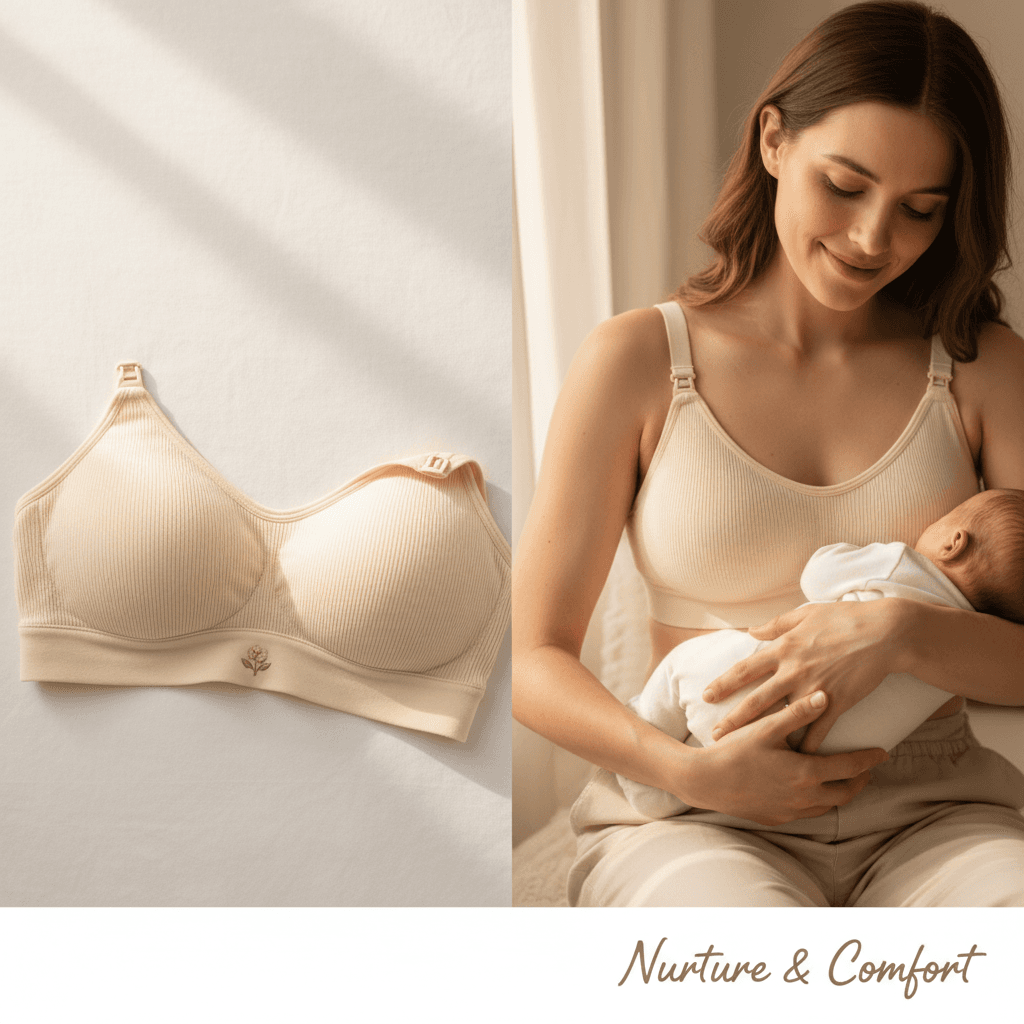
The defining feature of a nursing bra is the one-handed clip that drops the cup for feeding. Test this feature above all others. If you can't unclip it with one hand while holding a baby in the other, it fails the basic test. Most quality nursing bras use a small hook at the top of each cup strap.
The CDC's 2022 Breastfeeding Report Card found that 83.2% of U.S. infants start breastfeeding, but only 55.8% continue at 6 months. Lactation consultants from the International Lactation Consultant Association (ILCA) note that practical barriers — including difficulty with nursing clothing and bra access — contribute to early weaning, making one-handed clip design an important functional feature.
No underwire (usually)
Most lactation consultants recommend wireless nursing bras, especially in the early weeks. Underwire can put pressure on milk ducts and contribute to clogged ducts or mastitis. Some brands now offer flexible underwire options that are safer, but wireless is the standard recommendation until your supply is well established.
The Academy of Breastfeeding Medicine (ABM) recommends avoiding underwire bras during the establishment of lactation (typically the first 6-8 weeks), as sustained pressure on breast tissue can obstruct milk ducts. A 2014 study in the Journal of Human Lactation found that women who wore constrictive bras reported higher rates of plugged ducts and mastitis. The WHO estimates that lactational mastitis affects 10-33% of breastfeeding women, with improper breast compression cited as a modifiable risk factor.
Stretch and adjustability
Your size will change. A lot. Look for bras with stretchy fabric, multiple hook-and-eye closures in the back, and adjustable straps. Bras that accommodate 2-3 cup sizes give you the most wear time before sizing up or down.
According to a 2019 study in Midwifery, breast volume increases an average of 100-200 mL per breast during lactation, with significant fluctuations between feedings. The study found that bras with at least 2 inches of stretch in the band and adjustable hook-and-eye closures best accommodated these changes without creating constrictive pressure.
Breathable fabric
Breastfeeding generates heat, and leaked milk plus sweat is a recipe for discomfort. Moisture-wicking fabrics, mesh panels, and breathable cotton blends keep you more comfortable during long feeding sessions.
Supportive but not restrictive
You need support — especially if you're larger-chested — but compression or overly tight bands can restrict milk flow. The ideal nursing bra supports without squeezing.
Which nursing bra is the best overall?
The Kindred Bravely French Terry Racerback is the nursing bra that shows up on virtually every "best of" list, and after our research, we understand why. The French terry fabric is incredibly soft — it feels like wearing a favorite sweatshirt against your skin. The pullover design with clip-down cups means no clasps digging into your back, and the racerback style provides genuine support without underwire.
The sizing uses Kindred Bravely's S-Busty through XL-Busty system, which accounts for both band and cup size more accurately than standard bra sizing. Most women find their size on the first try using the brand's size chart. The bra holds nursing pads well and doesn't shift during sleep.
Pros
- Buttery-soft French terry fabric
- Racerback provides real support without underwire
- Easy one-handed clip-down cups
- Size range accommodates fluctuating breast size
Cons
- Racerback shows under some tops
- Not enough support for high-impact activity
- Light color shows through thin shirts
At around $35, this is the bra most breastfeeding parents buy multiples of. It works beautifully for everyday wear and sleeping.
Which nursing bra is best for large cup sizes?
Finding a nursing bra that provides real support above a D cup has historically been frustrating. The Cake Maternity Croissant Bra changes that with molded cups, a wide band, and a supportive (but wire-free) design that genuinely holds up through G cups. The drop-down clips are smooth and easy, and the fabric has enough stretch to accommodate engorgement without feeling like a compression garment.
Cake Maternity specializes in nursing bras and it shows. The construction quality is noticeably better than generic maternity brands, with reinforced seams and fabric that holds its shape wash after wash. The t-shirt-style cups give a smooth silhouette under clothing.
Pros
- Genuine support for D through G cups
- Molded cups for a smooth look under clothes
- Wire-free design safe for breastfeeding
- Durable construction that survives frequent washing
Cons
- More expensive at $55-65
- Limited color options
- Runs slightly small — size up if between sizes
For larger-chested parents who have been disappointed by the "one size fits most" approach of many nursing bras, Cake Maternity is worth every penny.
Which nursing bra is best for pumping?
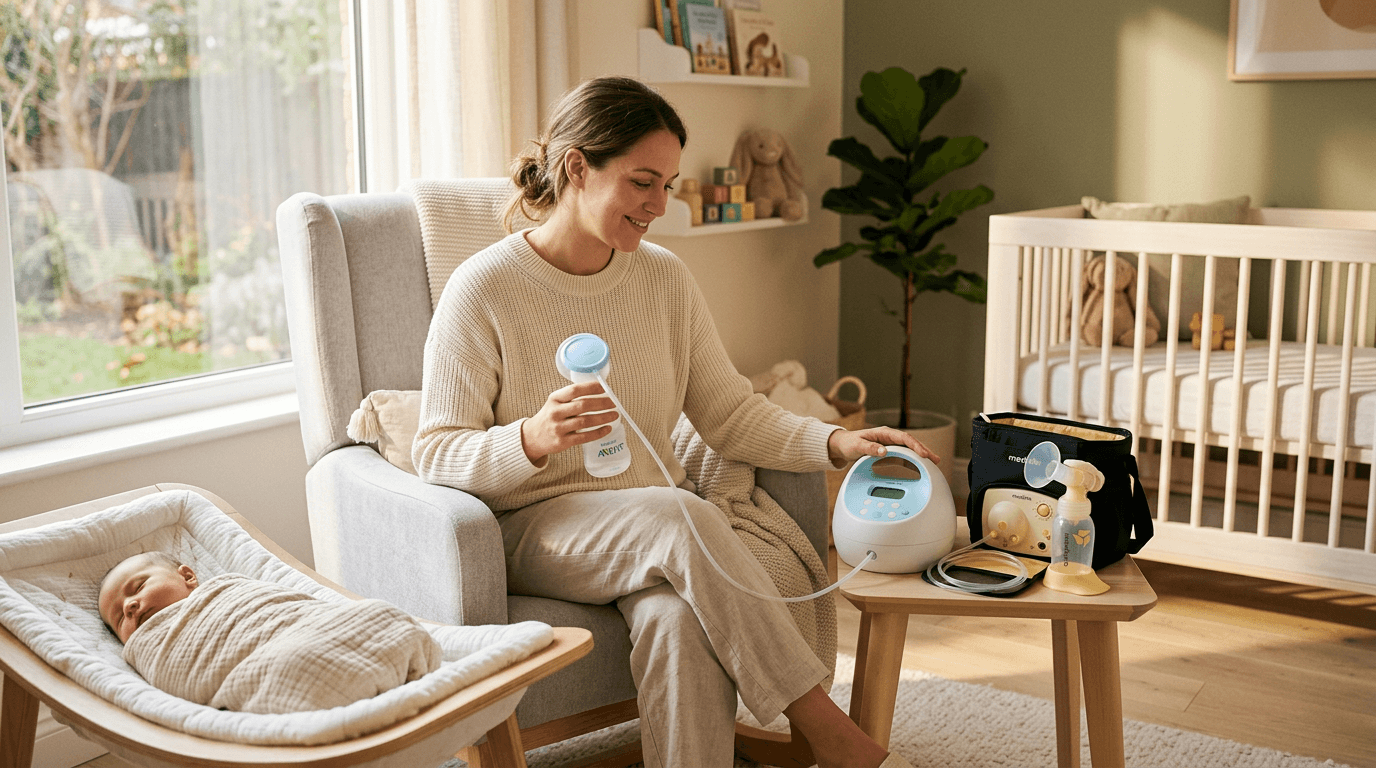
If you're pumping regularly — whether exclusively or to build a stash — a bra that holds pump flanges hands-free is a game-changer. The Momcozy 4-in-1 functions as a nursing bra, pumping bra, everyday bra, and sleep bra. The specially designed openings hold standard pump flanges securely, letting you pump while eating, working, or scrolling your phone.
The fabric is a smooth, stretchy blend that's comfortable enough for all-day wear, not just pumping sessions. The clip-down nursing access works just as well as dedicated nursing bras. If you're going back to work and will be pumping at the office, having a bra that transitions from nursing to pumping without a wardrobe change is incredibly practical.
Pros
- Holds pump flanges hands-free (compatible with most major brands)
- Functions well as everyday nursing bra and sleep bra
- Comfortable enough for all-day wear
- Very affordable at around $20
Cons
- Support is moderate — not ideal for larger cup sizes
- Flanges can shift during active movement
- Fabric pills after many washes
For parents who pump regularly, check out our Spectra vs. Medela comparison to pair with this bra.
What is the best nursing bra for sleeping?
Sleeping braless during breastfeeding can mean waking up soaked. The Bodily Everyday Nursing Bra is designed specifically for overnight wear — soft enough to sleep in, supportive enough to hold nursing pads in place, and simple enough to clip down for night feeds without turning on a light.
The organic cotton-modal fabric is gentle on sensitive nipples and breathable enough to prevent overheating. There's no padding, no structure, and no clasps — just soft fabric, nursing clips, and a pullover design. It's the closest thing to not wearing a bra while still getting the benefits of wearing one.
Pros
- Exceptionally soft organic fabric
- Easy night-feeding access
- Holds nursing pads securely
- No hardware that digs in while sleeping
Cons
- Minimal support — not suitable for leaving the house for most people
- Limited size range compared to competitors
- At $38, it's pricey for a sleep-only bra
Which sports bra is best for breastfeeding moms?
Look for two things: a fully adjustable band and straps, so the bra keeps working as your size fluctuates through the first months, and genuine high-impact compression rather than a soft "shelf" liner. A zip or clip front matters more than it sounds — it is the difference between feeding after a workout and changing your whole outfit first. Shefit's adjustable zip-front nursing bra is the one most often named in this category, though we no longer have a current listing to point you to.
Skip anything that relies on a stretchy pull-over panel for support. It will not hold up to running or jumping, and the compression it does apply is the kind associated with clogged ducts.
How many nursing bras do breastfeeding parents actually need?
Most breastfeeding parents find that 4-5 nursing bras cover their needs:
- 2-3 everyday bras (like the Kindred Bravely)
- 1 sleep bra (like the Bodily)
- 1 sports bra (if you exercise regularly)
- 1 pumping-compatible bra (if you pump)
Don't buy your full collection before your milk comes in. Your size at 38 weeks pregnant may be very different from your size at 2 weeks postpartum. Buy 1-2 bras in late pregnancy and add more once your supply regulates around 6-8 weeks.
What do parents ask most about nursing bras?
When should I buy nursing bras?
Buy 1-2 comfortable, stretchy nursing bras in your third trimester. Wait until 6-8 weeks postpartum (when your milk supply regulates and your size stabilizes) to invest in your full collection. Your late pregnancy size will be close to your breastfeeding size, but not exact.
The ABM recommends waiting until at least 36 weeks of pregnancy to purchase nursing bras, as breast size continues to change throughout the third trimester and the early postpartum period. Most lactation consultants suggest buying 2-3 bras initially and waiting until milk supply regulates (typically 6-8 weeks postpartum) before investing in additional sizes.
Can I wear regular bras while breastfeeding?
You can, but you'll quickly find the lack of one-handed access extremely frustrating, especially for night feeds. Underwire in regular bras also poses a risk for clogged ducts. Most parents switch exclusively to nursing bras within the first week.
How do I know what size nursing bra to buy?
Measure your band size snugly under your bust and your cup size at the fullest point (ideally when moderately full, not engorged). Add one band size from your pre-pregnancy measurement, and go up 1-2 cup sizes. Most nursing bra brands have detailed size guides — use them. When in doubt, size up. A too-tight bra is worse than a slightly loose one.
Do I need a nursing bra if I'm exclusively pumping?
Yes, but prioritize pumping-compatible bras like the Momcozy. You'll still want easy access for pump flange placement, and a hands-free pumping bra dramatically improves the pumping experience.
How do I care for nursing bras so they last?
Wash in cold water on a gentle cycle using a lingerie bag. Avoid the dryer — heat breaks down elastic and stretchy fabrics. Air dry flat or hang to dry. This simple routine can double the lifespan of your bras. Stock enough to rotate so each bra gets a rest day between wears.
So which nursing bra should you buy?
The Kindred Bravely French Terry Racerback is the best nursing bra for most parents — it's soft, supportive, easy to use, and affordable enough to buy multiples. Larger cup sizes should look at Cake Maternity, pumping parents will love the Momcozy 4-in-1, and anyone who exercises needs the Shefit.
For more breastfeeding support, check out our best nursing pillows guide, our Spectra vs. Medela breast pump comparison, and our self-care for new parents guide. Browse all feeding gear on our feeding bottles category page.
Further Reading
Your next step
Comfortable? Now make pumping actually sustainable.
Research Sources
Hilly Shore Inc.
Editorial teamIndependent product research team behind Cribworthy. Reviews are grounded in published AAP / CDC / NHTSA / CPSC pediatric guidance, JPMA / GREENGUARD GOLD / OEKO-TEX certification verification, and aggregated buyer sentiment.
115 products reviewed · 20 categories covered · cites AAP, CDC, NHTSA, CPSC, FDA, ACOG.
Safety claims are verified against published pediatric guidelines and CPSC databases. See our editorial standards.