Self-Care for New Parents: Practical Ideas That Don't Require Spare Time
Quick Answer
Trade shifts so each parent gets one unbroken four-to-five-hour block of sleep — that single change outperforms every other tactic on this page. Then keep it small: food you can eat one-handed, a daily walk outdoors, one message to an adult friend, and a hard limit on scrolling. If low mood persists past two weeks, that is a clinical question, not a discipline problem.
Our Verdict
Sleep comes first, always. The walk, the shower, the ten-minute reset all help at the margins, but nothing compensates for chronic loss of rest, and it is the strongest lever you have over mood and patience. Accepting practical help counts as looking after yourself; declining visitors who expect to be hosted and fed counts double.
As an Amazon Associate I earn from qualifying purchases. Product prices and availability are subject to change.
Self-Care for New Parents: Practical Ideas That Don't Require Spare Time
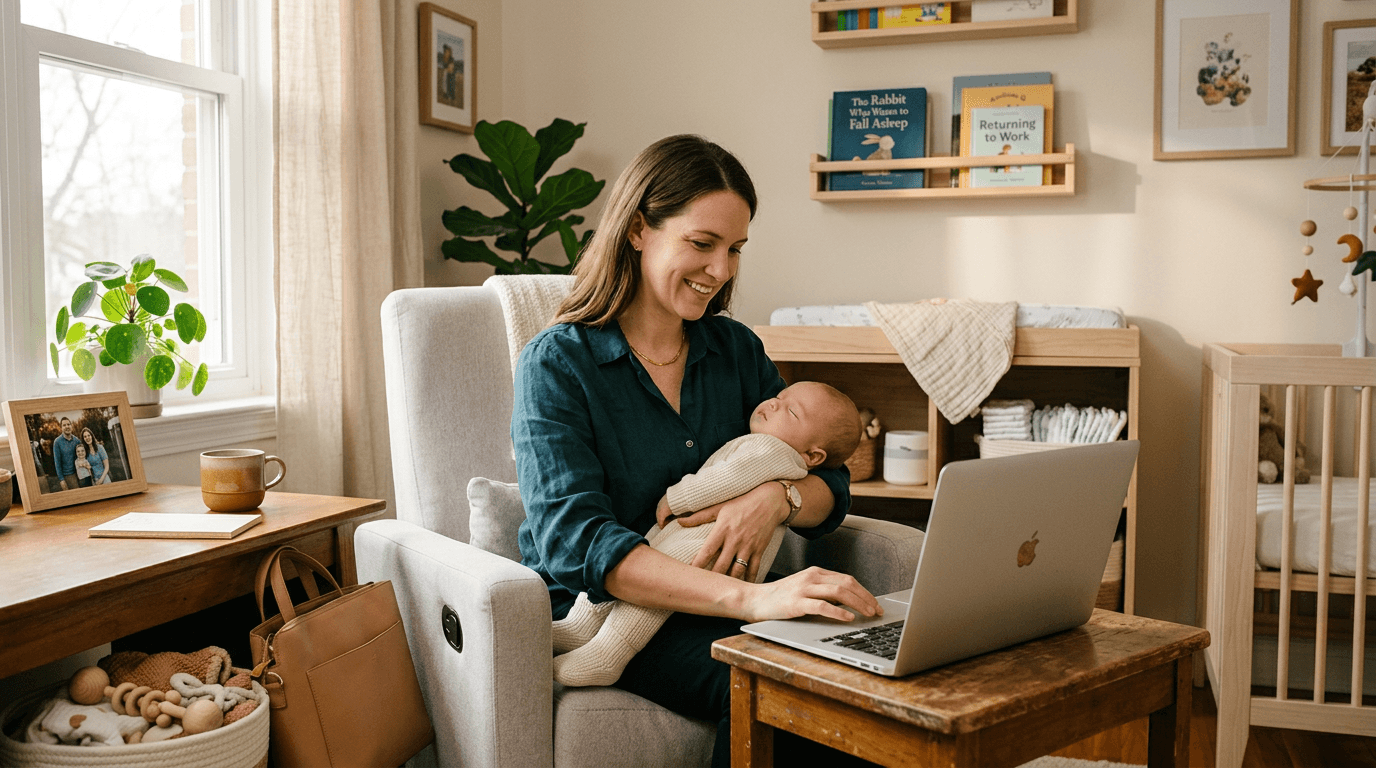
Self-care for new parents isn't about spa days — it's about protecting sleep, eating real food, and asking for help before you hit burnout. The single most impactful action is establishing sleep shifts with your partner so each person gets at least one 4-5 hour block of uninterrupted rest. A 2019 study in the journal Sleep of German parents found that in the first three months after a first birth, mothers slept about an hour less per night than before pregnancy and fathers about 13 minutes less, and neither fully recovered for up to six years. Taking care of yourself is not optional — it's essential to taking care of your baby.
Why is self-care so important for new parents?
Let's skip the spa-day fantasy and talk about why this matters. Parental burnout is real and documented. It leads to irritability, detachment, decreased patience, and poorer decision-making — all things that directly affect your baby. Taking care of yourself isn't selfish; it's functional maintenance for the most important job you've ever had.
The AAP recognizes parental well-being as a critical factor in child development and recommends that pediatricians screen parents for depression and anxiety at well-child visits during the first year.
What are the best physical self-care strategies for new parents?
Sleep protection
This is the single most important self-care action for new parents. Protect your sleep with the same intensity you protect your baby's.
The CDC reports that adults need at least 7 hours of sleep per night for optimal health and functioning. Sleep shifts, where each parent takes a guaranteed 4-5 hour uninterrupted block, are the single most effective fatigue-management strategy recommended by sleep researchers.
- Sleep shifts with your partner — each person gets a guaranteed block of uninterrupted sleep. Even 4-5 hours of unbroken sleep is restorative.
- Optimize your own sleep environment — blackout curtains, earplugs during your "off" shift, a comfortable pillow. Your sleep setup matters as much as baby's. You can use a sound machine too — see our sleep essentials recommendations, and what the research says about brown noise for exhausted parents.
- Nap when baby naps — cliché because it's true. Even a 20-minute nap helps. Don't use baby's nap to clean; use it to rest.
Nutrition
You can't pour from an empty cup, and you can't function on granola bars and cold coffee.
- Stock easy, one-handed foods: string cheese, fruit, trail mix, protein bars, pre-made sandwiches
- Accept every meal someone offers to bring
- Keep a large water bottle within reach at all times — dehydration worsens exhaustion, especially if breastfeeding
- Batch cook on weekends when you have help
Movement
You don't need a gym session. You need gentle movement that releases tension and boosts endorphins.
- Walk with baby in the stroller or carrier — fresh air benefits you both
- Stretch for 5 minutes while baby does tummy time
- Postpartum-specific exercises when cleared by your provider — rebuilding core strength after pregnancy is important
- Dance with baby — they love the motion and you get movement
How do new parents take care of their mental health?
Lower the bar
Perfectionism is the enemy of new-parent wellness. A "good day" isn't a day where everything goes smoothly. It's a day where everyone survives and maybe one thing goes well. Adjust your definition of success and give yourself credit for the relentless daily work of keeping a tiny human alive.
Stay connected
Isolation is a real risk in early parenthood. Maintain one or two connections actively — a text thread, a weekly video call, a parent group meetup. You don't need a full social calendar, but complete isolation compounds the difficulty.
Limit social media
Comparison is brutal when you're sleep-deprived and vulnerable. Curate your feed — unfollow accounts that make you feel inadequate. Follow accounts that normalize the messy, real experience of new parenthood.
Talk about how you're feeling
With your partner, a friend, a therapist, a parent group — anyone. Verbalizing the difficulty of new parenthood reduces its weight. If you're struggling with persistent sadness, anxiety, or dark thoughts, reach out to a professional. Postpartum depression and anxiety affect up to 1 in 5 new mothers and a meaningful percentage of new fathers.
The AAP encourages open communication between partners about emotional well-being and recommends that pediatricians ask about parental mental health at every well-child visit during the first year.
How do you maintain your relationship after a baby?
Your partnership needs attention
A new baby stress-tests even the strongest relationships. The division of labor, sleep deprivation, and reduced intimacy can create resentment quickly.
- Communicate explicitly — "I need you to handle the 2 AM feed tonight" is clearer than hoping your partner volunteers
- Express appreciation — "Thank you for doing the bottles" goes a long way when everyone is exhausted
- Schedule time together — even 30 minutes after baby's bedtime, sitting together without screens, reconnects you
- Give each other breaks — each partner should have regular solo time, even if it's just a 30-minute walk alone
Don't keep score
The division of labor will never be perfectly equal in any given week. What matters is that both partners feel supported over time.
What self-care can you do in under 10 minutes?
When you have no time, these small actions have outsized impact:
2-minute reset
- Step outside for fresh air
- Splash cold water on your face
- Take five deep breaths with your eyes closed
5-minute recharge
- Hot cup of tea or coffee, savored slowly
- Listen to one favorite song with headphones
- Text a friend something not about baby
10-minute restoration
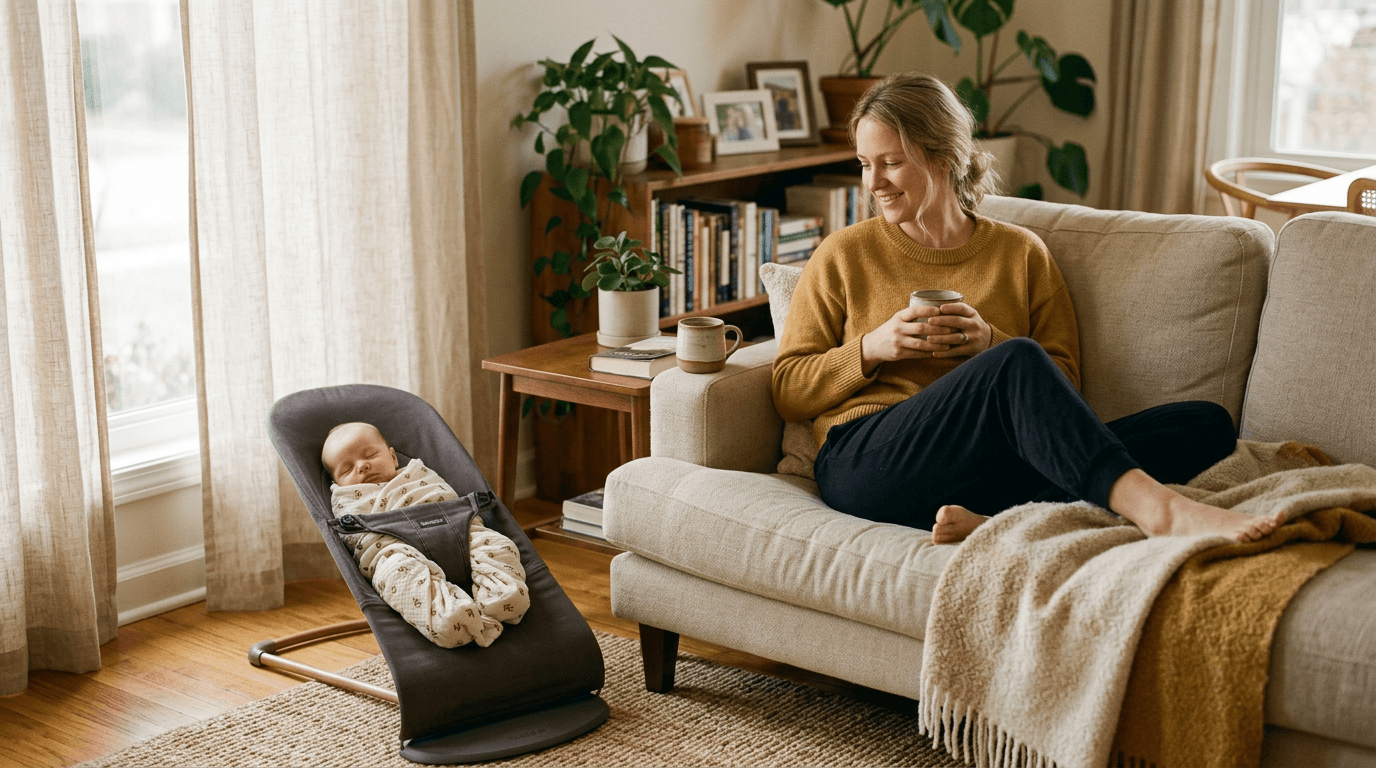
- Hot shower (use the BabyBjörn Bouncer or another safe seat to put baby in the bathroom with you)
- Short meditation or guided breathing (the Calm or Headspace apps have parent-specific content)
- Read a few pages of a book (a real book, not a parenting book)
How do you know when self-care isn't enough and you need professional help?
If you're experiencing any of the following, please reach out to a healthcare provider:
- Persistent sadness or emptiness lasting more than two weeks
- Inability to bond with or feel connected to baby
- Intrusive thoughts about harm to yourself or baby
- Severe anxiety that interferes with daily functioning
- Feeling detached from reality
These are symptoms of postpartum mood disorders, and they are treatable. You deserve help, and asking for it is an act of strength.
Postpartum Support International: 1-800-944-4773 Crisis Text Line: Text HOME to 741741
What's the most important self-care advice for new parents?
Self-care as a new parent isn't about grand gestures. It's about protecting sleep, eating adequately, staying connected to other humans, and giving yourself permission to be imperfect. The small acts of self-preservation add up. You matter in this equation — not just as a caregiver, but as a person. Take care of the parent, and the parent can better take care of the baby.
Further Reading
Research Sources
Hilly Shore Inc.
Editorial teamIndependent product research team behind Cribworthy. Reviews are grounded in published AAP / CDC / NHTSA / CPSC pediatric guidance, JPMA / GREENGUARD GOLD / OEKO-TEX certification verification, and aggregated buyer sentiment.
124 products reviewed · 22 categories covered · cites AAP, CDC, NHTSA, CPSC, FDA, ACOG.
Safety claims are verified against published pediatric guidelines and CPSC databases. See our editorial standards.