Going Back to Work After Baby: A Practical and Emotional Guide
Quick Answer
Book one or two trial daycare days a week before your real start date, pack the bag each night, and put your pumping blocks on the calendar as recurring meetings so they do not get eaten. The PUMP Act entitles most employees to break time and a private, non-bathroom space. Expect the first week to be the worst; by week three it is routine.
Our Verdict
The freezer stash is what parents over-build and under-need: a few days' buffer is plenty, and pumping at 3 a.m. to grow it costs sleep you cannot spare. Put the pumping schedule to your manager in writing before you return, not after the first meeting conflict. Then protect bedtime above everything else — it is the one stretch of the day reliably yours.

As an Amazon Associate I earn from qualifying purchases. Product prices and availability are subject to change.
Going Back to Work After Baby: A Practical and Emotional Guide
The transition back to work is one of the hardest parts of new parenthood, and the first week is almost always the worst. Start by arranging 1-2 trial days at daycare before your official return, pack everything the night before, and build a realistic pumping schedule if applicable. According to a 2023 report from the U.S. Bureau of Labor Statistics, 57% of mothers with infants under 1 year are in the labor force. The AAP supports employers providing adequate time and private spaces for pumping, as the Providing Urgent Maternal Protections (PUMP) Act of 2022 now legally requires break time and space for nursing employees.
Is it normal to feel guilty about going back to work?
Research consistently shows that adequate leave length (12+ weeks), workplace flexibility, and social support are the strongest predictors of a successful transition. The AAP advocates for a minimum of 12 weeks of paid parental leave.
It's okay to have mixed feelings
You might feel relieved to return to adult conversation and professional identity. You might feel devastated to leave your baby. You'll probably feel both simultaneously, and that's completely normal. There's no "right" way to feel about going back to work.
The first week is the hardest
The first morning drop-off is brutal. Give yourself permission to cry in the car. Then take a breath and go to work. It gets easier — not because you care less, but because you see that baby is thriving in their care environment and that you are still a wonderful parent.
Guilt is universal but not useful
Guilt serves no purpose here. You're providing for your family, modeling work ethic, and maintaining professional skills.
Working parents are good parents. Full stop.
How do you prepare for daycare or childcare?
The AAP recommends that child-to-caregiver ratios for infants be no greater than 3:1, and that childcare facilities follow safe sleep, feeding, and hygiene protocols consistent with Caring for Our Children national standards.
Do a trial run
Before your first day back, do at least one or two practice drop-offs at daycare or with your caregiver. Leave baby for a few hours, go run errands, and practice the separation. This helps both you and baby adjust gradually.
Pack the night before
Daycare prep is a logistical operation. The night before, pack the diaper bag with:
- Diapers and wipes
- Labeled bottles — most daycares require labels on everything
- Extra outfit changes
- Lovey or comfort item, if allowed
- Any medication or cream with signed authorization
Use a dedicated diaper bag for daycare — having a pre-packed bag eliminates morning chaos.
Communicate with your provider
Give your caregiver or daycare detailed information about baby's schedule, preferences, and quirks. Write it down and include:
- Feeding schedule
- Nap routine
- Soothing techniques that work
- Any medical information
Update it regularly as baby's needs change.
Have a backup plan
Babies get sick. Daycares close for holidays and emergencies. Have a backup care plan — a family member, trusted friend, or backup care service through your employer. Many companies offer emergency backup childcare as a benefit; check with HR.
How do you manage pumping at work?
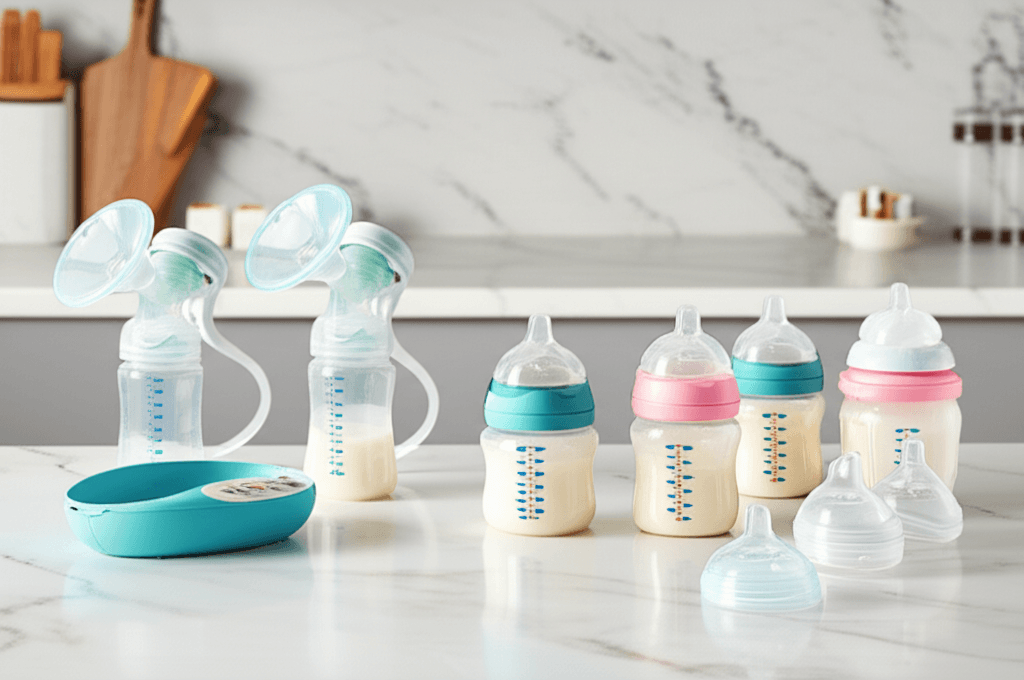
If you're breastfeeding, pumping at work is a significant logistical consideration. Federal law requires most employers to provide reasonable break time and a private space (not a bathroom) for pumping for up to one year after birth.
The PUMP Act of 2022 (amending the Fair Labor Standards Act) requires employers to provide reasonable break time and a private, non-bathroom space for nursing employees to express breast milk for up to one year after the child's birth. The AAP recommends pumping every 3 hours during the workday to maintain milk supply, which typically means 2-3 pumping sessions during a standard 8-hour shift.
Setting up your pumping routine
- Pump at the same times baby would normally eat (typically every 3 hours)
- A wearable pump like the Elvie Stride offers flexibility if you can't take full pump breaks
- Keep a spare set of pump parts at work to avoid the panic of forgetting them
- Invest in a good cooler bag and ice packs for milk transport
Building a freezer stash before returning
Start collecting milk 2-3 weeks before your return date. A Haakaa during morning feeds is an easy way to accumulate without extra pumping sessions. You don't need a massive stash — enough for the first few days gives you a buffer. See our feeding guide for pump recommendations.
The AAP recommends beginning to build a breast milk stash 2-3 weeks before returning to work by pumping once daily after a morning feeding. Stored breast milk is safe for the following, according to CDC guidelines:
| Where it is stored | Safe for |
|---|---|
| Room temperature | Up to 4 hours |
| Refrigerator | 4 days |
| Freezer | 6-12 months |
Having 3-5 days' worth of stored milk provides a comfortable buffer.
Talking to your manager
Have a straightforward conversation about your pumping needs before your first day back. Share exactly what you'll need:
- 2-3 breaks of about 20 minutes each
- A private space with an outlet
- Access to a refrigerator or your own cooler
Most managers are accommodating when given clear, specific information.
How do you maintain a routine when you go back to work?
Protect bedtime
Bedtime routine becomes sacred when you're a working parent. It's often your primary quality time with baby on weekdays. Keep it consistent — bath, book, feed, bed — and be fully present during it. Put your phone away and soak in the connection. Our bedtime routine guide has detailed steps.
Meal prep on weekends
Cook in batches on the weekend so weeknight dinners aren't another source of stress. Slow cooker meals, sheet pan dinners, and simple batch recipes save sanity.
Morning routine optimization
Do as much as you can the night before:
- Lay out clothes, yours and baby's
- Prep bottles and pump parts
- Have the diaper bag packed and by the door
Every decision you eliminate from the morning makes it smoother.
Accept imperfection
The house will be messier. Your social life will shrink. Some weeks you'll rely on takeout more than home cooking.
This is a season of life, not forever — and doing your best is genuinely enough.
How do you stay connected with baby during the workday?
Ask for photos and updates
Most daycares and nannies will send photos throughout the day. These tiny updates help you feel connected to baby during work hours. If your provider doesn't offer this, ask for it.
Your baby monitor at work
Some smart monitors like the Nanit let you check in remotely. If your baby is at home with a caregiver, a quick peek can ease anxiety.
Don't compare
Social media will show you stay-at-home parents doing crafts at 10 AM and working parents who seem to have it all figured out. Neither portrayal is complete. Focus on your family, your situation, and your choices.
What are tips for working from home with a baby?
Remote work with a baby requires childcare.
Repeat: you cannot reliably work from home while being the primary caregiver for a baby.
You need a caregiver (nanny, family member, or daycare) even when you work from home. What WFH gives you is eliminated commute time and occasional flexibility.
Why is self-care important for working parents?
Burnout is a real risk when you're balancing work and a baby. Protect small moments for yourself:
- Exercise, even 20 minutes
- Time with friends or partner without baby present
- Hobbies or activities that are just for you
- Therapy if you're struggling — and even if you're not
What's the best advice for going back to work after baby?
Going back to work is hard, and it gets easier. The logistics smooth out, the guilt softens, and you find a rhythm. Be patient with yourself during the transition, accept help, and remember that working to support your family is an act of love. For gear that makes the working-parent juggle easier — from pumps to daycare-ready diaper bags — explore our product recommendations across the site.
Further Reading
💬 Real Talk from Parents
Your baby will reject the $40 bottle and love the $3 one. Every time.
The 'best' bottle is whichever one your baby actually accepts.
You'll develop strong opinions about bottle nipple flow rates, and that's okay.
Try at least 3 different bottles before deciding your baby 'won't take a bottle.' Each one has a different flow and shape. Babies are picky.
Paraphrased community consensus — not a direct quote.
You should sterilize bottles before every single use.
The CDC recommends sterilizing bottles once when new, then again only if your baby is premature, under 2 months, or immunocompromised. For healthy babies over 3 months, hot soapy water or a dishwasher is sufficient.
Hilly Shore Inc.
Editorial teamIndependent product research team behind Cribworthy. Reviews are grounded in published AAP / CDC / NHTSA / CPSC pediatric guidance, JPMA / GREENGUARD GOLD / OEKO-TEX certification verification, and aggregated buyer sentiment.
124 products reviewed · 22 categories covered · cites AAP, CDC, NHTSA, CPSC, FDA, ACOG.
Safety claims are verified against published pediatric guidelines and CPSC databases. See our editorial standards.