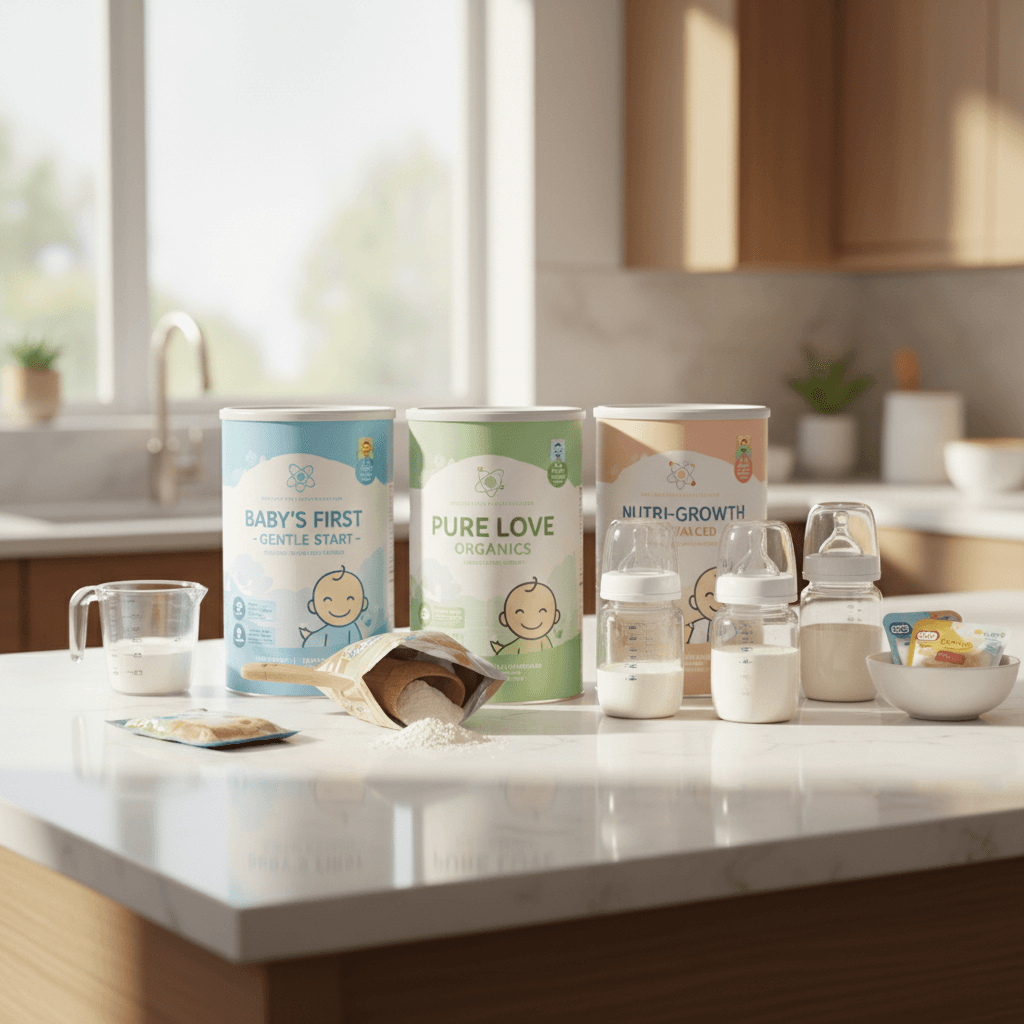
Best Organic Baby Formula: Top Picks and What to Look For
Our #1 Pick
Bobbie Organic is the best overall organic formula, built on a European-style recipe with grass-fed milk and no corn syrup solids. Kendamil Organic is the easiest strong option to actually get hold of, and Earth's Best Organic covers the same nutrition for less. Every formula sold in the United States must meet the same federal nutrient requirements, organic or not.
Also Great
Best European-Style: Kendamil Organic ($33) — Best European-Style
Budget Pick: Earth's Best Organic Dairy Formula ($30) — Best Budget Organic
Our Verdict
Take Bobbie if you want the closest thing to a European recipe made under United States rules, Kendamil when availability and price matter more, Earth's Best to spend the least, or HiPP Dutch for a baby who struggles with standard cow's milk formula. Do not import formula through unofficial resellers, and do not switch brands repeatedly while chasing a digestive change that needs your pediatrician.
#1Bubs 365 Day Grass Fed Infant Formula with Iron 4.5 | #2Happy Baby Organics Stage 1 Infant Formula 4.6 | #3Earth's Best Organic Dairy Formula 4.7 | #4Earth's Best Organic Infant Formula 4.7 | #5Burt's Bees Organic 4.8 | |
|---|---|---|---|---|---|
| Verdict | Bubs 365 Grass Fed Infant Formula is a cow-milk, grass-fed formula with iron from a reputable brand, an in-stock alternative to the unavailable Bobbie Whole Milk formula at ~$30. | Happy Baby Organics Stage 1 is a widely available USDA-organic infant formula modeled after breast milk, a reputable in-stock organic pick to replace the unavailable Kendamil Organic (~$36). | Best Budget Organic | Best Organic Formula on Amazon | Best for Supplementing |
| Price | ~$29.69Buy on Amazon | ~$32.64Buy on Amazon | ~$42.99Buy on Amazon | ~$34.57Buy on Amazon | ~$11.18Buy on Amazon |
| Brand | Bubs | Happy Baby | — | — | — |
| Type | — | — | Organic Baby Formula | Organic milk-based with iron | Organic Baby Formula |
| Size | — | — | — | 21 oz container | — |
| Age | — | — | — | 0–12 months | — |
| Certifications | — | — | — | USDA Organic, Non-GMO Project | — |
| Buyer sentiment | — | — | Formula Ingredients Value for money Effectiveness Scent Buyers praise formula, ingredients, value for money and effectiveness. Mixed feedback on consistency and taste. Some flag scent. Based on 1,190 user mentions | Formula Ingredients Value for money Effectiveness Scent Buyers praise formula, ingredients, value for money and effectiveness. Mixed feedback on consistency and taste. Some flag scent. Based on 1,244 user mentions | Softness Quality Appearance Fabric Buyers praise softness, quality, appearance and fabric. Mixed feedback on fit and durability. Based on 1,165 user mentions |
| Pros |
|
|
|
|
|
| Cons |
|
|
|
* Prices are approximate. Check the linked retailer for current pricing and availability.
Key Takeaways
- ✓Take Bobbie if you want the closest thing to a European recipe made under United States rules, Kendamil when availability and price matter more, Earth's Best to spend the least, or HiPP Dutch for a baby who struggles with standard cow's milk formula. Do not import formula through unofficial resellers, and do not switch brands repeatedly while chasing a digestive change that needs your pediatrician.
- ✓Bobbie Organic Infant Formula is our top overall pick for organic formula in 2026, modeled after European formulations with grass-fed milk and no corn syrup solids. For budget-conscious families, E...
- ✓Bobbie has quickly become a standout in the organic formula space. Modeled after European formula standards, Bobbie uses organic grass-fed cow's milk with a whey-to-casein ratio that closely mimics...
- ✓Kendamil Organic is a British formula that recently became widely available in the US. It's the only formula to use whole milk (not skim milk with added vegetable oils), which provides naturally oc...
- ✓Earth's Best Organic has been a trusted name in organic baby products for decades. Their infant formula is USDA Organic, non-GMO, and includes DHA and ARA for brain and eye development. The ingredi...
💬 Real Talk from Parents
You'll develop strong opinions about bottle nipple flow rates, and that's okay.
The 'best' bottle is whichever one your baby actually accepts.
Your baby will reject the $40 bottle and love the $3 one. Every time.
Formula is not a failure. Fed is genuinely best.
Try at least 3 different bottles before deciding your baby 'won't take a bottle.' Each one has a different flow and shape. Babies are picky.
Paraphrased community consensus — not a direct quote.
Breastfed babies don't need to burp.
All babies swallow some air while feeding, regardless of method. Breastfed babies may swallow less air, but they still benefit from gentle burping after feeds.
You should sterilize bottles before every single use.
The CDC recommends sterilizing bottles once when new, then again only if your baby is premature, under 2 months, or immunocompromised. For healthy babies over 3 months, hot soapy water or a dishwasher is sufficient.
As an Amazon Associate I earn from qualifying purchases. Product prices and availability are subject to change.
Best Organic Baby Formula: Top Picks and What to Look For
Bobbie Organic Infant Formula is our top overall pick for organic formula in 2026, modeled after European formulations with grass-fed milk and no corn syrup solids. For budget-conscious families, Earth's Best Organic Dairy Formula delivers solid nutrition at a lower price point.
All infant formula sold in the United States must meet the FDA's strict nutritional standards under the Infant Formula Act of 1980 (21 CFR 107), ensuring every formula — organic or conventional — provides adequate nutrition for healthy growth. The AAP states that while breast milk is the ideal source of nutrition for infants, commercial infant formula is a safe and complete alternative. A 2022 review in Nutrients found no clinically significant difference in growth outcomes between infants fed organic versus conventional formula when both met FDA standards.
Is organic formula really better than regular formula?
All infant formula sold in the United States must meet strict FDA nutritional requirements. This means every formula — organic or conventional — provides the essential nutrients your baby needs to grow and thrive. Organic certification primarily relates to how ingredients are sourced and processed, not to nutritional adequacy. Your baby will be well-nourished regardless of which FDA-approved formula you choose. For a broader look at all formula types, see our baby formula comparison guide.
The FDA requires that all infant formula sold in the United States contain minimum levels of 29 specified nutrients, including protein, fat, vitamins, and minerals, as mandated by the Infant Formula Act of 1980 and subsequent amendments.
Organic is a sourcing label, not a nutrition claim. The AAP affirms that parents should feel confident that any FDA-registered formula provides complete nutrition for their infant, and that the decision between organic and conventional formulations is one of personal preference, not nutritional necessity.
Best Overall: Bobbie Organic Infant Formula
Bobbie has quickly become a standout in the organic formula space. Modeled after European formula standards, Bobbie uses organic grass-fed cow's milk with a whey-to-casein ratio that closely mimics breast milk (60:40). It contains DHA from organic algal oil, no corn syrup or palm oil, and is USDA Organic and EU organic certified.
The ingredient list is refreshingly simple and easy to understand. Bobbie dissolves cleanly without clumping, and parents consistently report that babies tolerate it well with minimal gas and fussiness. At about $30 for a 14-ounce can, it's premium priced but competitive with other high-end organic options.
Why it's our top pick
- USDA Organic and meets EU organic standards
- 60:40 whey-to-casein ratio (closest to breast milk)
- No corn syrup, palm oil, or artificial additives
- DHA from organic algal oil
- Dissolves smoothly with minimal foam
Best European-Style: Kendamil Organic
Buy on Amazon · $32.64 →Kendamil Organic is a British formula that recently became widely available in the US. It's the only formula to use whole milk (not skim milk with added vegetable oils), which provides naturally occurring milk fat globule membrane (MFGM) — a component also found in breast milk that research suggests may support brain development.
Kendamil uses no palm oil, no fish oil (DHA comes from plant-based algal sources), and no soy. It's certified organic in both the EU and US. The taste is slightly creamier than many formulas due to the whole-milk base, and many parents switching from breast milk report a smooth transition. At about $33 per can, it's similarly priced to Bobbie.
Why it's our European-style pick
- Whole milk, rather than skim milk with added vegetable oils
- Naturally occurring MFGM, also found in breast milk
- No palm oil, no fish oil, no soy
- Certified organic in both the EU and US
- Creamier taste; many parents report a smooth transition from breast milk
Best Budget Organic: Earth's Best Organic Dairy Formula
Buy on Amazon · $42.99 →Earth's Best Organic → has been a trusted name in organic baby products for decades. Their infant formula is USDA Organic, non-GMO, and includes DHA and ARA for brain and eye development. The ingredient list is straightforward, and it's widely available at grocery stores and online.
At about $30 for a 21-ounce can, Earth's Best offers more formula per dollar than the premium brands. It uses lactose as the primary carbohydrate (matching breast milk), and organic nonfat milk as the protein base. Some parents note it's slightly harder to dissolve than Bobbie or Kendamil, but thorough mixing or using a formula pitcher solves this.
Why it's our budget pick
- USDA Organic and Non-GMO Project Verified
- Lactose-based (no corn syrup solids)
- Includes DHA and ARA
- Widely available in stores and online
- Best price-per-ounce among organic options
Best for Sensitive Tummies: HiPP Dutch Stage 1
HiPP Dutch Stage 1 is a European organic formula that many parents turn to when their baby struggles with gas, constipation, or reflux on other formulas. HiPP has been making formula in Germany since 1932, and their formulations are among the most researched in the world.
The Dutch version is preferred by many US parents for its clean ingredient list and inclusion of prebiotics (GOS) and probiotics (L. fermentum), which support digestive health. It uses organic skim milk with added whey, organic vegetable oils, and organic lactose. At about $38-45 per box (depending on where you purchase), it's the most expensive option on our list, but parents of sensitive babies often find it's worth every penny.
Why it's our sensitive-tummy pick
- Prebiotics (GOS) and probiotics (L. fermentum) to support digestive health
- Clean ingredient list: organic skim milk with added whey, organic vegetable oils, organic lactose
- Made in Germany since 1932, among the most researched formulations in the world
- The formula many parents turn to for gas, constipation, or reflux on other formulas
Best for Supplementing: Burt's Bees Organic
Buy on Amazon · $11.18 →Burt's Bees Baby Organic → is a solid choice for parents who are supplementing with formula alongside breastfeeding. It's USDA Organic, uses lactose as the primary carbohydrate, and has a mild taste that babies transitioning from breast milk tend to accept more readily.
At about $28 for a 23-ounce can, it's one of the best values in the organic formula market. The easy-to-scoop design and smooth mixing make middle-of-the-night bottles less frustrating. It's available at most major retailers, which means you won't face supply anxiety.
Why it's our supplementing pick
- USDA Organic, with lactose as the primary carbohydrate
- Mild taste that babies transitioning from breast milk tend to accept more readily
- Easy-to-scoop design and smooth mixing for middle-of-the-night bottles
- Available at most major retailers, so no supply anxiety
For the best bottles to pair with your formula, check our feeding bottles guide.
What does organic certification actually mean for baby formula?
USDA Organic certification in formula means:
- Milk comes from cows raised on organic feed without synthetic pesticides or fertilizers
- No genetically modified organisms (GMOs)
- No artificial growth hormones
- Specific processing standards for other ingredients
- Regular USDA inspections and audits
What organic does not guarantee: that the formula is automatically better for your baby, that it won't cause gas or fussiness, or that it's closer to breast milk.
The organic label relates to farming and processing practices, not to the nutritional profile.
What ingredients should I look for in baby formula?
Protein source
Most organic formulas use cow's milk protein. The whey-to-casein ratio matters — breast milk is approximately 60:40 whey-to-casein in early lactation. Formulas like Bobbie match this ratio, while others may differ.
A 2021 study in the Journal of Pediatric Gastroenterology and Nutrition compared whey-dominant and casein-dominant formulas and found that whey-dominant formulas (60:40 whey-to-casein ratio, mirroring human breast milk) were associated with faster gastric emptying and fewer episodes of spit-up in infants under 4 months. The European formulas on this list, including Bobbie and Kendamil, use this whey-dominant ratio.
Carbohydrate source
Lactose is the carbohydrate in breast milk and the gold standard for formula. Some formulas use corn syrup solids or maltodextrin, which are nutritionally adequate but less ideal. All our top picks use lactose as the primary carbohydrate.
The USDA organic certification (USDA NOP) prohibits the use of synthetic pesticides, genetically modified organisms, and artificial growth hormones in organic formula ingredients. However, organic formulas may still contain processed sugars like organic corn syrup solids or organic glucose syrup. The WHO recommends that added sugars be minimized in infant feeding products, and the AAP's 2023 policy statement on sugar intake supports limiting added sugars from the earliest age.
Fats
DHA (docosahexaenoic acid) and ARA (arachidonic acid) are omega fatty acids important for brain and eye development. The source varies — some formulas use fish oil, others use plant-based algal oil. Neither is superior nutritionally, but algal-sourced DHA is preferred by parents avoiding fish-derived ingredients.
Prebiotics and probiotics
Some formulas include prebiotics (like GOS and FOS) and probiotics to support digestive health. These can be helpful for babies with sensitive stomachs. HiPP is particularly well-known for including beneficial gut bacteria.
A 2020 Cochrane Review analyzing 56 randomized controlled trials found that adding probiotics to infant formula was associated with a modest reduction in episodes of acute gastroenteritis and antibiotic-associated diarrhea. However, the AAP notes that evidence does not yet support routine supplementation of formula with probiotics and recommends that parents discuss probiotic-containing formulas with their pediatrician.
What are the best tips for formula feeding?
- Water temperature: Most formulas mix best with warm (not hot) water around 98-104 degrees Fahrenheit. Check the specific instructions on your formula's packaging.
- Mixing technique: Add water first, then powder. Swirl gently rather than shaking vigorously to minimize air bubbles that cause gas. A formula pitcher is a worthwhile investment for making multiple bottles at once.
- Storage: Prepared formula should be used within one hour at room temperature or stored in the refrigerator for up to 24 hours.
- Switching formulas: You don't need to do a gradual transition in most cases. However, if your baby has a sensitive stomach, mixing the old and new formulas over 3-5 days can ease the change. Always consult your pediatrician if you're concerned.
Never re-heat formula more than once.
How does formula compare to breastfeeding?
Feeding your baby is personal, and there's no single right approach. Some families breastfeed exclusively, some use formula exclusively, and many combine both. What matters most is that your baby is fed, growing, and thriving. For an in-depth look at the considerations, read our formula vs. breastfeeding guide.
Which organic baby formula should you buy?
- Bobbie — our top recommendation for most families seeking an organic formula: breast-milk-modeled composition, clean ingredients, and smooth mixing.
- Earth's Best Organic — for budget-conscious parents who want excellent nutrition at a lower price point.
- HiPP Dutch — for families dealing with digestive sensitivity; a long track record of being gentle on sensitive stomachs.
Remember: the best formula is one your baby tolerates well, you can consistently afford, and that's readily available.
Don't hesitate to try a different option if the first one doesn't work — finding the right fit sometimes takes a round or two.
Further Reading
Research Sources
Hilly Shore Inc.
Editorial teamIndependent product research team behind Cribworthy. Reviews are grounded in published AAP / CDC / NHTSA / CPSC pediatric guidance, JPMA / GREENGUARD GOLD / OEKO-TEX certification verification, and aggregated buyer sentiment.
115 products reviewed · 20 categories covered · cites AAP, CDC, NHTSA, CPSC, FDA, ACOG.
Safety claims are verified against published pediatric guidelines and CPSC databases. See our editorial standards.