The Complete Baby Feeding Guide 2026: Birth to Toddler
Quick Answer
Milk — breast, bottle, or both — supplies nearly all nutrition until six months. Around six months, once your baby sits with support and reaches for what you are eating, begin iron-rich solids alongside milk. Peanut and egg belong in that first month of eating, not later. Honey, cow's milk as a drink, and added salt wait until the first birthday.
Our Verdict
For most families: combo feeding is underrated, store-brand formula is as safe as name-brand, and the #1 mistake is delaying allergen introduction. Fed is best — but timing and safety rules matter.
Key Takeaways
- ✓Baby feeding is surprisingly controversial. Breast vs bottle. Formula brand wars. "Fed is best" vs "breast is best." When to start solids. Baby-led weaning vs purees.
- ✓Previous advice was to delay allergens. Current research shows the opposite is better. The LEAP study (Learning Early About Peanut Allergy) showed early introduction reduces allergy risk.
- ✓Roughly 2-3 oz per pound of body weight per day, split across feedings. A 10 lb baby typically takes 20-30 oz total per day. Check with your pediatrician for specifics.
- ✓Baby feeding doesn't have to be stressful.
As an Amazon Associate I earn from qualifying purchases. Product prices and availability are subject to change.
The Complete Baby Feeding Guide 2026: Birth to Toddler
Baby feeding is surprisingly controversial. Breast vs bottle. Formula brand wars. "Fed is best" vs "breast is best." When to start solids. Baby-led weaning vs purees. Every choice you make gets second-guessed by well-meaning strangers and anxious in-laws.
This guide is here to cut through the noise with honest, AAP-aligned, research-based guidance for every feeding decision from birth through 12 months. Your feeding approach is your choice — we're just here to help you make informed ones.
The feeding stages at a glance
| Age | Stage | Primary food | Notes |
|---|---|---|---|
| 0-6 months | Milk only | Breast milk or formula | Exclusive per AAP |
| 6-9 months | Solids introduction | Milk + purees/BLW | 1-2 solid meals/day |
| 9-12 months | Expanding variety | Milk + 2-3 solid meals | Finger foods, self-feeding |
| 12+ months | Toddler eating | Whole milk + table foods | Phasing out bottle |
The big decisions, honestly addressed
Breast vs bottle: what the research actually says
Breastfeeding benefits (per AAP/WHO research):
- Reduced risk of certain infections (ear, respiratory, GI)
- Potential reduction in SIDS risk
- Potential reduction in childhood obesity
- Possible cognitive benefits (research is inconsistent)
- No cost
Formula feeding benefits:
- Measurable intake
- Anyone can feed baby (sharing the load)
- No dietary restrictions on mom
- Easier transition to work
- No physical demands on mom
The honest reality:
- Formula-fed babies do just as well in most long-term outcomes
- "Fed is best" is the correct framing for most families
- The breastfeeding benefits are statistically meaningful but not large in absolute terms
- Maternal mental health and family functioning matter more than which feeding method you use
Takeaway: Pick the approach that works for YOUR family. There is no wrong answer. A well-fed baby in a functional home is the goal.
When to start solids
Per AAP guidelines: Around 6 months of age, and not before 4 months.
Signs of readiness (must meet all):
- Sits upright with minimal support
- Has good head/neck control
- Has lost the tongue-thrust reflex
- Shows interest in food (watches you eat, opens mouth)
- Has roughly doubled their birth weight
- Pediatrician has cleared it
Don't start earlier than 4 months regardless of how "advanced" baby seems. Earlier solid introduction is associated with increased risk of allergies, obesity, and digestive issues.
Formula: does brand matter?
Short answer: not really. All FDA-approved infant formulas in the US meet the same nutritional standards. The differences are:
- Marketing and price (Enfamil vs Similac vs store brands)
- Specific ingredients (organic, A2, grass-fed, European imports)
- Gut health additives (HMOs, probiotics, prebiotics)
- Protein source (cow's milk standard, goat milk, soy, hydrolyzed)
What actually matters:
- FDA approval (stick with FDA-approved formulas only)
- Your baby's tolerance — some babies have issues with certain formulas (rash, reflux, constipation)
- Iron-fortified (standard for US formulas — don't buy iron-free unless specifically directed)
Store brands work. Costco Kirkland, Target Up&Up, Walmart Parent's Choice, and Aldi Little Journey are all manufactured to the same FDA standards as Enfamil and Similac. They cost 30-50% less.
Combination feeding (breast + formula)
Many parents do both. This is completely fine and supported by research. Benefits:
- Mom gets rest during some feeds
- Partners can bond through feeding
- Easier return to work
- Breastfeeding continues longer than exclusive breastfeeding would
Supply note: If you want to maintain breastfeeding long-term, be strategic about when you supplement. Replacing breastfeeding sessions with formula (especially in the morning or cluster-feeding times) can reduce supply. A lactation consultant can help you plan.
Feeding essentials by stage
Newborn stage (0-3 months)
If breastfeeding:
- Nursing bras (2-3)
- Nursing pads (disposable or washable)
- Nipple cream (Lansinoh or Earth Mama)
- Boppy or My Brest Friend pillow
- Haakaa silicone milk catcher (for let-down)
- Water bottle you can reach one-handed
If formula feeding:
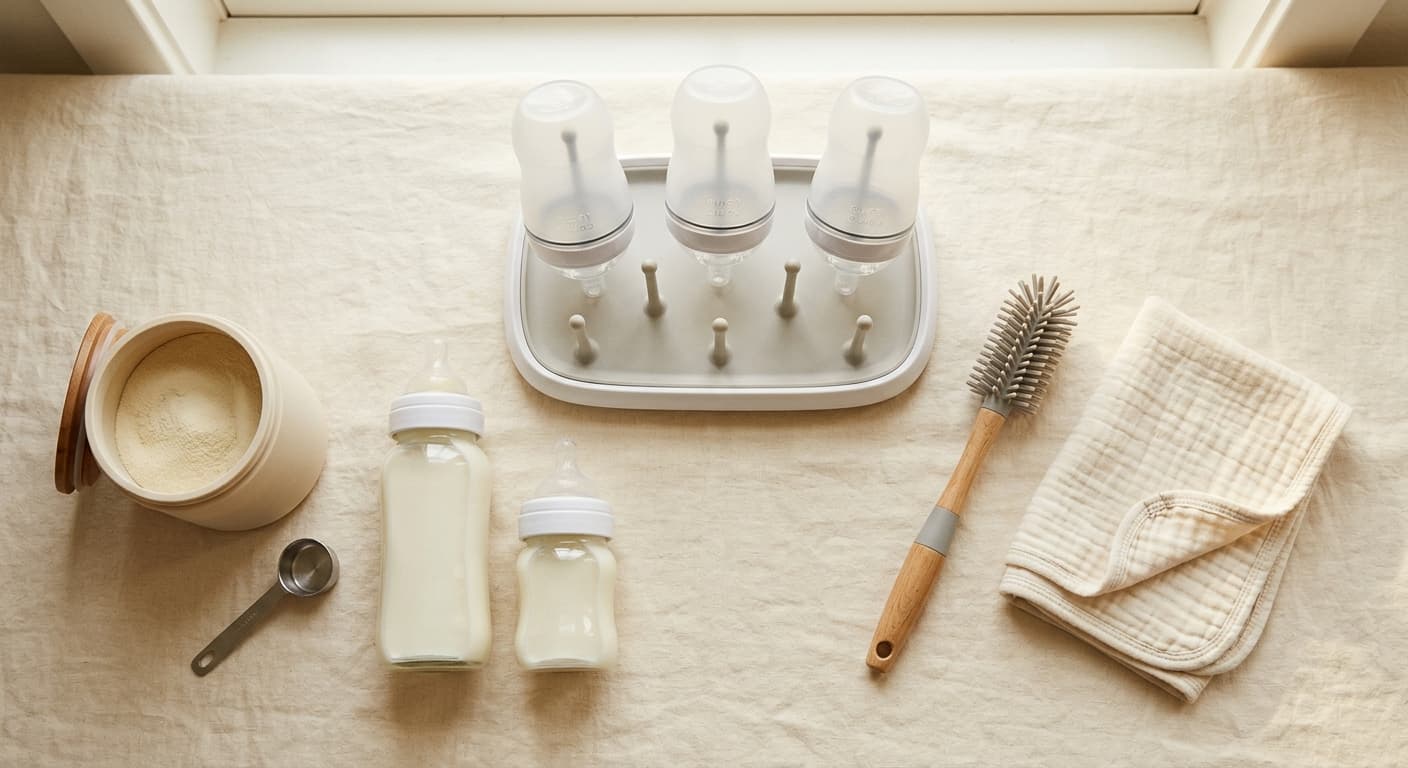
- 8 bottles (Dr. Brown's Options+ or Philips AVENT Natural)
- Bottle brush + drying rack
- Sterilizer (optional but nice; for a washer-dryer, see Momcozy vs Baby Brezza)
- Formula (see brand notes above)
Both:
- Burp cloths (10-12, you'll need more than you think)
- Bibs (4-6 bandana style for spit-up)
4-6 months (milk still primary)
- More bottles as baby takes larger volumes
- Bottle nipple upgrades to next flow level
- Consider a bottle warmer (though water heating works fine)
- Prep for starting solids next stage
6-9 months (starting solids)
- High chair (see high chair guide)
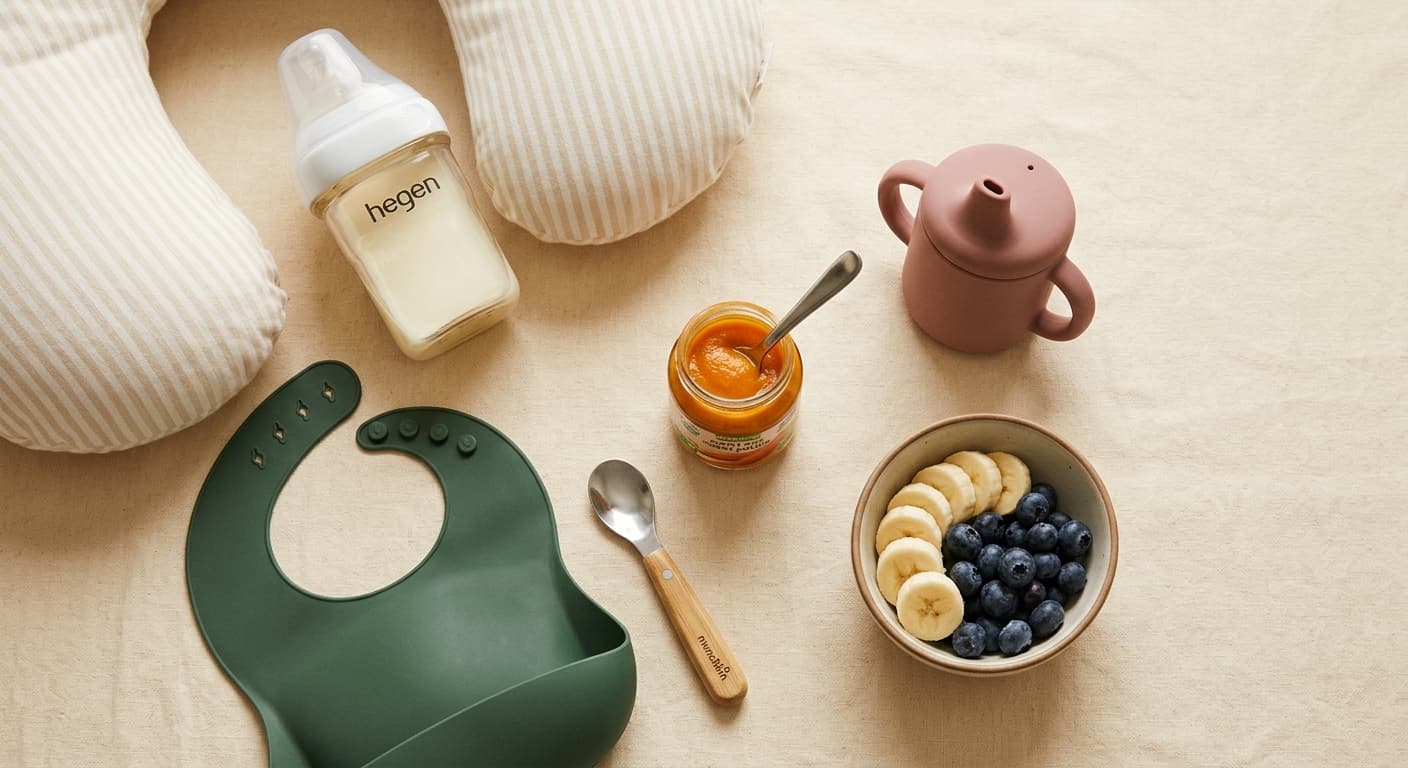
- Silicone bibs (3-4, wipeable > fabric at this age)
- Soft-tipped baby spoons
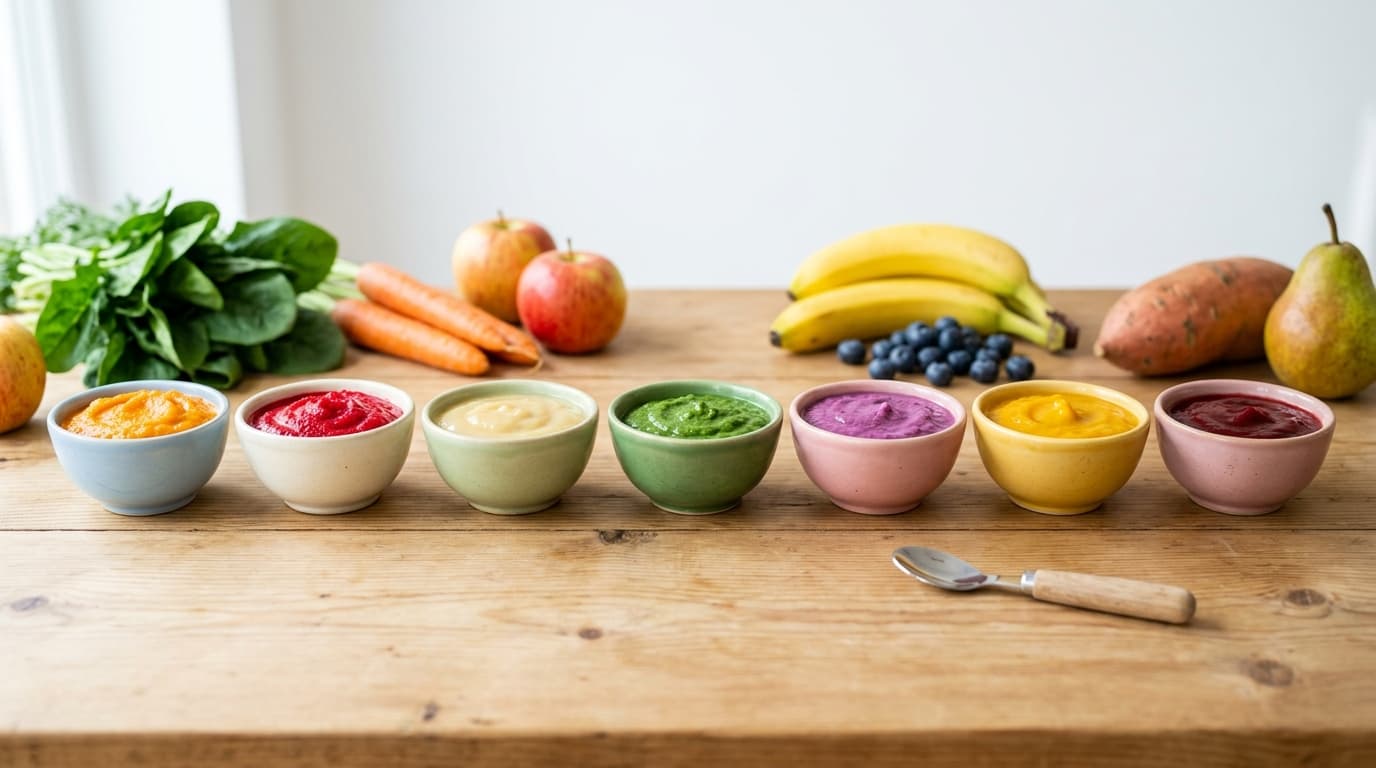
- Suction bowls and plates
- Sippy cup or straw cup for water
- Baby food maker or regular blender
9-12 months (expanding variety)
- More varied finger food options
- Reusable pouches for on-the-go
- Open cup training
- Snack containers
- Continue adding food variety (including early allergens)
12+ months (toddler transition)
- Transition to whole milk
- Phase out bottle (15-18 months goal)
- Toddler-style utensils
- Open cup mastery
- Family meal participation
Foods to delay or avoid by age
Don't give until 12 months:
- Honey (botulism risk)
- Cow's milk as a drink (small amounts in food OK)
- Added salt or sugar
Don't give until 4-5 years (choking hazards):
- Whole grapes
- Whole nuts
- Popcorn
- Hard candy
- Marshmallows
- Raw hard vegetables in chunks
Never give:
- Unpasteurized dairy
- Raw fish, eggs, or meat
- Home-canned foods
- Soft cheeses made from unpasteurized milk
Early allergen introduction (critical update)
Previous advice was to delay allergens. Current research shows the opposite is better. The LEAP study (Learning Early About Peanut Allergy) showed early introduction reduces allergy risk.
Introduce these between 4-11 months:
- Peanuts (as thinned peanut butter or Bamba puffs — NEVER whole peanuts)
- Eggs (fully cooked)
- Dairy (yogurt, cheese — but not cow's milk as a drink)
- Wheat
- Fish and shellfish (soft-cooked, boneless)
- Soy
- Sesame
- Tree nuts (as thinned nut butters)
How to introduce safely:
- Start after baby has tolerated a few other solids
- Introduce one new allergen per 3-4 day window
- First exposure in the morning (easier to watch all day)
- Start with small amount (¼ teaspoon)
- Gradually increase and reintroduce 2-3 times per week to maintain tolerance
Watch for:
- Hives or rash
- Vomiting (more than typical spit-up)
- Wheezing or difficulty breathing
- Extreme fussiness after eating
- Face swelling
High-risk babies (eczema or existing food allergy) should consult their pediatrician before introducing allergens.
Cluster articles
- Breastfeeding Essentials Gear — nursing pillow, pump, bras, and more
- Bottle Feeding Essentials — bottles, sterilizers, nipples, warmer options
- Starting Solids: Baby-Led Weaning Guide — BLW method from start to finish
- First Foods & Allergen Introduction — safe starting foods and allergen timing
Common feeding mistakes
- Starting solids before 6 months — increases allergy and obesity risk
- Skipping iron-rich first foods — iron is the nutrient babies need most from solids
- Salt or sugar in baby food — kidneys can't handle it
- Propping bottles — aspiration and choking risk
- Giving water before 6 months — can cause hyponatremia
- Delaying allergen introduction — current research supports early introduction
- Forcing baby to "finish" a bottle or solid meal — teaches disconnected eating
- Comparing your baby's intake to others — variations are normal
FAQ
How much formula does my baby need? Roughly 2-3 oz per pound of body weight per day, split across feedings. A 10 lb baby typically takes 20-30 oz total per day. Check with your pediatrician for specifics.
How often should I feed a newborn? On demand — roughly every 2-3 hours in the first weeks, with cluster feeding especially in the evenings. By 6-8 weeks, stretches may extend to 3-4 hours during the day.
What if my baby refuses solids? It's common in the first 2-3 weeks of starting. Keep offering without pressure. Most babies warm up to solids within 2-4 weeks.
When should I introduce water? After 6 months, small amounts (2-4 oz per day) with meals. Not before 6 months.
Should I be worried about formula shortages? If you experience a shortage, talk to your pediatrician about safe alternatives. Don't water down formula or switch to cow's milk before 12 months.
When do I stop night feeds? Most babies can physically go 6+ hours without a feed by 4-6 months, but emotional need varies. Talk to your pediatrician about your specific baby.
Bottom line
Baby feeding doesn't have to be stressful. Pick an approach (breast, bottle, or combo), focus on responsive feeding, introduce solids around 6 months following AAP guidelines, introduce allergens early, and trust that a fed baby is a healthy baby.
Related reading:
Research Sources
Hilly Shore Inc.
Editorial teamIndependent product research team behind Cribworthy. Reviews are grounded in published AAP / CDC / NHTSA / CPSC pediatric guidance, JPMA / GREENGUARD GOLD / OEKO-TEX certification verification, and aggregated buyer sentiment.
122 products reviewed · 22 categories covered · cites AAP, CDC, NHTSA, CPSC, FDA, ACOG.
Safety claims are verified against published pediatric guidelines and CPSC databases. See our editorial standards.