Month 6: Starting Solids, High Chairs, and First Foods
Quick Answer
Start solids when your baby sits with minimal support, holds their head steady, brings objects to their mouth, and tracks your food — usually right around six months rather than on a calendar date. Lead with iron: fortified cereal, pureed meat, or lentils. Bring peanut and egg in during these first weeks instead of waiting. Honey and cow's milk as a drink wait for twelve months.
Our Verdict
Purees versus finger foods barely matters; the gap between them is small and most households wind up doing both by month seven. What does matter is iron, early allergen exposure, and a seat that puts your baby's feet on a footrest with hips at ninety degrees. Buy the high chair you can hose off, not the one that matches your kitchen cabinets.
Key Takeaways
- ✓Month 6 is one of the most exciting milestones of the first year: starting solids. It's messy, entertaining, and the beginning of a whole new feeding adventure.
- ✓If baby is 6 months and doesn't meet all criteria, wait another 2-4 weeks and reassess. No rush.
- ✓There are three approaches. All can work. All are safe when done correctly. Most families land on a combo approach.
- ✓Gagging: Loud, red face, sometimes vomiting. The gag reflex is protective — it's moving food away from the airway. Do NOT intervene. Baby is working through it.
- ✓At 6 months, solid food is SUPPLEMENTAL, not replacing milk feeds. The phrase is: "Food before one is just for fun."
As an Amazon Associate I earn from qualifying purchases. Product prices and availability are subject to change.
Month 6: Starting Solids, High Chairs, and the First Foods
Month 6 is one of the most exciting milestones of the first year: starting solids. It's messy, entertaining, and the beginning of a whole new feeding adventure. This guide covers the AAP readiness checklist, honest pros and cons of baby-led weaning vs purees, high chair picks, and a safe first-foods list including early allergen introduction.
What's happening at 6 months
Physical milestones:
- Sits with minimal support (essential for safe solids)
- Brings things to mouth deliberately
- Turns head to follow interesting objects
- Recognizes familiar faces clearly
- Babbles with consonants ("bababa", "dada", "mama" — not yet specific)
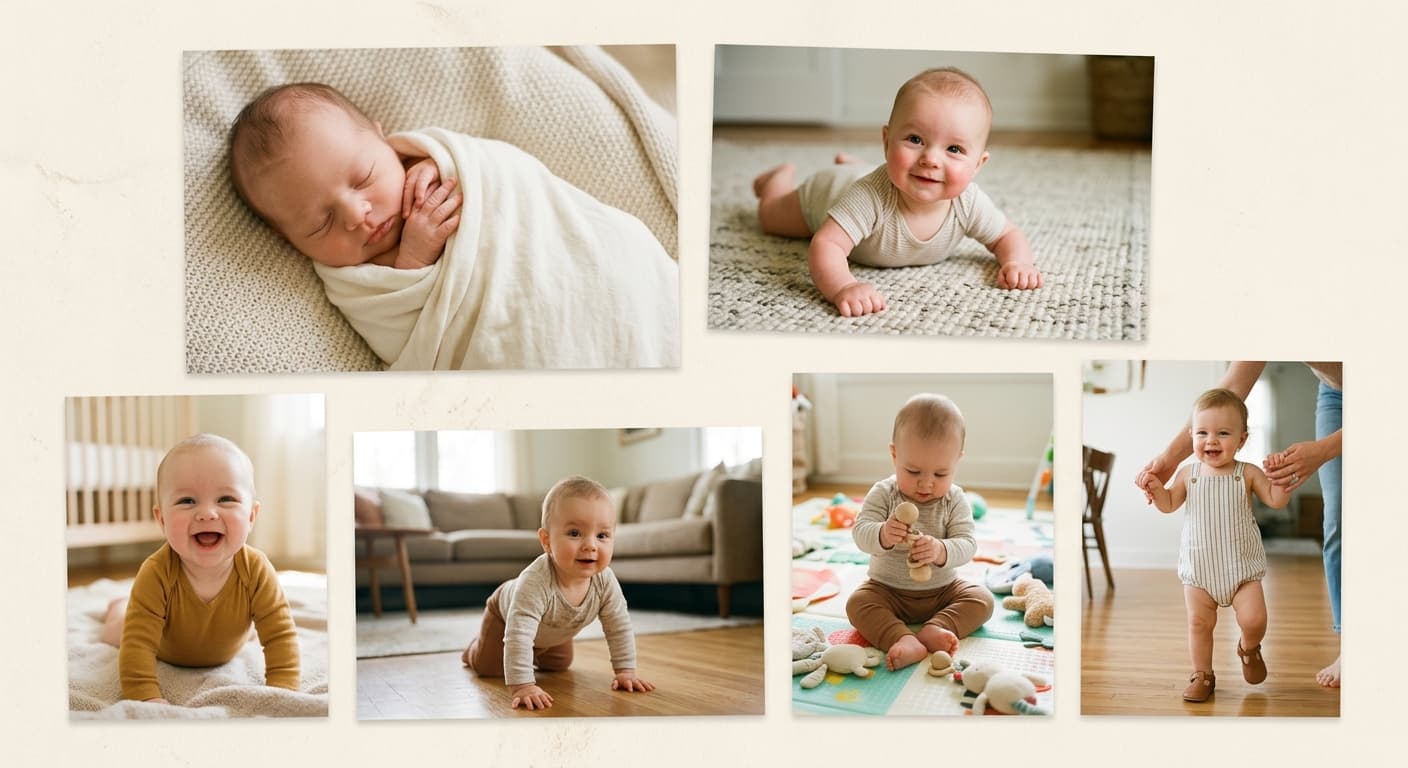
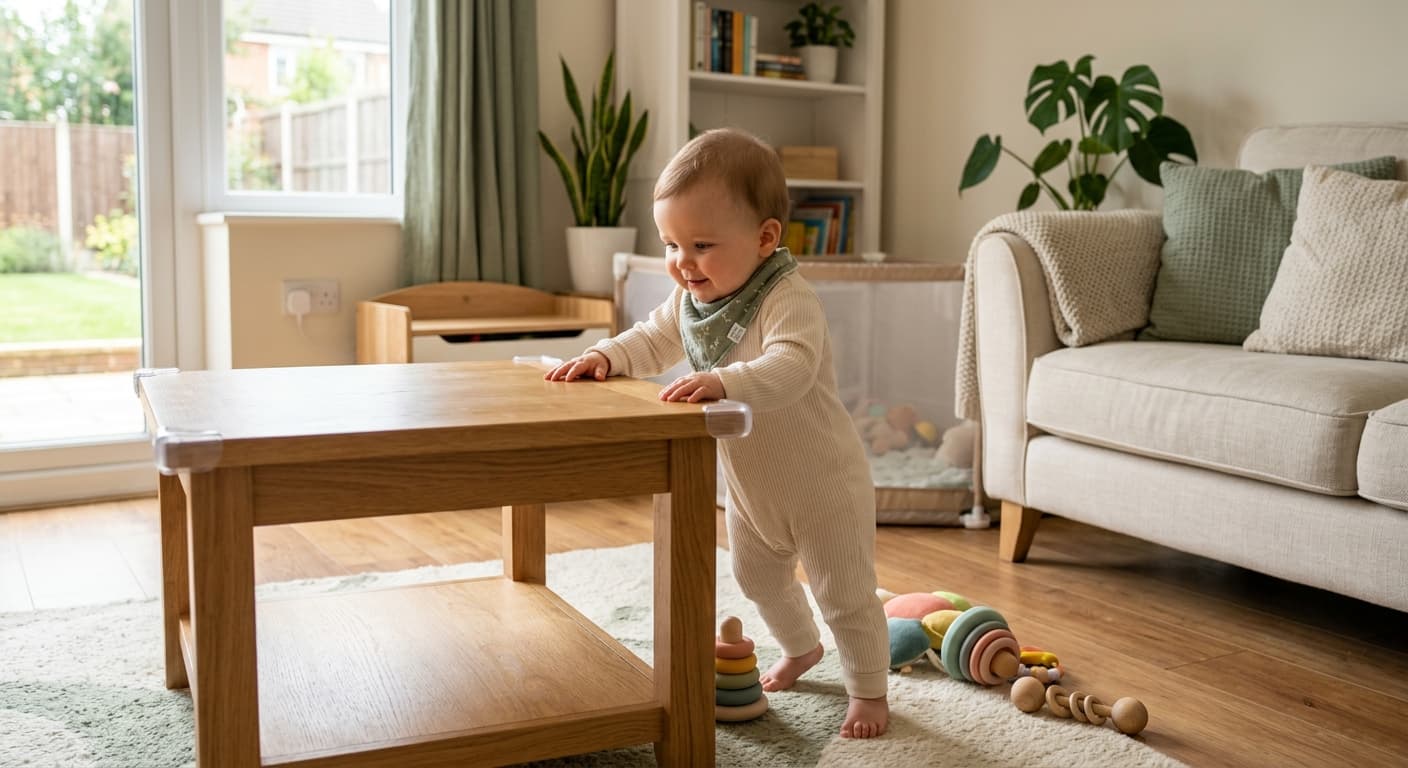
- Some babies are starting to crawl
- Grabs feet and rolls easily
- First tooth may be on its way (ranges widely — some babies don't teethe until 9-12 months)
Sleep:
- Most babies are on 2-3 naps
- Longer night stretches for many (8-10 hours with or without one wake)
- Wake windows: 2.5-3 hours
The AAP starting-solids readiness checklist
Don't start solids based on age alone. Per AAP guidelines, check for these signs before starting:
- Baby is at least 6 months old (earlier than 4 months is clearly unsafe; between 4-6 months is controversial)
- Can sit upright with minimal support (prevents choking)
- Has good head and neck control
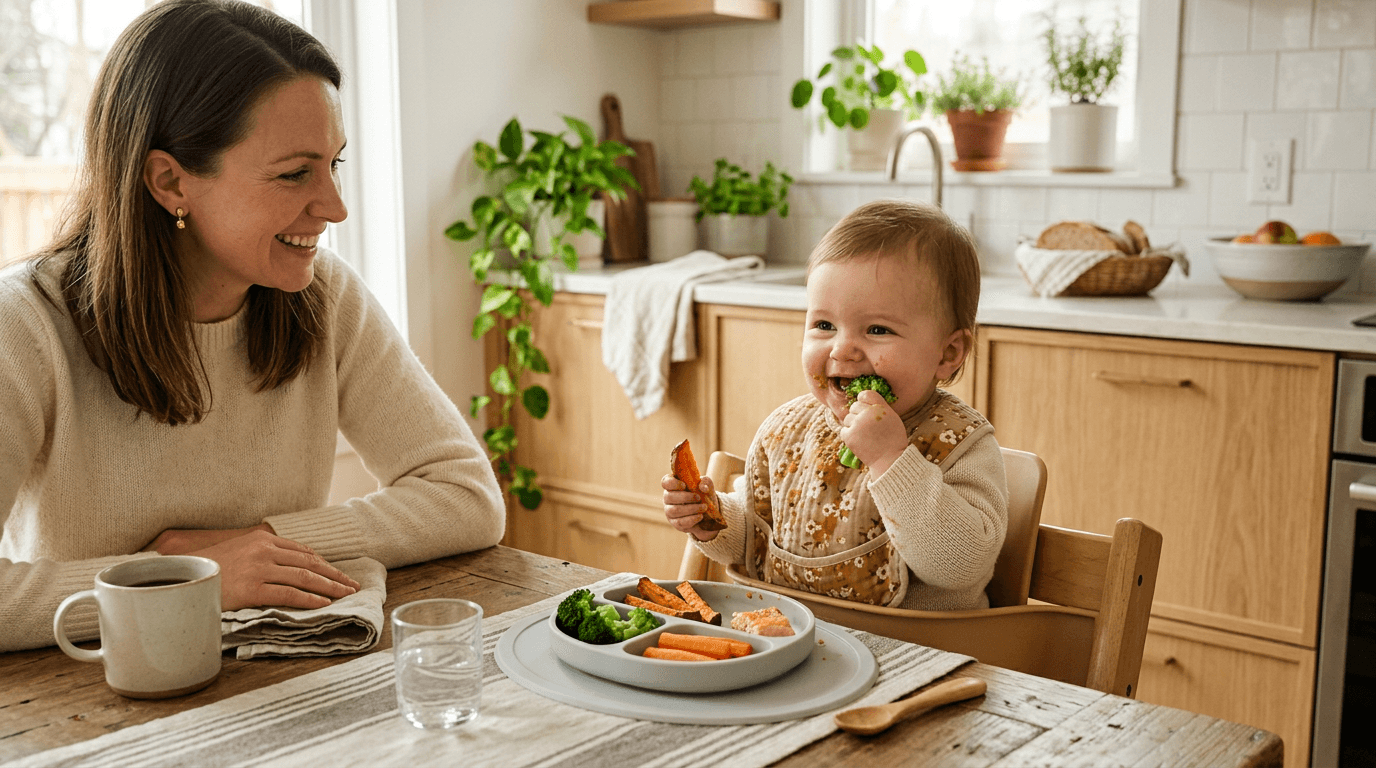
- Shows interest in food — watching you eat, reaching for food, opening mouth at the sight of food
- Has lost the tongue-thrust reflex — can move food from the front to the back of the mouth instead of pushing it out
- Is about double their birth weight
- Pediatrician has cleared starting (typically at the 4 or 6 month visit)
If baby is 6 months and doesn't meet all criteria, wait another 2-4 weeks and reassess. No rush.
Baby-led weaning (BLW) vs purees vs combo
There are three approaches. All can work. All are safe when done correctly. Most families land on a combo approach.
Baby-led weaning (BLW)
What it is: Skip purees entirely. Offer baby soft, whole foods in safe shapes (strips of avocado, steamed carrot sticks, soft pieces of banana) and let baby feed themselves from the start. Our baby-led weaning first foods guide lists what to serve at 6, 7, 8 and 9 months, with safe cutting shapes.
Pros:
- Baby learns self-feeding from day 1
- Exposes baby to textures and flavors earlier
- Makes family meals simpler — baby eats what you eat
- Research suggests it may reduce picky eating later
- No separate baby food prep
Cons:
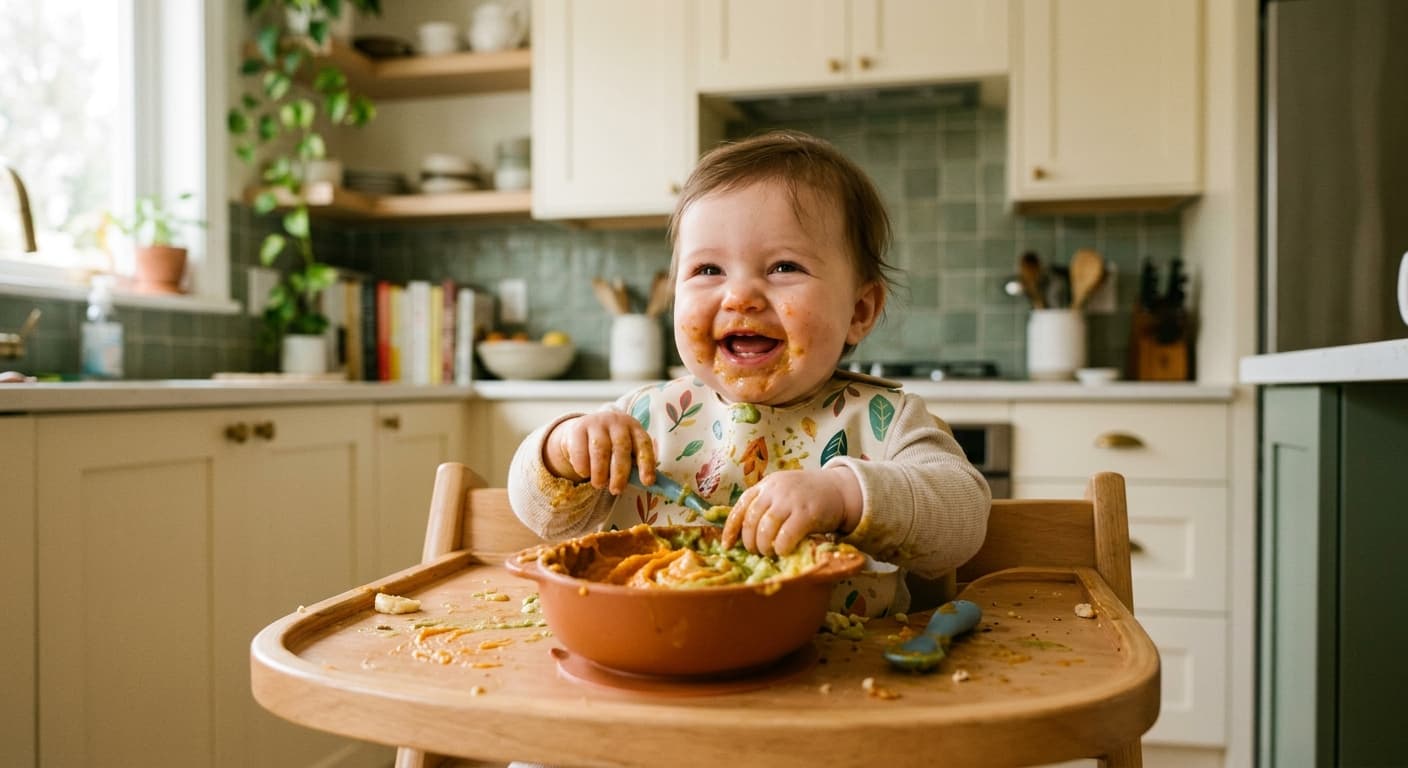
- Messy (really messy)
- Gag reflex is VERY active — parents must understand gagging vs choking (they're different)
- Slower weight gain in early weeks compared to purees
- Some daycares don't allow BLW
Best for: Parents who can tolerate mess, who have done their choking vs gagging research, and who value the independence aspect.
Puree / traditional spoon-feeding
What it is: Smooth purees (homemade or store-bought) spoon-fed by parents, gradually advancing to thicker textures and small pieces over 2-4 months.
Pros:
- Less messy initially
- Easier to track intake
- Familiar to grandparents and many daycares
- Less choking anxiety
Cons:
- Baby is passive — doesn't learn self-feeding as early
- Requires separate prep (or buying pouches, which add up in cost)
- Transition to textures still required eventually
Best for: Parents who prefer structure, babies with slower oral-motor development, or daycare situations.
Combo (what most parents actually do)
Offer purees AND BLW-style pieces. Spoon-feed purees, then let baby pick up pieces of soft food. Best of both worlds for most families.
Your starting solids kit
High chair (pick one)
- IKEA Antilop ($30) — no frills, wipe-clean, fits anywhere. Wildly popular for a reason.
- Graco Blossom 6-in-1 ($170) — grows with child, multiple configurations
- Stokke Tripp Trapp ($250) — premium, grows to adult chair, lasts forever
Feeding essentials
- 5-6 silicone bibs (Bumkins, Happy Healthy Parent)
- Soft-tipped spoons (OXO Tot, NumNum)
- Suction bowls/plates (EZPZ, Munchkin Stay Put)
- Sippy cup or open cup for water (start training around 6 months)
- Reusable pouches (if doing purees on the go)
Cleanup gear (you'll need it)
- Silicone floor splat mat (one-time purchase, saves sanity)
- Full-coverage bib or smock (Bumkins sleeved bibs for BLW)
- Wipeable placemat
First foods: a safe starting list
Traditionally "first foods" (all are fine)
- Iron-rich foods first — AAP recommends iron-fortified infant cereal, pureed meat, or well-mashed iron-rich legumes as first foods
- Avocado (soft, easy to grip in BLW)
- Banana (soft, naturally sweet)
- Sweet potato (mashed or roasted strips)
- Butternut squash
- Pear and apple (cooked and mashed)
- Oatmeal cereal (iron-fortified)
- Peas (mashed)
Foods to START (yes, START) at 6 months
The LEAP study and subsequent research showed that early allergen introduction prevents allergies. Previously, parents were told to delay; current AAP/NIAID guidelines say the opposite.
Start these by 6-11 months:
- Peanuts (in the form of thinned peanut butter or Bamba puffs — NOT whole peanuts)
- Eggs (well-cooked, full egg including yolk)
- Dairy (yogurt, cheese — but not cow's milk as a drink until 12 months)
- Wheat (in infant cereals, then pastas)
- Fish and shellfish (soft-cooked, boneless)
- Soy (edamame mashed, tofu)
- Sesame (in hummus or tahini)
- Tree nuts (in thinned nut butters)
How to introduce allergens safely:
- Introduce one new allergen per 3-day window
- First thing in the morning (so you can watch baby all day)
- Small amount first (¼ teaspoon)
- Watch for reaction (hives, vomiting, extreme fussiness, difficulty breathing)
- If no reaction, gradually increase and introduce regularly (2-3 times per week to maintain tolerance)
High-risk babies (eczema, egg allergy) should talk to their pediatrician before introducing peanuts.
Foods to AVOID at 6-12 months
- Honey — botulism risk until age 1
- Cow's milk as a drink — small amounts in food OK, but no bottle of cow's milk until 12 months
- Salt — no added salt to baby's food
- Sugar — no added sugar
- Choking hazards — whole grapes, whole nuts, popcorn, hard candy, raw hard vegetables in chunks
- Raw fish/eggs
- Unpasteurized dairy
- Home-preserved meats and vegetables (botulism risk)
Choking vs gagging (essential knowledge)
Gagging: Loud, red face, sometimes vomiting. The gag reflex is protective — it's moving food away from the airway. Do NOT intervene. Baby is working through it.
Choking: Silent, blue lips, no sound. This is a medical emergency. Act immediately.
Before starting solids, take an infant CPR class. Red Cross and American Heart Association offer them. Hospitals often have free versions for new parents.
How much and how often
At 6 months, solid food is SUPPLEMENTAL, not replacing milk feeds. The phrase is: "Food before one is just for fun."
- Start with 1 meal per day
- Progress to 2 meals per day by 7-8 months
- 3 meals per day by 9-10 months
- Breast milk or formula is still the primary nutrition source through 12 months
Don't stress about amounts. A few bites is a win in week 1.
Common month 6 mistakes
-
Stressing about amounts eaten. The goal at 6 months is exposure, not calories.
-
Skipping iron-rich foods. Iron is the nutrient babies actually need from solids. Prioritize it.
-
Avoiding allergens. Current research strongly supports early introduction.
-
Confusing gagging with choking. Take an infant CPR class.
-
Salt or sugar on baby food. Baby's kidneys can't handle it. No seasoning.
-
Giving up after week 1. Most babies take 10-15 exposures to a new food before accepting it.
Month 6 to-dos
- 6-month well-child visit
- High chair set up and baby-fitted
- Feeding kit purchased
- Infant CPR class (if not already)
- First foods shopping list
- Start solids once pediatrician clears it
- Introduce peanuts within the first few weeks
Related reading:
Hilly Shore Inc.
Editorial teamIndependent product research team behind Cribworthy. Reviews are grounded in published AAP / CDC / NHTSA / CPSC pediatric guidance, JPMA / GREENGUARD GOLD / OEKO-TEX certification verification, and aggregated buyer sentiment.
122 products reviewed · 22 categories covered · cites AAP, CDC, NHTSA, CPSC, FDA, ACOG.
Safety claims are verified against published pediatric guidelines and CPSC databases. See our editorial standards.