Month 9: Pull to Stand, Cruising, and Full Baby-Proofing
Quick Answer
Nine months is when baby-proofing stops being optional: your baby pulls to stand, cruises furniture, and reaches anything at coffee-table height. Anchor every dresser, bookshelf, and television, hardware-mount gates at the top and bottom of stairs, lock the cabinets holding cleaners and medication, and move small objects up. Most babies are still on two naps here, with longer nights.
Our Verdict
Do the anchoring and the stair gates this month, even if nobody is walking yet — cruising is more than enough force to bring a dresser down. Push-along toys are fine; sit-in wheeled walkers are not, and no product speeds up walking anyway. Save shoes until your child is outdoors on their own feet, which is frequently months further out than parents expect.
Key Takeaways
- ✓Month 9 is when your baby becomes a tiny mobile menace. They're crawling everywhere, pulling to stand on any surface, and starting to cruise along furniture. This is the month baby-proofing becomes urgent, not optional.
- ✓Now is the time. Your baby can reach, grab, pull, and climb — and they don't understand danger yet.
- ✓This doesn't cover every room perfectly but gets the dangerous stuff covered.
- ✓Most babies are sleeping 10-11 hours at night with 1-2 wake-ups maximum. Two naps totaling 3-4 hours of day sleep.
- ✓Month 9 is all about managing the mobile baby. Baby-proofing now prevents scary moments later. The pull-to-stand milestone is exciting but also dangerous — make sure your home is ready.
As an Amazon Associate I earn from qualifying purchases. Product prices and availability are subject to change.
Month 9: Pull to Stand, Cruising, and Full Baby-Proofing Crunch Time
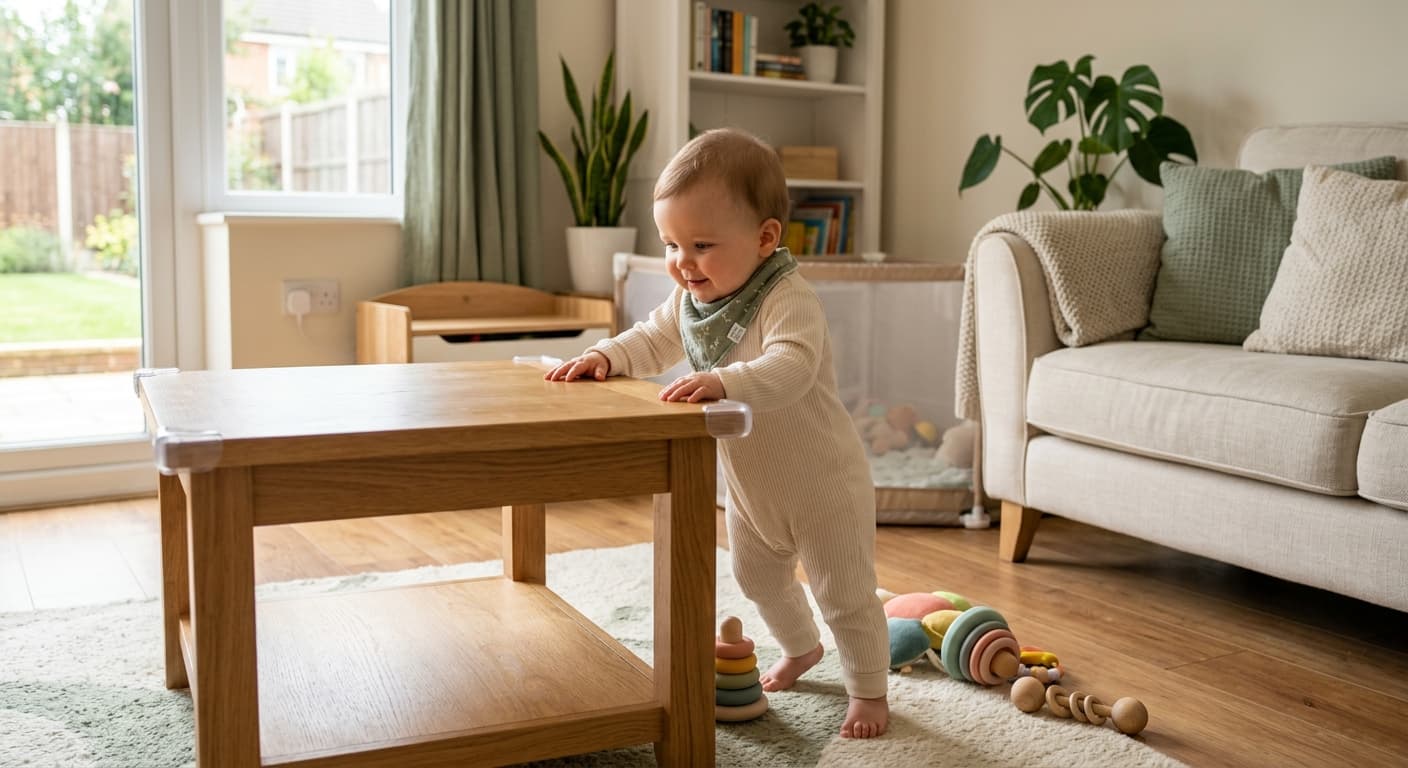
Month 9 is when your baby becomes a tiny mobile menace. They're crawling everywhere, pulling to stand on any surface, and starting to cruise along furniture. This is the month baby-proofing becomes urgent, not optional.
What's happening at 9 months
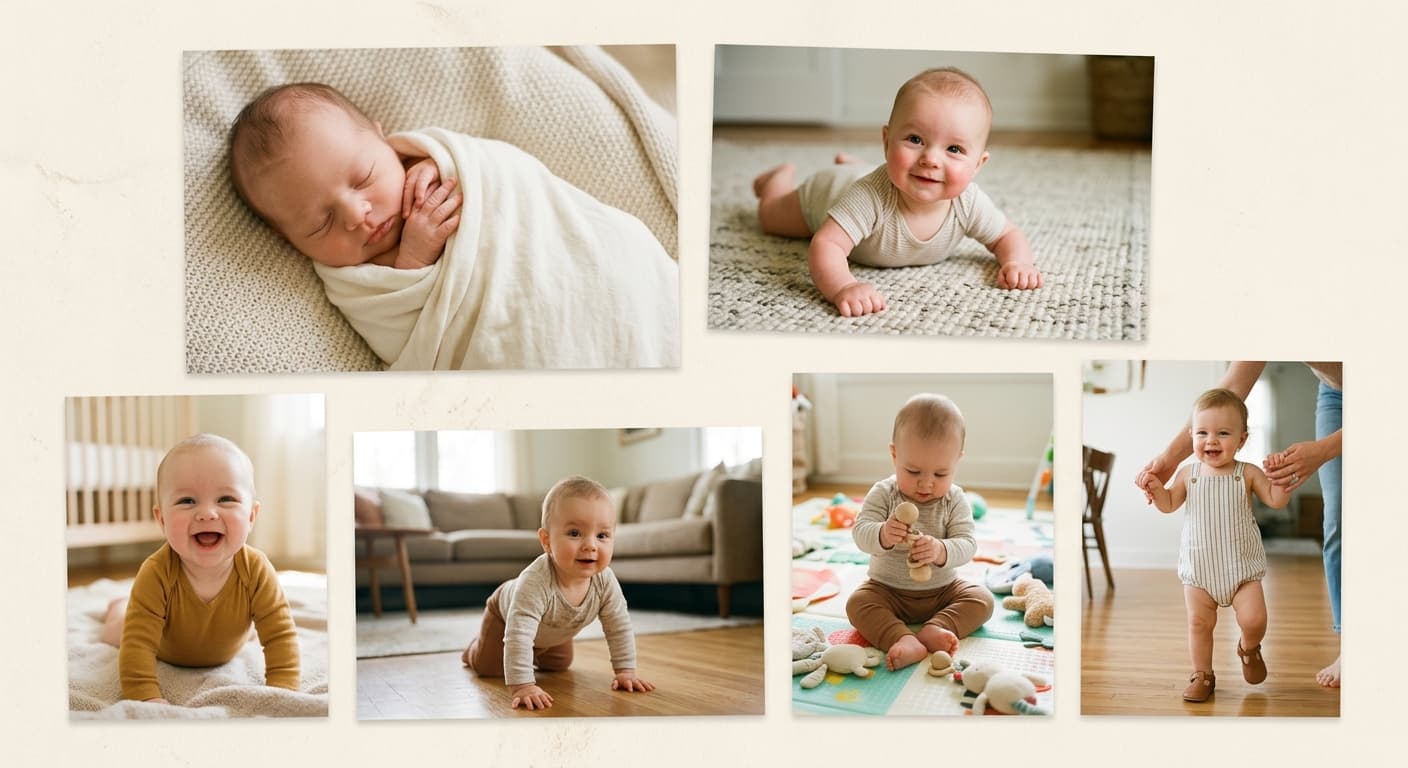
Physical milestones:
- Sitting independently with ease
- Crawling confidently (or scooting — all forms count)
- Pulling to stand using any furniture within reach
- Cruising along couches, coffee tables, etc.
- Pincer grasp developing (thumb + index finger)
- Feeding themselves with fingers
- Clapping, waving
- Understanding simple words ("no", their name)
- Babbling more purposefully ("mama", "dada" may be specific)
Sleep:
- Most babies on 2 naps
- Nights are generally longer (though 8-month regression may still be lingering)
- Bedtime routine is critical for consistency
Feeding:
- 2-3 solid meals per day
- Self-feeding more finger foods
- Still getting most calories from milk
The baby-proofing checklist
Now is the time. Your baby can reach, grab, pull, and climb — and they don't understand danger yet.
Immediate priorities (do these first)
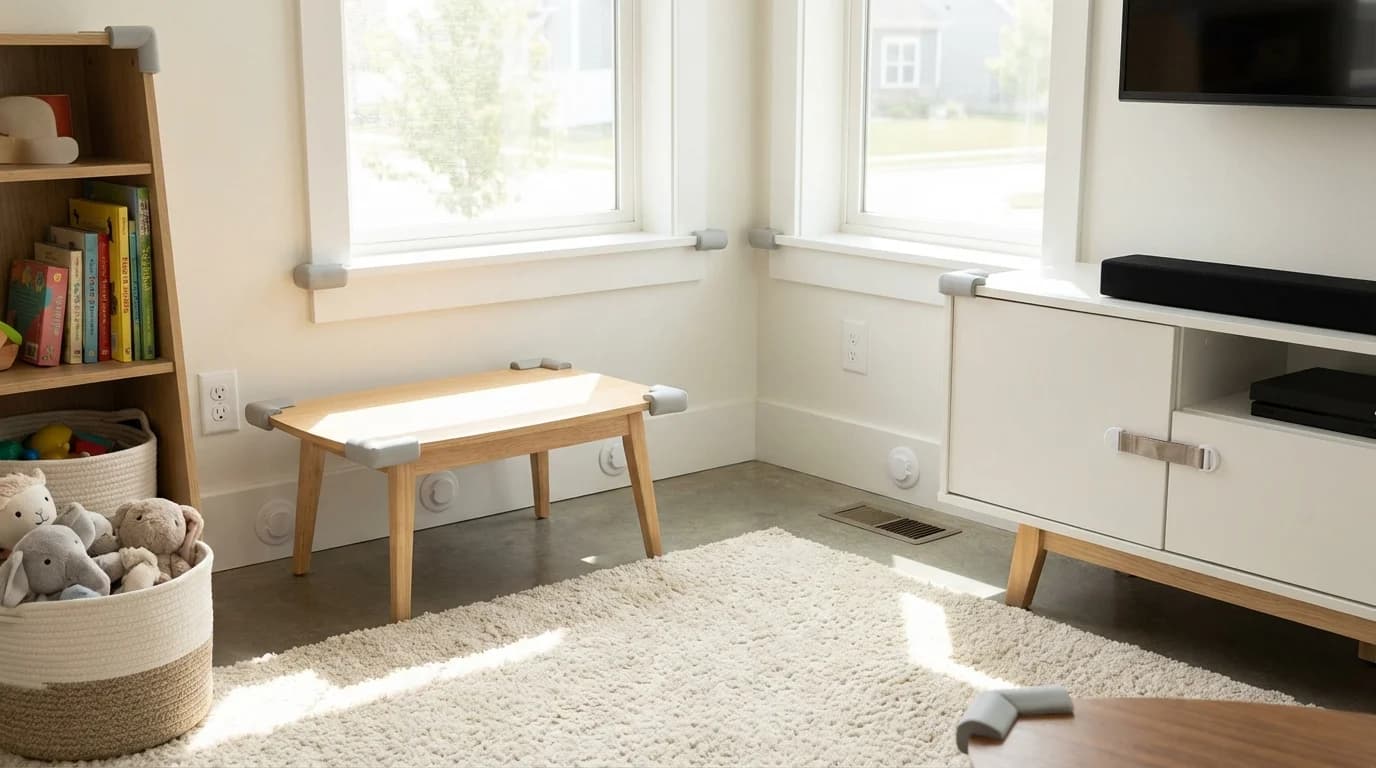
- Anchor all dressers and tall furniture to walls (anti-tip kits — cheap, life-saving)
- Install baby gates at stairs (Regalo Easy Step is the go-to, $35-45)
- Outlet covers on every accessible outlet (box of 50 for $8)
- Cabinet locks on anything with dangerous items (magnetic ones from Safety 1st are best)
- Toilet locks (no one likes them but they work)
- Drawer locks on kitchen drawers with knives or sharp tools
- Cord wrappers for blinds (strangulation risk)
- TV wall mounts or anchoring straps (TVs fall on babies)
- Pot handles turned inward on the stove (habit, not product)
- Stair gates — pressure-mounted for between rooms, hardware-mounted at stairs
Second wave (do within 2 weeks)
- Corner guards on sharp furniture edges
- Door stoppers (finger protection on hinges)
- Knob covers for doors you don't want opened
- Bath water thermometer and anti-scald kitchen/bath faucets (or just set water heater to 120°F max)
- Refrigerator latch (maybe — depends on baby's curiosity level)
- Oven lock
- Fireplace padding or full barrier
- Window locks (babies can climb onto chairs/ottomans)
- Stove knob covers (gas stoves especially)
Move dangerous items UP
- Cleaning supplies (poison control calls: every 30 seconds in the US — most from children)
- Medications (including your purse)
- Small objects (choking hazards — pennies, buttons, magnets)
- Plants (many are toxic)
- Small decorative items
- Anything breakable
- Laptop cords, phone chargers (baby will chew them)
Shopping list for baby-proofing
Here's a realistic baby-proofing starter pack:
| Item | Brand | Cost |
|---|---|---|
| Furniture anchor straps (8) | Safety 1st | $15 |
| Outlet covers (48) | Safety 1st | $8 |
| Magnetic cabinet locks (12) | Safety 1st | $30 |
| Toilet lock | Safety 1st | $10 |
| Corner guards (16) | Safe-O-Kid | $12 |
| Door stoppers (8) | Munchkin | $10 |
| Stair gate | Regalo Easy Step | $40 |
| 2nd stair gate | Summer Infant | $35 |
| Cord wrappers (10) | Generic | $10 |
| TV anti-tip strap | Safety 1st | $8 |
| Total | $178 |
This doesn't cover every room perfectly but gets the dangerous stuff covered.
Cruising milestones
Once baby is cruising, walking is 1-4 months away (typical range: 10-14 months). Signs they're getting close:
- Letting go briefly while standing
- Squatting to pick things up from the floor
- Walking along with support from both hands
- Standing alone for brief moments
Walking gear (mostly don't need yet)
Skip:
- Baby walkers with wheels (banned in Canada, discouraged in US — injury risk)
- Fancy walking shoes
- Walking toys with lights and music (not needed)
Helpful if you want:
- Push toys (VTech Sit-to-Stand Learning Walker, $40) — assists balance
- Soft shoes for cold outdoor days (barefoot is still best indoors)
Sleep at 9 months
Most babies are sleeping 10-11 hours at night with 1-2 wake-ups maximum. Two naps totaling 3-4 hours of day sleep.
Typical 9-month schedule:
- 7:00 AM Wake
- 9:30 Nap 1 (60-90 min)
- 1:30 PM Nap 2 (90-120 min)
- 7:00 PM Bedtime
Common 9-month issues:
- Separation anxiety peak — baby is aware you leave. Bedtime may become harder.
- Pulling up in crib — baby stands in crib at night. Don't make it a habit to rescue them. They'll lie back down.
- 8-month regression tail end — may still be lingering
Do NOT drop to 1 nap yet. Most babies need 2 naps until 13-18 months.
Daily rhythm at 9 months
Morning:
- Wake, diaper, breastfeed/bottle
- Breakfast (solids)
- Play time
- First nap
Midday:
- Wake, bottle/milk
- Lunch (solids)
- Play, stroll outside
- Second nap
Afternoon/evening:
- Wake, milk
- Play, family interaction
- Dinner (solids with family when possible)
- Bath, bedtime routine, bottle, bed
Red flags at 9 months (talk to pediatrician)
- Not sitting independently
- No crawling or alternative mobility
- Not making eye contact
- Not responding to their name
- Not babbling
- Seems "floppy" or "stiff"
- Not transferring objects between hands
- Losing skills they previously had
Month 9 to-dos
- 9-month well-child visit
- Full baby-proofing complete (don't wait)
- Stair gates installed
- Dangerous items moved UP
- Review sleep schedule — still 2 naps
- Expand food variety (baby can handle most family foods now)
- Start reading board books daily
Bottom line
Month 9 is all about managing the mobile baby. Baby-proofing now prevents scary moments later. The pull-to-stand milestone is exciting but also dangerous — make sure your home is ready.
Related reading:
Baby proofing tip nobody mentions: anchor ALL your furniture to the wall. Not just bookshelves. Dressers tip over too.
Paraphrased community consensus — not a direct quote.
Hilly Shore Inc.
Editorial teamIndependent product research team behind Cribworthy. Reviews are grounded in published AAP / CDC / NHTSA / CPSC pediatric guidance, JPMA / GREENGUARD GOLD / OEKO-TEX certification verification, and aggregated buyer sentiment.
122 products reviewed · 22 categories covered · cites AAP, CDC, NHTSA, CPSC, FDA, ACOG.
Safety claims are verified against published pediatric guidelines and CPSC databases. See our editorial standards.