How to Babywear Safely: A Beginner's Guide to Carriers and Wraps
Quick Answer
Safe babywearing reduces to five checks made every single time the carrier goes on: tight, in view, close enough to kiss, chin off chest, and back supported. Your baby's face has to stay visible without moving any fabric, and the chin must never fold into the chest, which is how airways close inside soft carriers. Newborns ride facing inward, knees higher than the bottom.
Our Verdict
Start with a stretchy wrap for a newborn if you can tolerate the learning curve, choose a structured soft carrier when speed and longer walks matter more, and keep a ring sling for quick errands because it folds into a diaper bag. Avoid bag-style slings that curl an infant into a deep C shape. Take your child out of any carrier while they are congested or unwell.

As an Amazon Associate I earn from qualifying purchases. Product prices and availability are subject to change.
How to Babywear Safely: A Beginner's Guide to Carriers and Wraps
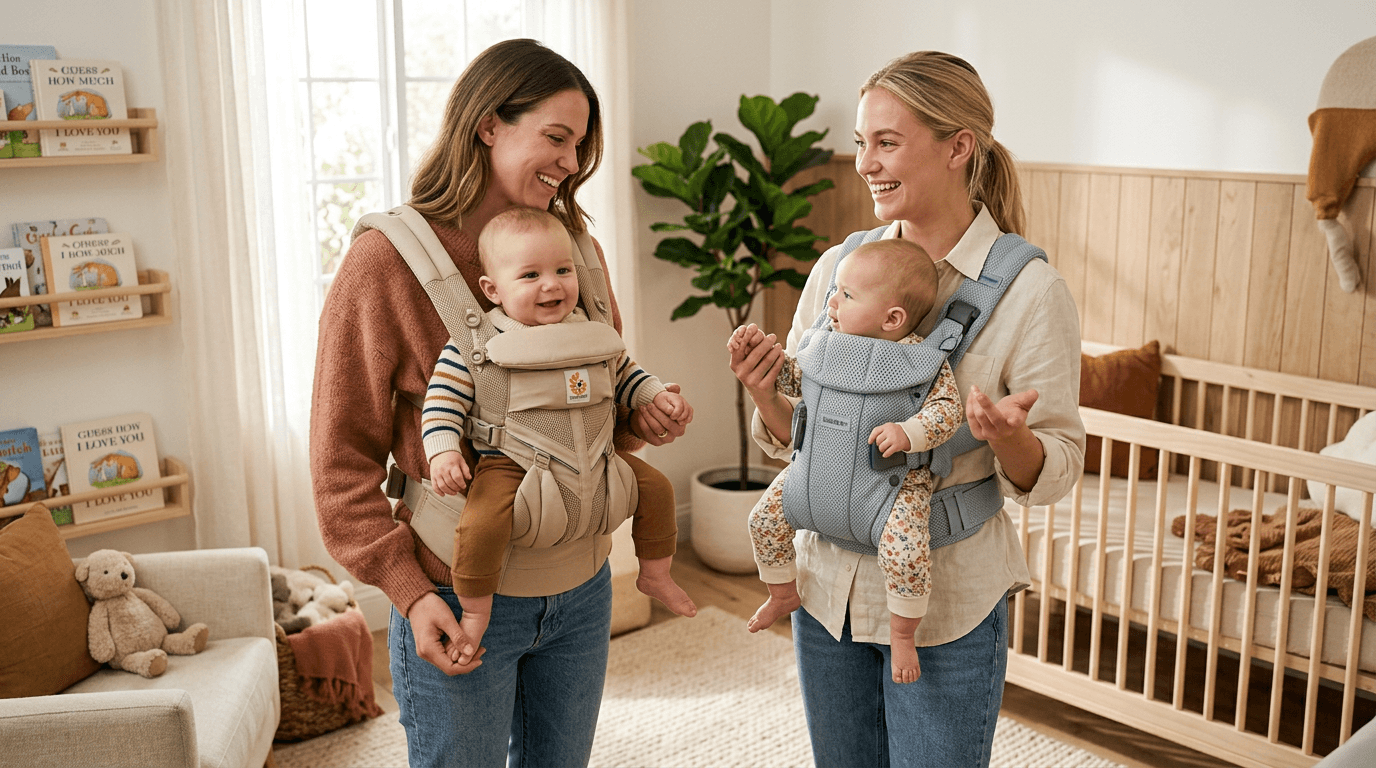
To babywear safely, follow the T.I.C.K.S. rule: keep the carrier Tight, baby In view at all times, Close enough to kiss, Keep chin off chest, and ensure a Supported back. For newborns, use a stretchy wrap or carrier with proper head support in a front inward-facing position. Always ensure baby's airway is clear and face is visible — you should be able to see your baby's face by glancing down without moving fabric.
The CPSC has documented serious injuries and deaths associated with improper baby carrier use, primarily involving positional asphyxiation in bag-style slings. A 2010 CPSC safety warning specifically addressed carriers that could cause an infant's face to press against fabric or the wearer's body, restricting breathing. Following the T.I.C.K.S. guidelines endorsed by pediatric safety organizations virtually eliminates these risks.
What are the benefits of babywearing?
Research consistently supports the developmental benefits of babywearing. A 1986 randomized trial in Pediatrics found that infants given extra daily carrying cried and fussed 43% less at 6 weeks. The AAP's Healthy Child Development guidelines note that close physical contact promotes secure attachment, regulates infant stress hormones, and supports early brain development.
Benefits for baby
- Close physical contact regulates body temperature, heart rate, and breathing
- Motion soothes fussiness and can reduce colic symptoms
- Carried babies tend to cry less (research supports this)
- Higher vantage point promotes cognitive development through environmental exposure
Benefits for parent
- Hands-free capability for everyday tasks
- Easier to navigate crowds, stairs, and public transit
- Promotes bonding and oxytocin release
- Can help with postpartum recovery by gently activating core muscles (once cleared by your doctor)
How do you choose your first baby carrier?
If you're new to babywearing, start with one carrier and learn it well before adding others. Our best baby carriers of 2026 guide covers specific product recommendations. Here's a quick decision tree:
If you want the easiest learning curve
Go with a structured soft carrier (SSC) like the Ergobaby Omni 360 or BabyBjörn Free. These buckle on intuitively and most parents feel confident within one or two tries. If fit across two very different body sizes is the worry, see how the WildBird Aerial and Mabē Monarch size up.
If you want the coziest newborn experience
A stretchy wrap like the Solly Baby Wrap or Boba Wrap creates a womb-like snuggle. The learning curve is steeper (plan to practice before baby arrives), but the newborn cuddle factor is unmatched.
If you want quick on-and-off
A ring sling like the Wildbird lets you pop baby in for short carries — grocery shopping, cooking dinner, soothing during fussy periods — and remove them quickly.
What is the T.I.C.K.S. rule for babywearing safety?
This is the universal safety framework for babywearing. Every carry should follow these principles:
The CPSC established mandatory safety standards for soft infant carriers (16 CFR 1226) in 2014, specifically addressing the risk of positional asphyxiation. The standard requires warning labels about suffocation risk and mandates structural testing. Between 2003 and 2016, the CPSC linked 14 infant deaths to sling-type carriers, nearly all in infants under 4 months who were positioned with their airway obstructed.
T — Tight
The carrier should be snug enough that baby is held close to your body. If you lean forward, baby shouldn't slump away from your chest. Tighten straps and fabric until baby feels securely hugged against you.
I — In view at all times
You should always be able to see baby's face by glancing down. Fabric, carrier panels, and your own body shouldn't cover their face.
C — Close enough to kiss
Baby's head should be positioned high enough on your chest that you can easily lean your chin down and kiss the top of their head. If they're too low, you need to tighten the carrier or adjust the waistband.
K — Keep chin off chest
Baby's chin should never be pressed against their chest, which can restrict their airway. There should always be at least a finger's width of space between chin and chest.
S — Supported back
Baby's back should be supported in a natural curved position. The carrier should hold them snugly but not force them into an unnaturally straight posture. For newborns, the spine should be in a C-curve.
What carrying positions are appropriate for each age?
Newborn (0-4 months)
Front inward-facing only. Baby should be in a deep seat with knees higher than their bottom (the M-position for hip health). Head should be supported by the carrier panel or your hand.
The International Hip Dysplasia Institute (IHDI) recommends that baby carriers support the infant's thighs in a spread-squat position with hips flexed and knees slightly higher than the buttocks (the "M-position"). This position promotes healthy hip joint development and reduces the risk of developmental dysplasia of the hip, which the AAP reports affects approximately 1-3% of newborns.
4-6 months
Front inward-facing remains the best option. Some carriers allow forward-facing from this age, but baby should have full head control first. Most babywearing experts recommend limiting forward-facing time to 15-20 minutes as it can be overstimulating.
6+ months
Front carry (inward or outward), hip carry with a ring sling, and back carry (once baby has solid trunk control) are all options. Back carrying is a game-changer for older, heavier babies — the weight distribution is much better.
What are the most common babywearing mistakes?
Carrier too loose
The most common error. If there's space between your body and baby's body, the carrier is too loose. This is uncomfortable for both of you and can be unsafe if baby slumps into an airway-compromising position.
Baby positioned too low
Baby's head should be at or above your chest. If you have to hunch over to see their face, they're too low. Adjust the waistband higher on your torso.
Ignoring the M-position
For hip health, baby's knees should be spread wide and positioned higher than their bottom, creating an M shape. Narrow-based carriers that let baby's legs dangle straight down are not recommended, especially for young babies.
Skipping the practice session
Don't try your carrier for the first time when baby is screaming. Practice with a stuffed animal or a willing doll, watch the manufacturer's tutorial videos, and do a test run when baby is calm and fed. Having a partner spot you the first few times builds confidence.
How does weather affect babywearing?
Hot weather
Use breathable mesh carriers and count the carrier as a layer of clothing. Dress baby lightly underneath. Watch for signs of overheating: flushed skin, sweating, fussiness. Carrier covers with UV protection help with sun exposure.
The AAP warns that infants are particularly susceptible to overheating because their thermoregulation is immature. When babywearing in warm weather, count the carrier as one layer of clothing. The CDC recommends avoiding prolonged outdoor activity in temperatures above 90°F, and the AAP advises checking baby's neck and back for sweat as indicators of overheating.
Cold weather
Layer baby's clothing and use a carrier-compatible coat or cover over both of you. Baby's extremities (hands, feet, head) should be covered. Don't zip baby inside your own coat in a way that obscures their face or compresses their chest.
When should you not babywear?
- When cooking near heat or open flames
- While eating very hot food or drinking hot beverages over baby
- While riding a bicycle, driving, or any wheeled activity
- If you're feeling dizzy, faint, or unwell
- If baby is showing signs of distress or overheating
Do you need more than one baby carrier?
Most dedicated babywearing parents end up with two or three carriers for different situations:
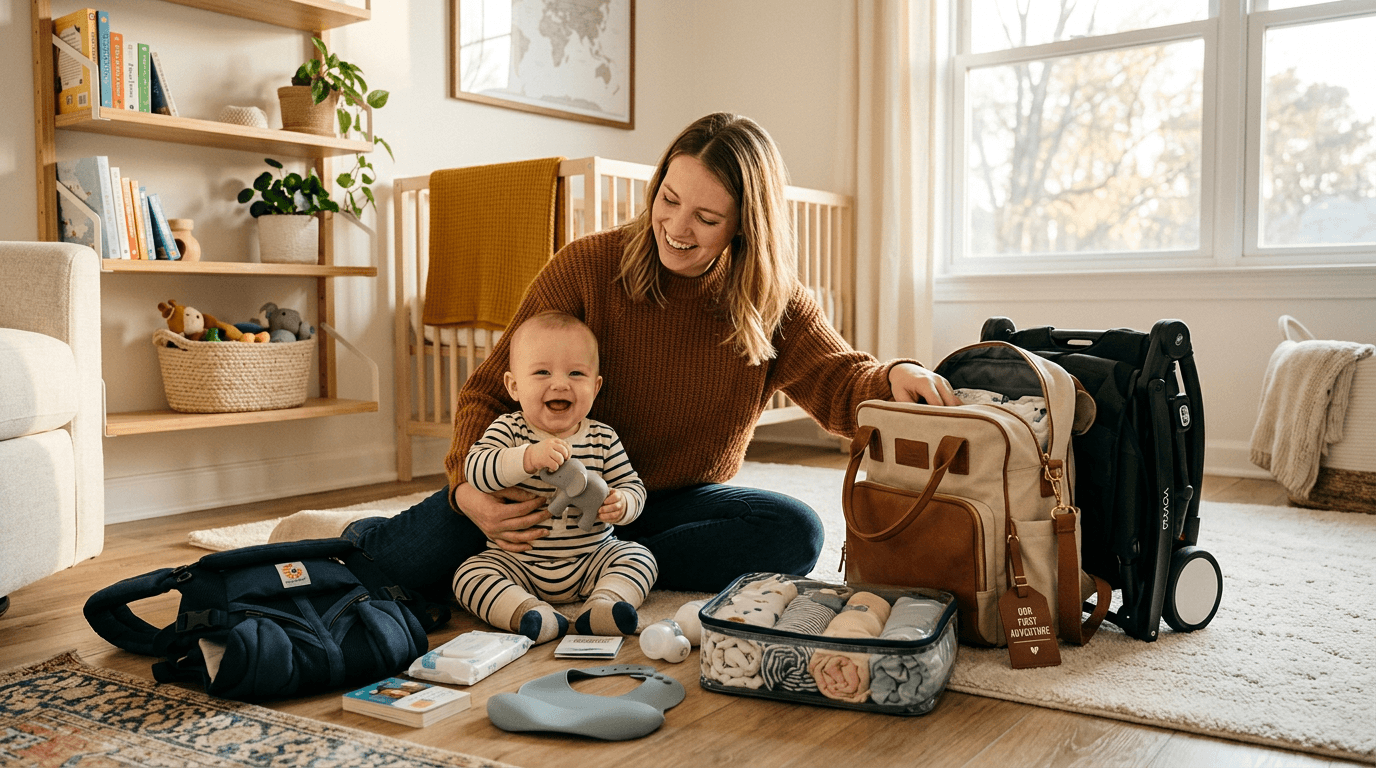
- Primary structured carrier (Ergobaby Omni 360 or similar) for long walks, errands, travel
- Ring sling (Wildbird or similar) for quick carries, hip carries, and toddler up-and-downs
- Optional: wrap for the newborn stage or a framed carrier for hiking
You don't need to buy everything at once. Start with one carrier, master it, and add based on what your life demands.
What's the most important thing to remember about babywearing?
Babywearing is safe, beneficial, and life-changing when done correctly. Start with the T.I.C.K.S. rule, practice before baby arrives, and choose a carrier that fits your body and lifestyle. Visit our baby carriers category for detailed reviews of every carrier we've reviewed.
Further Reading
Your next step
Ready to pick a carrier? Here are the safest picks.
Research Sources
- Baby Carriers: Backpacks, Front Packs & Slings - HealthyChildren.org (AAP)
- Sling Carriers Business Guidance (16 CFR part 1228, ASTM F2907) - U.S. CPSC
- Soft Infant and Toddler Carriers Business Guidance (16 CFR part 1226, ASTM F2236) - U.S. CPSC
- Increased carrying reduces infant crying: a randomized controlled trial — Pediatrics (1986), PubMed abstract
Hilly Shore Inc.
Editorial teamIndependent product research team behind Cribworthy. Reviews are grounded in published AAP / CDC / NHTSA / CPSC pediatric guidance, JPMA / GREENGUARD GOLD / OEKO-TEX certification verification, and aggregated buyer sentiment.
124 products reviewed · 22 categories covered · cites AAP, CDC, NHTSA, CPSC, FDA, ACOG.
Safety claims are verified against published pediatric guidelines and CPSC databases. See our editorial standards.