How to Start Baby-Led Weaning: A Practical Guide
Quick Answer
Around six months, once your baby sits upright with little help, reaches for your plate, and no longer pushes food back out with their tongue. Offer strips about the length of an adult finger — ripe avocado, steamed sweet potato, banana — and let them do the work. Trial data shows this is not riskier than spoon-feeding when hard, round, coin-shaped foods are excluded.
Our Verdict
Go this route if you want fewer dishes and are comfortable letting your baby set the pace; stay with purees if gagging frightens you or a swallowing concern has been flagged. Most households end up mixing both, and the evidence does not penalize that. The non-negotiables either way: an upright seat, nothing hard or coin-shaped, and an adult within arm's reach for every meal.
As an Amazon Associate I earn from qualifying purchases. Product prices and availability are subject to change.
How to Start Baby-Led Weaning: A Practical Guide
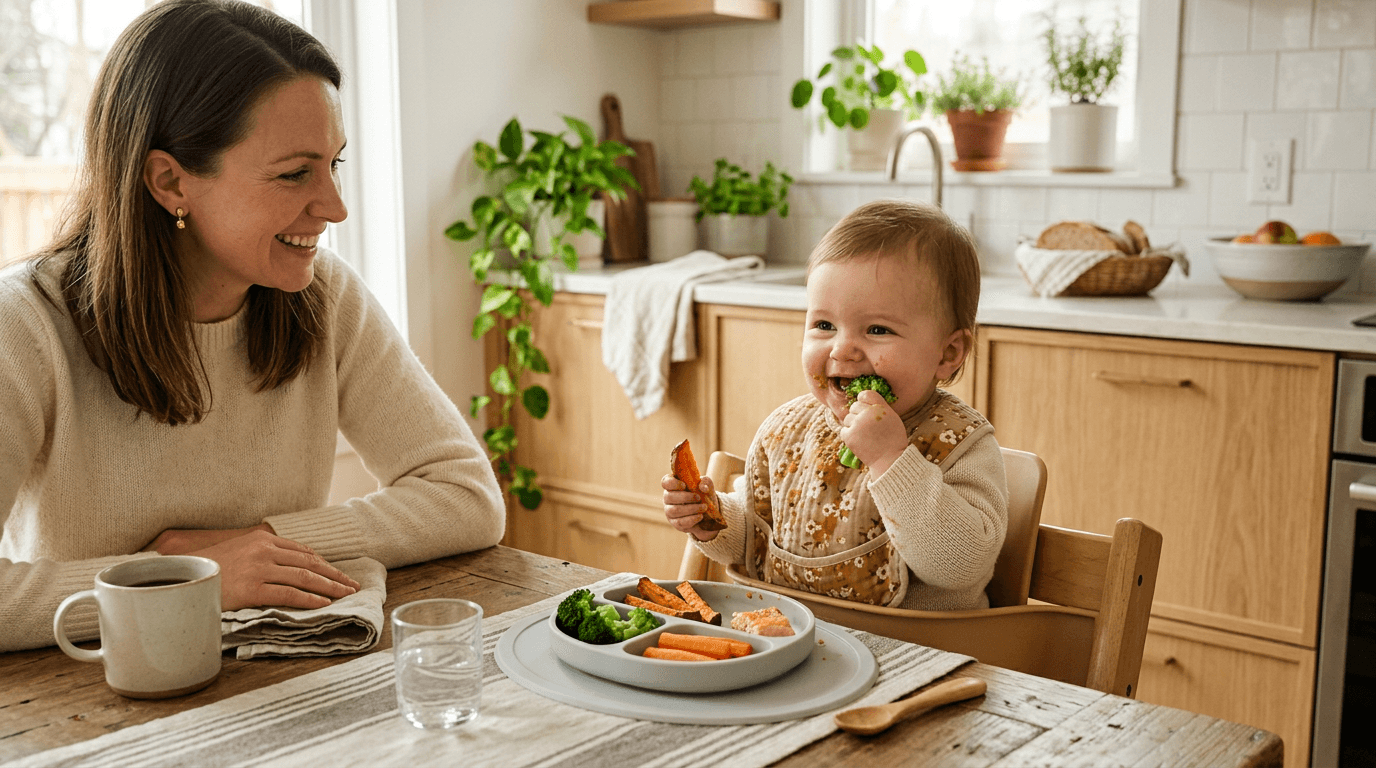
To start baby-led weaning (BLW), wait until your baby is at least 6 months old and showing readiness signs — sitting upright with minimal support, showing interest in food, and having lost the tongue-thrust reflex. Then offer soft, finger-sized pieces of whole foods (like ripe avocado strips, steamed sweet potato, or banana spears) and let baby self-feed at their own pace. Skip purées entirely or use them alongside finger foods.
The WHO and AAP both recommend introducing complementary foods at around 6 months of age. A 2016 randomized trial in Pediatrics, part of New Zealand's BLISS study, found that babies following a baby-led approach with advice on reducing choking risk were no more likely to choke than babies fed by traditional spoon-feeding.
What exactly is baby-led weaning?
Traditional weaning starts with spoon-fed purees and gradually introduces textures. Baby-led weaning flips this by offering soft, appropriately-sized finger foods from the beginning. Baby controls what goes in their mouth, how much they eat, and the pace. You provide safe, nutritious options; they explore.
The approach was popularized by British health visitor Gill Rapley. It's worth noting that BLW isn't all-or-nothing. Many families do a combination approach — some spoon-fed meals, some self-feeding meals. Do what works for your family and your baby.
When is a baby ready for baby-led weaning?
Most babies are ready for solids around six months. Look for these readiness signs:
The AAP and WHO both recommend introducing complementary foods at approximately 6 months of age — not before 4 months.
Physical readiness cues
- Can sit upright with minimal support
- Has lost the tongue-thrust reflex (doesn't automatically push food out with their tongue)
- Shows interest in food — watching you eat, reaching for your plate
- Can bring objects to their mouth
- Has reasonably good head control
Age alone isn't enough. Some babies are ready at 5.5 months, others closer to 7. Follow your baby's cues and talk to your pediatrician if you're unsure.
What gear do you need for baby-led weaning?
high chair
You need a high chair that positions baby upright at 90 degrees with feet supported. The Stokke Tripp Trapp and IKEA Antilop are both excellent choices. A footrest is important — try eating with your feet dangling and you'll understand why.
Suction plates and bowls
The ezpz Mini Mat and Bumkins suction plates stick to the high chair tray, preventing baby from launching their food across the room. They don't prevent it entirely, but they help.
Bibs with pockets
The BapronBaby and Bumkins sleeved bibs catch a lot of the mess. A bib with a pocket at the bottom catches dropped food. You'll still need to clean the floor, but less so.
Splash mat
Put something under the high chair. A plastic splat mat, an old shower curtain, or even a cheap plastic tablecloth from the dollar store. This saves your sanity and your floors.
What you can skip
Bundled "BLW starter kits" are marketing. Beyond the chair, plate and bib, the only extras worth having are a soft-tipped spoon for yogurt and a small open or straw cup for sips of water at meals.
What are the best first foods for baby-led weaning?
Start with soft, easily squishable foods cut into finger-length strips (about the size of your pinky finger). Baby will use a palmar grasp at first, so the food needs to stick out of their fist. For what to add at 7, 8 and 9 months, see our baby-led weaning first foods by month.
Great starter foods
- Avocado strips — roll in hemp seeds or infant cereal for grip
- Banana — leave some peel on for grip, or roll in coconut flour
- Steamed sweet potato strips — soft enough to gum
- Steamed broccoli florets — the stem makes a natural handle
- Strips of soft-cooked chicken or turkey — great for iron
- Toast strips with nut butter — thin layer for allergen introduction
- Steamed apple slices — must be very soft
- Egg strips from an omelet — excellent early protein
- Flaked, fully cooked salmon — check carefully for bones
- Soft-cooked pasta — penne or lasagna strips, no sauce at first
- Very ripe pear or mango strips — soft and motivating for new eaters
Foods to avoid before age 1
- Honey (botulism risk)
- Whole grapes, cherry tomatoes, hot dog rounds (choking hazards — cut lengthwise)
- Added salt and sugar
- Cow's milk as a drink (small amounts in cooking are fine)
- Hard raw vegetables and fruits
The shape rule: strip or squish
Food shape matters as much as food choice. Every piece should be either a long strip your baby can grip with part sticking out of their fist, or soft enough to squash between your thumb and finger — ideally both. What it must never be is small and hard. Round and coin shapes (grapes, cherry tomatoes, hot dog slices, whole nuts) get quartered lengthwise, cooked soft, or left off the plate.
The AAP advises against honey before age 1 due to the risk of infant botulism, and recommends avoiding whole nuts, whole grapes, popcorn, and other round, firm foods that pose a choking hazard. The AAP's 2019 clinical report on food allergies (published in Pediatrics) found no reason to delay common allergens, including peanut products, beyond about 4 to 6 months, building on the LEAP trial, in which early peanut introduction sharply reduced peanut allergy in high-risk infants.
What's the difference between gagging and choking?
This is the most important thing to understand about BLW, and it's what scares parents most.
Gagging is a protective reflex that prevents choking and is very common when babies start solid foods. The same Pediatrics trial found that baby-led babies gagged more often at 6 months but less often by 8 months than spoon-fed babies. An infant CPR and choking first-aid class before you start is worth the few hours it takes.
Gagging is normal and safe
Gagging is a safety reflex — baby's gag reflex is triggered further forward on the tongue than in adults. You'll see coughing, sputtering, and sometimes mild retching. Baby's color stays normal and they work through it. It means the safety system is working.
Choking is silent and dangerous
True choking is silent because the airway is blocked. Baby will look panicked, may turn blue, and won't make noise. This is a medical emergency requiring intervention.
How to reduce choking risk
- Always supervise meals — never walk away
- Baby must be seated upright, never reclined
- Offer appropriate textures (soft enough to squish between your fingers)
- Take an infant CPR class before starting solids — this is non-negotiable advice
- Avoid high-risk shapes (round, coin-shaped foods)
What does a typical first week of BLW look like?
Days 1-3
Offer one food at a time. A strip of steamed sweet potato or avocado at one meal. Don't expect much to be eaten — this is exploration.
Days 4-7
Begin offering two or three food options per meal. Try one meal a day, ideally when baby is alert but not starving (about an hour after a milk feed).
Weeks 2 to 6: iron first, then allergens
Iron is the nutrient babies most need from solids at this age, so put iron-rich foods on the tray early: soft strips of meat, flaked fish, lentils or beans mashed slightly, and iron-fortified infant cereal served thick enough to scoop with a hand. Then introduce the common allergens one at a time — egg, thinned peanut butter on a toast strip, full-fat plain yogurt, wheat, fish — and keep offering them regularly once tolerated.
Week 6 onwards
Gradually increase variety and number of meals. By around 8-9 months, aim for three meals a day with a variety of food groups. Expect refusals: many foods need repeated exposures before a baby accepts them, so keep offering without pressure.
How do you manage the mess with baby-led weaning?
BLW is messy. Accept this now. Strategies that help:
- Strip baby down to a diaper and bib in warm weather
- Use the pocket bibs and splash mats mentioned above
- Keep a wet washcloth nearby for quick hand and face wipes
- Batch-cook and freeze BLW-appropriate foods to save prep time
How much will baby actually eat, and do they still need milk?
Almost nothing at first, and that is normal. For the first weeks, BLW is about exploration, texture and flavor, not calories — a few bites, or none, is a successful meal. Some days they'll eat with enthusiasm; other days everything goes on the floor.
Until age one, breast milk or formula remains baby's primary nutrition source. Solid food is complementary — it's about learning to eat, not replacing milk feeds. Don't reduce milk feeds as you introduce solids in the early months; your pediatrician can tell you how feeds should taper as intake grows. Read the stop cues too: a baby who turns their head away, closes their mouth or pushes food off the tray is done.
Can you combine BLW with purees?
Yes, and many families do. Offer spoon-fed purees such as iron-fortified cereal or mashed vegetables, while also putting soft strips on the tray for self-feeding. A mixed approach suits babies with slower oral-motor development, parents who feel safer starting with purees, and daycare settings that won't do BLW. The evidence doesn't show that strict BLW beats a mix, so do what works for your family.
Is baby-led weaning right for your family?
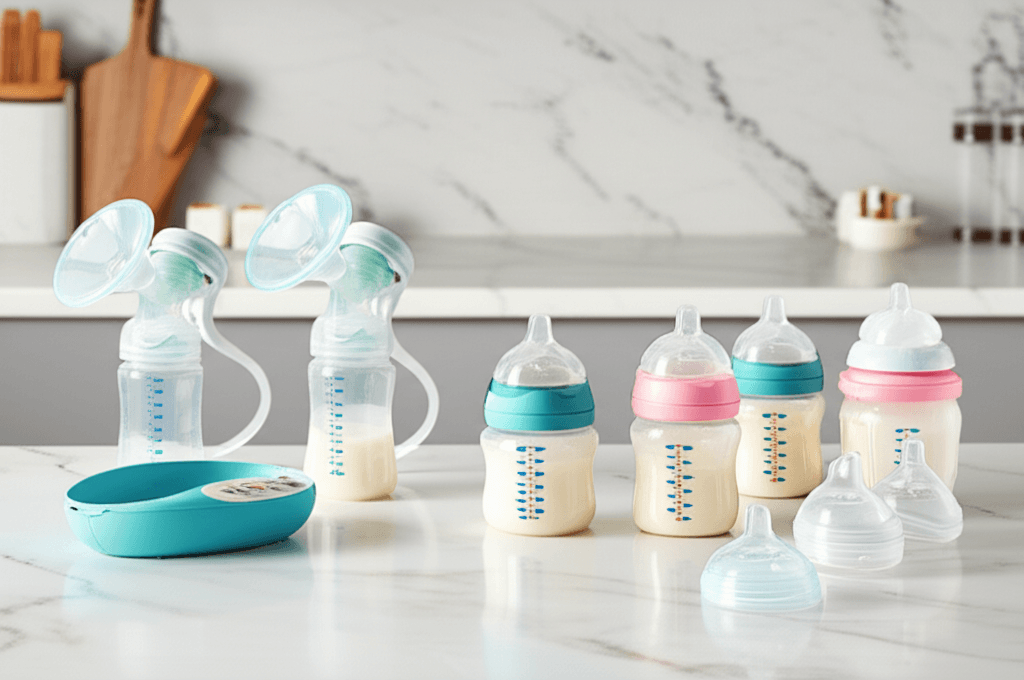
Baby-led weaning is a wonderful approach to starting solids, but it requires preparation: take a CPR class, set up the right gear, and start with appropriate foods. For our recommended feeding gear, including bottles for combo-feeding, visit the category page. Trust your baby's ability to learn, stay calm during gagging (it really is normal), and enjoy watching them discover food.
Related Reading
💬 Real Talk from Parents
The 'best' bottle is whichever one your baby actually accepts.
Your baby will reject the $40 bottle and love the $3 one. Every time.
The Dr. Brown's bottles are annoying to clean but genuinely reduce gas. Worth the extra parts for a gassy baby.
Paraphrased community consensus — not a direct quote.
You should sterilize bottles before every single use.
The CDC recommends sterilizing bottles once when new, then again only if your baby is premature, under 2 months, or immunocompromised. For healthy full-term babies older than 2 months, hot soapy water or a dishwasher is sufficient.
Research Sources
- When Can Babies Start Solid Foods? — HealthyChildren.org (AAP)
- Choking Prevention — HealthyChildren.org (AAP)
- A Baby-Led Approach to Eating Solids and Risk of Choking — Pediatrics (2016), PubMed abstract
- Randomized Trial of Peanut Consumption in Infants at Risk for Peanut Allergy (LEAP) — NEJM (2015), PubMed abstract
- When, What, and How to Introduce Solid Foods - CDC
- When to Introduce Egg, Peanut Butter & Other Common Food Allergens to Your Baby - HealthyChildren.org (AAP)
Hilly Shore Inc.
Editorial teamIndependent product research team behind Cribworthy. Reviews are grounded in published AAP / CDC / NHTSA / CPSC pediatric guidance, JPMA / GREENGUARD GOLD / OEKO-TEX certification verification, and aggregated buyer sentiment.
131 products reviewed · 22 categories covered · cites AAP, CDC, NHTSA, CPSC, FDA, ACOG.
Safety claims are verified against published pediatric guidelines and CPSC databases. See our editorial standards.