Skip This: Crib Bumpers, Even the 'Breathable' Ones
Skip this
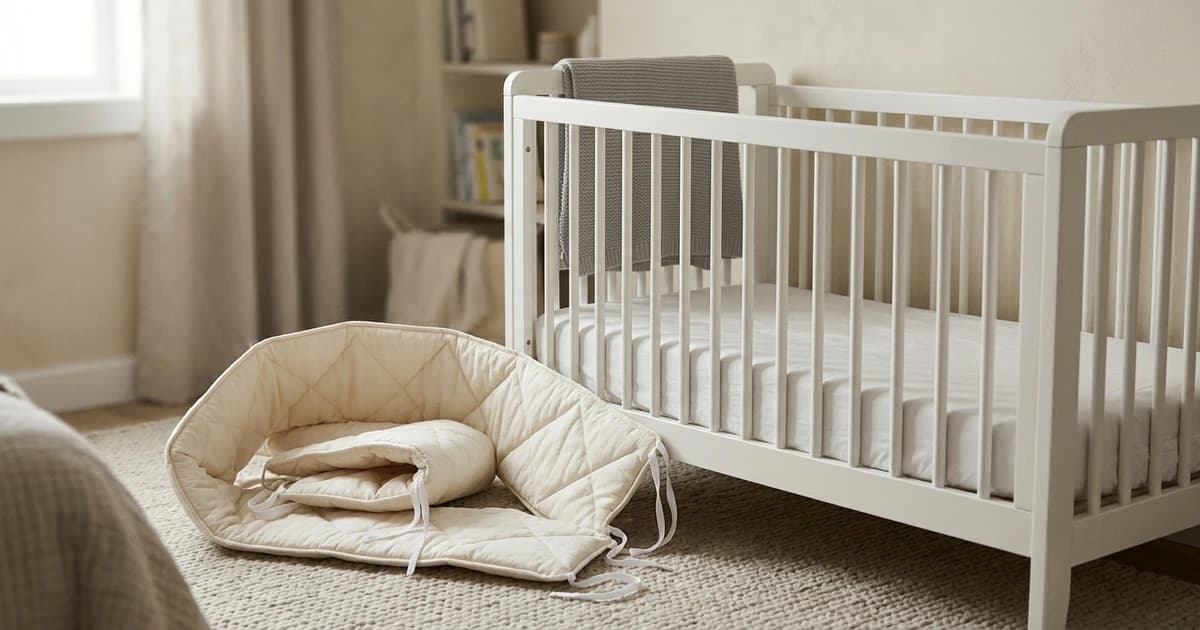
Crib bumpers — padded, mesh, vertical, and 'breathable' variants
Padded, vinyl and vertical-slat bumpers are banned nationwide by the Safe Sleep for Babies Act of 2021. Non-padded mesh liners are exempt from that ban, but the AAP still advises against anything soft that attaches inside the crib.
Quick Answer
Crib bumpers are banned in the United States. Federal law made padded bumpers, vinyl bumper guards, and vertical slat covers hazardous products, and the only carve-out is a non-padded mesh liner. We say skip that too. A bare crib with a fitted sheet and nothing else is the standard, and limbs slipping between correctly spaced slats do not cause real injury.
Our Verdict
Use a wearable sleep sack for warmth and leave the crib itself completely empty. If your child's legs keep sliding through the slats, wait it out rather than buying a liner, because the phase passes and the trade is not worth it. Refuse hand-me-down bumper sets, breathable liners, and Wonder Bumpers alike, and check any older or secondhand crib against current slat-spacing rules.
Key Takeaways
- ✓The Safe Sleep for Babies Act of 2021 — an act of Congress, approved May 16, 2022 as Public Law 117-126 — made crib bumpers a banned hazardous product in the United States: padded bumpers, supported and unsupported vinyl bumper guards, and vertical crib slat covers.
- ✓The correct crib setup is: a firm, flat mattress that fits snugly (no more than two finger widths between mattress and frame), a fitted sheet, and the baby.
As an Amazon Associate I earn from qualifying purchases. Product prices and availability are subject to change.
Why every kind of crib bumper is off the list
The Safe Sleep for Babies Act of 2021 — an act of Congress, approved May 16, 2022 as Public Law 117-126 — made crib bumpers a banned hazardous product in the United States: padded bumpers, supported and unsupported vinyl bumper guards, and vertical crib slat covers. The statute carves out exactly one exception, a non-padded mesh crib liner, which CPSC confirms is outside the scope of the ban. We still say skip it, on AAP guidance rather than federal law: the AAP advises keeping bumper pads and related products that attach to crib slats or sides out of the sleep area.
The reasoning: a bumper (even a thin mesh one) changes the airflow and tactile environment of a crib. Babies can press their face into it, get arms or legs trapped between slats, or pull it down over themselves once they're rolling. In the rulemaking that preceded the ban, CPSC reported 113 fatalities associated with crib bumpers occurring between January 1, 1990 and March 31, 2019 — though CPSC classified 30 of those as incidental to the death.
Mesh 'breathable' liners marketed after the 2011 hospital-bumper warnings are the one style the federal ban does not reach. That is a legal distinction, not a safety endorsement: the mesh reduces one risk (face-pressing suffocation) while preserving the other two (entrapment and climb-out), which is why the AAP still advises against them and why we do too.
What to use instead
Nothing. That is the actual answer.
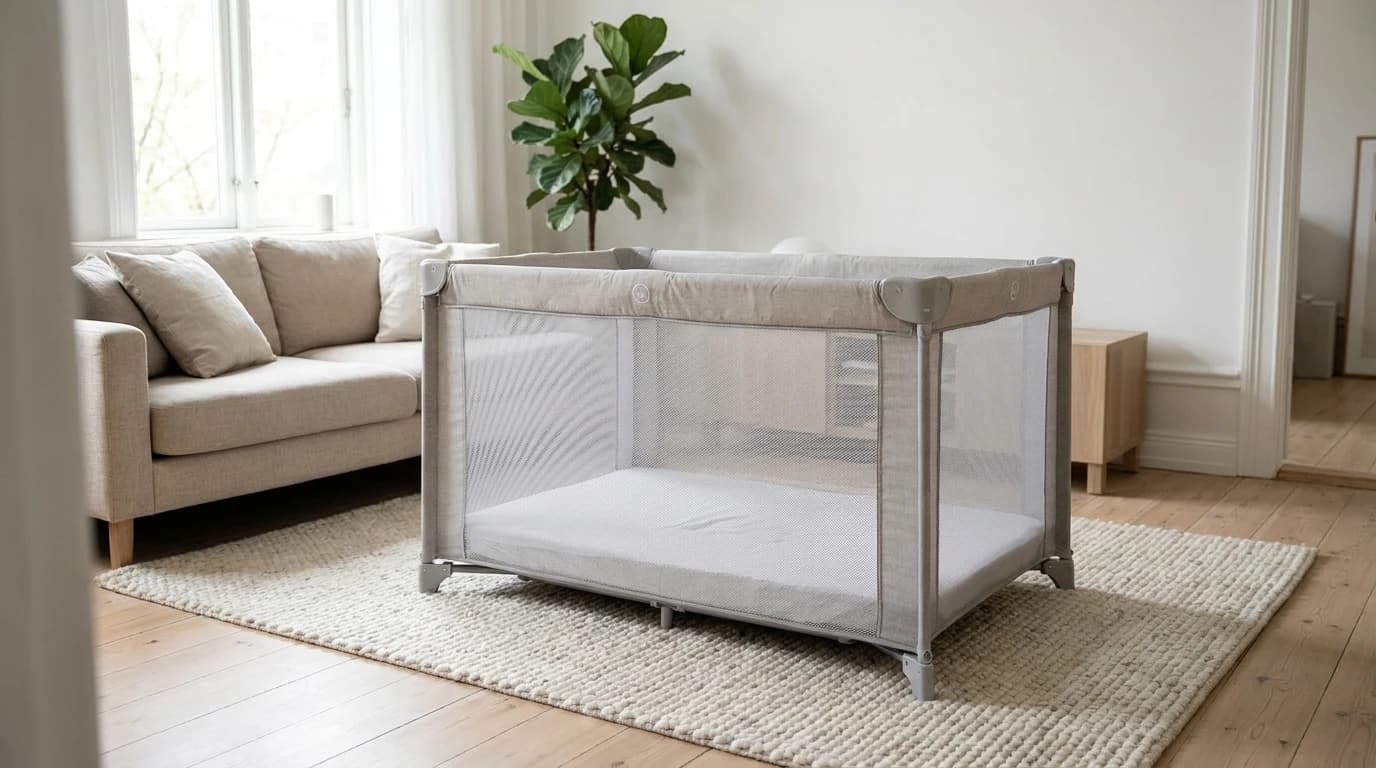
The correct crib setup is: a firm, flat mattress that fits snugly (no more than two finger widths between mattress and frame), a fitted sheet, and the baby. No bumper, no blanket, no pillow, no stuffed animal, no positioner.
If you're worried about baby's arms or legs slipping through slats: that's fine. Modern cribs meet the CPSC slat-spacing standard (≤2⅜"), which prevents head entrapment. An arm or leg slipping through is briefly uncomfortable; it is not dangerous.
If you're worried about head-banging on the slats: wait it out. Head-banging is a common self-soothing behavior that resolves on its own. A bumper does not fix it, and adds real risk.
What about crib liners, vertical bumpers, or 'Wonder Bumpers'?
Vertical crib slat covers and vinyl bumper guards are named in the federal ban. Non-padded mesh liners are not banned, but they are not recommended either. Any soft accessory that attaches inside the crib changes the sleep environment in ways the AAP advises against.
FAQ
My baby gets a limb stuck in the slats at 3 AM. Won't they get hurt?
It's startling, not dangerous. Spacing is regulated specifically so that a limb can slip through but a head cannot. Baby will wiggle free, you'll rescue them if not, everyone's fine.
What if my crib is older or used?
Check the manufacture date. Cribs made before 2011 may have drop-side designs that were banned by the CPSC. If the crib predates 2011 or you're unsure, replace it — used cribs are the cheapest place to compromise on safety and the worst.
Research Sources
Hilly Shore Inc.
Editorial teamIndependent product research team behind Cribworthy. Reviews are grounded in published AAP / CDC / NHTSA / CPSC pediatric guidance, JPMA / GREENGUARD GOLD / OEKO-TEX certification verification, and aggregated buyer sentiment.
131 products reviewed · 22 categories covered · cites AAP, CDC, NHTSA, CPSC, FDA, ACOG.
Safety claims are verified against published pediatric guidelines and CPSC databases. See our editorial standards.