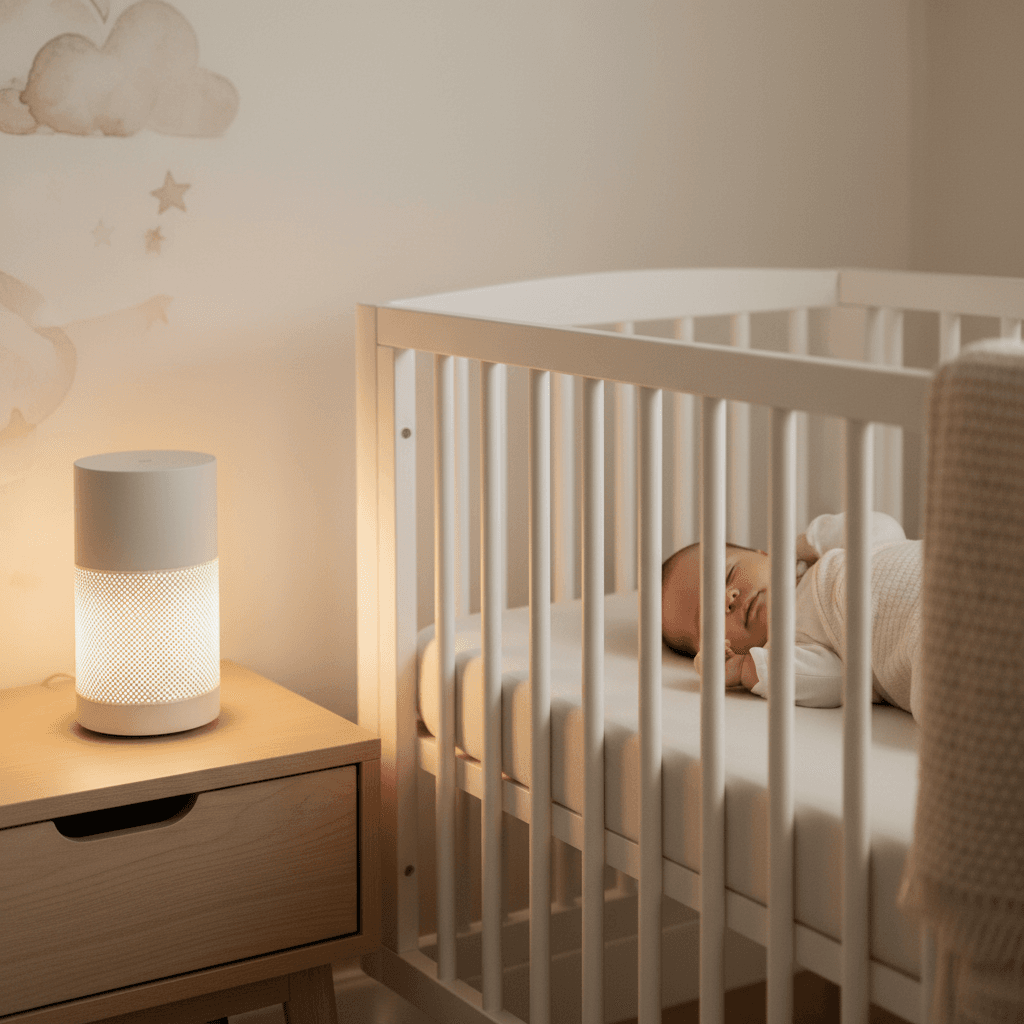
Toddler Sleep Regression: Why It Happens and How to Survive It
Quick Answer
You finally had a good sleeper.
Our Verdict
You finally had a good sleeper.
Key Takeaways
- ✓You finally had a good sleeper.
- ✓You finally had a good sleeper. Then something shifted — the toddler who was sleeping 11 hours straight is suddenly awake at 10pm, 1am, and 4am, demanding milk, company, or just proving that they e...
- ✓Rewarding the waking. Bringing the toddler into your bed, offering a bottle of milk, letting them watch cartoons at 2am — all of these create new expectations. The regression lasts longer because t...
- ✓If disrupted sleep persists beyond 6–8 weeks despite consistent management, consult your pediatrician to rule out:
- ✓1. American Academy of Sleep Medicine (AASM) — Pediatric sleep recommendations by age. aasm.org.
💬 Real Talk from Parents
Every baby sleep book contradicts the last one you read. That's normal.
White noise machines are not for the baby. They're for your sanity.
The swaddle is magic until the day it isn't, and that day comes without warning.
Sleep training is 50% technique and 50% parental willpower.
If your baby is sleeping safely, you're doing it right. Ignore anyone who says otherwise.
Paraphrased community consensus — not a direct quote.
As an Amazon Associate I earn from qualifying purchases. Product prices and availability are subject to change.
Toddler Sleep Regression: Why It Happens and How to Survive It
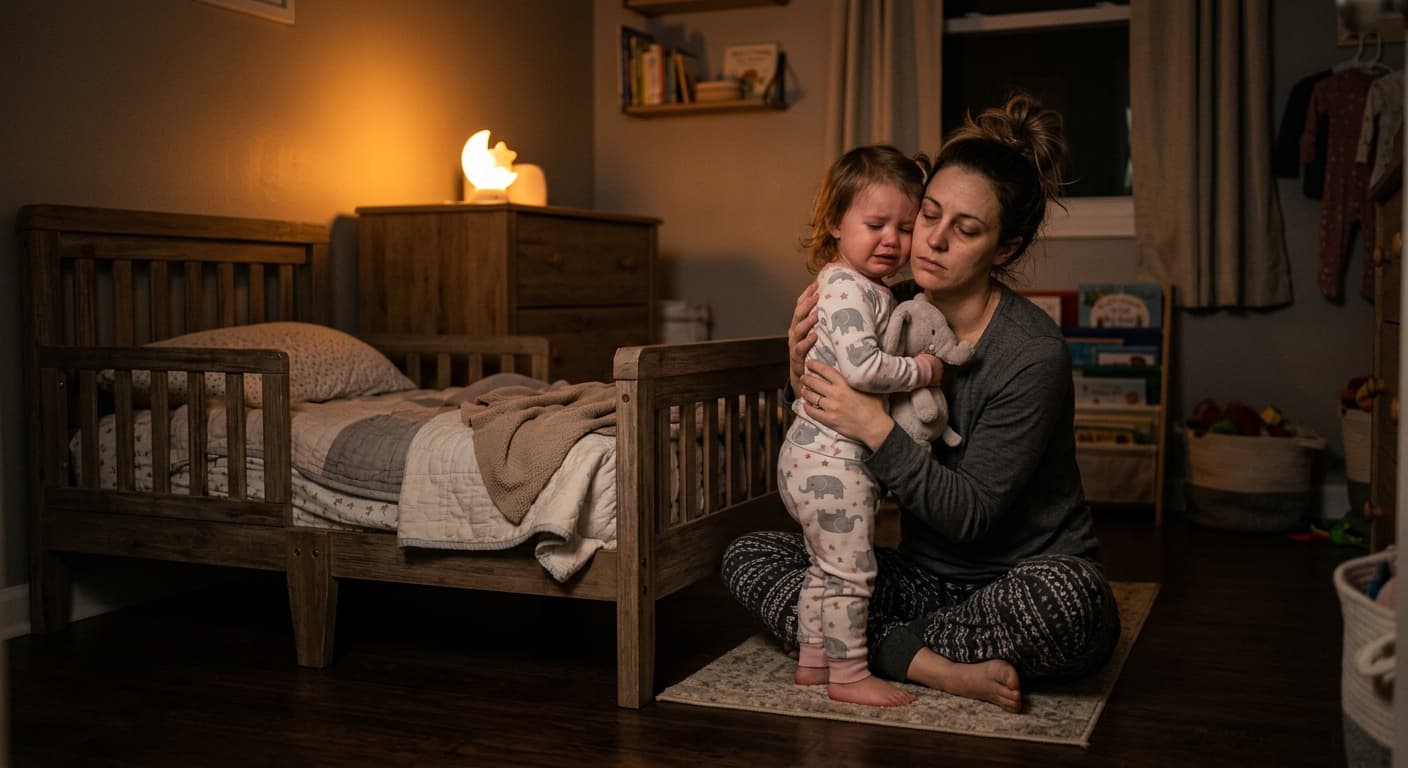
You finally had a good sleeper. Then something shifted — the toddler who was sleeping 11 hours straight is suddenly awake at 10pm, 1am, and 4am, demanding milk, company, or just proving that they exist. Welcome to the toddler sleep regressionsleep regressionA stretch of worse sleep tied to a developmental leap — common at 4, 8-10, 12, and 18 months. Not a sign you did something wrong. Usually passes in 2-6 weeks..
Sleep regressions are temporary disruptions to previously established sleep patterns caused by developmental leaps. They're frustrating, they're normal, and they end. Here's what you need to know.
The Two Big Toddler Regressions
The 18-Month Sleep Regression
The 18-month regression is considered one of the most challenging because it coincides with an explosion of toddler awareness — they've discovered they're their own person, they have opinions about everything, and they're not thrilled about being separated from you at bedtime.
What drives it:
- Rapid language development (brain is working overtime)
- Emerging separation anxiety (second wave after the 8–10 month version)
- Molars emerging (very painful)
- Transitioning between 2 naps → 1 nap — either overtiredness or too much daytime sleep
Duration: 2–6 weeks if you hold your routines consistently. Longer if you make significant routine changes in response to the regression.
The 2-Year Sleep Regression
Less universal than 18 months but very common. Coincides with:
- The "terrible twos" autonomy drive — toddlers want control, and bedtime is a prime battleground
- Growing awareness of what they're missing when they sleep
- Nightmare onset (2-year-olds can now form and remember scary scenarios)
- Dropping the nap (some 2-year-olds start resisting naps — this disrupts overnight sleep patterns)
Duration: 2–4 weeks with consistent management.
What Makes It Worse
Rewarding the waking. Bringing the toddler into your bed, offering a bottle of milk, letting them watch cartoons at 2am — all of these create new expectations. The regression lasts longer because the toddler learns that waking = reward.
Inconsistency. Responding differently each night teaches the toddler that persistence eventually pays off.
Overtiredness. A toddler pushed past their sleep window is harder to settle and wakes more at night. An overtired toddler is a cruel irony.
Screen exposure too close to bedtime. Blue light suppresses melatonin and delays sleep onset.
Strategies That Work
Hold the routine
Your existing bedtime routine is your most powerful tool. When the regression hits, lean into the routine harder, not less. Same time, same sequence, same duration. Predictability is soothing when everything feels uncertain developmentally.
Adjust the nap (for 18-month regression)
If your 18-month-old is resisting bedtime or waking at night more than usual, the nap timing may be the culprit. The transition to one nap usually happens 15–18 months. If your toddler is on two naps, try moving to one mid-day nap (11am–1pm). If already on one nap, move it slightly earlier.
Validate the feelings, hold the boundaries
"You want Mommy to stay. I know. I love you. It's sleep time. I'll see you in the morning." This acknowledges their feelings without capitulating to the demand. Repeat calmly as many times as needed without escalating.
Use a toddler OK-to-wake clock
OK-to-wake clocks glow green when it's morning (a time you set) and amber at night. Toddlers as young as 18 months can learn to stay in bed until the clock turns green. This is one of the highest-value sleep tools for this age group.
For nightmares (2-year regression)
Brief reassurance and back to bed — don't over-engage with the nightmare narrative at 2am, as this can make the child more alert and extend the wake window. Keep the nighttime response calm, brief, and boring: "You're safe. It was a dream. Back to sleep."
When to Seek Help
If disrupted sleep persists beyond 6–8 weeks despite consistent management, consult your pediatrician to rule out:
- Obstructive sleep apnea (snoring, mouth breathing, restless sleep)
- Restless legs syndrome (more common in toddlers than recognized)
- Iron deficiency (common cause of sleep disruption in toddlers)
For related sleep help, see our sleep regression survival guide and how to sleep train a baby.
🏆 Bottom Line: Toddler sleep regressions are developmental, not behavioral failures. Hold your routines, don't create new sleep associations in desperation, and most regressions resolve in 2–6 weeks. The 18-month regression is the hardest — survive it with consistency and an OK-to-wake clock.
Sources
- American Academy of Sleep Medicine (AASM) — Pediatric sleep recommendations by age. aasm.org.
- Mindell JA, Owens JA — A Clinical Guide to Pediatric Sleep. Lippincott Williams & Wilkins, 2015.
- Jenni OG, O'Connor BB — "Children's sleep: an interplay between culture and biology." Pediatrics, 2005.
- American Academy of Pediatrics (AAP) — Sleep in infants and toddlers. healthychildren.org.
- Ferber R — Solve Your Child's Sleep Problems. Touchstone, 2006.
Hilly Shore Inc.
Editorial teamIndependent product research team behind Cribworthy. Reviews are grounded in published AAP / CDC / NHTSA / CPSC pediatric guidance, JPMA / GREENGUARD GOLD / OEKO-TEX certification verification, and aggregated buyer sentiment.
115 products reviewed · 20 categories covered · cites AAP, CDC, NHTSA, CPSC, FDA, ACOG.
Safety claims are verified against published pediatric guidelines and CPSC databases. See our editorial standards.