When to Switch From Crib to Toddler Bed: Signs and Best Options
Quick Answer
Hold off until roughly 2.5 to 3 years old unless your toddler is climbing out, which turns the rail into a fall hazard and forces an earlier move. Height is the other trigger: near 35 inches, the crib is outgrown. Make the change at naps first, keep every other part of the evening identical, and anchor dressers and bookcases to the wall before night one.
Our Verdict
Stay with the crib for as long as it remains safe, since a later move costs nothing and an early one usually costs weeks of bedtime. Buy a low, dedicated toddler bed such as the DaVinci Jenny Lind if you want a real intermediate step, or simply convert the crib you already own and pocket the money. Leave the twin bed until your child can climb in and out alone.
Key Takeaways
- ✓Stay with the crib for as long as it remains safe, since a later move costs nothing and an early one usually costs weeks of bedtime. Buy a low, dedicated toddler bed such as the DaVinci Jenny Lind if you want a real intermediate step, or simply convert the crib you already own and pocket the money. Leave the twin bed until your child can climb in and out alone.
- ✓Most children are ready to switch from a crib to a toddler bed between 2.5 and 3 years old, though the transition should be driven by developmental signs — not a specific birthday. The most urgent ...
- ✓We cover these in depth in our best toddler beds roundup, but here are our top picks specifically for the crib-to-bed transition.
💬 Real Talk from Parents
The crib bumpers are cute but the AAP says no. Trust the AAP.
The convertible crib that grows with your child is genuinely worth the extra $100.
Assembly time on the box: 30 minutes. Actual time: 2.5 hours and one argument.
A firm mattress looks uncomfortable to you but it's exactly what safe sleep requires.
Get a convertible crib from the start. They cost $100 more and last literally until your kid is a teenager.
Paraphrased community consensus — not a direct quote.
A soft mattress is more comfortable for baby.
Firm crib mattresses are required for safe sleep. A baby's face can sink into soft surfaces, creating a suffocation risk. If it feels too firm for you, it's right for baby.
Used cribs are just as safe as new ones.
Crib safety standards are updated regularly. Cribs made before June 2011 don't meet current CPSC standards (drop-side cribs were banned). Always check manufacture date and look for current JPMA certification.

As an Amazon Associate I earn from qualifying purchases. Product prices and availability are subject to change.
When to Switch From Crib to Toddler Bed: Signs and Best Options
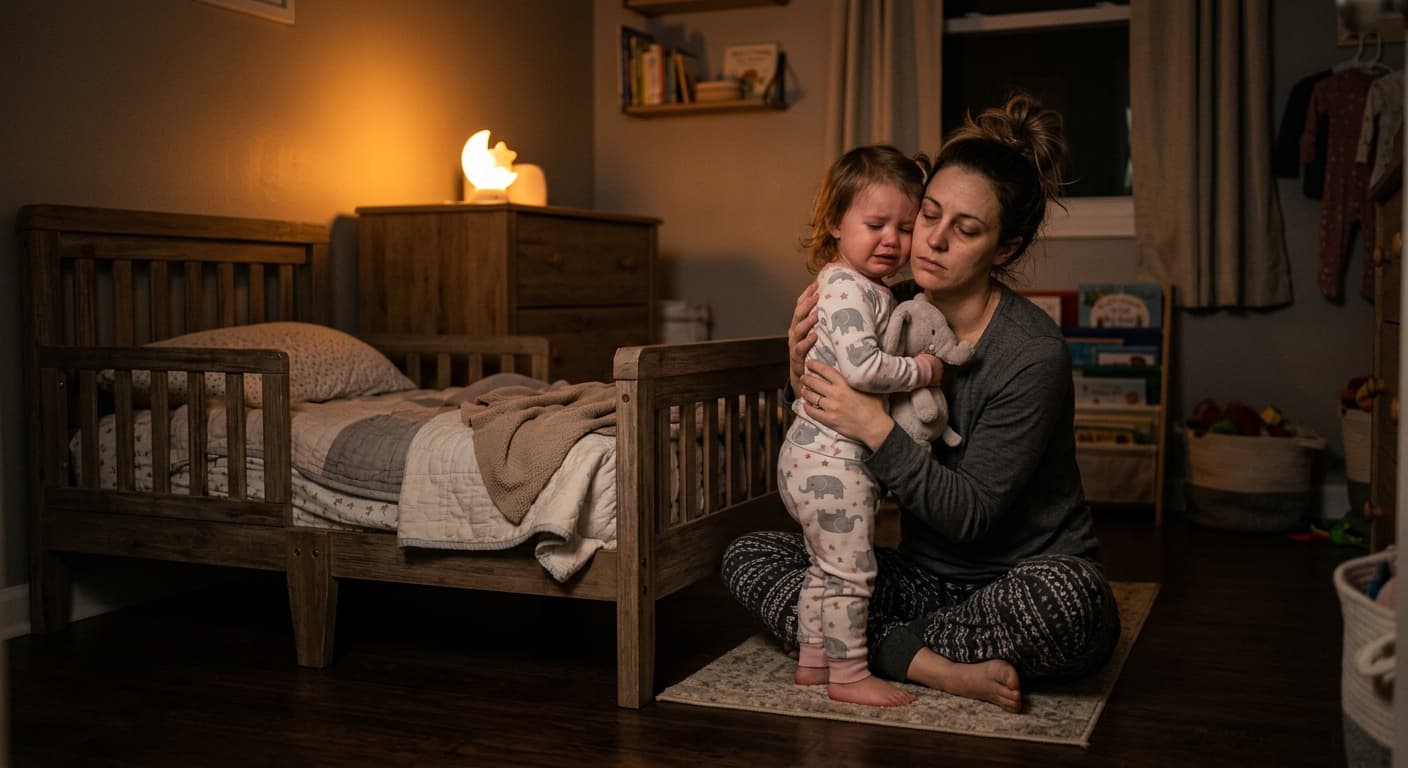
Most children are ready to switch from a crib to a toddler bed between 2.5 and 3 years old, though the transition should be driven by developmental signs — not a specific birthday. The most urgent sign is climbing out of the crib, which turns the crib into a fall hazard.
The AAP recommends keeping children in a crib as long as it remains safe, noting that premature transitions often lead to sleep disruptions. A 2019 study in Sleep Medicine of nearly 2,000 toddlers across five countries found that children still sleeping in cribs went to bed earlier, woke less at night, and slept longer than those already moved to beds — with the least favorable sleep among children transitioned before age 2. The CPSCCPSCThe US federal agency that issues product recalls and enforces safety standards on cribs, strollers, car seats, and other juvenile products. advises transitioning once a child reaches 35 inches tall or can climb over the crib railing, whichever comes first.
How do I know when my toddler is ready for a toddler bed?
There's no magic age for switching to a toddler bed. Most children transition between 18 months and 3 years, with the sweet spot being around 2.5 to 3 years for most families. But age alone isn't the deciding factor — watch for these specific signs.
| Sign | What it means | Move now? |
|---|---|---|
| Climbing out of the crib | The crib is a fall hazard, not a safe sleep space | Yes — regardless of age |
| Chest reaches the top rail (about 35 inches) | Containment is no longer adequate | Yes |
| Asking for a "big kid" bed | The motivation is coming from your child | Yes — the transition tends to go more smoothly |
| New sibling needs the crib | Make the change at least two months before the baby arrives | Only if the timing works |
| Under 2, sleeping well, not climbing | The crib is still the safest sleep environment | No — don't rush it |
Climbing out of the crib
This is the most urgent sign. Once your toddler can climb over the crib railing, the crib becomes a fall hazard rather than a safe sleepsafe sleepAAP guideline: baby sleeps Alone (no blankets, pillows, bumpers, or toys), on their Back, in a Crib or bassinet with a firm flat mattress. Room-sharing without bed-sharing is recommended for the first 6-12 months. space. A fall from crib height onto a hard floor can cause serious injury. If your child climbs out — or makes determined attempts — it's time to transition, regardless of age.
Rule of thumb: Age is a guideline; climbing is a deadline. Once your toddler can climb over the crib railing, the crib is a fall hazard regardless of age.
According to CPSC injury data, crib-related falls account for approximately 8,000 emergency room visits per year among children under 5. The CPSC specifically warns that once a toddler can climb out of a crib, the risk of head and limb injuries from falling over the railing increases substantially, and the child should be transitioned to a lower sleep surface.
Reaching 35 inches tall
Most cribs have a maximum height recommendation. When your child's chest reaches the level of the top railing (typically around 35 inches tall), the crib no longer provides adequate containment. Check your crib's specific guidelines, but this is a common threshold.
Most crib manufacturers set their maximum height recommendation in accordance with ASTM F1169, the federal safety standard for full-size cribs. This standard requires that the distance from the top of the mattress support in its lowest position to the top of the crib rail be at least 26 inches. When a child's chest reaches the rail height — typically around 35 inches tall — the containment is no longer adequate.
Asking for a "big kid" bed
Some toddlers become genuinely interested in a toddler bed, especially if they've seen a sibling's or friend's bed. When the motivation comes from your child, the transition tends to go more smoothly because they feel ownership over the change.
New baby arriving
If you need the crib for a new sibling, try to make the transition at least two months before the baby arrives. You don't want your toddler to feel displaced by the new baby taking "their" crib. If the timing doesn't work, consider a second crib — it's often worth the investment to avoid emotional setbacks.
Signs it's NOT time yet
If your toddler is under 2, sleeping well in the crib, not climbing, and there's no safety concern, there's no reason to rush. The crib is the safest sleep environment for young toddlers because it contains them. A toddler who can freely leave their bed will — at 2 AM, repeatedly, for weeks. Don't fix what isn't broken.
Don't rush it: A crib that still contains a child who isn't climbing is doing its job. Waiting costs you nothing; switching early can cost you months of sleep.
How can I make the crib-to-toddler-bed transition easier?
The switch from crib to toddler bed is as much a psychological transition as a physical one. These strategies help it go well.
- Let your toddler help choose — ownership reduces bedtime refusal
- Keep everything else the same — same routine, same room layout, same sleep associations
- Start with naps — lower stakes, and your child is less tired
- Use a toddler bed rail — a physical boundary that mimics the security of the crib
- Be boring about nighttime visits — calm, quiet, no negotiation
- Toddler-proof the bedroom — the whole room is now accessible at night
Let your toddler help choose
Involve your child in picking their new bed, sheets, or pillow. This gives them a sense of control and excitement about the change. Even something as simple as letting them choose between two sheet sets makes a difference.
Child psychologists at the American Academy of Pediatrics note that toddlers who feel a sense of ownership over the transition — such as choosing their new bedding or helping set up the bed — demonstrate fewer bedtime refusal behaviors. A 2021 study in the Journal of Clinical Sleep Medicine found that involving toddlers in the process reduced transition-related sleep disturbances by approximately 35%.
Keep everything else the same
Change one thing: The bed is changing — nothing else should.
Keep the same bedtime routine, the same room layout, the same sleep associations (sound machine, lovey, nightlight). Changing too many variables at once is a recipe for regression. If you have an established bedtime routine, lean into it heavily during the transition.
Start with naps
Introduce the toddler bed during daytime naps first. The stakes are lower, your child is less tired (and therefore more adaptable), and you can respond quickly to any issues. Once naps go smoothly for a few days, switch nighttime sleep too.
Use a toddler bed rail initially
Even if you don't think your child moves much at night, they likely do. A bed rail prevents falls during the adjustment period and provides a physical boundary that mimics the security of the crib. Most toddler beds include built-in rails. If using a twin bed, add aftermarket rails.
Be boring about nighttime visits
Your toddler will test the freedom of an open bed. When they get up and come to your room (and they will), calmly and quietly walk them back to bed. No conversation, no negotiation, no excitement. Make leaving the bed the most boring thing in the world. Consistency here is everything — most toddlers accept the new boundary within one to two weeks.
Toddler-proof the bedroom
Once your child can leave their bed freely, the entire bedroom becomes accessible at night. - Anchor furniture to walls
- Cover outlets
- Secure blind cords
- Remove anything you wouldn't want your toddler accessing unsupervised at 3 AM
- Place a baby gate at the bedroom door to keep them contained in a safe space
Best Toddler Beds for the Transition
We cover these in depth in our best toddler beds roundup, but here are our top picks specifically for the crib-to-bed transition.
| Pick | Price | Why it suits the transition |
|---|---|---|
| DaVinci Jenny Lind | Around $130 | Sits low to the ground, guardrails on both sides, uses a standard crib mattress |
| Delta Children Canton | Under $60 | Attached guardrails, low-to-the-ground profile, supports up to 50 lbs |
| Your existing crib + conversion kit | $30-80 | Looks and feels familiar — only the front rail changes |
| Montessori floor bed | Frame-free | Eliminates fall risk entirely and encourages autonomy |
Best Overall: DaVinci Jenny Lind Toddler Bed
The DaVinci Jenny Lind is a classic spindle-design toddler bed made from solid New Zealand pine. It sits low to the ground (perfect for new climbers), includes safety guardrails on both sides, and uses a standard crib mattress — so you don't need to buy a new mattress. The Greenguard GoldGREENGUARD GoldIndependent certification that a product emits low levels of VOCs (volatile organic compounds). Common on mattresses, cribs, and nursery furniture — means safer indoor air for babies. certification means low chemical emissions, and the solid wood construction will outlast your toddler's use of it. At around $130, it's excellent value.
Best Budget: Delta Children Canton Toddler Bed
The Delta Children Canton delivers reliable safety at under $60. It includes attached guardrails, a low-to-the-ground profile, and supports up to 50 lbs. The engineered wood construction is sturdy enough for everyday use, and it comes in multiple colors. If you need an affordable transition bed that does the job well, this is it.
Best Convertible Option: Your Existing Crib
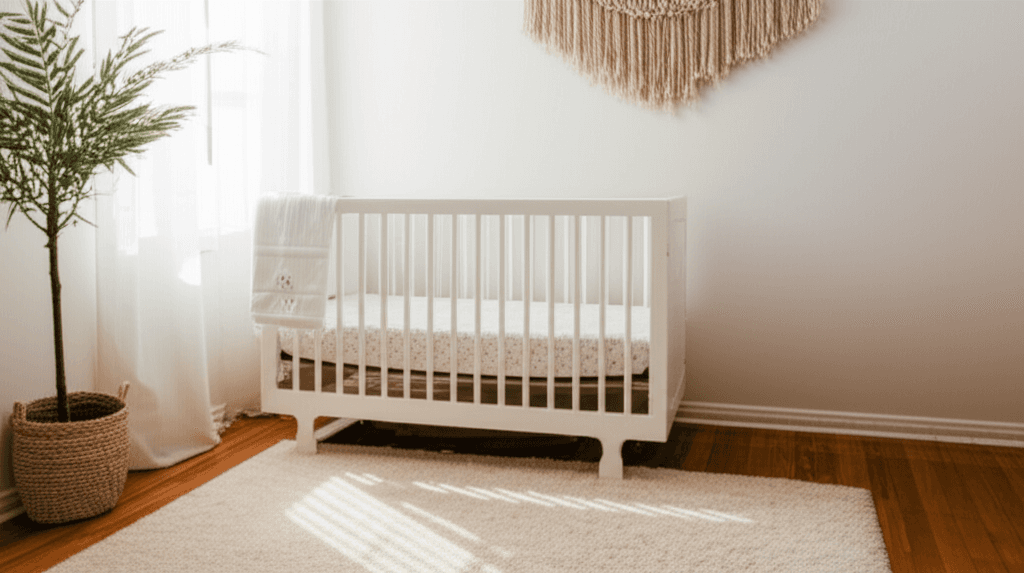
Many modern cribs — including the popular Babyletto Hudson and Graco Benton — convert to toddler beds with a conversion kit (typically $30-80). This is often the smoothest transition because the bed looks and feels familiar; only the front rail changes. Check your crib's specifications to see if a conversion kit is available.
Best for the Montessori Approach: Floor Bed
Montessori-style floor beds place the mattress directly on the floor (or on a very low frame), giving toddlers full independence to get in and out safely. This approach eliminates fall risk entirely and encourages autonomy. It's not for every family — some toddlers use the freedom to play instead of sleep — but for children who are developmentally ready, floor beds can work beautifully.
What are common problems when switching to a toddler bed?
The constant bedtime escape artist
Your toddler gets out of bed 15 times in the first hour. This is normal and expected.
What actually works:
- A calm, quiet return to bed, every single time
- No talking, no eye contact, no negotiation
- Complete consistency — most children stop testing within 5-10 days
What parents try that backfires:
- Engaging in conversation about why they need to stay in bed
- Lying with them until they fall asleep, which becomes the new sleep crutch
- Being consistent on some nights but not others
The AAP's Guide to Your Child's Sleep recommends a consistent, boring response to bedtime escapes: silently walk the child back to bed without engaging in conversation or negotiation. Behavioral sleep researchers have found that most toddlers stop testing boundaries within 3-7 nights when parents maintain this approach consistently.
Early morning wake-ups
Toddlers who previously stayed in the crib until you retrieved them may now appear in your bedroom at 5 AM. A toddler clock with a color-changing light (like the Hatch Rest) teaches them when it's okay to get up.
- Set the light to change at an appropriate wake time
- Reinforce the boundary every morning, the same way
- Expect the clock to take longer to work than you'd like
Regression in sleep quality
Some toddlers experience a temporary sleep regressionsleep regressionA stretch of worse sleep tied to a developmental leap — common at 4, 8-10, 12, and 18 months. Not a sign you did something wrong. Usually passes in 2-6 weeks. during the transition — more night waking, difficulty falling asleep, or nap refusal. This typically resolves within two to three weeks.
- Maintain your routine
- Stay consistent
- Avoid introducing new sleep crutches that will create long-term habits Our sleep regression survival guide has more strategies.
Fear of the dark or monsters
The transition can coincide with new nighttime fears, which are developmentally normal around age 2-3. Three things help:
- A dim nightlight
- A brief "monster check" as part of the bedtime routine
- Calm reassurance Avoid making it a big production — a quick, matter-of-fact check is more reassuring than an elaborate search.
Frequently Asked Questions
Can I skip the toddler bed and go straight to a twin bed?
Yes, many families do this successfully, especially if the child is closer to 3 years old. Use a twin mattress on the floor or a low twin frame with bed rails. The advantage is not needing to buy an intermediate bed; the disadvantage is that a twin bed without rails offers less containment. Floor mattresses are a safe middle ground.
What mattress should I use for a toddler bed?
Most toddler beds use a standard crib mattress, which is convenient if you already have one. Two things to check:
- It fits snugly in the frame with no gaps
- It is under 5-7 years old and shows no signs of wear
A firm, supportive mattress is just as important for toddlers as it is for infants.
Should I use a pillow and blanket in the toddler bed?
For children over 12 months, a thin pillow and lightweight blanket are generally safe. The AAP's safe sleep guidelines focus primarily on infants under 12 months. Use a toddler-sized pillow (not an adult pillow) and a lightweight blanket or sleep sack designed for toddlers.
How long will my child use a toddler bed?
Most children use a toddler bed from roughly age 2-3 until age 4-5, when they transition to a twin or full-size bed. Convertible cribs that become toddler beds and then daybeds can extend usability even further.
What if my toddler asks to go back to the crib?
This is common and usually temporary. If there's no safety reason they can't use the crib (they're not climbing out and still fit), it's okay to let them return briefly. But if climbing was the reason for the switch, the crib is no longer safe and you'll need to gently persist with the toddler bed. Stay consistent, keep the routine, and the adjustment will come.
What's the best approach to switching from crib to toddler bed?
The best time to switch from crib to toddler bed is when your child shows clear signs — climbing out, reaching the height limit, or showing genuine readiness — rather than hitting a specific birthday. For most families, somewhere between 2.5 and 3 years is the sweet spot. The DaVinci Jenny Lind is our top toddler bed recommendation, but converting your existing crib is often the easiest and most cost-effective path.
The short version:
- Keep the rest of the sleep environment consistent
- Use the boring walk-back method for nighttime escapes
- Give it two to three weeks before deciding if something isn't working For our full toddler bed reviews, visit best toddler beds, and for safe sleep fundamentals, see our guide on setting up a safe sleep space. Browse all our cribs and bassinets for options at every stage.
Further Reading
Research Sources
- Durable Infant or Toddler Products - U.S. Consumer Product Safety Commission
- Preventing Furniture and TV Tip-Overs - HealthyChildren.org (AAP)
- Make Baby's Room Safe: Parent Checklist - HealthyChildren.org (AAP)
- Healthy Sleep Habits: How Many Hours Does Your Child Need? - HealthyChildren.org (AAP)
- Caregiver-perceived sleep outcomes in toddlers sleeping in cribs versus beds — Sleep Medicine, 2019
Hilly Shore Inc.
Editorial teamIndependent product research team behind Cribworthy. Reviews are grounded in published AAP / CDC / NHTSA / CPSC pediatric guidance, JPMA / GREENGUARD GOLD / OEKO-TEX certification verification, and aggregated buyer sentiment.
115 products reviewed · 20 categories covered · cites AAP, CDC, NHTSA, CPSC, FDA, ACOG.
Safety claims are verified against published pediatric guidelines and CPSC databases. See our editorial standards.