How to Set Up a Safe Sleep Space for Your Baby
Quick Answer
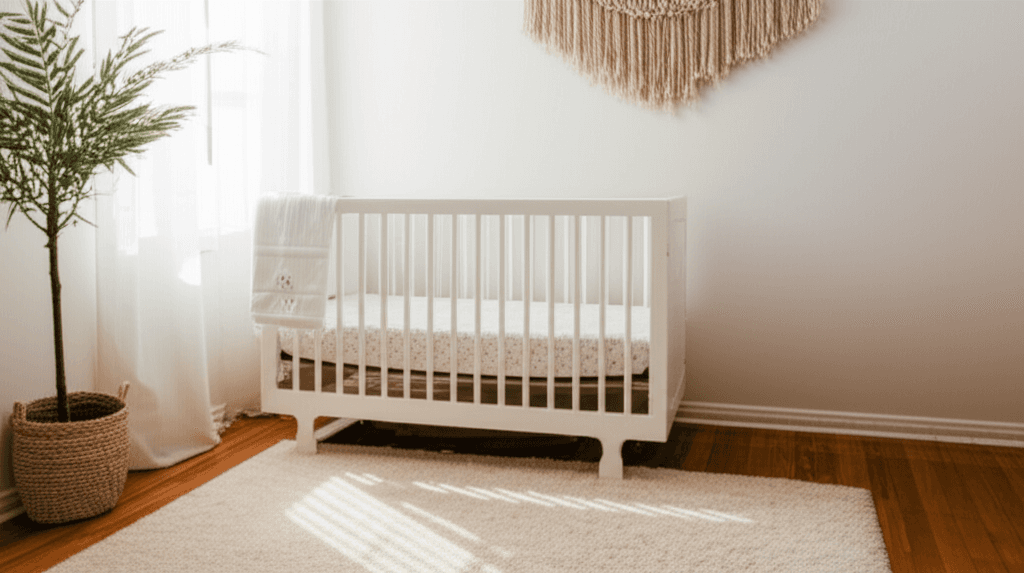
A safe sleep space is a bare, firm, flat surface in your own bedroom for at least the first six months. Nothing goes in with your baby except a fitted sheet: no blankets, pillows, bumpers, positioners, wedges, or toys. Lay your baby down on the back for every nap and every night, keep the room comfortably cool, and dress for warmth instead of covering.
Our Verdict
Choose whichever crib, bassinet, or play yard meets current federal requirements and fits your room, because certification matters and brand prestige does not. Move to a full-size crib once your baby outgrows the smaller option. Return or bin any inclined sleeper, sleep positioner, docking pod, or lounger you were given, and treat wearable vitals trackers as reassurance for you rather than protection for your baby.
6-month reality check
What parents say after living with this half a year — paraphrased community consensus from the subreddits below.
The ABCs — Alone, on Back, in a Crib — get easier to follow once you accept the crib will look "empty" compared to nursery photos on Pinterest. Firm, flat, bare. That's it.
r/beyondthebumpOwlet-style monitors cause more 3 AM panic than they prevent. Many parents return to the basics — baby monitor + safe sleep — by month 4.
r/NewParents
As an Amazon Associate I earn from qualifying purchases. Product prices and availability are subject to change.
How to Set Up a Safe Sleep Space for Your Baby
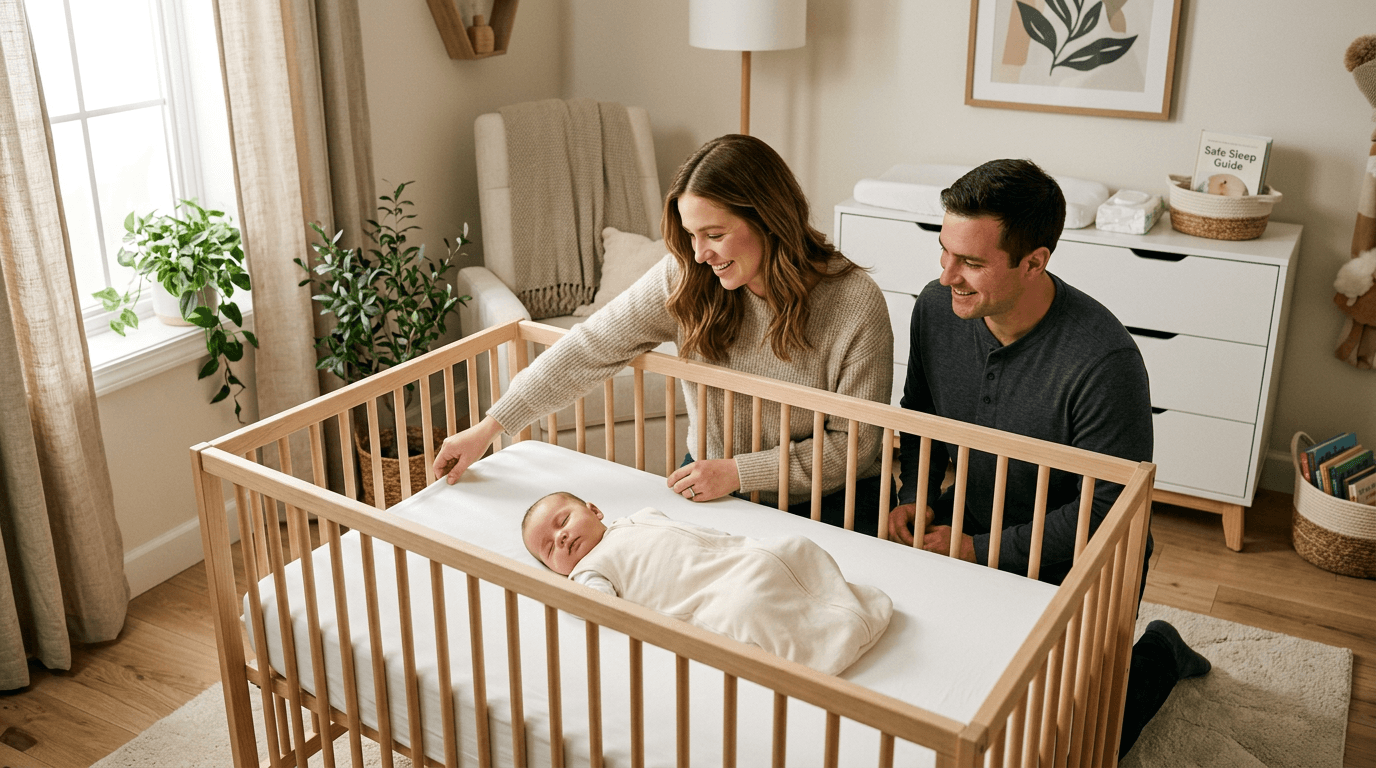
To set up a safe sleep space, follow the AAP's ABCs: Alone (no other people or objects in the sleep area), Back (always place baby on their back), and Crib (a firm, flat CPSC-approved surface). Use a bare crib with only a tight-fitting sheet — no blankets, pillows, bumpers, stuffed animals, or positioners. Keep the room between 68-72°F and share the room (but not the bed) for at least the first 6 months.
These guidelines are not suggestions — they are evidence-based practices supported by decades of research. The AAP's 2022 safe sleep policy statement reports that approximately 3,500 infants die annually in the United States from sleep-related causes, including SIDS, accidental suffocation, and strangulation. The vast majority of these deaths involve an unsafe sleep environment.
What are the ABCs of safe sleep?
The American Academy of Pediatrics (AAP) summarizes safe sleep with three letters:
| Letter | What it means | In practice |
|---|---|---|
| A — Alone | Baby sleeps alone in their own sleep space | No pillows, blankets, bumper pads, stuffed animals or positioning devices |
| B — Back | Always on their back, for every sleep | Naps and nighttime. Once baby can roll both ways they can find their own position, but always start them on their back |
| C — Crib | A firm, flat, safety-approved surface | A crib, bassinet or play yard with a mattress that fits snugly |
A — Alone
Your baby should sleep alone in their own sleep space. No pillows, blankets, bumper pads, stuffed animals, or positioning devices. Just baby on a mattress with a fitted sheet. This might look stark, but it's the safest environment.
The AAP's 2022 policy statement emphasizes that bed-sharing is associated with a significantly increased risk of sleep-related death, particularly for infants under 4 months, premature babies, and infants whose parents smoke or have consumed alcohol. The AAP recommends against bed-sharing because it raises the risk of sleep-related infant death.
B — Back
Always place your baby on their back to sleep, for every sleep — naps and nighttime. Back sleeping reduces SIDS risk significantly compared to side or stomach sleeping. Once your baby can roll both ways independently, they can find their own sleep position, but always start them on their back.
The NIH's "Back to Sleep" campaign (now "Safe to Sleep"), launched in 1994, has been credited with reducing the SIDS rate in the United States by more than 50%. Despite this progress, a 2023 CDC report found that 21.6% of mothers reported placing their infant in a non-supine sleep position at least some of the time, indicating continued need for education.
C — Crib
Use a firm, flat mattress in a safety-approved crib, bassinet, or play yard. The mattress should fit snugly with no gaps around the edges.
The two-finger test: If you can fit two fingers between the mattress and the side of the crib, the mattress is too small.
Only use the mattress that came with the sleep space or one specifically designed for it.
How do you choose a safe crib?
A full-size crib is the most common choice and what your baby will sleep in for the longest. Look for these features:
- Safety certifications — every crib sold in the US must meet CPSC standards; JPMA certification is an additional quality indicator
- Mattress height settings — most have 3-4 positions, starting highest for newborns
- Slat spacing — no more than 2-3/8 inches apart
- No drop-side rails — banned in 2011
Safety certifications
Every crib sold in the US must meet CPSC safety standards, but look for JPMA certification as an additional quality indicator. Our best cribs and bassinets guide has specific recommendations.
Mattress height settings
Most cribs have 3-4 mattress height positions. Start with the highest setting for newborns (easier to lay them down) and lower it as baby learns to sit and pull up.
Slat spacing
Slats should be no more than 2-3/8 inches apart. This is a federal requirement for new cribs, but be cautious with vintage or secondhand cribs that might not meet current standards.
No drop-side rails
Drop-side cribs were banned in 2011 due to safety concerns.
No exceptions: If anyone offers you one, decline it regardless of condition.
What kind of mattress does your baby need?
The crib mattress is arguably more important than the crib itself. Here's what to look for:
- Firmness — firm enough that it doesn't conform to the shape of your baby's face
- Fit — snug in the crib with no gaps, since a too-small mattress creates entrapment hazards
- Waterproof cover — a thin fitted waterproof sheet under the crib sheet, not a thick quilted pad
- Certifications — Greenguard Gold and CertiPUR-US indicate lower chemical emissions
Firmness
The mattress should be firm enough that it doesn't conform to the shape of your baby's face.
The hand test: Press your hand into the mattress. If it springs back immediately, it's firm enough. If your hand leaves an impression, it's too soft.
The Safe Sleep for Babies Act of 2021 is an act of Congress rather than a CPSC rule, and it bans inclined sleepers and crib bumpers rather than setting a firmness spec. The firmness requirement comes from CPSC's separate infant sleep products rule at 16 CFR Part 1236, which incorporates ASTM F3118. A mattress that conforms to an infant's face can obstruct the airway. The AAP recommends the hand test: press your hand into the mattress surface — if it retains the impression, it is too soft.
Fit
The mattress should fit snugly in the crib with no gaps. A too-small mattress creates entrapment hazards.
Waterproof cover
A waterproof mattress or waterproof cover is practical and hygienic. Avoid thick, quilted mattress pads — a thin, fitted waterproof sheet under the fitted crib sheet is all you need. If you plan to sew your own sheets, our nursery sewing guide starts with measuring the mattress so the corners stay put.
Certifications to look for
Greenguard Gold and CertiPUR-US certifications indicate lower chemical emissions, which matters for something your baby spends 12-16 hours a day on.
How should you set up the nursery for safe sleep?
| Element | Target |
|---|---|
| Room temperature | 68-72 degrees Fahrenheit — overheating is a SIDS risk factor |
| Sound machine | Around 50 decibels, placed across the room from the crib rather than beside baby's head |
| Darkness | Blackout curtains or shades, especially for naps when daylight is strong |
| Air circulation | A ceiling fan or gentle room fan on a low setting |
Room temperature
Keep the room between 68-72 degrees Fahrenheit. Overheating is a SIDS risk factor. Dress baby in a sleep sack or footed pajamas rather than using blankets to stay warm.
Overheating is an independent risk factor for SIDS. The AAP recommends maintaining the nursery at 68-72°F (20-22°C) and dressing the infant in no more than one additional layer than an adult would need.
Sound machine
White noise at a moderate volume (around 50 decibels, roughly the volume of a shower) can help baby sleep more soundly and mask household noise. Place it across the room from the crib, not right next to baby's head. The Hatch Rest is our top recommendation.
Darkness
A dark room helps baby produce melatonin and sleep better. Blackout curtains or shades are a worthwhile investment, especially for naps when daylight is strong.
Air circulation
A ceiling fan or gentle room fan provides air circulation, which some research suggests may reduce SIDS risk. Keep it on a low setting — the goal is gentle air movement, not a breeze directly on baby.
What items should never go in the crib?
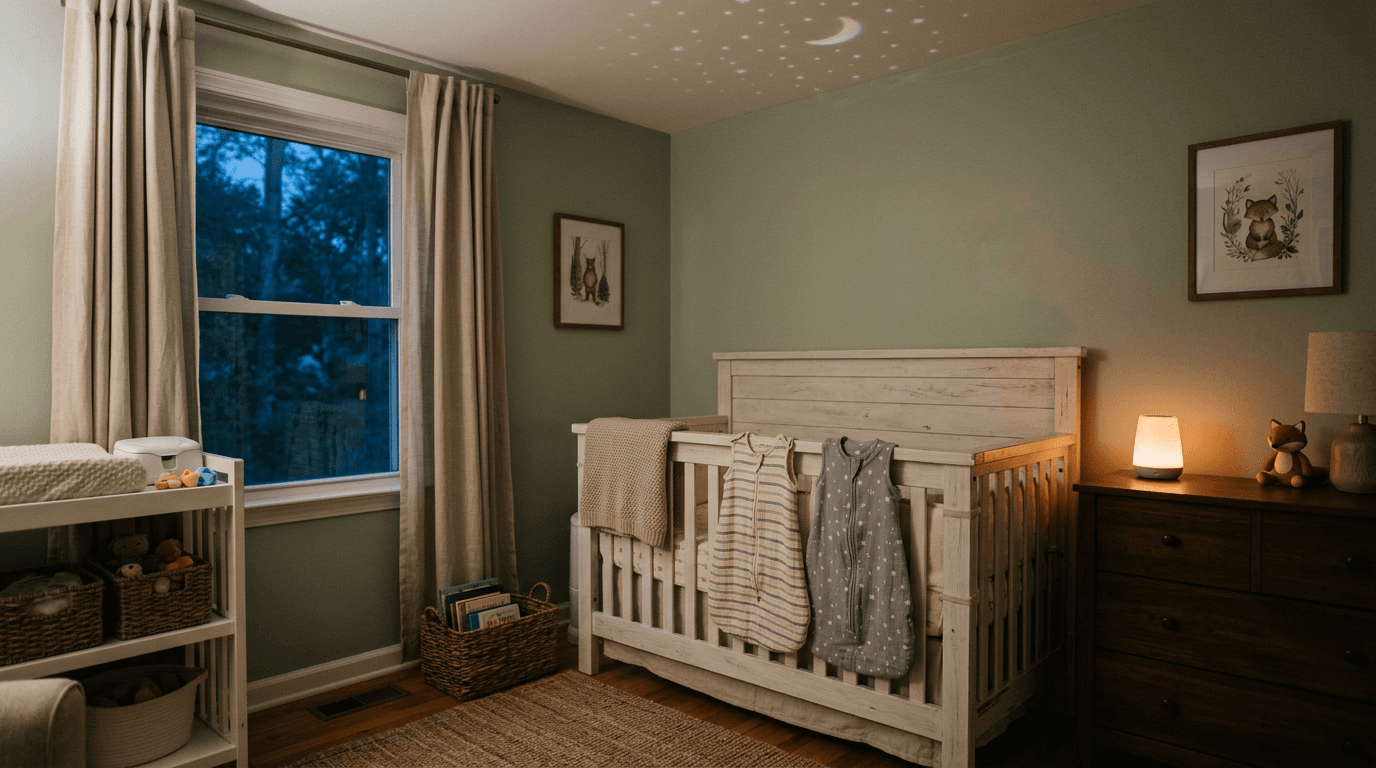
This is where it gets hard emotionally, because an empty crib can look cold and uninviting.
The standard: Every item in the crib beyond the fitted sheet is a potential hazard.
Remove these items
- Pillows and pillow-like items
- Loose blankets of any kind
- Crib bumper pads (including mesh bumpers)
- Stuffed animals and toys
- Sleep positioners and wedges
- Extra mattresses or padding
The crib should contain only a firm mattress with a fitted sheet. If baby needs warmth, use a wearable blanket (sleep sack) that they can't pull over their face.
Should you start with a bassinet or a crib?
Many families start with a bassinet beside the bed for the first few months, then transition to the crib. Both are safe options as long as they meet CPSC standards. A bedside bassinet makes nighttime feeds easier and follows the AAP recommendation of room-sharing (not bed-sharing) for at least the first six months.
Our top bassinet pick is the Halo BassiNest, which swivels and tucks over the bed for easy access.
When should you transition to a new sleep space?
| Move | When |
|---|---|
| Bassinet to crib | When baby outgrows the bassinet's weight limit, starts rolling, or reaches the age limit — typically around 5-6 months |
| Crib to toddler bed | Between ages 2-3, usually when they start climbing out of the crib |
Bassinet to crib
Move to the crib when baby outgrows the bassinet's weight limit, starts rolling, or reaches the age limit (typically around 5-6 months). Some families transition earlier, and that's fine.
Crib to toddler bed
Most children transition to a toddler bed between ages 2-3, usually when they start climbing out of the crib. There's no rush — if your child is happy and safe in the crib, keep them there.
What's the most important thing to remember about safe sleep?
The whole standard, in six words: Firm mattress, fitted sheet, nothing else.
Setting up a safe sleep space isn't complicated, but it does require discipline. It might not look Pinterest-worthy, but it's the safest environment for your baby. For specific product recommendations, visit our cribs and bassinets and sleep essentials category pages.
Further Reading
💬 Real Talk from Parents
You'll google 'baby sleep regression' at least once a month for the first year.
The bassinet-to-crib transition feels scarier for you than for the baby.
Sleep training is 50% technique and 50% parental willpower.
The secret nobody tells you: most babies figure out sleep eventually. The books just help you survive until they do.
Paraphrased community consensus — not a direct quote.
Babies should sleep in complete silence.
Steady background sound is fine, but keep it quiet. A 2014 Pediatrics study found all 14 infant sleep machines tested at maximum volume exceeded 50 dB, the recommended limit for hospital nurseries, at 30 cm. Use the lowest setting that masks household noise, with the machine across the room.
Sleep training damages your baby's attachment.
A 2012 randomized trial in Pediatrics followed families to age 6 and found no evidence of differences in children's emotional or behavioral scores, child-parent closeness, or attachment measures between families who used behavioral sleep techniques and those who didn't.
Your next step
Build the safe sleep space.
Research Sources
- How to Keep Your Sleeping Baby Safe: AAP Policy Explained
- Safe Sleep: Back is Best, Avoid Soft Bedding, Inclined Surfaces & Bed Sharing
- Safe Sleep: 9 Ways to Reduce a Baby's Risk of SIDS & Suffocation
- Providing Care for Babies to Sleep Safely
- Sleep-Related Infant Deaths: Updated 2022 Recommendations for Reducing Infant Deaths in the Sleep Environment — Pediatrics (2022), PubMed abstract
- Inclined Sleepers, Soft Nursing Pillows, & Other Baby Products to Avoid
- Five-year follow-up of harms and benefits of behavioral infant sleep intervention — Pediatrics (2012), PubMed abstract
Hilly Shore Inc.
Editorial teamIndependent product research team behind Cribworthy. Reviews are grounded in published AAP / CDC / NHTSA / CPSC pediatric guidance, JPMA / GREENGUARD GOLD / OEKO-TEX certification verification, and aggregated buyer sentiment.
124 products reviewed · 22 categories covered · cites AAP, CDC, NHTSA, CPSC, FDA, ACOG.
Safety claims are verified against published pediatric guidelines and CPSC databases. See our editorial standards.