Baby Shower vs. Registry: The No-Duplicate Gift Plan
Quick Answer
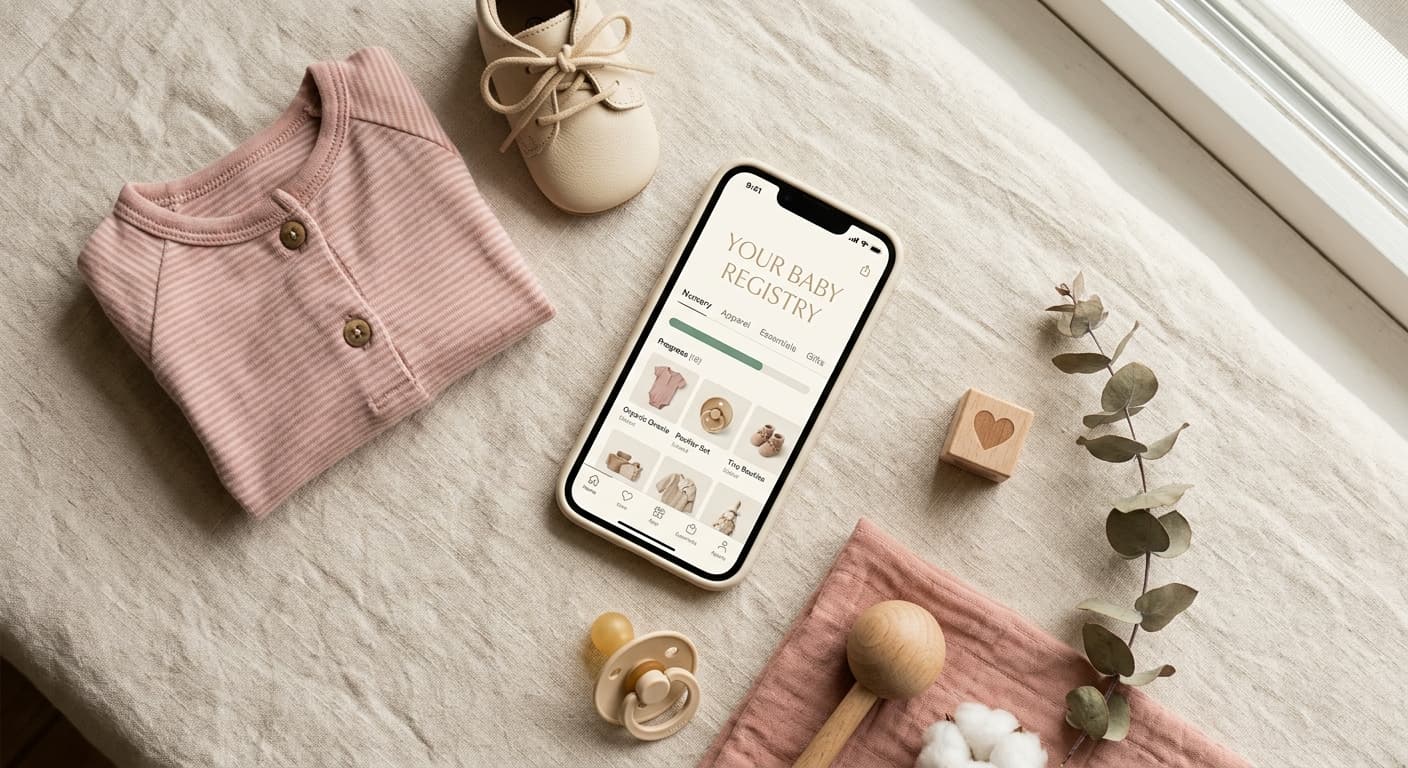
Treat the registry as the single source of truth and the shower as one of its funding channels. Before invitations go out, assign every gear category to one of three lanes: registry for big, specific items; shower asks for consumables and group gifts; and buy-later for anything better chosen after the baby arrives. Duplicates and returns cluster in unassigned categories — blankets, newborn clothes, plush — so a coverage map, not a longer wish list, is what prevents the pile of fourteen blankets.
Our Verdict
Map every category to registry, shower, or buy-later before invitations go out, point every guest at one registry, and plan the return run for the first month. Blankets are the cautionary tale: AAP safe-sleep rules keep loose bedding out of the crib entirely, so the most-gifted category is the least usable one — route guests toward consumables and group gifts instead, and the nursery ends up holding only things that get used.
Key Takeaways
- ✓Map every category to registry, shower, or buy-later before invitations go out, point every guest at one registry, and plan the return run for the first month. Blankets are the cautionary tale: AAP safe-sleep rules keep loose bedding out of the crib entirely, so the most-gifted category is the least usable one — route guests toward consumables and group gifts instead, and the nursery ends up holding only things that get used.
- ✓Treat the registry as the single source of truth and the shower as one of its funding channels — not a separate gift event.
- ✓One registry, everywhere. Every invitation, shower page, and grandparent question should point at the same list, so purchases mark themselves off.
- ✓The waste problem is a routing problem. Guests default to unlisted, feel-good purchases when the registry does not obviously cover a category, and parents pad registries with things better chosen later.
- ✓Blankets are the perfect storm of gifting: soft, affordable, personal — and nearly unusable in year one.

As an Amazon Associate I earn from qualifying purchases. Product prices and availability are subject to change.
Quick answer
Treat the registry as the single source of truth and the shower as one of its funding channels — not a separate gift event. Before invitations go out, assign every gear category to one of three lanes: registry (the big, specific items), shower asks (consumables and group gifts), and buy-later (anything your baby has to be born before you can choose well). Duplicates and returns happen almost entirely in categories nobody assigned to a lane — blankets, newborn clothes, plush toys — so the fix is a coverage map, not a longer wish list.
Key takeaways
- One registry, everywhere. Every invitation, shower page, and grandparent question should point at the same list, so purchases mark themselves off.
- Blankets are the canary. Loose blankets cannot go in a crib under AAP safe-sleep rules, which is why the most-gifted item is also the least usable one.
- Route consumables and group gifts to the shower, specific hardware to the registry, and opinion-heavy items to after the birth.
- Plan the return path before the shower — gift receipts and one retailer's return window beat a closet of unopened boxes.
The three-lane coverage map
The waste problem is a routing problem. Guests default to unlisted, feel-good purchases when the registry does not obviously cover a category, and parents pad registries with things better chosen later. Assign every category a lane before anyone shops:
| Category | Registry | Shower ask | Buy later |
|---|---|---|---|
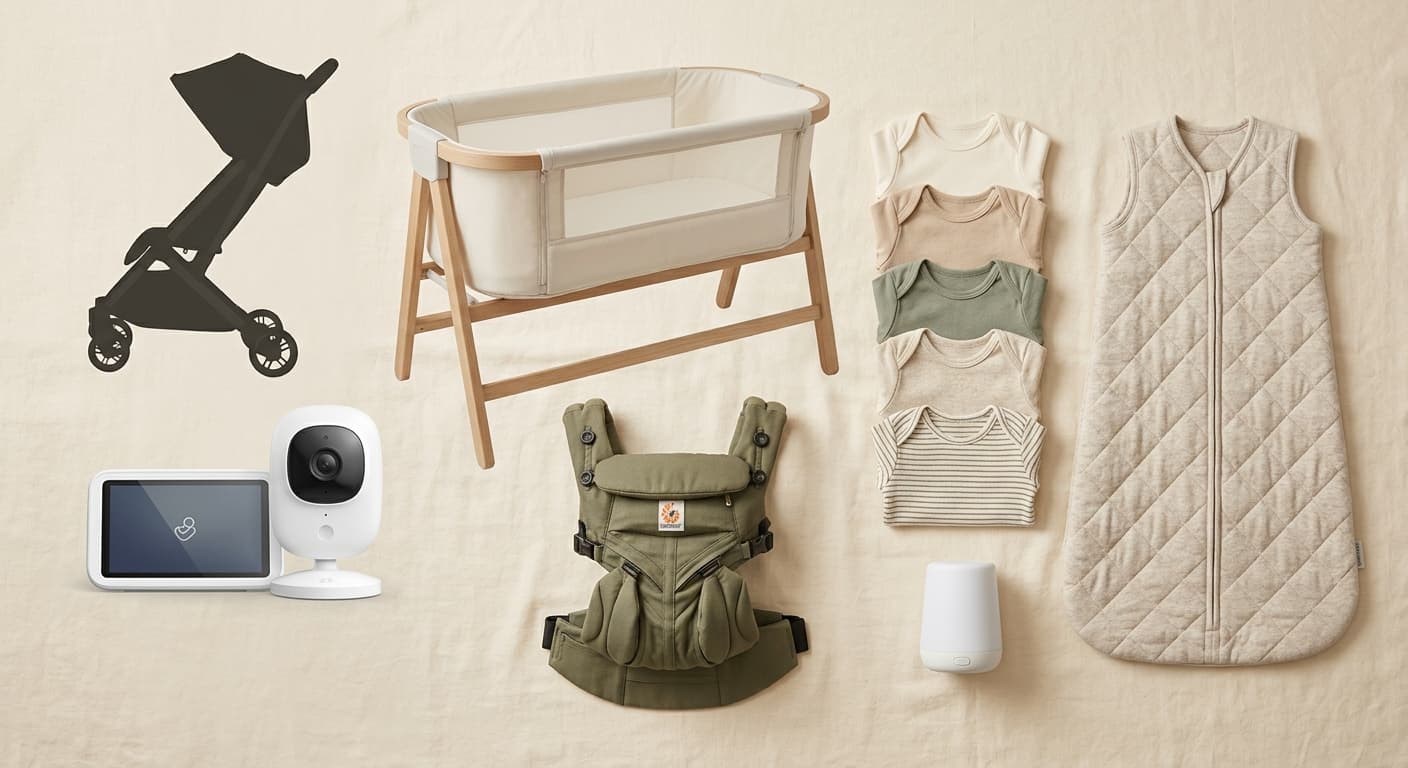
| Car seat, stroller, crib | ✔ — exact model | Group-gift it here | |
| Diapers & wipes | ✔ — a "diaper raffle" beats 14 blankets | ||
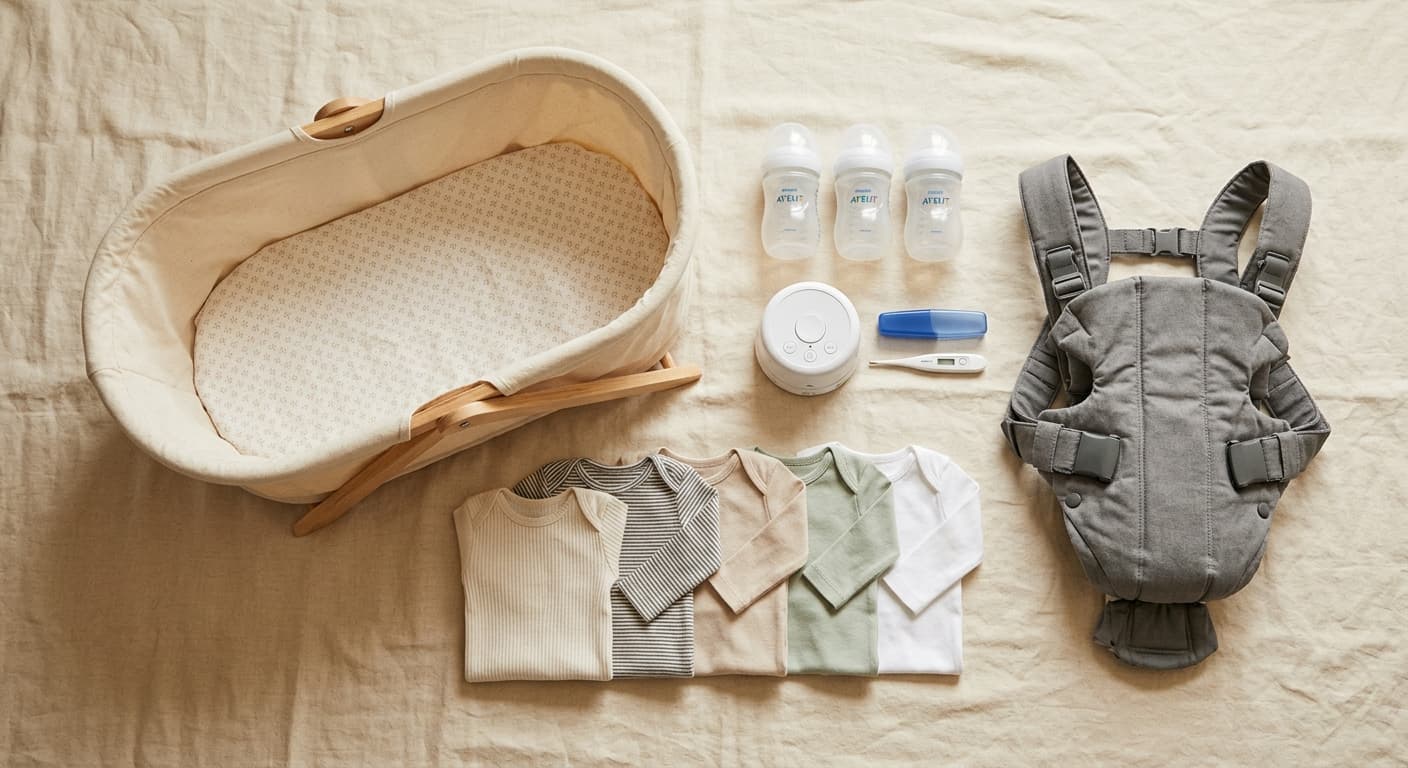
| Bottles & feeding | ✔ — one starter set only | ✔ — stock up after baby shows a preference | |
| Newborn clothes | Skip sizes 0–3 mo | Expect them unrequested — plan for it | ✔ — larger sizes, after you see growth |
| Blankets, plush, decor | Leave off entirely | Politely absent | ✔ — if you still want them |
| Baby carrier | ✔ — returnable retailer | ✔ — fit is personal; keep the receipt | |
| Bath & care consumables | ✔ — small, giftable, always used |
Two of our existing breakdowns slot straight into this map: the $500 registry and $1,000 registry plans show what belongs in the registry lane at each budget, and our most overrated registry items list is effectively the buy-later-or-never lane.
Why everyone gets 14 blankets
Blankets are the perfect storm of gifting: soft, affordable, personal — and nearly unusable in year one. The AAP's safe-sleep guidance is explicit that loose bedding, quilts, comforters, and blankets stay out of a baby's sleep area entirely, and the CPSC's crib rule is even shorter: bare is best — nothing but a fitted sheet. A gifted blanket is a photo prop and a stroller layer, and a family needs perhaps two or three of those. The same logic catches most plush toys and crib decor. This is not a reason to be ungracious; it is a reason to make sure the visible, shareable registry is full of things guests can feel equally good about buying.
The return-pile reality check
Talk to recent parents — or read any parenting forum thread on post-shower returns — and the same categories come up again and again. We could not find a rigorous published dataset on baby-gift returns, so treat this as pattern, not statistics:
The usual suspects: newborn-size clothing (outgrown in weeks, often before it is worn), duplicate blankets and swaddles, wipe warmers and other single-task gadgets, off-registry bottle sets in a brand the baby refuses, and shoes for a human who cannot walk. What survives the purge: diapers in a range of sizes, anything consumable, and the boring, specific hardware that was actually on the list.
The defensive play is simple: ask for gift receipts in the shower invitation (etiquette allows it when phrased as a kindness to guests), keep registry purchases inside one retailer's return window where you can, and do a single return-and-exchange run in the first month, before windows close and boxes migrate to the garage.
Coordinating the shower itself
The shower host, not the parents, traditionally runs the event — which is exactly why the registry lane map has to exist before the host sends anything. Share it early, ask that invitations link only the registry (and not name specific gifts), and let the host route group gifting toward the big-ticket lane. The etiquette details of who hosts, what invitations can say, and how registry links should appear are covered well in this baby shower etiquette guide. On the registry side, consolidating to one platform makes the whole system work — our Amazon vs. Babylist vs. Target comparison covers which one fits which family, and our registry building guide covers what goes on it.
What most parents get wrong
The standard move is to make the registry longer, on the theory that more options prevent off-list gifts. The evidence of every post-shower return pile points the other way: long registries bury the priorities, guests bounce to something personal, and the duplicates arrive anyway. A short registry of specific items, a shower channel deliberately aimed at consumables and group gifts, and an explicit buy-later list is what actually closes the gap between what arrives and what gets used.
The bottom line
Map every category to registry, shower, or buy-later before invitations go out, keep one registry as the source of truth, and pre-plan the return run. The goal is not maximizing gifts — it is a nursery where everything that arrived gets used.
Is it rude to ask for gift receipts in a shower invitation?
No, when it is framed as making things easy for guests — for example, "gift receipts appreciated, sizes are unpredictable." Etiquette draws the line at demanding specific gifts, not at enabling easy exchanges.
Should the registry be finished before the shower invitations go out?
Yes. Invitations typically go out four to six weeks ahead, and guests shop from the moment they arrive. A registry that fills in later guarantees early guests buy off-list — which is where duplicates come from.
What should deliberately stay off a baby registry?
Loose blankets, crib bumpers and decor, newborn-size clothing hauls, and anything opinion-heavy your baby gets a vote on — bottle brands beyond a starter set, pacifier stockpiles, and shoes. Route those to the buy-later lane.
Sources
Research Sources
Hilly Shore Inc.
Editorial teamIndependent product research team behind Cribworthy. Reviews are grounded in published AAP / CDC / NHTSA / CPSC pediatric guidance, JPMA / GREENGUARD GOLD / OEKO-TEX certification verification, and aggregated buyer sentiment.
115 products reviewed · 20 categories covered · cites AAP, CDC, NHTSA, CPSC, FDA, ACOG.
Safety claims are verified against published pediatric guidelines and CPSC databases. See our editorial standards.