Best Baby Sunscreen and Sun Protection (Reef-Safe Picks)
Our #1 Pick
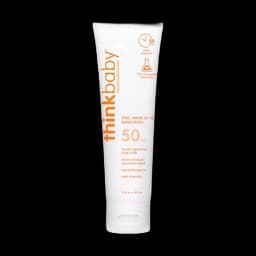
Thinkbaby SPF 50+ is the sunscreen to buy once your baby is over six months: mineral, zinc-based, and easier to rub in than most. Under six months, the answer is not a product at all but shade, a hat, and long sleeves, with sunscreen used only on small exposed patches when shade is genuinely unavailable. Reapply every two hours outdoors.
Best Overall
- EWG top-rated infant sunscreen for 11 consecutive years
- Non-nano zinc oxide 20% active ingredient
- Free of oxybenzone, octinoxate, avobenzone, parabens, phthalates
Price checked Sep 12, 2026
Also Great
Best Sensitive Skin: Blue Lizard Baby Mineral Sunscreen SPF 50+ ($15) — Best Sensitive Skin
Best Stick: Badger Baby Sunscreen Stick SPF 40 ($10) — Best Stick
Our Verdict
Take Thinkbaby for everyday use, Blue Lizard Baby for beach and pool days, and Badger Baby if you want the shortest ingredient list on the shelf. Choose Neutrogena Pure & Free when cost is the deciding factor. Avoid spray formats around a baby's face, avoid oxybenzone and octinoxate, and never rely on sunscreen alone during the middle of the day.
#1Thinkbaby Safe Sunscreen SPF 50+ 4.6 | #2Blue Lizard Baby Mineral Sunscreen SPF 50+ 4.8 | #3Badger Baby Sunscreen Stick SPF 40 4.6 | #4Pipette Mineral Sunscreen SPF 50 4.4 | |
|---|---|---|---|---|
| Verdict | Best Overall | Best Sensitive Skin | Best Stick | Best Spray Alternative |
| Price | ~$13.49Buy on Amazon | ~$8.74Buy on Amazon | ~$17.99Buy on Amazon | |
| Type | Baby Sunscreen | Baby Sunscreen | Baby Sunscreen | Baby Sunscreen |
| Buyer sentiment | Sun Protection Fragrance Effectiveness Greasiness Buyers praise sun protection, fragrance, effectiveness and greasiness. Mixed feedback on thickness and residue. Based on 4,574 user mentions | Sun Protection Application Effectiveness Skin Sensitivity White Cast Buyers praise sun protection, application, effectiveness and skin sensitivity. Mixed feedback on non-greasy and compact size. Some flag white cast. Based on 871 user mentions | Sun Protection Ingredients Effectiveness Fragrance Thickness Greasiness Buyers praise sun protection, ingredients, effectiveness and fragrance. Mixed feedback on ease of application. Some flag thickness and greasiness. Based on 565 user mentions | Sun Protection Moisturizing Effectiveness Application Greasiness Buyers praise sun protection, moisturizing, effectiveness and application. Mixed feedback on white cast and skin compatibility. Some flag greasiness. Based on 1,475 user mentions |
| Pros |
|
|
|
|
| Cons |
|
|
|
|
* Prices are approximate. Check the linked retailer for current pricing and availability.
Key Takeaways
- ✓Take Thinkbaby for everyday use, Blue Lizard Baby for beach and pool days, and Badger Baby if you want the shortest ingredient list on the shelf. Choose Neutrogena Pure & Free when cost is the deciding factor. Avoid spray formats around a baby's face, avoid oxybenzone and octinoxate, and never rely on sunscreen alone during the middle of the day.
- ✓> This outranks every product recommendation below. The AAP's official sunscreen guidance is clear: sunscreen should not be applied to babies under 6 months old as the primary sun protection method.
- ✓Sunscreens come in two fundamentally different categories, and for babies the choice is easy.
- ✓When evaluating a baby sunscreen, check these five things on the label:
- ✓Based on AAP and EWG guidance, skip any sunscreen that contains:
💬 Real Talk from Parents
You'll reapply sunscreen once. Your kid will immediately stick their hands in sand.
Mineral sunscreen leaves them looking like a tiny ghost, but it's the safest option.
The AAP says no sunscreen under 6 months — shade and clothing first.
Putting sunscreen on a squirming toddler is an Olympic-level sport.
Mineral sunscreen only for babies. Chemical sunscreens aren't tested on infants. Zinc oxide is your friend.
Paraphrased community consensus — not a direct quote.
Babies under 6 months can use regular sunscreen.
The AAP recommends avoiding sunscreen for babies under 6 months. Their skin is thinner and absorbs chemicals more readily. Use shade, protective clothing, and wide-brim hats instead.
Spray sunscreen is just as effective as lotion.
Spray sunscreens provide uneven coverage and risk inhalation — the FDA has warned against using sprays on children's faces. Lotion or stick formulas ensure better, more consistent protection.
As an Amazon Associate I earn from qualifying purchases. Product prices and availability are subject to change.
Picking a sunscreen for a baby is surprisingly hard. The shelves are full of products marketed as "baby safe" that contain ingredients the American Academy of Pediatrics (AAP) recommends avoiding. Mineral vs chemical, under 6 months vs older, SPF 30 vs 50 — there's a lot of conflicting advice. This guide is the research-based breakdown, pulled from AAP guidelines, Environmental Working Group (EWG) ratings, and verified parent reviews of what actually works on real baby skin.
We're a research-based site. We don't test products ourselves — we synthesize expert sources, long-term parent feedback on r/beyondthebump and BabyCenter forums, and cross-reference every pick against AAP, FDA, and EWG guidance before including it.
The single most important rule: no sunscreen under 6 months
This outranks every product recommendation below. The AAP's official sunscreen guidance is clear: sunscreen should not be applied to babies under 6 months old as the primary sun protection method.
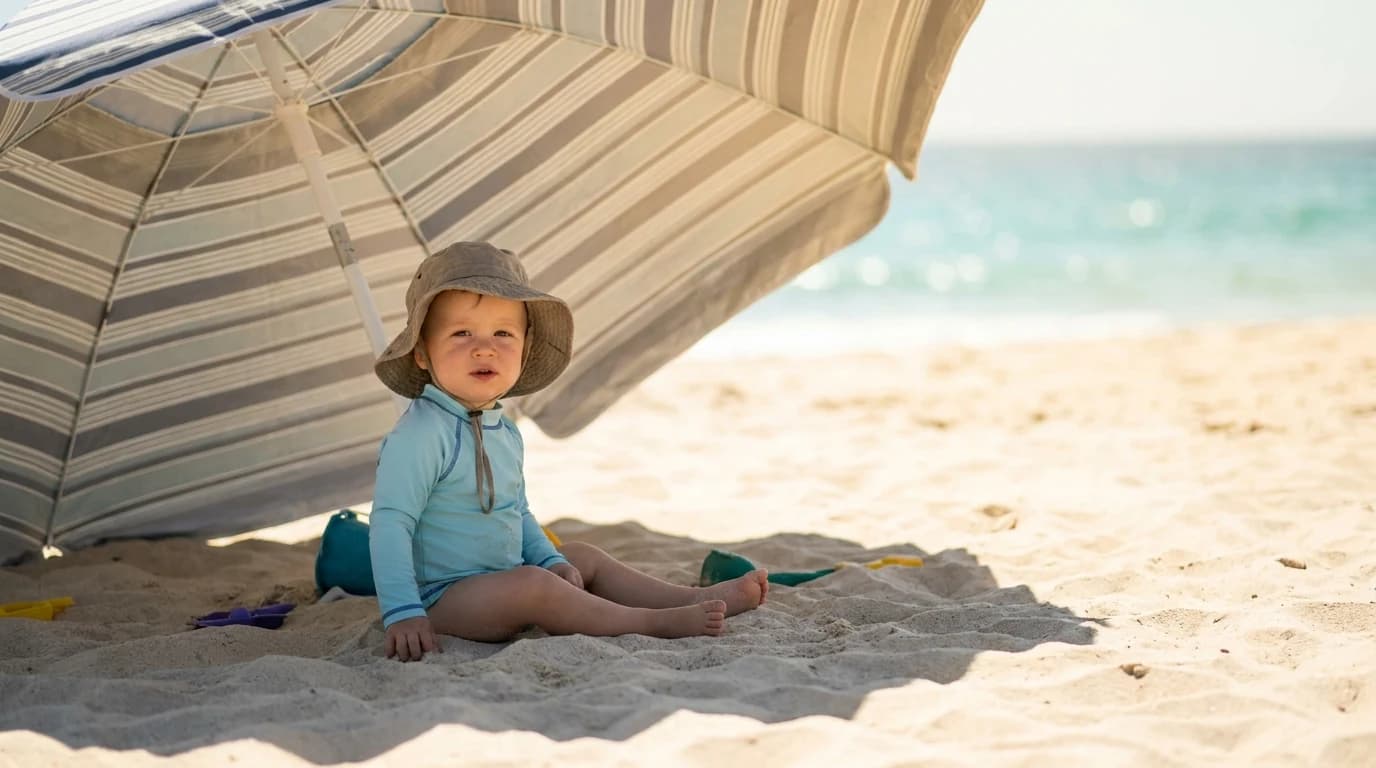
Their skin is thinner and more permeable than older children or adults, which means more of the chemicals in sunscreen are absorbed into the bloodstream. The AAP's recommended approach for babies under 6 months:
- Keep them out of direct sunlight between 10am and 4pm (peak UV)
- Use protective clothing — long sleeves, long pants, wide-brim hat
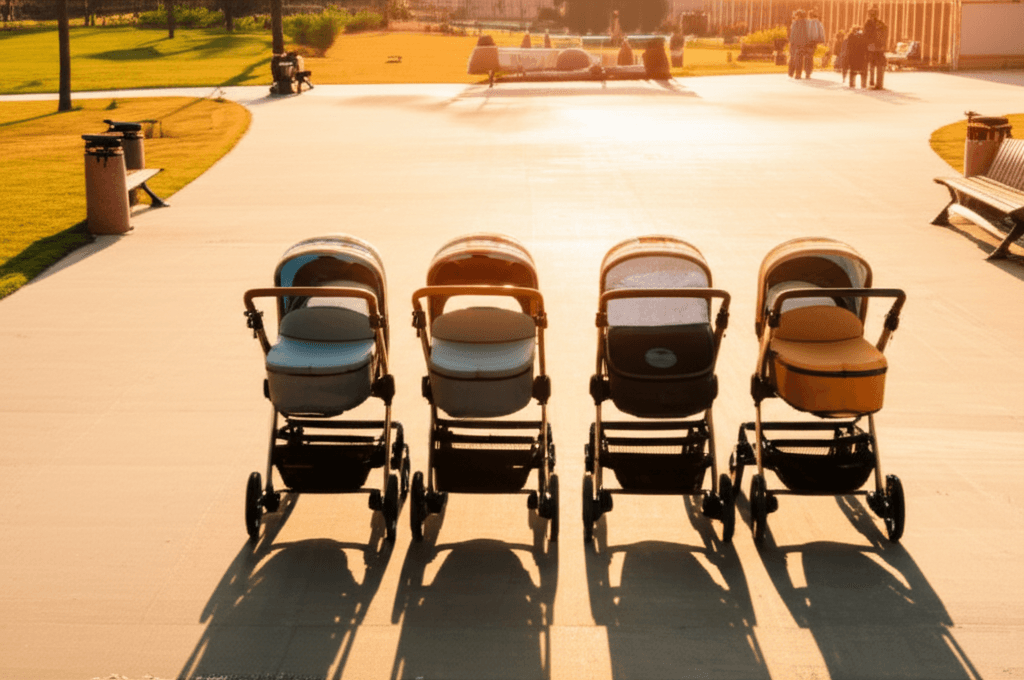
- Use stroller canopies and shaded carriers for outdoor walks
- Apply sunscreen ONLY to small exposed areas (face, hands) that can't be covered by clothing, and only as a last resort
For babies 6 months and older, sunscreen becomes the primary line of defense. Everything below is for that age group and up.
Chemical vs mineral sunscreen — the critical choice
Sunscreens come in two fundamentally different categories, and for babies the choice is easy.
Mineral (physical) sunscreens — the baby-safe choice
Mineral sunscreens use zinc oxide or titanium dioxide as active ingredients. These create a physical barrier on the skin that reflects UV rays. They don't absorb into the bloodstream, they start working immediately upon application (no 15-minute wait), and they rarely cause allergic reactions.
Why pediatricians prefer mineral for babies:
- Non-absorbing — stays on the skin surface
- Broad-spectrum UVA/UVB coverage naturally
- Gentle on sensitive, eczema-prone skin
- FDA-recognized as Generally Recognized As Safe and Effective (GRASE)
Downside: Mineral sunscreens leave a visible white cast on skin (especially darker skin tones). Some newer "tinted" mineral formulas reduce this.
Chemical sunscreens — what to avoid for babies
Chemical sunscreens use active ingredients like oxybenzone, octinoxate, homosalate, avobenzone, and octisalate. These absorb UV rays and convert them to heat. They absorb INTO the skin and bloodstream — a 2019 FDA study found several of these chemicals at detectable levels in the blood after a single application.
Why to avoid for babies:
- Oxybenzone is a known hormone disruptor (EWG rates it as a "high hazard")
- Higher rates of skin irritation and allergic reactions
- FDA is re-evaluating the safety of most chemical UV filters (as of 2021)
- Some (oxybenzone, octinoxate) are banned in Hawaii, Key West, and other reef environments
The shortcut: read the active ingredients. If it says zinc oxide or titanium dioxide (ideally both), it's mineral. If it says anything else, it's chemical and you want to skip it for babies.
Our top picks — best baby sunscreens for 2026
| Pick | Active mineral | SPF | Water-resistant | Best for |
|---|---|---|---|---|
| Thinkbaby | 20% zinc oxide | 50+ | 80 minutes | The default choice; EWG-verified |
| Blue Lizard Baby | 10% zinc oxide + 5% titanium dioxide | 50+ | 40 minutes | Sensitive and eczema-prone skin |
| Badger Baby | Zinc oxide (5 ingredients total) | 30 | — | The shortest ingredient list |
| Babyganics | 20% non-nano zinc oxide | 50 | — | Drugstore and Target availability |
| Neutrogena Pure & Free Baby | 21.6% zinc oxide | 60 | 80 minutes | Grabbing one on the way out |
| All Good Baby | Zinc oxide only | 30 | — | Reef-safe travel |
1. Thinkbaby SPF 50+ Mineral Sunscreen
The reference baby sunscreen. 20% non-nano zinc oxide, EWG-verified as having zero hazard concerns, and it was the first sunscreen to pass Whole Foods' "Premium Body Care" quality standards. Water-resistant up to 80 minutes. The formula rubs in more easily than most mineral sunscreens — still leaves a light cast on darker skin tones, but noticeably less than cheaper zinc-only products.
- Good for: Most babies 6 months and older, regular beach/pool use, parents who want the EWG-verified option.
- Watch out for: Slight white cast on darker skin (common to all mineral sunscreens).
- Ingredients: Active — 20% zinc oxide. Inactive — aloe, vitamin E, shea butter.
2. Blue Lizard Baby Mineral Sunscreen SPF 50+
Buy on Amazon · $8.74 →The pediatrician favorite. 10% zinc oxide + 5% titanium dioxide dual-mineral formulation for full broad-spectrum coverage. Water-resistant 40 minutes. The bottle has a color-changing feature — it turns pink when UV is present, which is a surprisingly useful visual reminder. Fragrance-free, paraben-free, and free of the "big 6" chemical UV filters.
- Good for: Sensitive skin, eczema-prone babies, parents who want the "recommended by pediatricians" pick.
- Watch out for: Thicker consistency — takes effort to rub in on wiggly babies.
3. Badger Baby Sunscreen SPF 30
The minimalist pick. Just 5 ingredients: zinc oxide, sunflower oil, beeswax, vitamin E, and seabuckthorn. EWG-verified with a 1/10 hazard rating (the safest possible). The SPF 30 rating is intentional — Badger argues (with some science backing) that SPF 30 adequately blocks UVB while letting skin maintain some Vitamin D synthesis. Great for parents who want the fewest possible ingredients.
- Good for: Extremely sensitive skin, eczema, parents prioritizing "clean" ingredients.
- Watch out for: Leaves the most visible white cast of any pick on this list. SPF 30 is slightly lower than pediatrician-recommended 50 for all-day outdoor exposure.
4. Babyganics Mineral Sunscreen SPF 50
The mainstream-accessible pick. Found in most major drugstores and Target, which matters when you forget to bring sunscreen on a trip. 20% non-nano zinc oxide, tear-free formula, fragrance-free. Not as "clean" as Thinkbaby or Badger but significantly cleaner than any chemical sunscreen, and the convenience factor is real.
- Good for: Convenience, travel, parents who need a good-enough option from a regular store.
- Watch out for: Some owners report it pills/rolls up on application.
5. Neutrogena Pure & Free Baby SPF 60
Drugstore-accessible mineral sunscreen from a mainstream brand. 21.6% zinc oxide, SPF 60, water-resistant 80 minutes. Hypoallergenic and dermatologist-tested. If you need to grab sunscreen at Walgreens at 9am before a beach day, this is the best of the widely-available options.
- Good for: Emergencies, travel, drugstore purchases.
- Watch out for: More processed feel than Thinkbaby or Badger.
6. All Good Baby Sunscreen SPF 30
The reef-safe pick. Zinc oxide only, biodegradable packaging, and specifically formulated to not harm coral reefs. Slightly thinner consistency than Thinkbaby, which makes application easier on squirmy babies. SPF 30 (same caveat as Badger).
- Good for: Beach trips, environmentally-conscious parents, reef-safe travel destinations (Hawaii, Mexico, parts of Caribbean).
- Watch out for: SPF 30 means reapplication needed more frequently than SPF 50.
Sunscreen safety checklist — what to look for
When evaluating a baby sunscreen, check these five things on the label:
- Active ingredient: zinc oxide or titanium dioxide only. If it has any other active ingredient (oxybenzone, octinoxate, homosalate, avobenzone, octisalate), skip it.
- Broad-spectrum. This means it blocks both UVA (aging rays) and UVB (burning rays). Modern mineral sunscreens are broad-spectrum by default.
- SPF 30 or higher. AAP recommends at least SPF 30 for babies 6 months and older. SPF 50 for full-day outdoor exposure.
- Water-resistant. The label will say "water-resistant 40 minutes" or "water-resistant 80 minutes" — choose based on whether your baby is swimming.
- Fragrance-free. Fragrances are a common cause of skin irritation in babies.
Avoid these ingredients specifically
Based on AAP and EWG guidance, skip any sunscreen that contains:
- Oxybenzone (hormone disruptor, EWG rating 8/10 hazard)
- Octinoxate (hormone disruptor, banned in several beach jurisdictions)
- Homosalate (hormone disruptor concerns)
- Avobenzone (breaks down in sunlight without stabilizers)
- Retinyl palmitate (vitamin A derivative that may increase skin sensitivity to sun)
- Parabens (hormone disruptors)
- Synthetic fragrances (skin irritants)
How to apply sunscreen to a baby
Technique matters as much as the product:
- Apply 15 minutes before going outside. Mineral sunscreens actually work immediately, but the extra time helps the product set on the skin.
- Use enough. Most parents underapply. A rule of thumb: a nickel-sized amount for the face, and about a shot glass worth for full-body coverage.
- Don't forget the ears, back of the neck, tops of feet, and behind the knees. These are the most commonly missed spots.
- Reapply every 2 hours, and immediately after swimming or heavy sweating. Even "80 minute water-resistant" sunscreens need reapplication after 80 minutes in water.
- For faces, use a stick format. Most mineral sunscreens are available as sticks, which are easier to apply around the eyes without drippage.
Combining sunscreen with other sun protection
Even with the best sunscreen, babies need additional protection:
- Wide-brim hat with a chin strap (prevents the toddler "hat throwing" game)
- UPF-rated swim shirt for pool and beach days
- Stroller canopy or umbrella
- Sun-protective clothing from brands like Coolibar or SwimZip
- Shade-seeking behavior — plan walks before 10am or after 4pm during high-UV season
The EWG's advice is that clothing + shade > sunscreen as the first line of defense, with sunscreen covering exposed skin as a backup.
Common mistakes parents make
- Using spray sunscreen on babies. Sprays are convenient for adults but not recommended for babies — they can be inhaled during application, and it's hard to tell if you've applied enough. Use a lotion or stick instead.
- Relying on makeup with SPF. Makeup with SPF is not sunscreen. The SPF claim is based on a thick layer that nobody actually applies, and it's not water-resistant.
- Expecting one application to last the day. Sunscreen needs reapplication every 2 hours, regardless of SPF level. SPF 100 doesn't last longer than SPF 30 — it just blocks slightly more of the initial UV.
- Using adult sunscreen on babies. Adult sunscreens often contain fragrances, chemical UV filters, and other ingredients that are fine for adult skin but problematic for babies. Stick with baby-specific mineral formulations.
- Skipping sunscreen on cloudy days. UVA rays pass through clouds at ~80% intensity. Cloudy days still cause sunburn and skin damage.
Frequently asked questions
What is the best baby sunscreen?
For most parents, our top pick is Thinkbaby SPF 50+ Mineral Sunscreen — it's EWG-verified, water-resistant for 80 minutes, has 20% zinc oxide, and applies more easily than most mineral sunscreens. Blue Lizard is a close second and is the pediatrician favorite.
Is sunscreen safe for babies under 6 months?
The AAP recommends NOT using sunscreen as the primary protection for babies under 6 months. Keep them in shade, use protective clothing and hats, and only apply sunscreen to small exposed areas (face, hands) if unavoidable.
What's the safest sunscreen for infants and newborns?
For infants over 6 months, Badger Baby Sunscreen SPF 30 has the cleanest ingredient list (5 ingredients, EWG 1/10 hazard rating). Thinkbaby is a close runner-up with better application feel.
What SPF is best for babies?
SPF 30-50 is the sweet spot per AAP guidelines. SPF 30 blocks ~97% of UVB and SPF 50 blocks ~98%. Higher SPFs (70, 100) offer minimal additional protection and usually contain more chemical filters.
Is chemical sunscreen bad for babies?
Chemical sunscreens (oxybenzone, octinoxate, avobenzone, etc.) absorb into the bloodstream at higher rates in babies than adults due to thinner skin. The FDA is re-evaluating their safety for children. The AAP's practical guidance: use mineral sunscreens (zinc oxide, titanium dioxide) for babies.
Does my baby need sunscreen on cloudy days?
Yes. Up to 80% of UV rays pass through clouds. Babies still need sun protection on overcast days.
Is Coppertone Water Babies safe for my baby?
Coppertone Water Babies contains chemical UV filters (avobenzone, homosalate, octisalate, oxybenzone in some formulations). While FDA-approved, most pediatricians recommend a mineral sunscreen instead. Coppertone also makes a Pure & Simple line that is mineral-based and a better choice.
What's reef-safe sunscreen and do I need it?
Reef-safe sunscreens are free of oxybenzone, octinoxate, and other ingredients that damage coral reefs. You need it if you're swimming in ocean environments, especially in Hawaii, Key West, Mexico, or other reef-sensitive areas (several have banned non-reef-safe sunscreens). All the mineral picks in this guide are reef-safe.
How often should I reapply baby sunscreen?
Every 2 hours, or immediately after swimming, heavy sweating, or toweling off. Even "water-resistant 80 minute" sunscreens need reapplication after 80 minutes in water.
What's the best sunscreen for babies with eczema?
Badger Baby Sunscreen SPF 30 has the fewest possible ingredients and is fragrance-free, making it the safest pick for eczema-prone babies. Blue Lizard Baby is also pediatrician-recommended for sensitive skin.
Can I use baby sunscreen on toddlers and older kids?
Yes. Baby-safe mineral sunscreens are just as effective for toddlers, kids, and adults. Many parents just use Thinkbaby or Blue Lizard for the whole family.
Bottom line
For babies 6 months and older, the best pick is Thinkbaby SPF 50+ Mineral Sunscreen — EWG-verified, 20% zinc oxide, water-resistant 80 minutes, and relatively easy to apply. For extra-sensitive skin or eczema, go with Badger Baby SPF 30. For pediatrician-recommended credibility, Blue Lizard Baby is the safe choice. Avoid any chemical sunscreen (oxybenzone, octinoxate, etc.) for babies.
And remember — under 6 months, sunscreen is NOT the primary protection. Shade, protective clothing, and avoiding peak sun hours are the first line of defense, with small amounts of mineral sunscreen as a backup for unavoidable exposure.
For more on baby safety essentials, see our guides on best baby sun hats for newborns, best baby laundry detergent for sensitive skin, and baby-proofing checklist for new parents.
Research Sources
Hilly Shore Inc.
Editorial teamIndependent product research team behind Cribworthy. Reviews are grounded in published AAP / CDC / NHTSA / CPSC pediatric guidance, JPMA / GREENGUARD GOLD / OEKO-TEX certification verification, and aggregated buyer sentiment.
115 products reviewed · 20 categories covered · cites AAP, CDC, NHTSA, CPSC, FDA, ACOG.
Safety claims are verified against published pediatric guidelines and CPSC databases. See our editorial standards.