Best White Noise Machines for Babies: Sleep-Saving Picks
Our #1 Pick
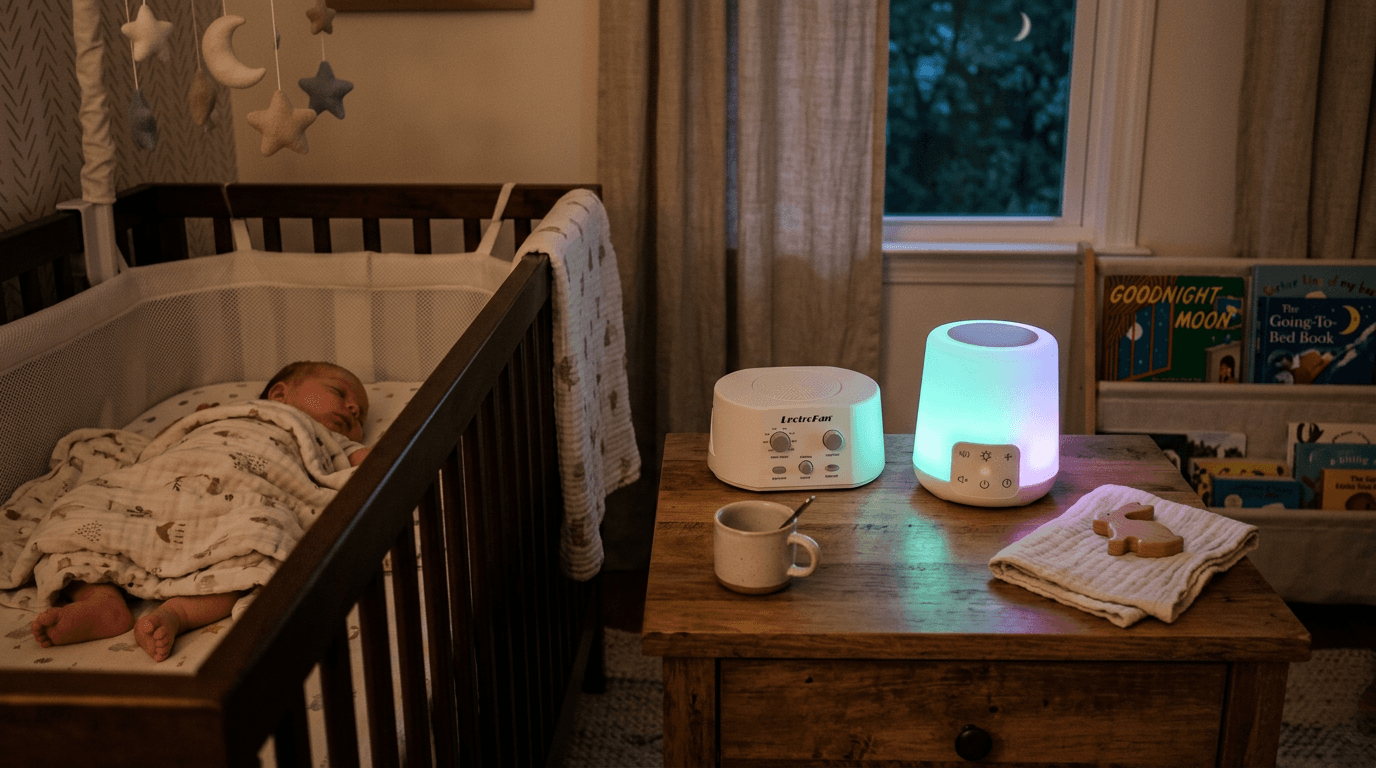
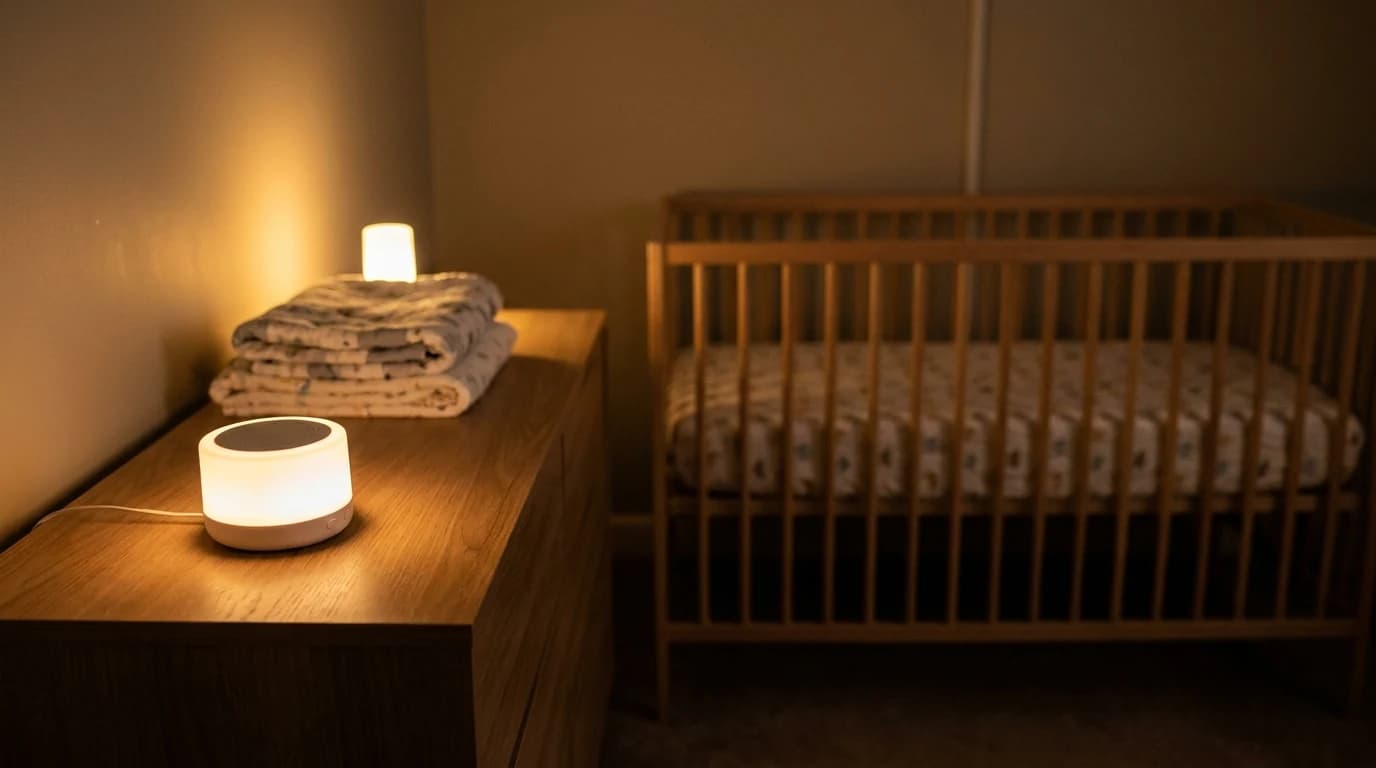
The Hatch Rest is the machine to buy for a nursery because it pairs steady sound with a night light and app control you keep using for years. The Yogasleep Dohm is the better choice if you want a fan-driven sound with no digital loop. Placement outranks the model: keep any machine well away from the crib and low enough to talk over comfortably.
Also Great
Best Mechanical: Yogasleep Dohm Classic ($35) — Best Mechanical
Best Portable: Yogasleep Hushh ($25) — Best Portable
Our Verdict
Choose the Hatch Rest for one device that grows into a toddler OK-to-wake clock, the Dohm Classic for mechanical sound at a third of the price, or the Yogasleep Hushh when you mainly need something for the stroller and hotel rooms. Skip anything whose volume only sounds right at maximum, and never mount a machine on the crib rail or a shelf directly above it.
#1Hatch Baby Sound Machine 4.8 | #2Yogasleep Dohm Classic 4.6 | #3Yogasleep Hushh 4.4 | #4Nanit Sound + Light 4.1 | #5LectroFan Micro2 4 | |
|---|---|---|---|---|---|
| Verdict | The current-generation Hatch Baby Sound Machine + Night Light is the direct successor to the Rest line — app-controlled sound machine, night light, and toddler sleep trainer — live at ~$80. | Best Mechanical | Best Portable | Best Smart Pick | Best Budget |
| Price | ~$79.99Buy on Amazon | ~$49Buy on Amazon | ~$29.99Buy on Amazon | ~$79.99Buy on Amazon | ~$54.95Buy on Amazon |
| Brand | Hatch Baby | — | — | — | — |
| Type | — | White Noise Machines Babies | White Noise Machines Babies | White Noise Machines Babies | White Noise Machines Babies |
| Buyer sentiment | — | Sound Quality Sleep Quality Noise Cancellation Effectiveness Noise Level Durability Buyers praise sound quality, sleep quality, noise cancellation and effectiveness. Some flag noise level and durability. Based on 26,246 user mentions | Sound Quality Portability Sleep Aid Volume Reliability Durability Buyers praise sound quality, portability, sleep aid and volume. Mixed feedback on battery life. Some flag reliability and durability. Based on 7,542 user mentions | Sound Quality Sound Ease Of Use Adjustability Connectivity Buyers praise sound quality, sound, ease of use and adjustability. Mixed feedback on reliability. Some flag connectivity. Based on 353 user mentions | Compact Size Noise Level Sound Quality Buyers praise compact size, noise level and sound quality. Based on 15 user mentions |
| Pros |
|
|
|
|
|
| Cons |
|
|
|
|
* Prices are approximate. Check the linked retailer for current pricing and availability.
Key Takeaways
- ✓Choose the Hatch Rest for one device that grows into a toddler OK-to-wake clock, the Dohm Classic for mechanical sound at a third of the price, or the Yogasleep Hushh when you mainly need something for the stroller and hotel rooms. Skip anything whose volume only sounds right at maximum, and never mount a machine on the crib rail or a shelf directly above it.
- ✓The Hatch Rest is the best white noise machine for most families, combining excellent sound quality, app-based control, and a built-in night light in one device. For a more affordable mechanical op...
💬 Real Talk from Parents
The bassinet-to-crib transition feels scarier for you than for the baby.
White noise machines are not for the baby. They're for your sanity.
Sleep training is 50% technique and 50% parental willpower.
Every baby sleep book contradicts the last one you read. That's normal.
If your baby is sleeping safely, you're doing it right. Ignore anyone who says otherwise.
Paraphrased community consensus — not a direct quote.
Babies should sleep in complete silence.
The womb is roughly 80-90 decibels — about as loud as a vacuum cleaner. White noise at 60-65 dB actually helps babies sleep by mimicking the familiar uterine environment.
Sleep training damages your baby's attachment.
Multiple peer-reviewed studies (including a 2012 Pediatrics study following children for 5 years) found zero difference in emotional health, behavior, or parent-child attachment between sleep-trained and non-sleep-trained children.
As an Amazon Associate I earn from qualifying purchases. Product prices and availability are subject to change.
Best White Noise Machines for Babies: Sleep-Saving Picks
The Hatch Rest is the best white noise machine for most families, combining excellent sound quality, app-based control, and a built-in night light in one device. For a more affordable mechanical option, the Yogasleep Dohm Classic produces natural fan-based white noise without any digital loops.
Research supports the use of white noise for infant sleep. A landmark 1990 study in Archives of Disease in Childhood found that 80% of newborns fell asleep within five minutes when exposed to white noise, compared to only 25% in the control group.
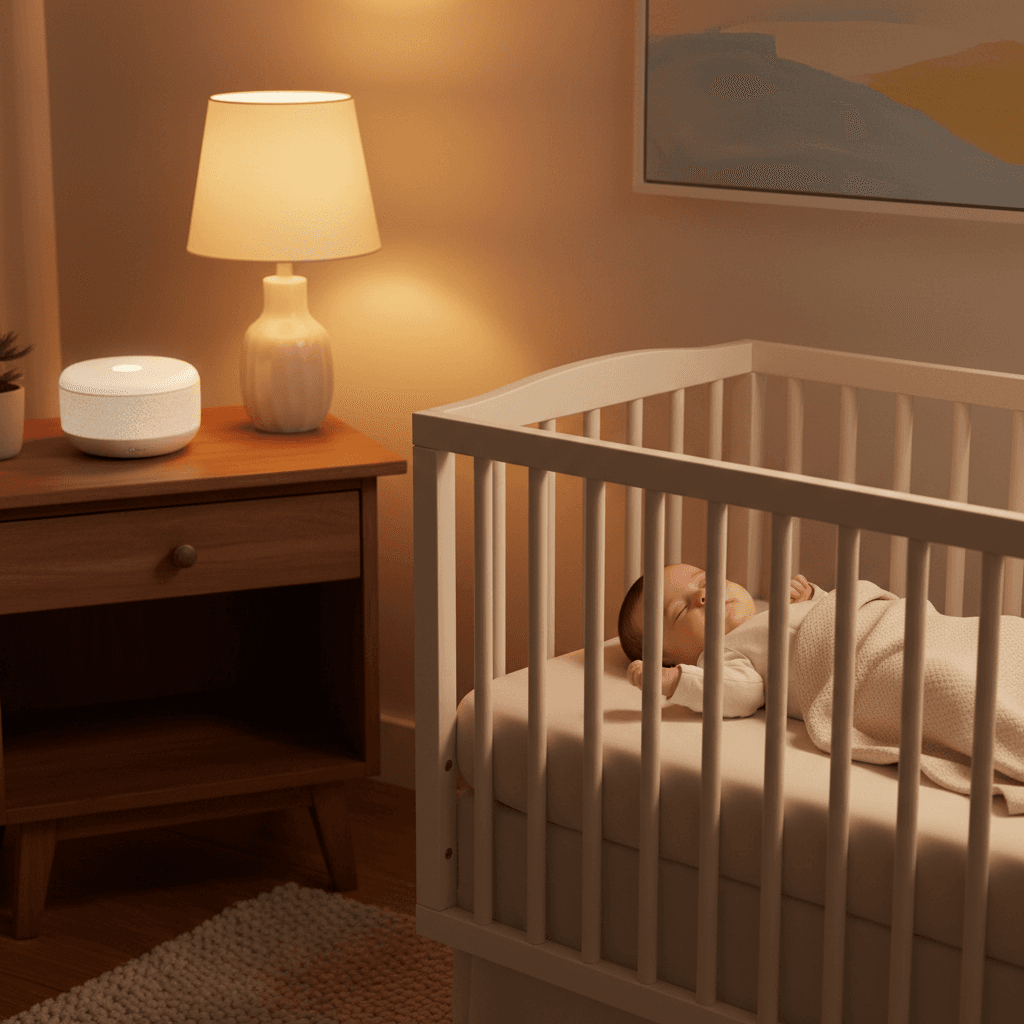
The two numbers that matter: keep white noise at or below 50 decibels — the noise limit the AAP recommends for hospital nurseries — and place the machine at least 7 feet (2 meters) from the crib, the distance the researchers behind a 2014 Pediatrics study of infant sleep machines advise to protect developing hearing.
| Machine | Price | How it makes sound | Best for |
|---|---|---|---|
| Hatch Rest | ~$80 | Digital library, app-controlled | Most families |
| Yogasleep Dohm Classic | $49.99 | A real internal fan | Loop-free simplicity |
| Yogasleep Hushh | $25.99 | Digital, three sounds | Strollers and car seats |
| Nanit Sound + Light | $79.99 | Digital, plus ceiling projection | Households already on Nanit |
| LectroFan Micro2 | $48.75 | Digital fan and white noise | Travel, doubles as a speaker |
What features matter most in a baby white noise machine?
Distance does more for safety than the volume knob
The AAP recommends keeping white noise machines at or below 50 decibels and placing them at least 7 feet from the crib. Look for machines with adjustable volume and consider measuring with a free decibel app to ensure you're in the safe range.
A 2014 study published in Pediatrics tested 14 popular white noise machines at maximum volume and found that all exceeded the recommended 50 dB limit for infant hospital nurseries when placed on the crib rail. The researchers recommended placing machines at least 200 cm (about 7 feet) from the infant and never running them at maximum volume.
A loop point wakes a baby, not the sound itself
There's a meaningful difference between looped digital recordings (which can have audible repeats) and continuous mechanical or algorithmically generated sound. Babies may startle at a loop point, so continuous sound is preferable.
Buy the machine that does timer and all-night
Some experts recommend running white noise all night to maintain consistent sleep environment. Others prefer a timer. The best machines offer both options so you can experiment.
A 2017 study in the Journal of Sleep Research found that continuous background noise throughout the night helped infants maintain longer sleep periods compared to timed intervals, likely because brief awakenings between sleep cycles were smoothed over by consistent ambient sound.
Portability decides whether you own one machine or two
If you travel or move the machine between rooms, size and battery life matter. Some machines clip onto strollers or car seats for naps on the go.
Which white noise machine is best overall for babies?
The Hatch Rest is more than a sound machine — it's a sound machine, night light, and toddler clock in one device. But as a white noise machine specifically, it excels. The sound library includes excellent white noise, pink noise, rain, ocean, and several other options. Sound quality is rich and full, not tinny or obviously looped.
The AAP's safe sleepsafe sleepAAP guideline: baby sleeps Alone (no blankets, pillows, bumpers, or toys), on their Back, in a Crib or bassinet with a firm flat mattress. Room-sharing without bed-sharing is recommended for the first 6-12 months. guidelines (updated 2022) do not specifically endorse or discourage white noise machines but emphasize that any device in the nursery should not pose a hazard. The Hatch Rest's volume is adjustable across a wide range, so keeping output inside that range is easy — check it with a free decibel-meter app held at the crib rail rather than trusting the slider in the app.
The app control is the standout feature. You can adjust volume, change sounds, set schedules, and create bedtime routines without opening the nursery door. The night light is fully customizable with millions of colors and brightness levels. And when your baby becomes a toddler, the time-to-rise feature teaches them when it's okay to get up.
What the ~$70 actually buys:
- Excellent sound quality across all options
- App-controlled — adjust without entering the room
- Night light with customizable colors and brightness
- Time-to-rise feature grows with your child
- WiFi + Bluetooth with cellular backup
What to weigh before you commit:
- Requires WiFi for full functionality
- App subscription ($4/month) unlocks some premium features
- Slightly larger than dedicated sound-only machines
It's priced for what you get — a device you'll use for years, not months.
Which mechanical white noise machine is best for babies?
The Dohm has been the go-to white noise machine for decades, and the Classic model remains excellent. Instead of playing a recording, it uses an actual internal fan to produce real white noise. The result is a rich, consistent sound that never loops or stutters.
Why mechanical wins on consistency: there is no recording, so there is nothing to loop. Consumer Reports' 2025 nursery gear evaluation rated mechanical white noise machines higher for sound consistency than digital models, noting that looped digital recordings can contain subtle repetition artifacts that some infants find stimulating rather than soothing.
You adjust the tone and volume by twisting the outer shell, which changes the airflow through the internal openings. It's elegantly simple. There are no apps, no Bluetooth, no settings to fiddle with. Plug it in, twist to your preferred sound, and forget about it.
Why it's the value pick at ~$35:
- Real mechanical white noise — no loops, ever
- Dead-simple operation — twist and go
- Excellent build quality that lasts years
- Very affordable at ~$35
What you give up:
- Only produces white noise (no nature sounds)
- Not portable — AC power only
- No timer, night light, or smart features
- Fan mechanism can be slightly audible up close
What is the best portable white noise machine for babies?
The Hushh is Yogasleep's portable companion to the Dohm. It's a compact, clip-on sound machine with three sound options: bright white noise, deep white noise, and gentle surf. The clip attaches to strollers, car seats, and diaper bags, making it perfect for naps on the go.
Battery life is excellent at 6+ hours on a full charge, and it charges via micro-USB. The child lock prevents little hands from changing settings or turning it off mid-nap. At around $25, it's an easy impulse buy and one of the most useful baby gadgets we've researched.
What makes it worth ~$25:
- Clips onto strollers, car seats, and bags
- 6+ hours of battery life
- Child lock prevents accidental changes
- Three genuinely useful sound options
Where it falls short:
- Sound quality doesn't match full-size machines
- Micro-USB charging (not USB-C)
- Limited sound options compared to smart machines
Which smart white noise machine is best for a nursery?
If you're already using a Nanit baby monitor, the Nanit Sound + Light integrates seamlessly into your existing setup. It offers white noise, nature sounds, and lullabies with app control. The night light projects soft patterns on the ceiling, which older babies find soothing.
The integration with Nanit's sleep tracking is the real value — you can see how sound machine usage correlates with sleep quality over time. At around $50, it's reasonably priced for a smart device.
Why Nanit owners should look at it:
- Integrates with Nanit baby monitor and sleep tracking
- App-controlled with scheduling
- Night light with ceiling projection
- Good sound quality
Why everyone else probably shouldn't:
- Best value within Nanit ecosystem (limited standalone appeal)
- Requires the Nanit app
- Some features need Nanit subscription
What is the best budget white noise machine for babies?
The LectroFan Micro2 is a pocket-sized powerhouse. Despite its tiny size, it produces surprisingly full sound. It offers fan sounds and white noise variations — no nature sounds, but the core sounds are excellent quality. Battery life runs about 6 hours, and it charges via USB.
At around $25, it's great as a travel companion or secondary machine. The Bluetooth speaker function is a nice bonus — you can use it as a regular speaker when it's not on nursery duty.
Why it punches above ~$25:
- Tiny size with full sound quality
- Bluetooth speaker doubles as a regular speaker
- Multiple fan and white noise sounds
Where the size shows:
- No nature sounds or lullabies
- 6-hour battery limits overnight portable use
- Small speaker can't fill large rooms
What do parents ask most about white noise and babies?
Is white noise safe for babies?
Yes, when used correctly. Keep the volume at or below 50 decibels (roughly the sound of a quiet conversation) and place the machine at least 7 feet from the crib. The AAP has studied white noise and found it safe at appropriate volumes. Avoid placing any sound machine directly in or on the crib.
Should white noise play all night?
Many sleep consultants recommend continuous play throughout the night. Consistent sound environment prevents the startle response from household noises (dogs barking, doors closing) that can wake light-sleeping babies. If you prefer a timer, set it for at least 30-45 minutes past the time your baby typically falls asleep.
When should I stop using white noise?
There's no medical reason to stop at a specific age. Many adults use white noise too. If you want to wean your child off it, gradually decrease the volume over several weeks rather than stopping abruptly. Most families naturally phase it out between ages 2-4.
The AAP has not established a specific age recommendation for discontinuing white noise use. However, audiologists from the American Speech-Language-Hearing Association (ASHA) recommend periodic hearing screenings — at birth, and again at ages 4, 5, 6, 8, and 10 — and suggest gradually reducing white noise dependency after the first year if possible.
White noise vs. pink noise — what's the difference?
White noise contains all frequencies at equal intensity (like static). Pink noise emphasizes lower frequencies and sounds more like steady rainfall or wind. Some research suggests pink noise may be slightly better for deep sleep, but both are effective. Experiment with what your baby responds to best.
So which white noise machine should you buy?
The Hatch Rest is our top recommendation for most families — its combination of sound quality, app control, and multi-year utility is unmatched. Budget-conscious parents should grab a Yogasleep Dohm Classic for home and a Hushh for the go. For more sleep gear recommendations, browse our sleep essentials category and read our detailed Hatch vs. Yogasleep comparison.
Further Reading
Add it to a registry instead
If baby hasn’t arrived yet, this is a classic registry item — worth adding rather than buying outright. Starting an Amazon Baby Registry is free, and you only pay for whatever your shower didn’t cover.
- Free Welcome Box of samples (Prime members, ~$35 value)
- Up to 15% completion discount on what's left when baby arrives
- Add items from any store — and free returns through baby's first year
Research Sources
Hilly Shore Inc.
Editorial teamIndependent product research team behind Cribworthy. Reviews are grounded in published AAP / CDC / NHTSA / CPSC pediatric guidance, JPMA / GREENGUARD GOLD / OEKO-TEX certification verification, and aggregated buyer sentiment.
115 products reviewed · 20 categories covered · cites AAP, CDC, NHTSA, CPSC, FDA, ACOG.
Safety claims are verified against published pediatric guidelines and CPSC databases. See our editorial standards.