Hatch Rest vs. Yogasleep Dohm: Sound Machine Comparison
The Verdict
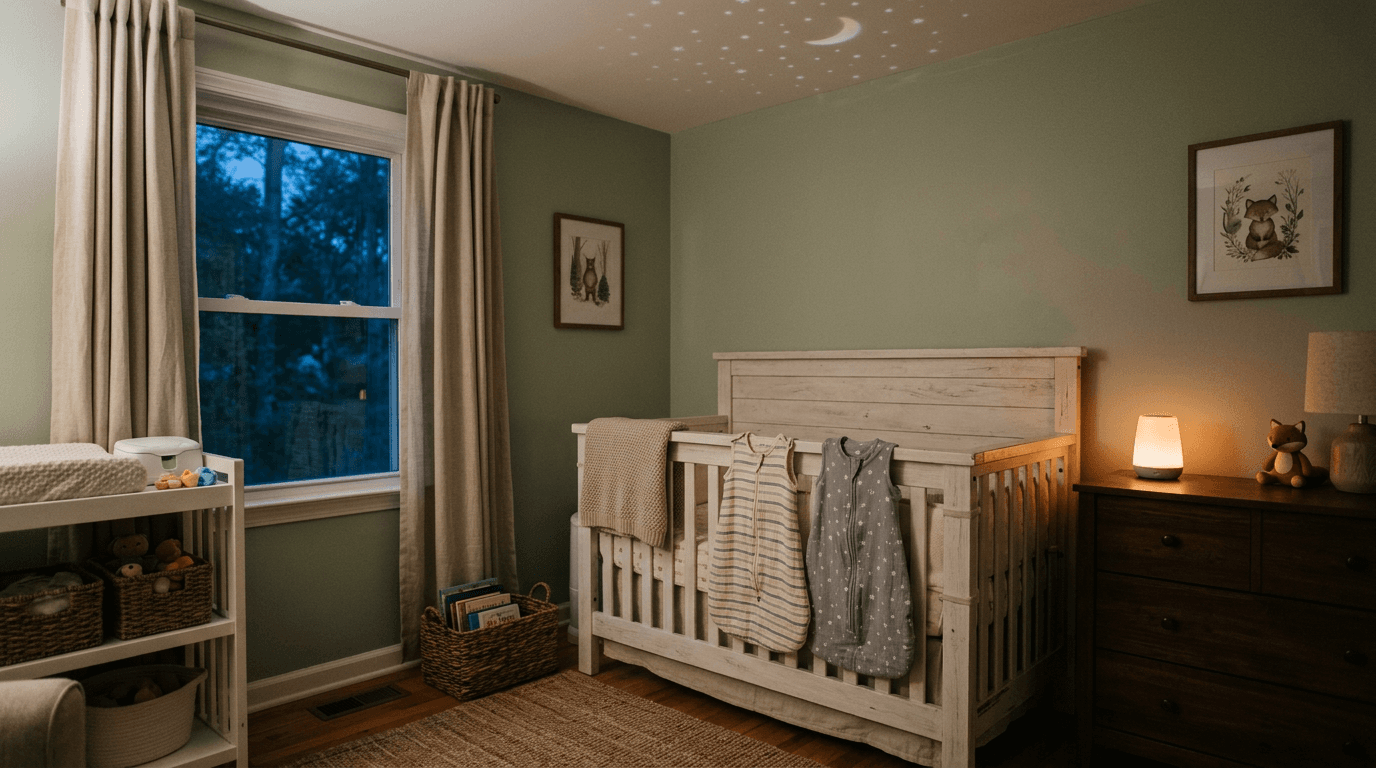
For most nurseries the Hatch Rest is the better buy, because one app-controlled unit covers white noise, a night light and a colored ok-to-wake cue you will use into the toddler years. Pick the Yogasleep Dohm if sound quality and simplicity come first: a motor-driven fan with no loop point, no Wi-Fi and no app. Keep either one across the room and turned down.
Our Verdict
Buy the Dohm if you want one job done well for a decade: a fan in a shell, no account, no firmware, nothing to fail at 2 a.m. Buy the Hatch if you will genuinely use the toddler ok-to-wake light later, which is the single feature that justifies its premium. Whichever you pick, it belongs across the room and turned down, never clipped to the crib rail.
Swipe to compare every product.
| Comparison field | #1Hatch Baby Sound Machine Owner rating | #2Yogasleep Dohm Classic Owner rating |
|---|---|---|
| Verdict | The current-generation Hatch Rest — sold on Amazon as the Hatch Baby Sound Machine & Night Light — is an app-controlled sound machine, night light, and toddler sleep trainer, live at ~$80. Hatch has discontinued the Rest+ that added an audio monitor and a battery. | Best Natural White Noise |
| Price | ~$79.99Buy on Amazon | |
| Brand | Hatch Baby | — |
| Sound Type | — | Mechanical fan-based |
| Speeds | — | 2 (low/high) |
| Power | — | AC adapter |
| Extra Features | — | None — intentionally simple |
| Buyer sentiment | — | Sound Quality Sleep Quality Noise Cancellation Effectiveness Noise Level Durability Buyers praise sound quality, sleep quality, noise cancellation and effectiveness. Some flag noise level and durability. Based on 26,246 user mentions |
| Pros |
|
|
| Cons |
|
* Prices are approximate. Check the linked retailer for current pricing and availability.
As an Amazon Associate I earn from qualifying purchases. Product prices and availability are subject to change.
Hatch Rest vs. Yogasleep Dohm: Sound Machine Comparison
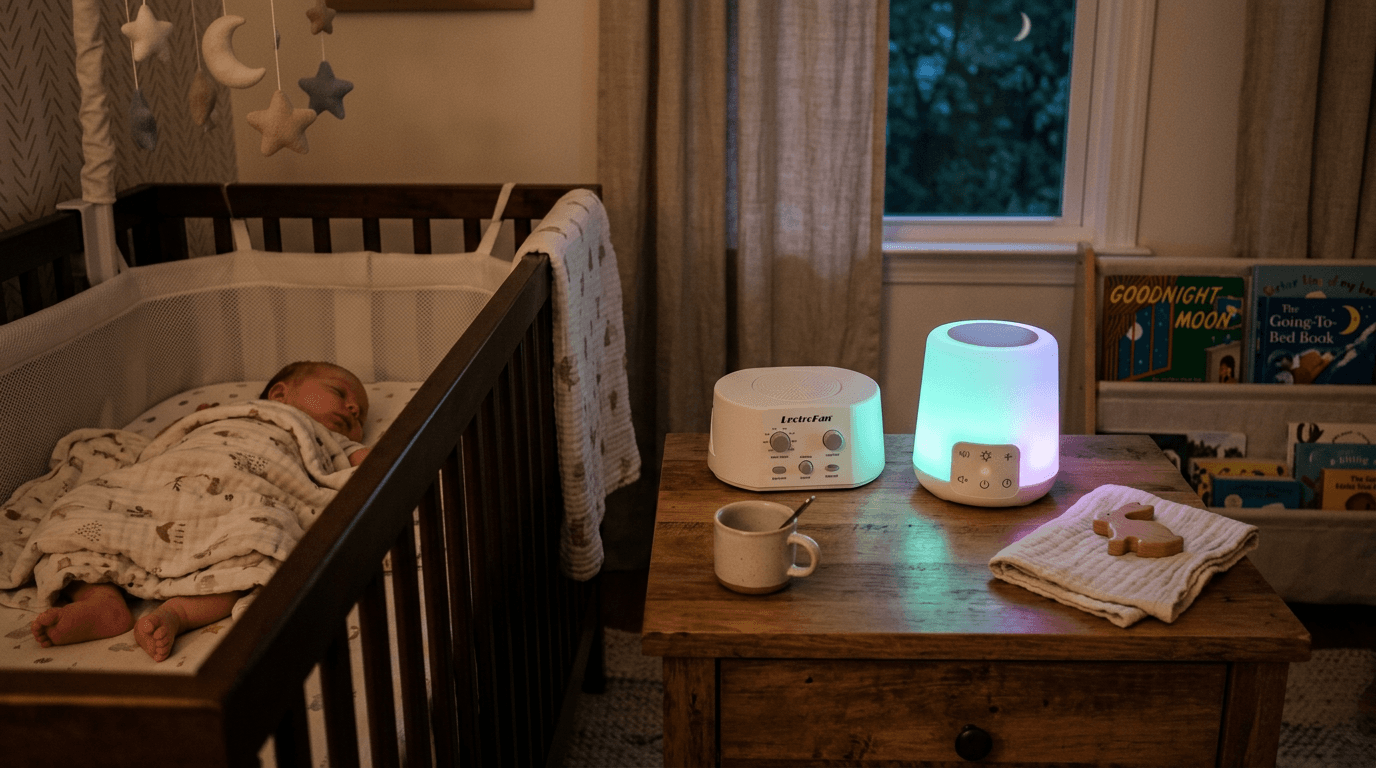
For most nurseries the Hatch Rest ($79.99) is the better buy: it's a sound machine, night light, and toddler ok-to-wake clock in one app-controlled unit that grows with your child. Buy the Yogasleep Dohm ($49) if you want the purest, most reliable white noise with zero app dependency or Wi-Fi requirements. The trade-off is sound: the Dohm's mechanical fan-based white noise is genuinely the better sound. One thing to know before you compare spec sheets: Hatch has discontinued the Rest+ (the version with the audio monitor and the rechargeable battery); the current Rest is sound and light only, mains-powered, so this comparison describes the unit you can actually buy today. Whichever you buy, the AAP's advice is to place a sleep machine as far from the baby's head as possible and keep the volume low.
What's the difference between the Hatch Rest and Yogasleep Dohm?
- Hatch Rest ($79.99): Smart sound machine, night light, and toddler clock — all app-controlled
- Yogasleep Dohm Classic ($49): Mechanical white noise machine with two speed settings and a physical switch
A 2014 study published in Pediatrics tested 14 popular infant sound machines at maximum volume and found that all exceeded 50 dB — the recommended limit for hospital nurseries — at 30 cm, and three topped 85 dB, levels the authors warn could damage infant hearing with prolonged exposure. They advise placing machines more than 200 cm (about 7 feet) from the crib. Both the Hatch and Dohm should be set to moderate volume and placed across the room from the crib.
This isn't really smart vs. dumb — it's versatility vs. simplicity. Both approaches have genuine merits.
Which sound machine has better sound quality?
In a small 1990 trial published in Archives of Disease in Childhood, 16 of 20 newborns (80%) fell asleep within 5 minutes with white noise, against 5 of 20 without it. The key is consistent, broadband sound that masks environmental noise fluctuations. The Dohm's mechanical fan generates true continuous noise without looping artifacts, while the Hatch's digital sounds are high-quality recordings that loop seamlessly for most listeners.
Hatch Rest
The Hatch plays digitally generated sounds from a built-in library: white noise, pink noise, brown noise, rain, water, wind, dryer, washing machine, birds, and more. The quality is good — clear, consistent, and adjustable in volume through the app. Because the sounds are digital recordings on a loop, some audiophiles notice a subtle repetition, though it's imperceptible to most people.
Yogasleep Dohm Classic
Check price on Amazon →The Dohm generates sound mechanically using an internal fan. It creates real, continuous white noise — not a recording. Many parents and sleep professionals consider this the purest, most consistent white noise available. The tone is adjustable by twisting the outer cap to change the airflow pattern. The result is a rich, full-spectrum sound that masks external noise beautifully.
Winner: Yogasleep Dohm — for pure white noise quality, the mechanical generation is superior. Hatch wins if you want sound variety.
Which sound machine has more features?
Hatch Rest
This is where the Hatch dominates. Beyond sound:
- Night light: Fully customizable colors, brightness, and schedules. Warm red/orange tones don't disrupt melatonin production.
- Time-to-rise: Programmable light that teaches toddlers when it's okay to get up in the morning. This single feature makes the Hatch worth owning for the toddler years.
- App control: Adjust everything from your phone without entering the nursery. Change the volume at 2 AM without risking waking baby.
- Favorites and programs: Save custom combinations and schedule them to play at specific times.
Yogasleep Dohm Classic
Two speed settings. A power switch. That's it. No app, no WiFi, no light, no monitoring, no updates, no subscriptions.
Winner: Hatch Rest — dramatically more versatile, serving multiple nursery functions. Note that neither machine monitors your baby; if you need audio or video, see our monitor guide.
Which sound machine is easier to use?
Hatch Rest
Initial setup requires downloading the app, creating an account, and connecting to WiFi. After that, daily use is controlled through the app, which is well-designed and responsive. There are also physical buttons on the device for basic control without the app. The learning curve is minimal if you're comfortable with smart home devices.
Yogasleep Dohm Classic
Plug it in. Flip the switch. Adjust the tone by twisting the cap. Done. No account, no app, no WiFi, no updates, no battery to charge. It will work during internet outages and in 15 years without any software deprecation risk.
Winner: Yogasleep Dohm — the simplest possible user experience
Which sound machine is more reliable?
The Dohm's advantage is that it has no Wi-Fi dependency — it works during internet outages and has no firmware to update. The Hatch requires Wi-Fi for app control but can operate basic functions via the physical button during outages.
Hatch Rest
Generally reliable, but it's a WiFi-connected device. Occasional app updates can introduce bugs (though Hatch resolves them quickly). If your WiFi goes down, app control stops working (physical buttons still work). The device requires firmware updates periodically.
Yogasleep Dohm Classic
Mechanical simplicity means there's very little to go wrong. Yogasleep Dohm machines from 10+ years ago are still working. No software to update, no connectivity to maintain, no accounts to manage. If the motor works, the machine works.
Winner: Yogasleep Dohm — mechanical reliability is unmatched
Which sound machine is better for travel?
Hatch Rest
The current Rest runs off mains power, so it stays where you plug it in — the rechargeable battery belonged to the discontinued Rest+. For travel you'll also need WiFi at your destination for full app control, or use the physical button.
Hatch's support site lists the smaller Rest Mini as discontinued, and it was a plug-in anyway; for travel, Hatch now points buyers to the Hatch Go, a small portable sound machine without a light.
Yogasleep Dohm Classic
The Dohm requires a power outlet, so it's less portable within your home. For travel, Yogasleep makes portable, rechargeable machines such as the Rohm and the Hushh. The classic Dohm is designed to sit on a nightstand and stay there.
Winner: Tie — neither is a travel machine. Both need an outlet. Buy a Hatch Go or a Yogasleep Rohm or Hushh if portability is the point.
How does the Hatch night light compare to the Dohm?
Hatch Rest
The built-in night light is one of the Hatch's strongest features. Customizable color, brightness, and scheduling. Use a dim red/orange light for nighttime feeds (these wavelengths don't suppress melatonin). Use a bright yellow light as a time-to-rise indicator for toddlers. The light customization is genuinely useful from infancy through childhood.
Yogasleep Dohm Classic
No light. If you want a night light, you need a separate product. This isn't a drawback of the Dohm's design philosophy — it's a sound machine, not a multi-function device — but it does mean additional purchases and outlets for your nursery.
Winner: Hatch Rest — the integrated light eliminates the need for a separate nursery light
Which sound machine is the better long-term investment?
The Hatch Rest's ok-to-wake light feature extends its usefulness well beyond the nursery stage — parents report using the color-coded clock to help toddlers learn when it's acceptable to get out of bed, reducing early morning wake-ups.
Hatch Rest
The Hatch grows with your child. Infant phase: sound machine and night light. Toddler phase: time-to-rise feature becomes essential for maintaining morning boundaries. School-age: continues as a sound machine and alarm clock. This longevity is the Hatch's strongest value proposition.
Yogasleep Dohm Classic
Does one thing forever. Your baby becomes a toddler becomes a kid becomes a teenager, and the Dohm still does exactly the same thing. There's a simplicity argument here — the Dohm will never become obsolete because it was never "smart" to begin with.
Winner: Hatch Rest — more functionality over a longer period, but the Dohm's durability is its own kind of value
Can you use both sound machines together?
Many families end up with both: a Hatch Rest in the nursery as the primary multi-function device, and a Yogasleep Dohm (or Rohm portable) for travel, backup, or a second room. This combination gives you smart control at home and reliable simplicity on the go.
Which sound machine should you buy?
Buy the Hatch Rest if:
- You want one device that handles sound, light, and the toddler ok-to-wake clock
- App control from outside the nursery appeals to you
- You plan to use the time-to-rise feature in the toddler years
- You prefer customizable sound options beyond white noise
Buy the Yogasleep Dohm if:
- You prioritize pure white noise quality
- Simplicity and reliability matter most
- You don't want WiFi-connected devices in the nursery
- You want something that will work unchanged for a decade
- Budget is a primary concern ($49 vs. $79.99)
Is the Hatch or Dohm the better sound machine?
The Hatch Rest is the more capable, versatile product. The Yogasleep Dohm produces better white noise with greater reliability. For most families setting up a nursery, we recommend the Hatch Rest for its all-in-one functionality and long-term utility — the time-to-rise feature alone is worth it. For purists who want the best white noise machine available with zero complexity, the Dohm is unbeatable. Both are excellent products that we recommend without reservation. See all our picks on the sleep essentials page.
Further Reading
💬 Real Talk from Parents
White noise machines are not for the baby. They're for your sanity.
Sleep training is 50% technique and 50% parental willpower.
Every baby sleep book contradicts the last one you read. That's normal.
You'll google 'baby sleep regression' at least once a month for the first year.
If your baby is sleeping safely, you're doing it right. Ignore anyone who says otherwise.
Paraphrased community consensus — not a direct quote.
Adding cereal to a bottle helps babies sleep longer.
The AAP advises against adding cereal to bottles. It doesn't improve sleep, increases choking risk, and can lead to overfeeding. Solid readiness signs usually appear around 6 months.
A louder sound machine works better.
In a 2014 Pediatrics study, all 14 infant sleep machines tested at maximum volume exceeded 50 dB at 30 cm, and three topped 85 dB. Use the lowest setting that masks household noise, with the machine across the room.
Research Sources
- How to Keep Your Sleeping Baby Safe
- Healthy Sleep Habits: How Many Hours Does Your Child Need?
- Infant sleep machines and hazardous sound pressure levels — Pediatrics, 2014 (PubMed)
- White noise and sleep induction — Archives of Disease in Childhood, 1990 (PubMed)
- How Noise Affects Your Child — HealthyChildren.org (AAP)
Hilly Shore Inc.
Editorial teamIndependent product research team behind Cribworthy. Reviews are grounded in published AAP / CDC / NHTSA / CPSC pediatric guidance, JPMA / GREENGUARD GOLD / OEKO-TEX certification verification, and aggregated buyer sentiment.
124 products reviewed · 22 categories covered · cites AAP, CDC, NHTSA, CPSC, FDA, ACOG.
Safety claims are verified against published pediatric guidelines and CPSC databases. See our editorial standards.