How Long Can a Baby Be in a Bouncer? Safe Limits
Quick Answer
Keep a baby in a bouncer for short stretches of about 15 to 30 minutes at a time, and limit total daily time in all sitting containers combined (bouncer, swing, car seat, high chair) to roughly one hour beyond necessary car travel. Too much container time raises the risk of flat spots, neck tightness, and motor delays. A bouncer is never a safe place to sleep.
Our Verdict
Use a bouncer for short stretches of 15 to 30 minutes, and keep total daily time across all sitting containers to about one hour beyond car travel. Never let a baby sleep in one.
“The pediatric PT we saw for our daughter's flat spot said the single biggest fix was boring: less time in the swing and bouncer, more time flat on the floor. We set a timer on the bouncer and the head shape evened out without a helmet.”
It's fine to let the baby nap in the bouncer if you're watching.
A bouncer is not a safe sleep surface. The AAP says if a baby falls asleep in a swing, bouncer, car seat, or carrier, move them to a firm sleep surface on their back as soon as possible, because a reclined seat can let a sleeping baby's head slump and restrict their airway.
There's no real harm in a baby spending most of the day in seats and swings.
Pediatric physical therapists link heavy container use to plagiocephaly (flat spots), torticollis (tight neck), and delayed motor milestones. The AAP reports the average baby spends almost six hours a day in a device, which experts say is far too long.
As an Amazon Associate I earn from qualifying purchases. Product prices and availability are subject to change.
A bouncer is a lifesaver when you need both hands for five minutes. But the question parents actually search isn't "until what age" — it's "how long at a time, and how much per day is too much?" That's a safety question, and the answer is shorter than most parents expect.
The short answer: minutes, not hours
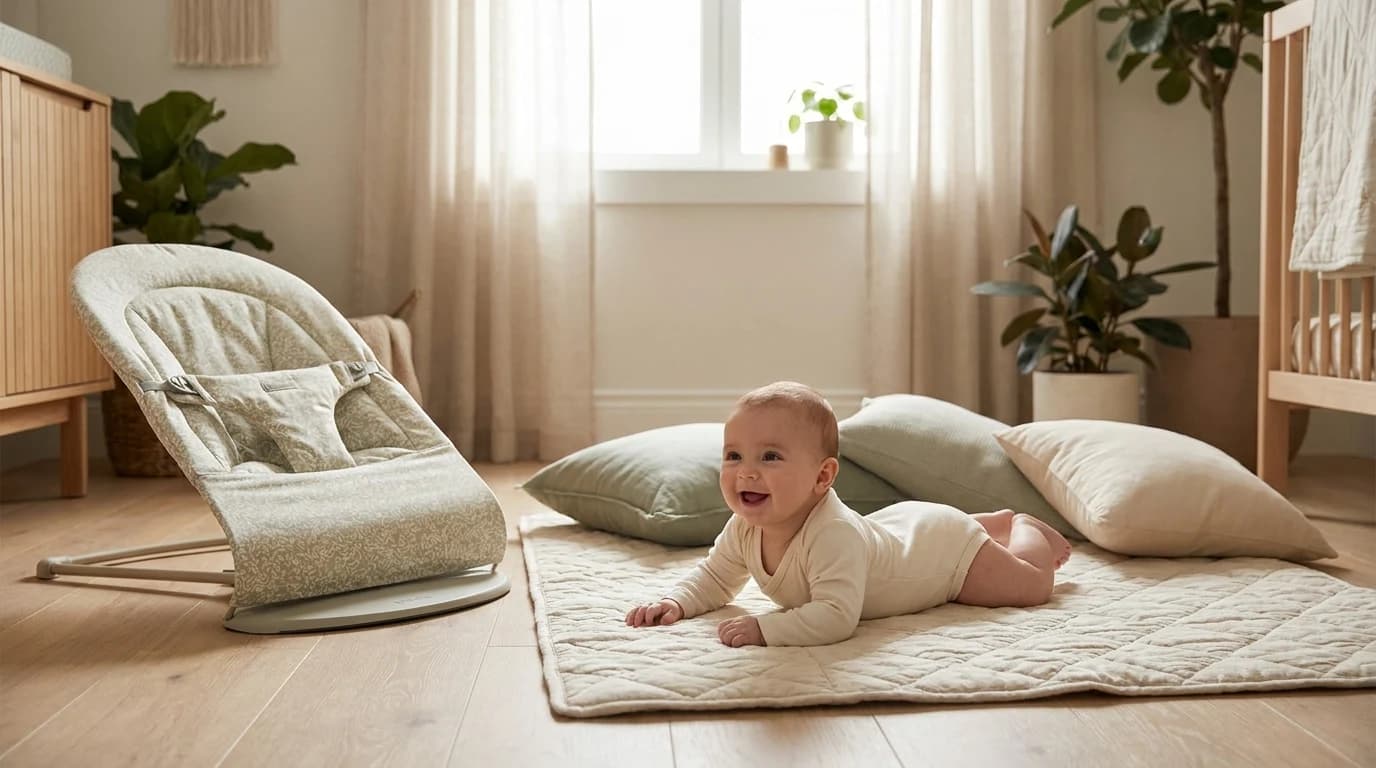
Use a bouncer for short stretches — roughly 15 to 30 minutes at a time, and aim to keep total daily time in all sitting "containers" combined to about one hour beyond necessary car travel.
That ceiling isn't arbitrary. Pediatric physical therapists treat a cluster of problems they call container baby syndrome, and the trigger is simple: too many waking hours spent strapped into a device instead of moving freely on the floor.
The American Academy of Pediatrics reports the average baby spends almost six hours a day in a device — which experts say is far too long. (Cleveland Clinic)
The goal isn't to never use the bouncer. It's to make floor time the default and the bouncer the exception.
What "containers" actually means
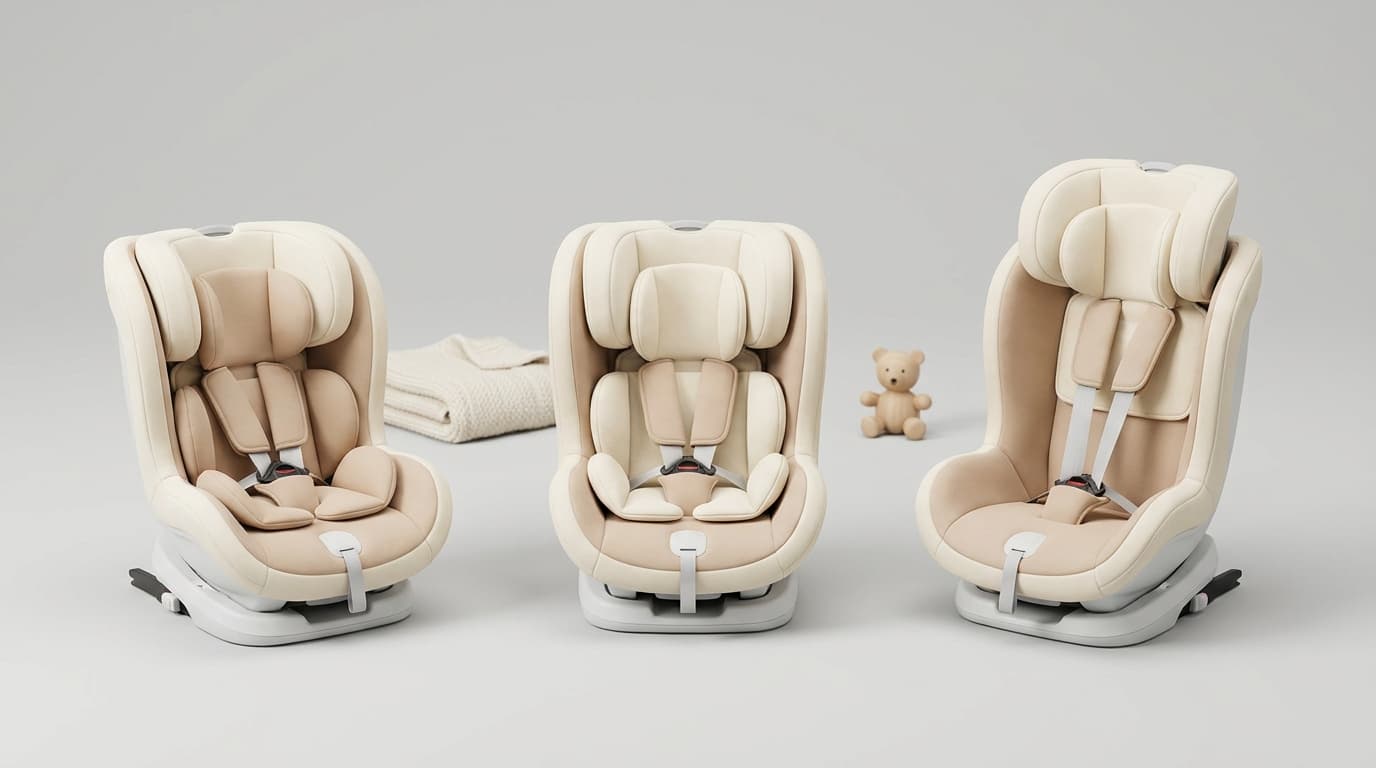
When therapists say "container," they don't just mean the bouncer. The clock runs across every sitting device your baby is buckled into during waking hours. Nationwide Children's Hospital groups them together:
| Counts as a container | Doesn't count |
|---|---|
| Bouncers and infant swings | Tummy time on the floor |
| Car seats (outside the car) | Free play on a mat |
| Floor seats and high chairs | Being worn in a carrier or sling |
| Jumpers, walkers, exersaucers | Being held in arms |
The hidden trap is stacking: car seat to the store, bouncer while you cook, swing while you eat, high chair for a snack. None of those feels long on its own, but a baby can quietly rack up four or five container hours before bedtime.
Why the limit matters: container baby syndrome
A baby in a semi-reclined seat can't turn their head fully, push up, roll, or shift their weight — the exact movements that build strength and shape a round skull. Spend too long there and three things show up:
- Flat spots (plagiocephaly). Constant pressure on a soft skull from one position creates a flat or asymmetric area on the head.
- Tight neck (torticollis). Holding the head turned or tilted to one side shortens the neck muscles on that side.
- Motor delays. Rolling, sitting, and crawling can come late when a baby spends their waking hours restrained instead of practicing on the floor.
These are common reasons families get referred to pediatric PT — and they're largely preventable by capping container time early.
Container time should be limited to necessary car travel plus one additional hour (or less) each day. (Cleveland Clinic)
The rule everyone breaks: a bouncer is never a bed
Here's the most dangerous misuse, and it has nothing to do with development. A bouncer's semi-upright, padded seat is not a safe sleep surface. If your baby dozes off, the AAP's instruction is direct:
If your baby falls asleep in a car seat, stroller, swing, infant carrier or sling, move them to a firm sleep surface on their back as soon as possible. (HealthyChildren.org)
A sleeping newborn's head can slump forward in a reclined seat and restrict their airway. Never leave a baby to nap in a bouncer, and never let one sleep in a bouncer overnight or unsupervised. The seat is for awake, supervised, watched-you minutes — full stop.
What to do with the rest of the time
If the bouncer is the exception, what's the rule? Movement.
- Tummy time, in short bursts, all day. A few minutes at a time, building up — it prevents flat spots and is how babies develop the head, neck, and trunk strength for everything that comes next.
- A plain floor mat. Babies learn by wiggling, reaching, and rolling. A flat, firm surface gives them room the bouncer can't.
- Babywearing instead of the seat. A baby carrier keeps your hands free without pressing on the back of the head, and lets the baby shift and look around. Therapists specifically suggest carriers as the container swap.
A useful trick from pediatric therapists: set a timer when your baby goes in the bouncer. It's startling how fast 15 minutes becomes 45 when you're cooking.
Quick self-check
If your baby is in a bouncer and content, watching you, for a short stretch — that's fine and normal. If they're in it because it's where they always end up, or they're fussing to get out, that's the signal to move them to the floor. When in doubt, less container, more floor.
Sources
Research Sources
Hilly Shore Labs
Editorial teamIndependent product research team behind Cribworthy. Reviews are grounded in published AAP / CDC / NHTSA / CPSC pediatric guidance, JPMA / GREENGUARD GOLD / OEKO-TEX certification verification, and aggregated buyer sentiment.
115 products reviewed · 20 categories covered · cites AAP, CDC, NHTSA, CPSC, FDA, ACOG.
Safety claims are verified against published pediatric guidelines and CPSC databases. See our editorial standards.