How to Choose a Stroller: The Complete Buyer's Guide

As an Amazon Associate I earn from qualifying purchases. Product prices and availability are subject to change.
How to Choose a Stroller: The Complete Buyer's Guide
The right stroller depends on your lifestyle, not the price tag. An urban parent navigating subway stairs needs something completely different from a suburban parent loading into an SUV, and a runner training for a 10K needs something different still. Before you spend a dollar, figure out where and how you will actually use your stroller most often — that single question will narrow the field more than any feature comparison.
According to CPSC data, approximately 15,300 stroller-related injuries are treated in U.S. emergency departments each year, with tip-overs and finger entrapment being the most common. Every stroller recommended on Cribworthy meets ASTM F833 safety standards, but proper use matters too — always buckle the harness and engage the brakes on hills.
What are the main types of strollers?
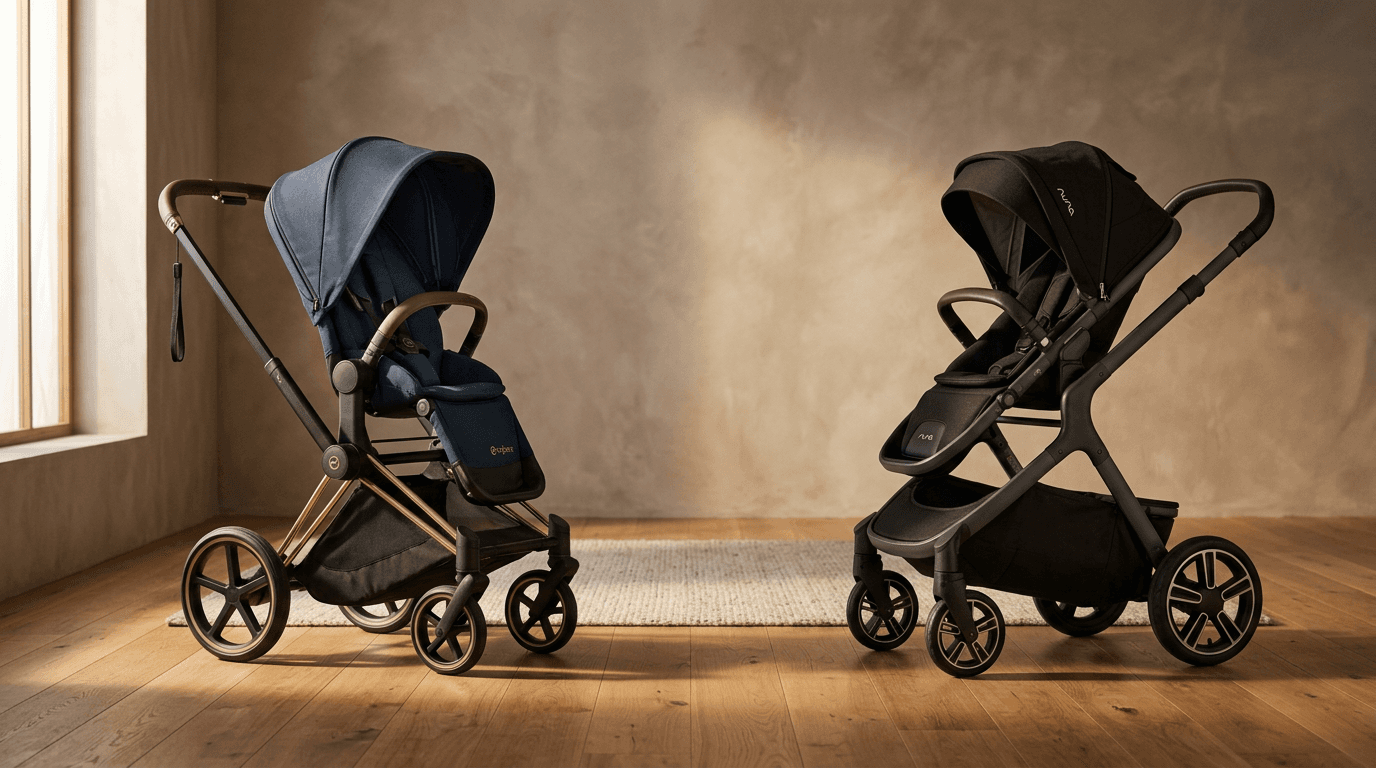
Full-size strollers are the do-everything workhorses. They offer the most features — large canopies, big storage baskets, multiple recline positions, and often compatibility with infant car seats. The trade-off is weight (typically 20-30 lbs) and a larger fold. If you have trunk space and want one stroller that handles everything from newborn to toddler, this is your category. The UPPAbaby VISTA and Nuna MIXX are the gold standards here.
Lightweight and umbrella strollers prioritize portability. Weighing 10-18 lbs with compact folds, they are ideal for travel, quick errands, and as a second stroller once your baby has head and neck control (usually around 6 months). They sacrifice features like storage and recline range for convenience.
Jogging strollers have three large, air-filled tires, a fixed front wheel for stability at speed, and a hand brake. If you plan to actually run with your stroller, you need this specific design — regular strollers are not safe for jogging. Most pediatricians recommend waiting until 6-8 months before jogging with baby due to head and neck support concerns.
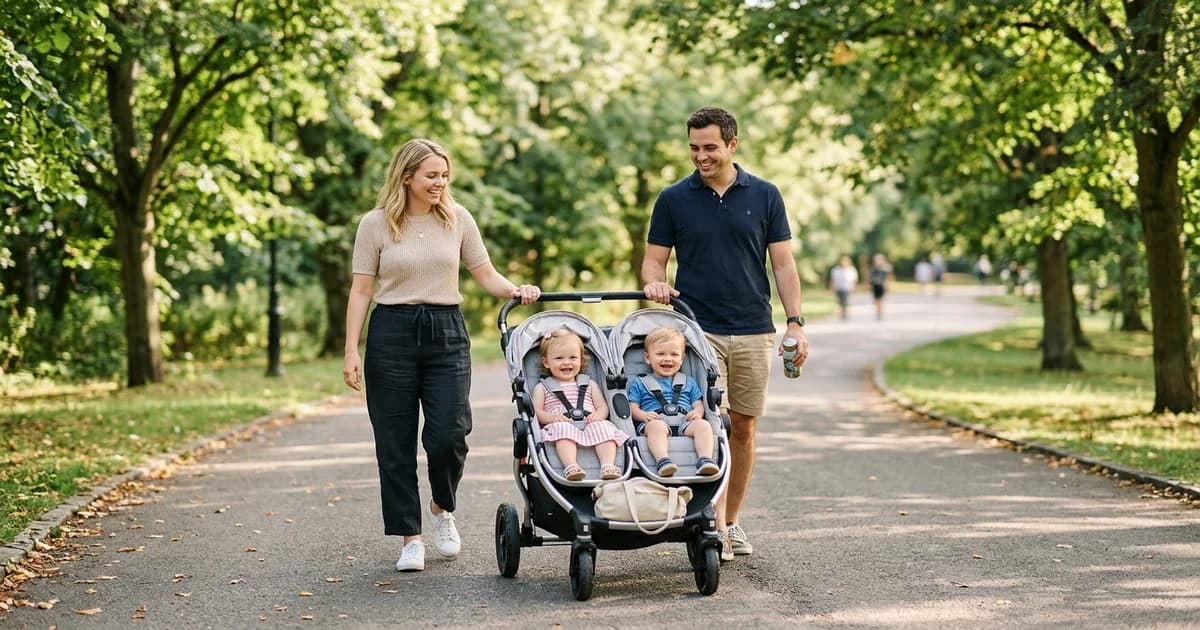
Double strollers come in two configurations: inline (tandem) and side-by-side. Inline doubles like the VISTA V2 with a second seat are narrower and fit through standard doorways but are longer. Side-by-side doubles offer equal seating but are wider. If you are expecting a second child, consider a double stroller or a single that converts to a double.
Travel systems bundle a stroller with a matching infant car seat and base. They offer convenience and often savings compared to buying separately. The car seat clicks directly into the stroller frame, which is incredibly convenient for the first year when you are constantly moving a sleeping baby from car to stroller without waking them.
What features should you prioritize?
Wheel type determines terrain capability. Foam-filled tires offer a balance of smoothness and zero-maintenance. Air-filled (pneumatic) tires give the best ride on rough terrain but can go flat. Hard rubber or plastic wheels are durable but transmit every bump. Match your wheels to your terrain — foam for sidewalks and stores, air-filled for trails and rough paths.
The fold mechanism is something you will use thousands of times. Test it before you buy if possible. A true one-hand fold is a game-changer when you are holding a baby. Some strollers fold with the seat attached, others require removing it first. A standing fold means you do not have to bend down to set it on the ground. Our best strollers roundup rates every model on fold ease.
Weight matters more than you think. That 30-lb stroller feels manageable in the store, but lifting it in and out of a trunk multiple times a day adds up. Consider the total weight including any accessories you will leave attached. If you fly regularly, check airline size requirements — most airlines accept strollers up to 20 lbs as gate-check items without issue.
Storage capacity is easy to overlook. A large, accessible underseat basket changes your daily experience. You want to be able to toss a diaper bag under there without fighting the frame. Some strollers also have parent organizers or cup holders — small additions that make a big quality-of-life difference.
Sun canopy size and coverage. An oversized canopy with UPF 50+ protection and a peek-a-boo window is one of those features you do not think about until you are walking into a setting sun with a screaming baby. Extendable canopies with mesh ventilation panels are the gold standard.
How do you match a stroller to your lifestyle?
Urban living (apartment, public transit, rideshares): Prioritize compact fold, lightweight, and one-hand operation. You will be folding this stroller on buses, carrying it up stairs, and fitting it into tiny apartment corners. Consider the Babyzen YOYO2 or a travel system like the Doona that combines car seat and stroller.
Suburban living (car-dependent, parks, malls): A full-size stroller with a big basket and smooth ride is your best bet. You have trunk space, so weight matters less than features and comfort. The VISTA V2 or Nuna MIXX are excellent choices.
Active parents (running, hiking, outdoor lifestyle): A dedicated jogging stroller with air tires and a hand brake is non-negotiable for running. For hiking, look for all-terrain capability with suspension. You may want a lightweight second stroller for non-active days.
When is the best time to buy a stroller?
Start researching in your second trimester and aim to purchase by week 32-34. This gives you time to learn the fold, attach accessories, and practice one-handed operation before baby arrives. Major sales happen during Prime Day (July), Black Friday, and Presidents Day weekend.
If budget is a concern, our baby gear on a budget guide covers strategies for getting premium strollers at lower prices, including buying floor models, previous-year colors, and certified refurbished options.
What budget should you plan for?
Budget tier ($150-$350): Travel systems like the Graco Modes series offer excellent value with a car seat included. You sacrifice some build quality and ride smoothness but get everything you need.
Mid-range ($350-$700): This is the sweet spot for most families. Strollers like the Baby Jogger City Mini GT2 and Nuna TRVL offer great features, solid build quality, and reasonable weight.
Premium ($700-$1,500): Full-featured strollers like the UPPAbaby VISTA and Bugaboo Fox deliver the best materials, smoothest rides, and longest usable lifespan. Worth it if you plan to use it for multiple children.
Further Reading
Note: As an Amazon affiliate, we may earn from qualifying purchases. All recommendations are based on independent research and real parent feedback.
Lloyd D'Silva
Founder & EditorNew parent and product researcher. Every Cribworthy recommendation is cross-referenced with AAP (American Academy of Pediatrics) guidelines, CPSC safety data, and real parent experiences from thousands of verified reviews.
Safety claims are verified against published pediatric guidelines and CPSC databases. See our research methodology.