How to Choose the Right Car Seat: A Complete Parent's Guide
Quick Answer
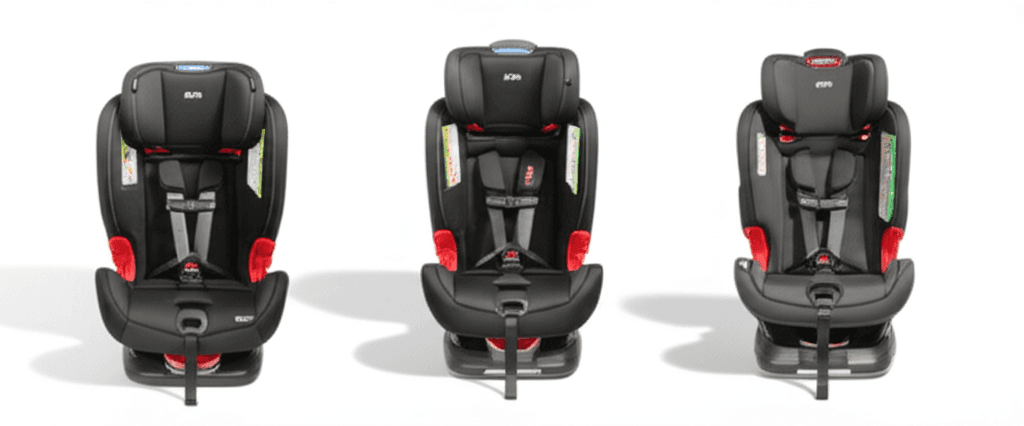
Start rear-facing: an infant seat (typically to 22–35 lbs) or a convertible that stays rear-facing longer, and keep your child rear-facing until the seat's rear-facing limit — the AAP says most convertibles allow 2 years or more. Then use a forward-facing harness with the top tether, ideally to at least age 4–5, then a booster until the adult belt fits, usually around 4 feet 9 inches and ages 8 to 12. Follow your seat's manual and limits; correct installation matters more than brand or price.
Our Verdict
Start rear-facing: an infant seat if you want the carrier and stroller click-in, or a convertible from birth if you would rather buy once. Keep your child rear-facing until they reach the seat's rear-facing height or weight limit, not a birthday. Every car seat sold in the US must meet the same federal safety standard, so spend on the seat you can install tightly in your own car, then have a certified technician check the install.
Which seat by your child's stage
| If your situation is… | Pick | Why |
|---|---|---|
| Newborn to about 2 years | Rear-facing infant or convertible seat | Rear-facing is safest. An infant 'bucket' is easiest for newborns; a convertible stays rear-facing longer. |
| Outgrew rear-facing limits (often 2-4 years) | Forward-facing harness seat | Keep them in a 5-point harness to the seat's top height/weight limits before any booster. |
| Outgrew the harness (often 5+, ~40-65 lb) | Belt-positioning booster | A booster routes the adult belt correctly until it fits alone, usually around 4'9" tall. |
Use this row to shortcut by situation.
As an Amazon Associate I earn from qualifying purchases. Product prices and availability are subject to change.
How to Choose the Right Car Seat: A Complete Parent's Guide
To choose the right car seat, start with a rear-facing infant seat or convertible seat for your newborn, and keep your child rear-facing as long as possible — the AAP recommends rear-facing until the child reaches the maximum weight or height allowed by the seat. The most important factor isn't the price or brand; it's correct installation and proper fit for your child's size.
NHTSA data shows that child safety seats reduce fatal crash injury by 71% for infants and 54% for toddlers ages 1-4. However, NHTSA's National Child Restraint Use Survey consistently finds that nearly half of car seats have at least one critical misuse error, making proper installation the single most impactful safety measure you can take.
What are the different types of car seats?
All car seats sold in the United States must meet Federal Motor Vehicle Safety Standard 213 (FMVSS 213), which requires dynamic crash testing at 30 mph. NHTSA administers this standard and publishes ease-of-use ratings that can help parents choose seats that are more likely to be installed correctly.
| Type | Typical range | Best for | Watch for |
|---|---|---|---|
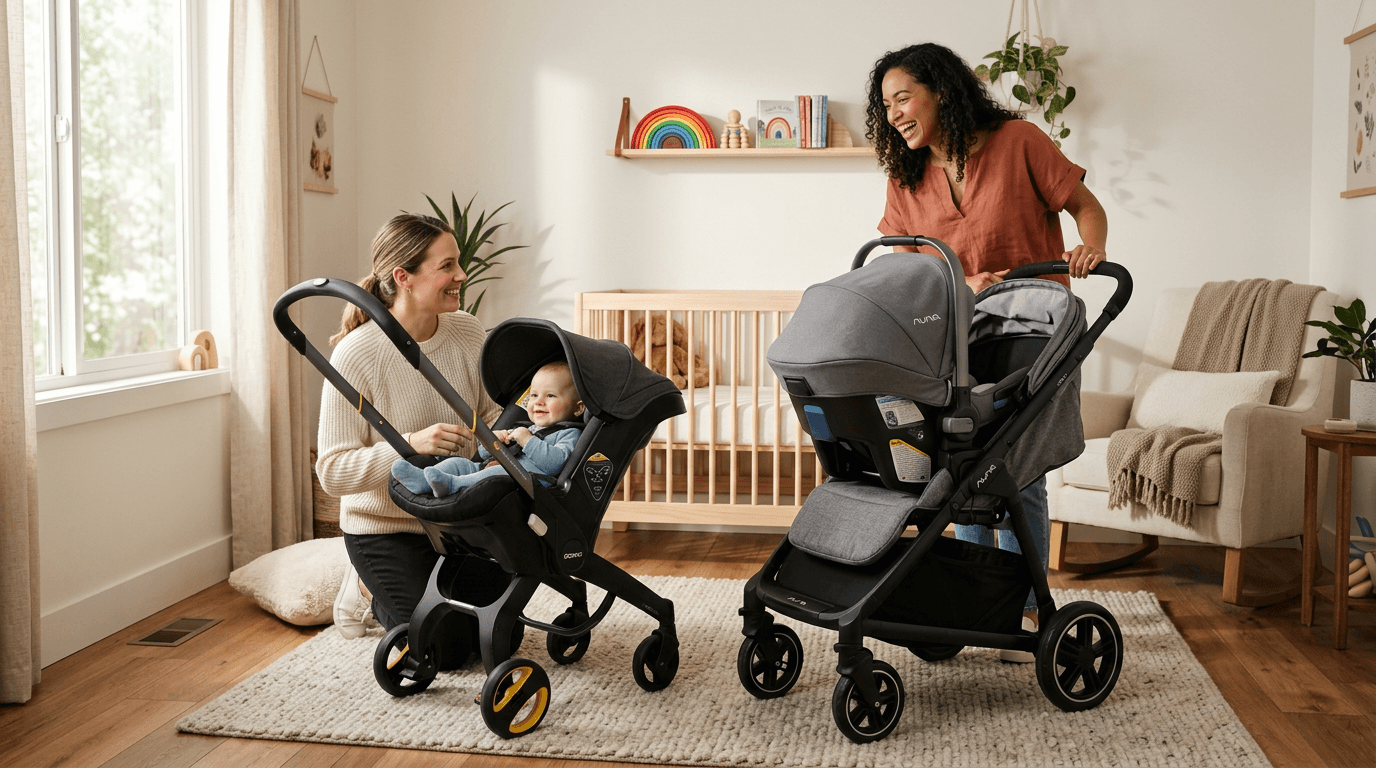
| Infant car seat | Birth to 22–35 lbs and 26–35 inches, by model | Newborn stage, especially clicking into a stroller frame | Outgrown by size, not a birthday; a rear-facing convertible comes next |
| Convertible | Rear-facing to 40–50 lbs on many models, then a forward-facing harness | One seat for the longest possible duration | Stays in the car; no carrier handle |
| All-in-one | Rear-facing, harness, then booster mode up to 100–120 lbs | Buy once and cover every stage | Large; check that it fits your back seat rear-facing |
| Booster | After the harness until the adult belt fits, usually ages 8–12 | Kids who have outgrown a forward-facing harness | Needs a lap-and-shoulder belt every ride |
These are typical ranges from the AAP; follow your seat's manual and its limits. For specific models, see our best car seats of 2026.
Rear-facing infant car seats
- A base stays in your car; the carrier snaps in and out, letting you move a sleeping baby without disturbing them
- Most work from birth to about 35 lbs or 32 inches
- The usable period ends at that model's size or fit limit, not a set month
Best for: A portable infant carrier, particularly when the exact seat and stroller are confirmed compatible.
Convertible car seats: separate rear-facing and harness limits
These start rear-facing for infants and switch to forward-facing for toddlers. They stay in the car permanently and cover a wider weight range. They're the most versatile option but can't be carried like infant seats.
Best for: Families who can use a fixed-in-car seat and want a rear-facing mode followed by a forward-facing harness mode.
All-in-one car seats: several modes, several limits
These cover every stage: rear-facing, forward-facing, high-back booster, and sometimes backless booster. They may cover several stages but tend to be large; check the limits separately in each mode.
Best for: Families comparing several modes in one shell, while still expecting to check fit at every transition.
Belt-positioning boosters
Used after children outgrow their forward-facing harness seat.
- High-back boosters provide head and neck support
- Backless boosters just position the seatbelt correctly
Children typically use a booster from about age 4–5, once the harness is outgrown, until the adult belt fits, usually around 4 feet 9 inches and ages 8 to 12 (AAP). A booster needs a lap-and-shoulder belt and a child who can sit properly the whole ride. See our full stage-transition checklist.
Which car seat buying strategy is right for your family?
- Infant seat then convertible — the convenience of a portable carrier when baby is small, switching to a rear-facing convertible when the infant carrier is outgrown
- Convertible from birth — saves money and avoids buying two seats, but no portable carrier for the newborn period
- All-in-one from birth — the most economical long-term approach, but the seats are large
Strategy 1: Infant seat then convertible
Start with an infant carrier for the newborn stage, then switch to a rear-facing convertible when the infant seat is outgrown. This gives you the convenience of a portable carrier when baby is small.
Strategy 2: Convertible from birth
Skip the infant seat and go straight to a convertible. You save money and avoid buying two seats. The trade-off is no portable carrier for the newborn period. Many convertible seats have newborn inserts to accommodate small babies.
Strategy 3: All-in-one from birth
The most economical long-term approach, but all-in-one seats are large and you lose the portable infant carrier convenience.
Should you use LATCH or a seatbelt to install the car seat?
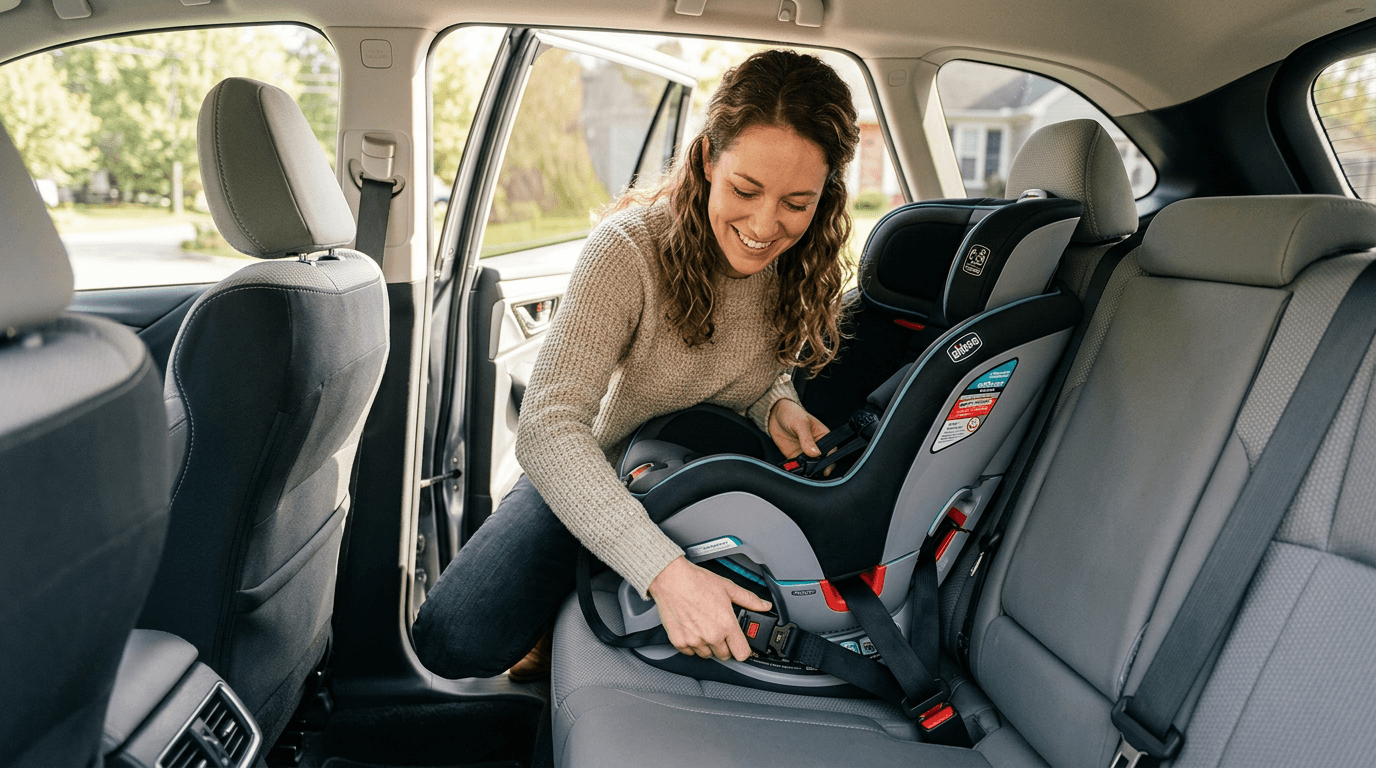
Every car seat can be installed two ways: with the LATCH system (Lower Anchors and Tethers for Children) or with the vehicle seat belt. The AAP says the two are equally safe, so use whichever gets a tight install in your car — just not both at once unless both manuals allow it — and always attach the top tether on a forward-facing seat.
| LATCH | Seatbelt | |
|---|---|---|
| How it works | Clip the lower anchor connectors to the metal bars hidden in your car's seat crease | Thread the seatbelt through the designated path and lock it in the locked mode |
| Weight limit | Typically 65 lbs combined child + seat weight | Works regardless of weight |
| Ease | Easier for most people | Some seats like the Britax ClickTight make it nearly foolproof |
LATCH system
Clip the lower anchor connectors to the metal bars hidden in your car's seat crease. Use the top tether for forward-facing seats. Easier for most people, but LATCH has weight limits (typically 65 lbs combined child + seat weight).
NHTSA requires all vehicles manufactured after September 2002 to include LATCH (Lower Anchors and Tethers for Children) hardware. However, LATCH has a weight limit — typically 65 lbs combined child and seat weight. After that limit, you must use the vehicle seatbelt for installation.
Seatbelt installation
- Thread the seatbelt through the designated path on the car seat
- Lock the seatbelt in the locked mode
- This method works regardless of weight Some seats like the Britax ClickTight make seatbelt installation nearly foolproof.
The one-inch test
After installation, grab the car seat at the belt path and try to move it side to side and front to back.
The one-inch test: It should not move more than one inch in any direction. If it does, tighten the installation.
Why is rear-facing so important?
The AAP recommends keeping children rear-facing as long as possible, until they outgrow the rear-facing height or weight limit of their convertible seat (often 40-50 lbs). There is no set age to turn them around.
Why it matters: Rear-facing provides dramatically better head, neck and spine protection in frontal crashes — the most common severe crash type.
The AAP updated its car seat recommendations in 2018 (reaffirmed 2022) to remove the age-2 milestone, instead recommending that children ride rear-facing until they reach the maximum weight or height allowed by their convertible seat. A widely cited 2007 study in Injury Prevention reported a large protective benefit for rear-facing children under 2, but a 2018 reanalysis found the US crash data too limited to confirm the size of that effect; the AAP's advice to stay rear-facing as long as possible rests on international field data and laboratory crash tests.
Common concerns about rear-facing
- Feet touch the vehicle seat back. The AAP explains that children can find a comfortable rear-facing position and rear-facing leg injuries are very rare. Folded legs alone do not determine outgrowth.
- The child looks tall. Check every rear-facing weight, height and head-clearance limit in that model's manual. Being below the shell by itself does not establish fit.
- The infant carrier is outgrown. A rear-facing convertible or all-in-one seat may be the next restraint; outgrowing an infant carrier does not automatically mean turning forward.
When should you move to the next car seat stage?
| Move | When |
|---|---|
| Rear-facing to forward-facing | When your child exceeds the rear-facing height or weight limit — 40–50 lbs on many convertibles — or the seat's head-clearance rule; typically 2–4 years |
| Forward-facing to booster | When your child outgrows the harness — 40–65 lbs depending on the seat — ideally at age 5 or older, and the booster's minimums are met |
| Booster to seatbelt only | When the lap belt sits low and flat across the upper thighs and the shoulder belt crosses the middle of the chest and shoulder — most children between ages 8-12 |
Rear-facing to forward-facing
When your child exceeds the rear-facing height or weight limit of their seat — 40–50 lbs on many convertibles — or reaches the head-clearance rule in its manual. Most children are between 2 and 4; the CDC puts rear-facing at birth to about age 2–4.
Forward-facing to booster
When your child exceeds the forward-facing harness limits — 40–65 lbs depending on the model, or shoulders above the top harness slots. The AAP advises a harness at least to age 4 and the CDC until at least age 5. If the harness is outgrown but your child can't yet sit properly in a booster, a higher-limit harnessed seat is the bridge.
Booster to seatbelt only
When the seatbelt fits properly without a booster: lap belt low and flat across the upper thighs, shoulder belt across the middle of the chest and shoulder. Most children reach this point between ages 8-12.
Where can you get your car seat installation checked?
Most fire stations and many hospitals offer free car seat installation checks by certified technicians.
Go anyway: Use this resource even if you think you've installed it correctly. NHTSA's National Child Restraint Use Special Study estimated that 46 percent of car seats and booster seats were misused.
Find a car seat inspection station near you at NHTSA.gov.
What's the most important thing to know about choosing a car seat?
If you remember one thing: Choose the seat type that fits your lifestyle and install it correctly. That matters more than which brand you buy. Every seat sold in the US meets the same federal safety standards. For our specific product recommendations, read our best car seats of 2026 roundup. Some product links may earn us an affiliate commission at no extra cost to you.
Further Reading
Car seats expire because manufacturers want you to buy new ones.
Car seats expire because plastic degrades over time from UV exposure and temperature changes, weakening the shell's crash protection. The 6-10 year expiration is based on material science.
A car seat that costs more is safer.
Every car seat sold in the US passes the same federal crash test standards (FMVSS 213). Price differences reflect features like fabric quality and convenience, not safety.
Research Sources
- Car Safety Seats: Information for Families
- Car Seats and Booster Seats
- Where We Stand: Car Seats For Children
- Car safety seats for children: rear facing for best protection — Injury Prevention (2007), PubMed abstract
- Rear-facing versus forward-facing child restraints: an updated assessment — Injury Prevention (2018), PubMed abstract
- Booster Seats for School-Aged Children — American Academy of Pediatrics
Hilly Shore Inc.
Editorial teamIndependent product research team behind Cribworthy. Reviews are grounded in published AAP / CDC / NHTSA / CPSC pediatric guidance, JPMA / GREENGUARD GOLD / OEKO-TEX certification verification, and aggregated buyer sentiment.
124 products reviewed · 22 categories covered · cites AAP, CDC, NHTSA, CPSC, FDA, ACOG.
Safety claims are verified against published pediatric guidelines and CPSC databases. See our editorial standards.