How to Choose the Right Stroller for Your Lifestyle
Quick Answer
Pick for terrain and storage, not for the spec sheet. If you drive most places, fold size and trunk fit decide it; if you walk city blocks, wheel quality and turning radius do. Most families are best served by a full-size model with a one-hand fold, adjustable handlebar, and infant car seat compatibility. Confirm ASTM F833 compliance and buckle the five-point harness every ride.
Our Verdict
Get one good full-size stroller now and add a cheap umbrella model later for flights; starting with the lightweight one almost always means buying twice. A jogging model is worth it only if you already run, since the fixed front wheel is worse everywhere else. Measure your trunk before ordering — a fold that does not fit is a stroller you quietly abandon.
Key Takeaways
- ✓To choose the right stroller, start by defining where you'll use it most — city sidewalks, suburban neighborhoods, hiking trails, or airports all call for different designs.
- ✓This page is the how to decide — not a product roundup. Once you know the type and features you need, see our ranked recommendations in Best Strollers 2026, or browse the full strollers category for individual reviews.
As an Amazon Associate I earn from qualifying purchases. Product prices and availability are subject to change.
How to Choose the Right Stroller for Your Lifestyle
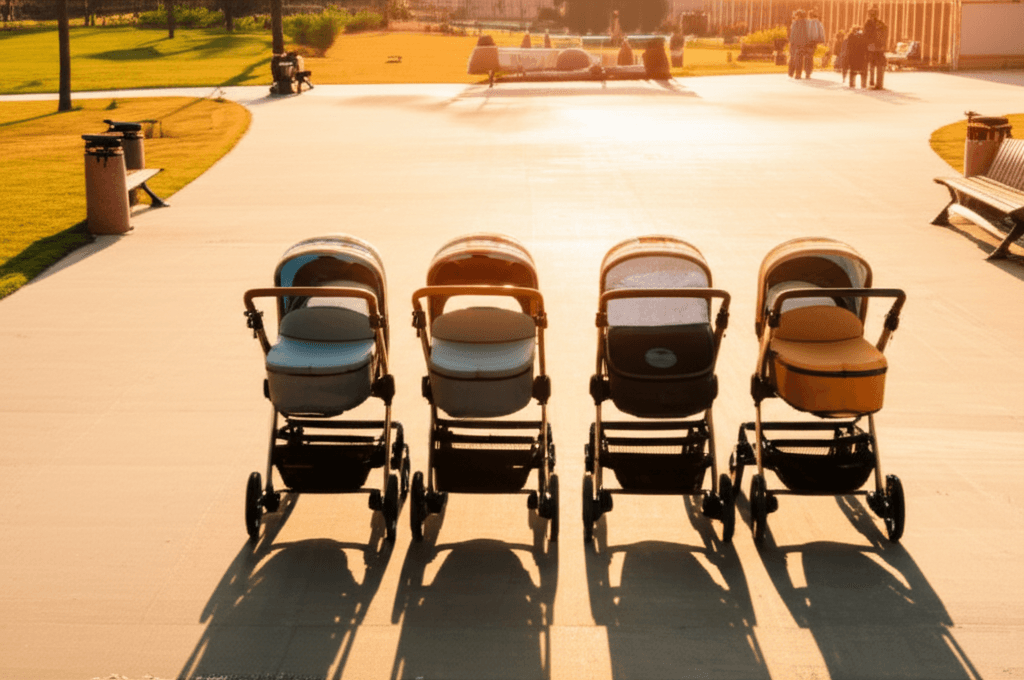
To choose the right stroller, start by defining where you'll use it most — city sidewalks, suburban neighborhoods, hiking trails, or airports all call for different designs. Most families do best with a full-size stroller that has a one-hand fold, adjustable handlebar, and infant car seat compatibility.
- If you primarily drive: fold size and trunk fit matter more than maneuverability.
- If you walk everywhere: wheel quality and turning radius are key.
The CPSC reports approximately 15,300 stroller-related injuries annually in U.S. emergency departments, with the most common causes being children falling out (often from unlatched harnesses) and finger entrapment in folding mechanisms.
Two things cut those risks the most: choosing a stroller that meets ASTM F833 safety standards, and consistently using the five-point harness.
This is a decision guide — the types, features, and trade-offs that should drive your choice. For our ranked product picks, see Best Strollers 2026.
What lifestyle factors should guide your stroller choice?
Defining your use case before shopping is the most reliable way to avoid buyer's remorse.
Before looking at any stroller, answer these questions honestly.
Where will you use it most?
- City sidewalks and public transit: You need something compact, easy to fold one-handed, and lightweight enough to carry up stairs.
- Suburbs and shopping malls: A full-size stroller with good storage works great. Weight matters less than comfort and features.
- Trails and parks: All-terrain tires and good suspension are worth the extra weight.
- Frequent travel: An ultralight or travel stroller that fits in an airplane overhead bin might be essential.
How will you transport it?
Measure your car trunk. Seriously, do this before you buy anything.
The most common stroller regret is buying one that barely fits (or doesn't fit) in your vehicle. If you use rideshares or taxis, fold speed and compactness matter enormously.
Do you plan to have more than one child?
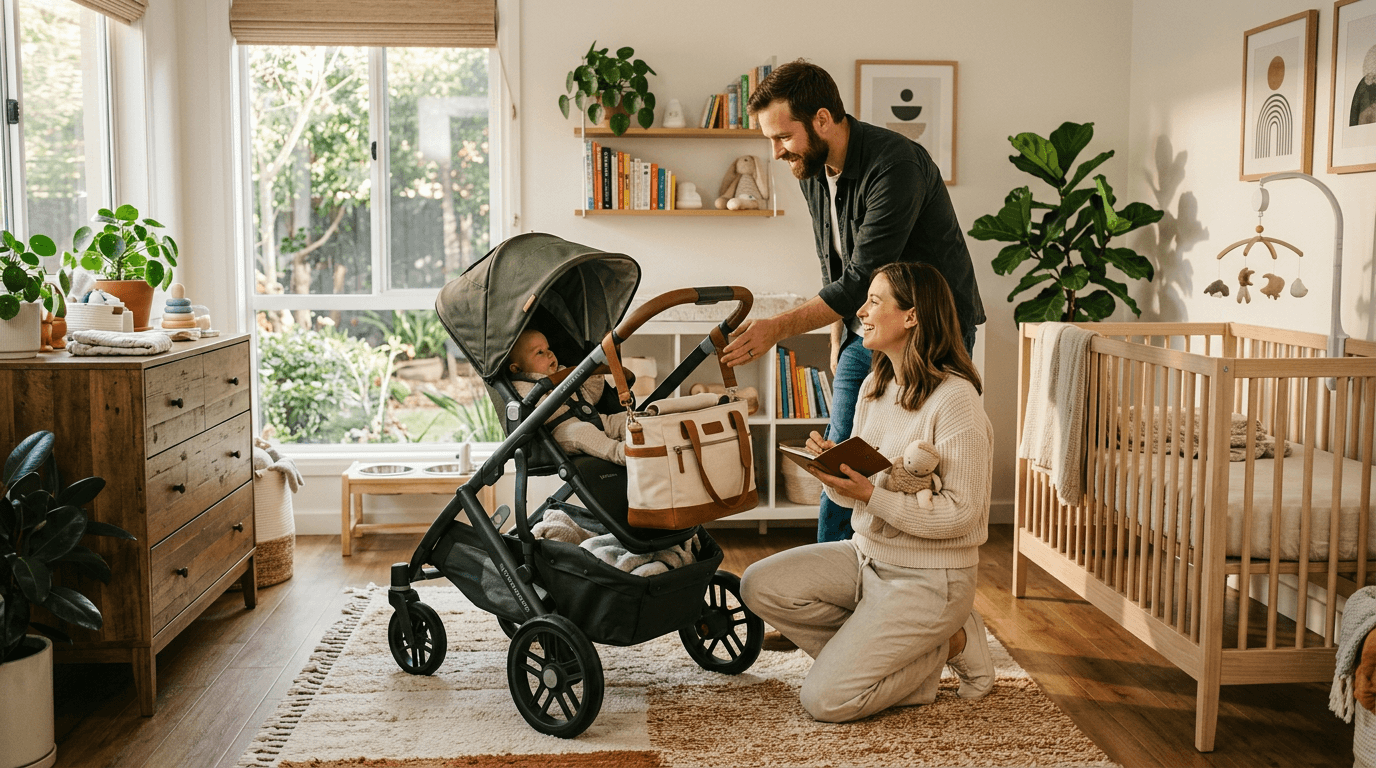
If you're planning to expand your family within a few years, consider a stroller that converts to a double configuration, like the UPPAbaby VISTA V3. Buying once and expanding is much cheaper than buying a completely new double stroller later.
What types of strollers are available?
Full-Size Strollers
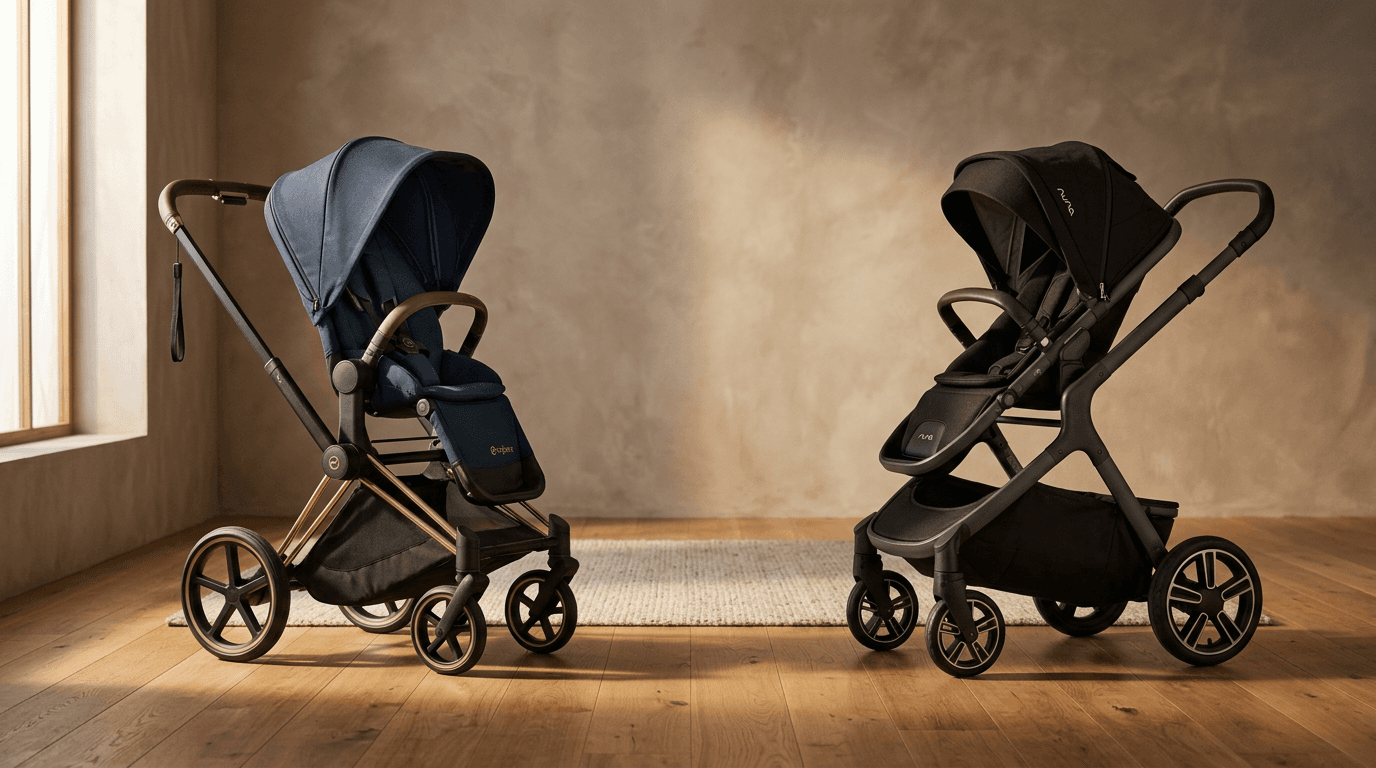
The standard all-rounders. They offer the most features: full recline, large canopies, big storage baskets, and compatibility with infant car seats. Typically 20-30 lbs. Examples: UPPAbaby VISTA V3, Nuna MIXX Next, Baby Jogger City Mini GT3.
All strollers sold in the U.S. should comply with ASTM F833, which covers stability, restraint systems, parking brakes, and folding mechanism safety. The CPSC monitors compliance and in 2023 issued 7 stroller recalls. Parents should always register their stroller with the manufacturer to receive recall notifications directly.
Lightweight/Umbrella Strollers
Stripped-down strollers designed for portability. Usually under 15 lbs, they fold compact and are easy to throw in a car or check at a gate. Less padding, smaller canopies, and minimal storage. Best as a secondary stroller for travel or quick errands. Examples: Babyzen YOYO2, Summer Infant 3Dlite.
Jogging Strollers
Three-wheeled strollers with suspension and a fixed front wheel for stability at running speeds. If you're a runner, these are essential — regular strollers aren't safe for jogging. Most aren't suitable until baby is 6-8 months old. Examples: Thule Urban Glide 2, BOB Gear Alterrain.
The AAP recommends that jogging strollers not be used for running until the infant is at least 6-8 months old and has full head and neck control.
For running, a jogging stroller should have:
- A fixed front wheel, or a lockable front wheel
- A five-point harness
- A wrist strap attached to the parent
The CPSC has linked uncontrolled jogging strollers to serious pedestrian and child injuries.
Double Strollers
For two kids. Tandem (one behind the other) doubles are narrower and fit through standard doorways. Side-by-side doubles give both kids equal views but are wider. Examples: UPPAbaby VISTA V3 with second seat, Bugaboo Donkey 5. Weighing a wagon instead? See wagon vs double stroller.
Travel Systems
A stroller bundled with a matching infant car seat. These offer the best value if you need both and want guaranteed compatibility. Examples: Graco Modes Nest DLX, Chicco Bravo Trio.
Which stroller features actually matter?
One-hand fold
You'll often be holding your baby while collapsing the stroller. A genuine one-hand fold is transformative. Test this in the store if possible — some "one-hand" folds technically require two hands in practice.
The CPSC has documented numerous finger entrapment injuries associated with stroller folding mechanisms. Modern strollers with one-hand fold designs have largely addressed this issue, but the CPSC still recommends keeping children clear of the stroller during folding and unfolding to prevent pinch injuries.
Adjustable handlebar
If you and your partner are different heights, an adjustable handlebar prevents back pain for the taller parent and awkward reaching for the shorter one.
Car seat compatibility
Most strollers accept infant car seats through adapters. Check that your chosen stroller works with your chosen car seat before buying either.
Recline
A full or near-flat recline allows your newborn to ride safely and lets older babies nap comfortably. Some strollers only recline partially, which limits newborn use.
Canopy coverage
A large, extendable canopy with a peek-a-boo window protects baby from sun and lets you check on them without stopping. UPF 50+ fabric is ideal.
Storage basket
You'll load it with a diaper bag, snacks, jackets, and shopping. Bigger is better, and accessibility matters — some baskets are impossible to reach when the seat is reclined.
Which stroller features are overrated?
Cup holders
Nice to have, not worth choosing a stroller over. You can add aftermarket cup holders to almost any stroller.
Fancy fabrics
Premium fabrics feel nice but get covered in cracker crumbs and milk spit-up regardless. Prioritize washability over luxury.
Color options
Choose what you like, but don't stress. You'll be too tired to notice what color your stroller is at 6 AM.
Where to find our specific picks
This page is the how to decide — not a product roundup. Once you know the type and features you need, see our ranked recommendations in Best Strollers 2026, or browse the full strollers category for individual reviews.
How do you pick the right stroller?
Don't buy a stroller because it looks good on Instagram or because a friend loves it. Think about your specific daily routine, your car, your neighborhood, and your budget. Then, before you commit:
- Test fold mechanisms
- Push the stroller loaded with weight
- Check that it fits in your vehicle
The right stroller makes leaving the house with a baby feel manageable instead of overwhelming.
Further Reading
💬 Real Talk from Parents
Every parent swears their stroller is the best one. None of them agree with each other.
You'll test-drive more strollers than cars before your first kid.
Honestly, test drive strollers with your actual car trunk before buying. Half the 'best' strollers don't fit in a sedan. Ask me how I know.
Paraphrased community consensus — not a direct quote.
You need a jogging stroller even if you don't jog.
Jogging strollers have fixed front wheels that make them harder to maneuver in tight spaces. Standard strollers with swivel wheels are better for everyday use.
More expensive strollers are always safer.
All strollers sold in the US must meet ASTM F833 safety standards regardless of price. A $200 stroller passes the same safety tests as a $1,200 one.
Hilly Shore Inc.
Editorial teamIndependent product research team behind Cribworthy. Reviews are grounded in published AAP / CDC / NHTSA / CPSC pediatric guidance, JPMA / GREENGUARD GOLD / OEKO-TEX certification verification, and aggregated buyer sentiment.
124 products reviewed · 22 categories covered · cites AAP, CDC, NHTSA, CPSC, FDA, ACOG.
Safety claims are verified against published pediatric guidelines and CPSC databases. See our editorial standards.