Introducing a Bottle to a Breastfed Baby: Start at 4 Weeks
Quick Answer
Offer the first bottle somewhere between three and six weeks, with about four weeks being the sweet spot: nursing is established by then and your baby is still flexible. Have someone other than the nursing parent give it, use a slow-flow wide-based nipple, and try when your baby is calm and only mildly hungry. Start with an ounce or two and stop if it turns into a fight.
Our Verdict
Hand the first bottle to a partner or grandparent, leave the room, and keep the attempt under ten minutes. Pace the feed upright with frequent pauses so your baby controls the flow. Change one variable per attempt, whether that is nipple shape, milk temperature, or time of day. If refusal has lasted more than a week, ask a lactation consultant instead of adding more bottles.
Key Takeaways
- ✓Hand the first bottle to a partner or grandparent, leave the room, and keep the attempt under ten minutes. Pace the feed upright with frequent pauses so your baby controls the flow. Change one variable per attempt, whether that is nipple shape, milk temperature, or time of day. If refusal has lasted more than a week, ask a lactation consultant instead of adding more bottles.
- ✓The best time to introduce a bottle to a breastfed baby is between 3 and 6 weeks of age, with around 4 weeks being the ideal window. At this point, breastfeeding is typically well established but t...
💬 Real Talk from Parents
You'll develop strong opinions about bottle nipple flow rates, and that's okay.
Formula is not a failure. Fed is genuinely best.
Sterilizing bottles at 2 AM is a rite of passage nobody tells you about.
The 'best' bottle is whichever one your baby actually accepts.
Combo feeding saved my sanity. Breast milk when I could, formula when I couldn't. Baby thrived either way.
Paraphrased community consensus — not a direct quote.
Switching formula brands frequently is harmful.
Most standard formulas have very similar nutritional profiles (they're all regulated by the FDA). Switching brands is fine — the exception is specialty formulas for allergies or medical conditions, which should be discussed with your pediatrician.
You should sterilize bottles before every single use.
The CDC recommends sterilizing bottles once when new, then again only if your baby is premature, under 2 months, or immunocompromised. For healthy babies over 3 months, hot soapy water or a dishwasher is sufficient.

As an Amazon Associate I earn from qualifying purchases. Product prices and availability are subject to change.
How to Introduce a Bottle to a Breastfed Baby: Timing and Technique
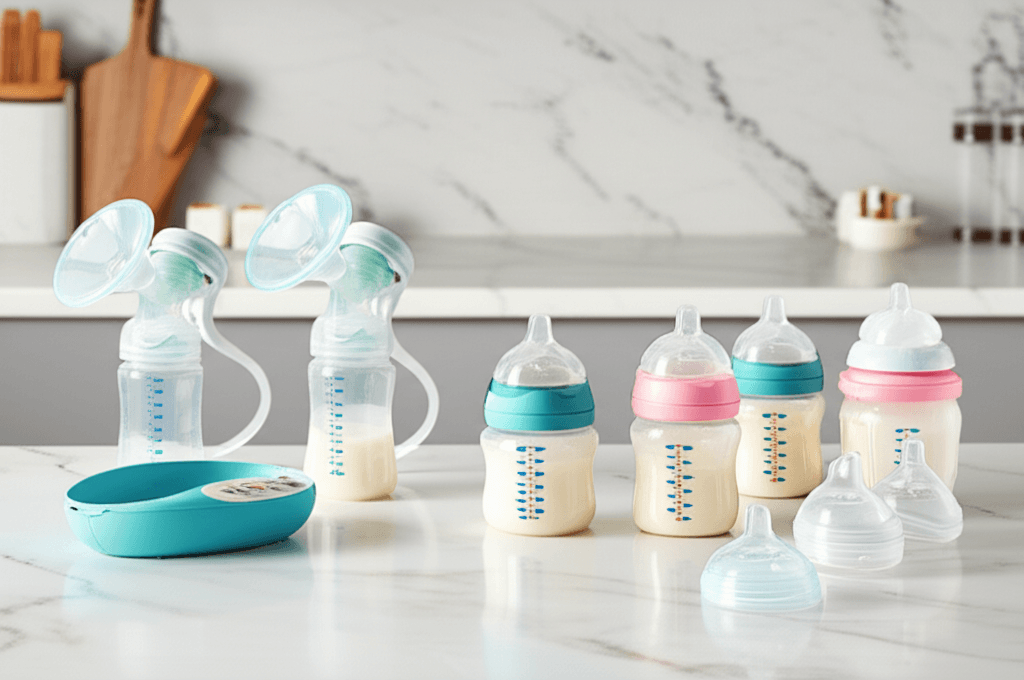
The best time to introduce a bottle to a breastfed baby is between 3 and 6 weeks of age, with around 4 weeks being the ideal window. At this point, breastfeeding is typically well established but the baby is still adaptable enough to accept an alternative feeding method. The AAP recommends exclusive breastfeeding for approximately 6 months, and introducing a bottle within this window does not interfere with that goal when paced bottle feedingpaced bottle feedingHolding the bottle nearly horizontal so baby has to actively suck, mimicking breastfeeding rhythm. Prevents over-feeding and the breast-to-bottle preference flip. techniques are used. Have someone other than the breastfeeding parent offer the first bottle, use a slow-flow, wide-based nipple, and keep the session low-pressure.
When is the best time to introduce a bottle to a breastfed baby?
The sweet spot is between 3-6 weeks of age. Here's why:
A 2019 study published in Breastfeeding Medicine found that infants introduced to a bottle between 3 and 6 weeks had the highest acceptance rates (87%), compared to 71% for those introduced after 8 weeks. The AAP emphasizes that bottle introduction within this window, when combined with continued breastfeeding, does not negatively affect breastfeeding duration or exclusivity.
| Timing | What is happening |
|---|---|
| Before 3 weeks | Breastfeeding is still being established. Introducing a bottle too early can cause nipple confusion — or more accurately, flow preference, since bottles are often easier to drink from, which can make baby frustrated at the breast. |
| The ideal window: around 4 weeks | Breastfeeding is usually well established, milk supply is regulated, and baby is still adaptable enough to accept a different feeding method. |
| After 6 weeks | Many babies become strongly attached to breastfeeding and are more likely to refuse a bottle. The longer you wait, the harder it can be. |
Going back to work? Start at least 2-3 weeks before your return date. This gives you time to troubleshoot if baby initially refuses.
What kind of bottle works best for breastfed babies?
Not all bottles work for breastfed babies. You want one that mimics the breast as closely as possible:
Research published in the Journal of Human Lactation (2021) found that slow-flow nipples significantly reduce the risk of flow preference (sometimes called nipple confusion) by requiring the infant to use a suck-swallow-breathe pattern similar to breastfeeding. The study recommended wide-based, slow-flow nipples for all breastfed infants transitioning to occasional bottle feeds.
What to look for
- Slow-flow nipple: Baby should have to work for the milk, similar to breastfeeding. Fast-flow nipples can cause a flow preference.
- Wide-base nipple: Encourages a wide latchISOFIXA standardized anchor system for installing car seats without the vehicle seatbelt. ISOFIX is the international name; in the US it's called LATCH (Lower Anchors and Tethers for Children). similar to the breast
- Soft, flexible nipple: Feels more natural in baby's mouth
Our top picks for breastfed babies
Comotomo Silicone Baby Bottle (Gen 2) → (~$14 for a 2-pack): The soft, squeezable silicone body and naturally shaped nipple are designed specifically for babies transitioning between breast and bottle. The wide-neck design makes cleaning easy. This is our most-recommended bottle for breastfed babies.
Lansinoh Breastfeeding Bottle → (~$18 for a 3-pack): The NaturalWave nipple is clinically proven to reduce nipple confusion. The wave-like shape encourages the same tongue movement as breastfeeding.
Philips Avent Natural → (~$20 for a 3-pack): The wide, breast-shaped nipple and flexible spiral design make it easy for babies to latch. The anti-colic valve reduces air intake.
For a deep dive into bottle options, read our best feeding bottles guide.
How do you give a breastfed baby their first bottle?
Step 1: Have someone else offer it
This is the most important tip. Have your partner, grandparent, or caregiver give the first few bottles while mom is in another room (or better yet, out of the house).
Why it helps: if mom offers the bottle, baby can smell her and will likely want the breast instead.
Step 2: Time it right
Offer the bottle when baby is hungry but not ravenous. A calm, slightly hungry baby is more willing to try something new than a screaming, starving one. About 30 minutes before a typical feeding time works well.
Step 3: Warm the milk
Breastfed babies are used to body-temperature milk. Warm the bottle to about 98-100°F by placing it in warm water. Test on your wrist — it should feel neutral, not warm or cold.
Step 4: Use paced bottle feeding
This technique mimics breastfeeding pace:
- Hold baby in a semi-upright position (not lying flat)
- Hold the bottle horizontal, not tilted up
- Let baby draw the nipple in rather than pushing it in
- Pause every few minutes by tilting the bottle down or removing it briefly
- Follow baby's cues — if they turn away, they're done
Paced feeding prevents overfeeding and helps baby maintain the ability to self-regulate intake at the breast.
Step 5: Start small
Offer 1-2 oz for the first few attempts. The goal is acceptance, not a full feed. As baby gets comfortable, gradually increase the amount.
What should you do if your breastfed baby refuses a bottle?
Don't panic — bottle refusal is common and usually temporary. Try these strategies:
A 2020 survey published in Maternal & Child Nutrition found that approximately 25% of breastfed infants initially refuse a bottle, but persistent, low-pressure introduction attempts over 1-2 weeks resulted in acceptance in 92% of cases. Pediatric feeding specialists recommend trying different nipple shapes and temperatures rather than forcing the bottle.
Change the environment
Some babies take a bottle while being walked around, in the car seat, or in a different room than where they usually breastfeed.
Try different nipple shapes
What works for one baby may not work for another. Before buying dozens of bottles, purchase single bottles of 2-3 different brands and see which one your baby prefers.
Offer at different times
Some babies accept bottles better at certain times of day. Early morning (when they're not fully awake) or during a drowsy feed can work.
Try different temperatures
Some babies prefer room temperature milk, others want it warm. A few even prefer it slightly cool.
Dip the nipple in breast milk
Let baby taste something familiar before they commit to the new delivery method.
Be patient, not forceful
Never force a bottle into a crying baby's mouth. This creates negative associations. If baby refuses after a few gentle attempts, try again at the next feeding. Consistency over days is more effective than persistence in a single session.
How do you maintain breastfeeding while also bottle feeding?
The AAP and the Academy of Breastfeeding Medicine recommend that breastfeeding parents pump whenever their baby takes a bottle to maintain milk supply and prevent engorgement.
Don't skip the session: skipping pump sessions can signal the body to reduce milk production within 48-72 hours, potentially affecting long-term supply.
Pump when baby takes a bottle
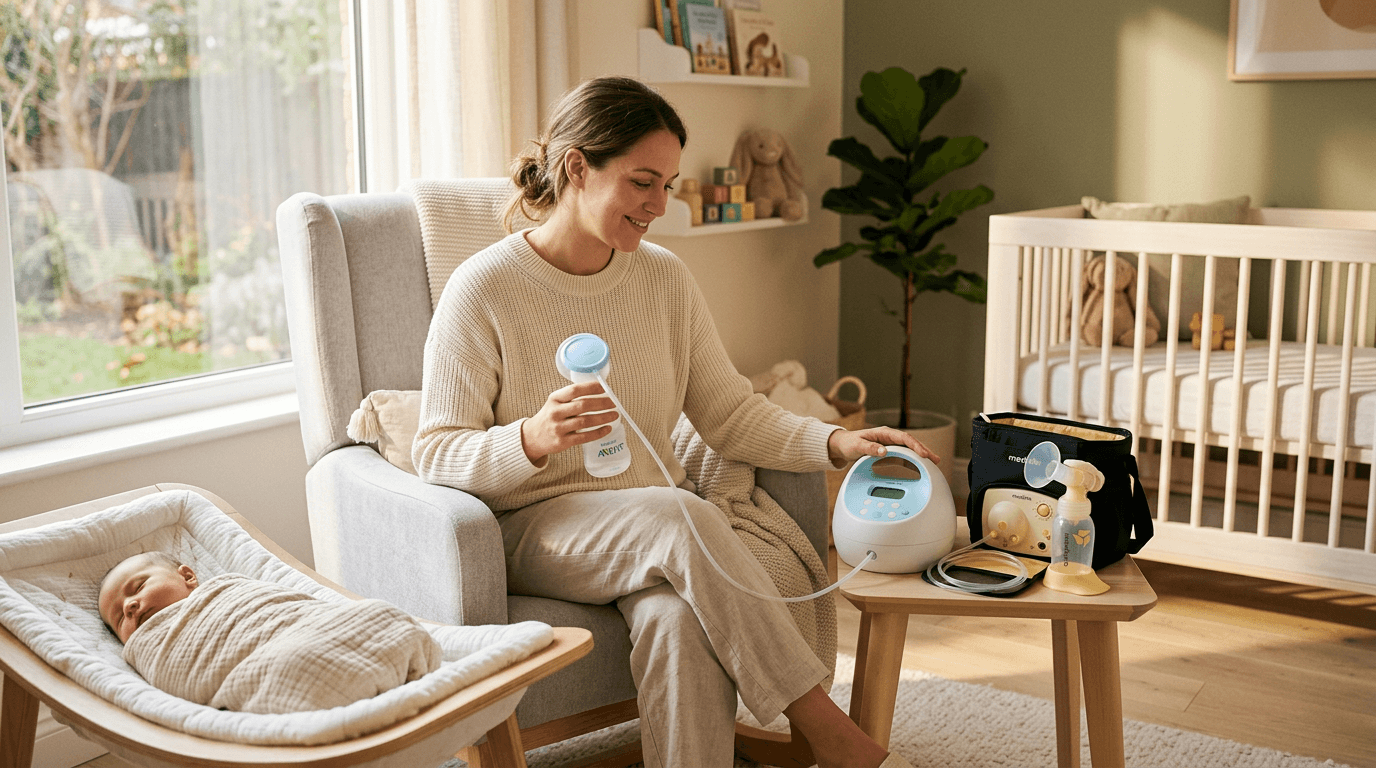
If your baby is drinking a bottle of expressed milk, pump at that same time to maintain your supply. Your body produces milk on a supply-and-demand basis — skipping sessions without pumping signals your body to make less. If you're building a pumping routine, check our Spectra vs Medela comparison.
Limit bottles to maintain breast preference
If your goal is primarily breastfeeding with occasional bottles, limit bottles to 1-2 per day max. This keeps baby primarily nursing and prevents flow preference.
Continue paced feeding
Even as baby becomes comfortable with bottles, maintain paced feeding technique. This keeps the bottle experience similar to breastfeeding and prevents baby from preferring the faster, easier bottle flow.
How much milk should you put in a bottle for a breastfed baby?
Rule of thumb: breastfed babies typically consume 1-1.5 oz per hour of separation. So if you'll be away for 3 hours, prepare 3-4.5 oz.
It's better to prepare smaller bottles and supplement with another if needed than to overfill and waste precious pumped milk.
General guidelines by age:
- 1-2 months: 2-3 oz per feeding
- 3-4 months: 3-4 oz per feeding
- 5-6 months: 4-5 oz per feeding
Breastfed babies typically don't increase bottle size the way formula-fed babies do — they stay around 3-4 oz per feeding even as they grow, but feed more frequently.
What is the best approach to introducing a bottle?
- Introduce the bottle around 4 weeks.
- Have someone other than mom offer it.
- Use a slow-flow nipple.
- Practice paced feeding.
If baby refuses, stay calm and try different bottles, positions, and environments. Most babies eventually accept a bottle with patience and consistency. The key is starting in that 3-6 week window before preferences become strong.
Related Reading
Research Sources
Hilly Shore Inc.
Editorial teamIndependent product research team behind Cribworthy. Reviews are grounded in published AAP / CDC / NHTSA / CPSC pediatric guidance, JPMA / GREENGUARD GOLD / OEKO-TEX certification verification, and aggregated buyer sentiment.
115 products reviewed · 20 categories covered · cites AAP, CDC, NHTSA, CPSC, FDA, ACOG.
Safety claims are verified against published pediatric guidelines and CPSC databases. See our editorial standards.