Preparing for Baby Number Two: What Changes and What Doesn't
Quick Answer
Reuse almost everything after a recall check at CPSC.gov, and buy new in three places: the car seat if the first has expired or been in a collision, the crib mattress, and a stroller that takes two. The real change is logistical, not informational — you already know how to raise a newborn, you simply have to do it while a toddler is awake.
Our Verdict
Sort out the double stroller before the birth if your children will be under three years apart, and borrow or rent one first if you can — plenty of households end up preferring a carrier plus a buggy board. Expect your older child to regress in sleep or toileting for a few weeks; that is the cost, and it passes. Protect one-on-one time over gear.
As an Amazon Associate I earn from qualifying purchases. Product prices and availability are subject to change.
Preparing for Baby Number Two: What Changes and What Doesn't
The biggest differences between baby one and baby two are logistical, not informational — you already know what you're doing, but now you're doing it while keeping a toddler alive. Reuse most of your existing gear after checking for recalls, but buy a new car seat if your first is expired or has been in an accident, and upgrade to a double-compatible stroller if you'll have two under 3. The AAP recommends checking all recalled products at CPSC.gov before reusing baby gear, particularly cribs, car seats, and sleepwear that may have been recalled since your first child used them.
What's easier with your second baby?
What gets easier:
- You know babies — you've survived the newborn stage once, and you won't panic at every hiccup
- You know what you actually need — your shopping list will be shorter and more focused
- Medical decisions feel clearer — you're making informed decisions rather than starting from zero
What gets harder:
- Logistics multiply — everything takes longer, and leaving the house requires twice the gear
- Naps don't align — "both kids napping at the same time" happens occasionally but isn't reliable
- Guilt is different — about the baby's attention, and about the toddler's disrupted routine
You know babies
The biggest advantage of being a second-time parent is experience. You've survived the newborn stage once. You know what cluster feeding sounds like, you can swaddle in the dark, and you won't panic at every hiccup. This confidence is genuine and valuable.
You know what you actually need
No more agonizing over baby gear. You know which products earned their place in your home and which collected dust. Your registry or shopping list will be shorter and more focused. See our what you actually need guide for a refresher.
Medical decisions feel clearer
You've already researched pediatricians, feeding approaches, and sleep philosophies. Whether you're doing the same thing or deliberately changing course, you're making informed decisions rather than starting from zero.
What's harder with a second baby?
Logistics multiply
Managing a newborn while keeping a toddler alive, fed, and emotionally stable is the core challenge. Everything takes longer. Diaper changes happen while a toddler climbs the couch. Bedtime involves two different routines. Leaving the house requires twice the gear.
Naps don't align
Your newborn's sleep schedule and your toddler's schedule will rarely overlap. The dream of "both kids napping at the same time" happens occasionally but isn't reliable. Adjust your expectations.
Guilt is different
You'll feel guilty that the new baby isn't getting the undivided attention your first had. You'll feel guilty that your toddler's routine is disrupted.
Neither guilt spiral is productive. Siblings teach each other resilience, sharing, and social skills that only children must learn elsewhere.
What baby gear can you safely reuse for a second baby?
Most things work for a second baby
Assuming they're in good condition and meet current safety standards:
- Crib (check expiration and recall status)
- High chair
- Baby carrier — your Ergobaby or BabyBjörn works for baby two
- Baby tub
- Sound machine
- Bottles and pump parts (replace nipples and any silicone/rubber components)
- Most clothing (check for wear and safety — no loose buttons)
Check for recalls
Check before you reuse: Safety standards evolve. What was safe three years ago might have been recalled since — check CPSC.gov.
The CPSC maintains a searchable recall database at CPSC.gov where parents can check any baby product by brand and model. Between 2020 and 2024, the CPSC issued recalls on over 150 infant and toddler products, including cribs, strollers, and sleepwear. Car seats have expiration dates (typically 6-10 years from manufacture) because materials degrade over time, and seats involved in a moderate-to-severe crash should be replaced.
What do you need to buy new for a second baby?
| Item | Buy new when |
|---|---|
| Car seat | It's expired, it's been in a crash, or your firstborn is still in theirs. You'll also need a second base if using an infant carrier |
| Stroller | Your current one doesn't expand to a double |
| Crib mattress | It's more than three years old, or shows any sagging, indentation or wear |
| Diaper bag | Your current one isn't large enough for two kids' supplies |
Car seat
Car seats expire (check the date stamped on the seat). If your firstborn's infant seat is expired or if they're still using their convertible seat, you'll need a new infant seat for baby two. Read our car seats guide. You'll also need a second car seat base if using an infant carrier.
NHTSA requires that car seats carry an expiration date, typically 6-10 years after manufacture. If your first child's car seat is still within its usable life and has never been in a crash, it can safely be reused. However, you will need two car seats installed simultaneously — NHTSA recommends having a certified technician verify proper installation when fitting two seats, as spacing and angle requirements can be tighter.
Stroller upgrade
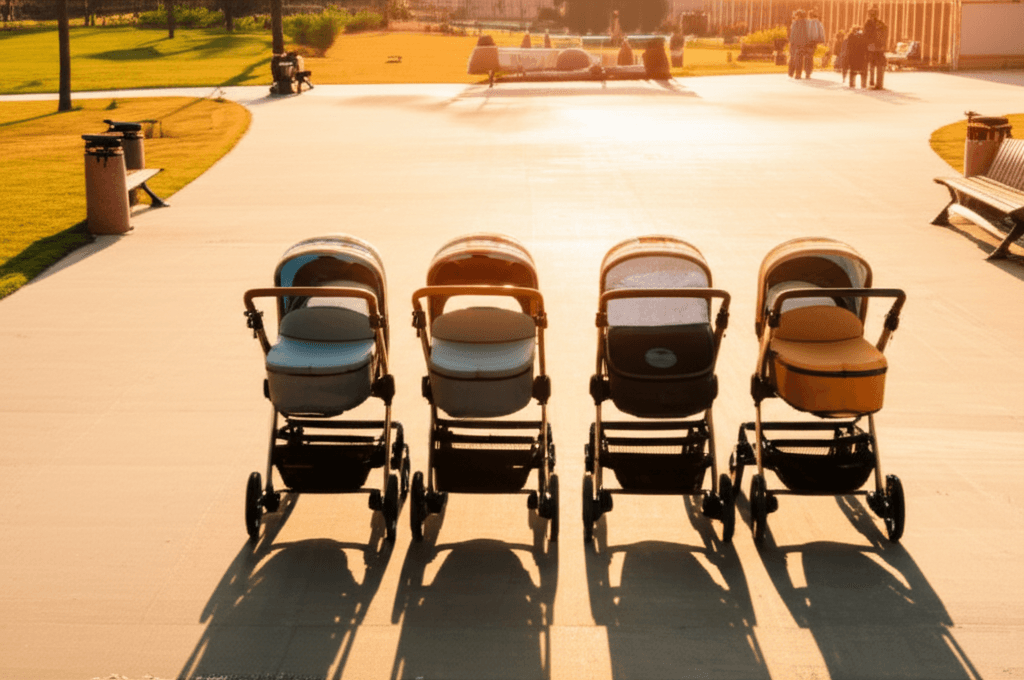
This is the big one. If your first stroller doesn't expand to a double, you'll need a solution. The UPPAbaby VISTA V3 converts to a double with a second seat, making it ideal for growing families. Alternatively, a sit-and-stand stroller works well when your firstborn is old enough to stand. See our strollers guide.
Mattress
Crib mattresses degrade over time. If your first child's mattress is more than three years old or shows any signs of sagging, indentation, or wear, replace it.
Non-negotiable: A firm mattress, for safe sleep.
Diaper bag
If your current diaper bag is large enough for two kids' supplies, keep using it. Many parents upgrade to a larger bag or add a secondary small bag for quick outings with just the baby.
How do you prepare a toddler for a new sibling?
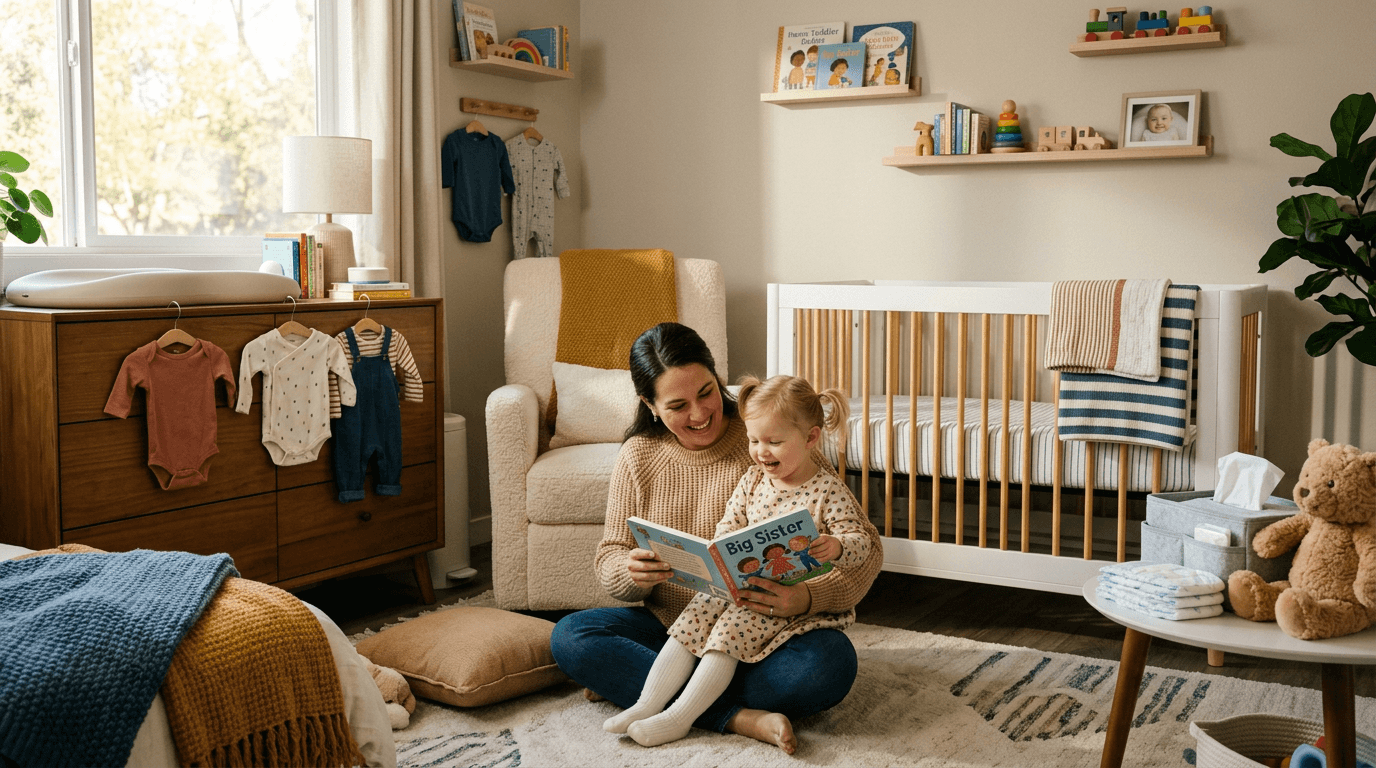
The AAP recommends introducing the concept of a new sibling gradually, starting during the second trimester. Child psychologists suggest reading age-appropriate books about new babies, involving the older child in preparation activities, and avoiding major transitions (potty training, new bed, new school) within 2-3 months of the due date. Four things that help:
- Start talking about the baby — around the last trimester, in age-appropriate terms
- Maintain their routine — same bedtime, same daycare schedule, same weekend activities
- Expect regression — accidents, bedtime resistance, clinginess. Normal and temporary
- Give them a role — fetching diapers, choosing baby's outfit, singing to the baby
Start talking about the baby
Around the last trimester, begin talking about the new sibling in age-appropriate terms. Read books about becoming a big brother or sister. Let them feel your belly when baby kicks.
Don't overhype it: "Exciting" and "fun" are less helpful than "they'll be very small and sleep a lot."
Maintain their routine
As much as possible, keep your firstborn's routine unchanged around the birth. Same bedtime, same daycare schedule, same weekend activities. Stability in their routine offsets the disruption of a new sibling.
Expect regression
Toddler regression is common when a new sibling arrives. Potty-trained kids may have accidents. Good sleepers may resist bedtime. Independent kids may become clingy. This is normal and temporary. Respond with patience and extra attention rather than punishment.
Give them a role
Let your toddler help — fetching diapers, choosing baby's outfit, singing to the baby. Involvement builds connection and reduces resentment.
What are the first weeks like with two kids?
The AAP notes that postpartum depression risk increases with subsequent pregnancies, particularly when the birth interval is less than 18 months. Parents of two should proactively arrange help during the first two weeks and watch for mood changes in both parents. Three things carry the first weeks:
- Accept more help — every offer. Someone playing with your toddler while you handle the newborn is incredibly valuable
- Protect one-on-one time — even 15 minutes of focused attention with your toddler each day
- Simplify meals — batch prep, delivery, simple repeatable meals
Accept more help
With your first baby, you might have been able to handle everything. With two, accept every offer of help. Having someone play with your toddler while you handle the newborn is incredibly valuable.
Protect one-on-one time
Each child needs individual attention. Even 15 minutes of focused one-on-one time with your toddler each day makes a meaningful difference in their adjustment.
Simplify meals
This isn't the time for elaborate cooking. Batch prep, meal delivery services, and simple repeatable meals keep everyone fed without adding stress.
What does nobody tell you about having a second baby?
You have more love than you think
The love is different, not divided. The common fear — "How can I love another child as much as my first?" — dissolves almost instantly.
They'll entertain each other eventually
The early months are pure logistics, but eventually your kids will play together, laugh together, and keep each other occupied. This is the reward for surviving the two-under-two chaos.
The second baby is more flexible
Second babies learn to sleep through noise, adapt to on-the-go routines, and fit into the family's existing rhythm. They're often more easygoing — or maybe you're just more relaxed. Either way, it helps.
What's the most important advice for second-time parents?
Baby number two is a different adventure. You're more prepared, more confident, and more realistic. The logistics are harder but the anxiety is lower. Three things:
- Update your gear where needed — car seat, stroller, mattress
- Prepare your firstborn gently
- Give yourself grace during the adjustment period For specific gear recommendations for growing families, explore our strollers and car seats categories.
Further Reading
Honestly, test drive strollers with your actual car trunk before buying. Half the 'best' strollers don't fit in a sedan. Ask me how I know.
Paraphrased community consensus — not a direct quote.
You need a jogging stroller even if you don't jog.
Jogging strollers have fixed front wheels that make them harder to maneuver in tight spaces. Standard strollers with swivel wheels are better for everyday use.
Hilly Shore Inc.
Editorial teamIndependent product research team behind Cribworthy. Reviews are grounded in published AAP / CDC / NHTSA / CPSC pediatric guidance, JPMA / GREENGUARD GOLD / OEKO-TEX certification verification, and aggregated buyer sentiment.
124 products reviewed · 22 categories covered · cites AAP, CDC, NHTSA, CPSC, FDA, ACOG.
Safety claims are verified against published pediatric guidelines and CPSC databases. See our editorial standards.