Baby-Led Weaning Starter Guide: Everything Parents Need to Know
Quick Answer
Baby-led weaning is the practice of letting your baby self-feed soft, age-appropriate finger foods from the very start of solids, skipping purees entirely.
Our Verdict
Baby-led weaning is the practice of letting your baby self-feed soft, age-appropriate finger foods from the very start of solids, skipping purees entirely.
Key Takeaways
- ✓Baby-led weaning is the practice of letting your baby self-feed soft, age-appropriate finger foods from the very start of solids, skipping purees entirely.
- ✓Both the World Health Organization and the AAP recommend introducing complementary foods around 6 months of age, when breast milk or formula alone no longer meets all of a baby's nutritional needs....
- ✓*Note: As an Amazon affiliate, we may earn from qualifying purchases. All recommendations are based on independent research and real parent feedback.*
💬 Real Talk from Parents
Your baby will reject the $40 bottle and love the $3 one. Every time.
Formula is not a failure. Fed is genuinely best.
The 'best' bottle is whichever one your baby actually accepts.
Sterilizing bottles at 2 AM is a rite of passage nobody tells you about.
Combo feeding saved my sanity. Breast milk when I could, formula when I couldn't. Baby thrived either way.
Paraphrased community consensus — not a direct quote.
Switching formula brands frequently is harmful.
Most standard formulas have very similar nutritional profiles (they're all regulated by the FDA). Switching brands is fine — the exception is specialty formulas for allergies or medical conditions, which should be discussed with your pediatrician.
Breastfed babies don't need to burp.
All babies swallow some air while feeding, regardless of method. Breastfed babies may swallow less air, but they still benefit from gentle burping after feeds.
As an Amazon Associate I earn from qualifying purchases. Product prices and availability are subject to change.
Baby-Led Weaning Starter Guide: Everything Parents Need to Know
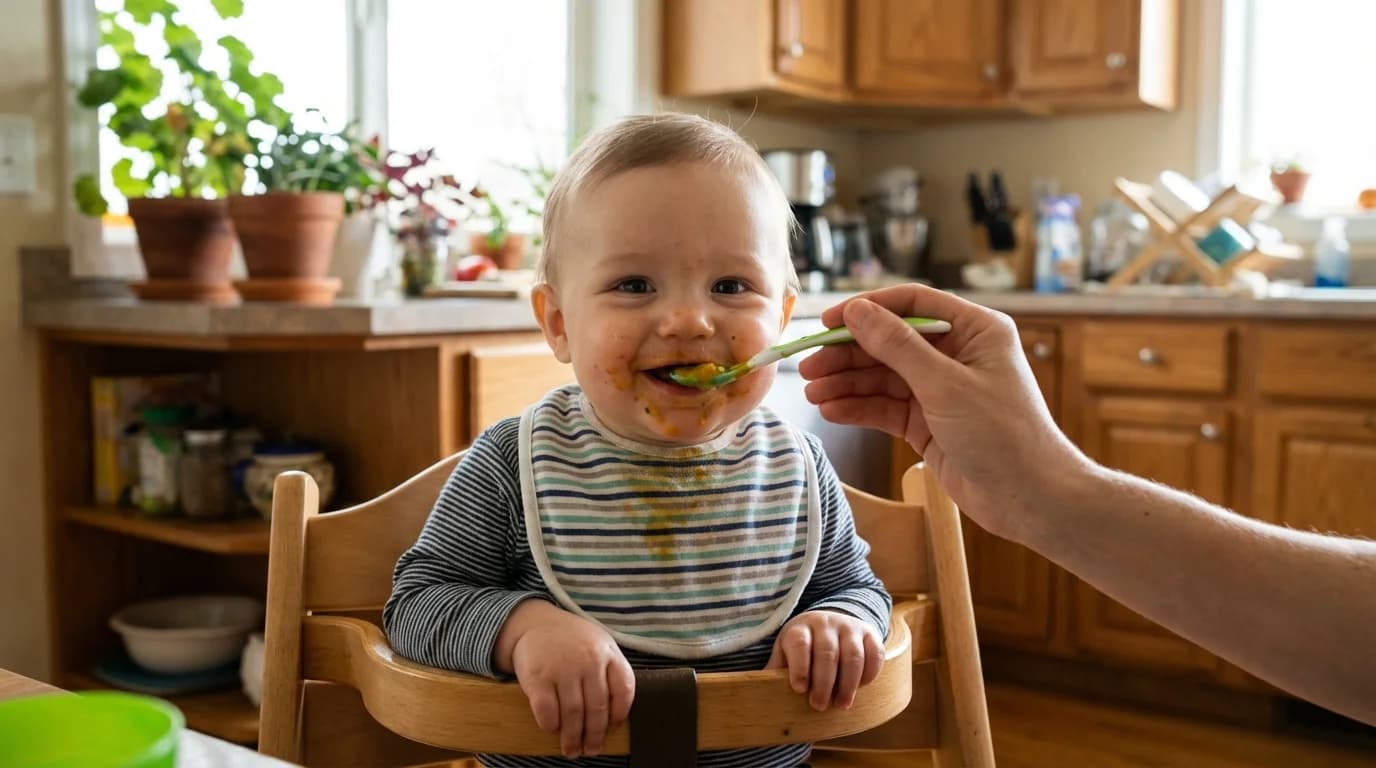
Baby-led weaningBLWBaby-led weaning: skipping purees and offering finger-sized pieces of soft food from ~6 months so baby self-feeds. Reduces picky eating risk; does not increase choking when done right. is the practice of letting your baby self-feed soft, age-appropriate finger foods from the very start of solids, skipping purees entirely. The approach was popularized by British health visitor Gill Rapley, and research published in the BMJ Open in 2016 found that BLW babies were no more likely to choke than spoon-fed babies when offered appropriate foods. The key is starting at the right time, offering the right foods in the right shapes, and knowing the difference between gagging and choking.
Both the World Health Organization and the AAP recommend introducing complementary foods around 6 months of age, when breast milk or formula alone no longer meets all of a baby's nutritional needs. Whether you choose BLW, traditional purees, or a combination, the timing guidelines are the same.
When is your baby ready for baby-led weaning?
The AAP identifies several signs of readiness that typically converge around 6 months. Your baby should be able to sit upright with minimal support, have good head and neck control, show interest in food (reaching for your plate, watching you eat intently), and have lost the tongue-thrust reflex that pushes food out of the mouth.
Do not start based on age alone. A baby who hits all readiness signs at 5.5 months is a better candidate than one who has not quite mastered sitting at 6.5 months. When in doubt, talk to your pediatrician. If you are looking for a broader overview of when and how to start solids, our guide to starting solid foods covers both BLW and traditional approaches.
What are the best first foods for baby-led weaning?
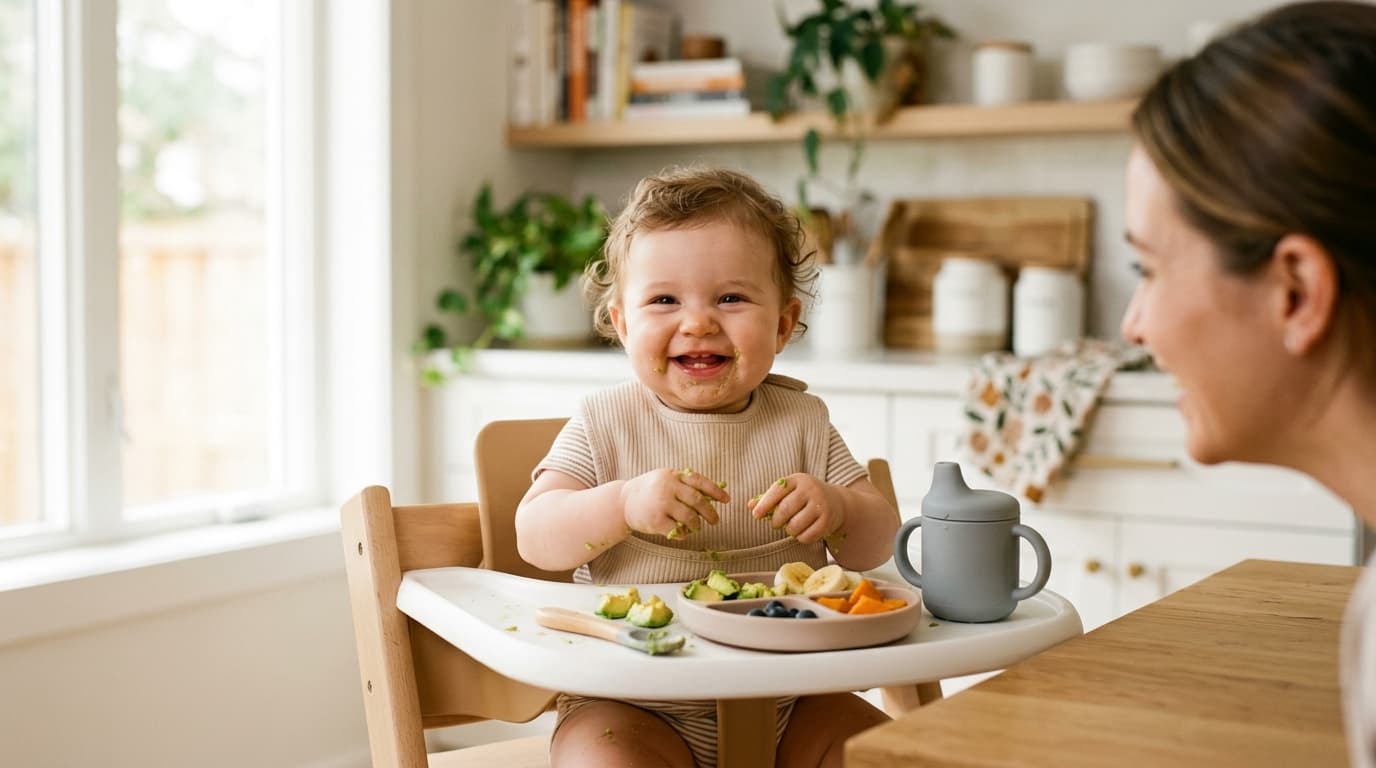
The ideal first BLW foods are soft enough to mash between your thumb and finger, cut into finger-length strips (about the size of an adult finger) so your baby can grip them with a palmar grasp, and nutritionally dense.
Great starter foods:
- Avocado strips — Soft, nutrient-rich, and easy to grip. Roll in a little hemp seed or infant cereal for better grip.
- Ripe banana — Cut in half and peel halfway down so the skin acts as a handle. Or cut into spears.
- Steamed sweet potato strips — Cook until very soft. Rich in vitamin A and naturally sweet.
- Steamed broccoli florets — The stem makes a natural handle. Cook until very soft.
- Strips of well-cooked salmon — Excellent source of omega-3s and iron. Remove all bones.
- Soft-cooked egg strips — A top allergen to introduce early. Cook fully and cut into strips.
- Very ripe pear or mango strips — Sweet, soft, and motivating for new eaters.
Foods to avoid in the first year:
- Honey (botulism risk before 12 months)
- Whole nuts and seeds (choking hazard — nut butters thinned and spread are fine)
- Whole grapes, cherry tomatoes, or hot dog rounds (cut lengthwise, never in rounds)
- Hard raw vegetables like carrots (steam until very soft instead)
- Added salt and sugar
- Cow's milk as a primary drink (small amounts in cooking are fine)
What is the difference between gagging and choking?
This is the most important safety distinction in BLW, and understanding it will dramatically reduce your anxiety.
Gagging is loud, visible, and normal. Your baby will cough, sputter, and may turn red. Their gag reflex is located much farther forward on the tongue than in adults, which means they gag on food that is nowhere near their airway. Gagging is a safety mechanism — it means the system is working. It is very common in the first weeks of BLW and decreases as your baby learns to manage food in their mouth.
Choking is silent. If your baby is truly choking, they will not be making noise. They may turn blue, look panicked, or become limp. This is a medical emergency. Every parent starting solids — whether BLW or purees — should take an infant CPR class. The American Red Cross and many local hospitals offer them.
The BMJ Open study found that with appropriate food preparation, BLW does not increase choking risk compared to traditional weaning. The key is cutting food into appropriate shapes and avoiding known choking hazards.
What kind of high chair do you need for BLW?
A good high chair is essential for safe BLW. Your baby needs to sit upright at 90 degrees with feet supported — a footrest is not optional, it is a safety feature that provides stability. Look for a chair with a flat, wide tray that is easy to clean, an adjustable footrest, and a harness that keeps your baby securely upright.
The Stokke Tripp Trapp is the gold standard for BLW because of its adjustable seat and footrest. Budget-friendly alternatives like the IKEA Antilop with a footrest hack work well too. See our full high chair roundup for options at every price.
How do you manage the mess?
Let's be honest — BLW is messy. Spectacularly messy. But the mess is part of the learning process. Babies learn about texture, temperature, and food properties through touching, squishing, and yes, throwing.
Practical mess management tips:
- Put a plastic splat mat or old shower curtain under the high chair
- Use long-sleeve bibs with a catch pocket
- Strip baby down to a diaper in warm weather
- Have a dedicated BLW cleanup cloth or sponge nearby
- Feed the dog after meals (only half joking)
- Accept that your floor will look like a battlefield and that is completely fine
How much will your baby actually eat at first?
Almost nothing, and that is perfectly normal. For the first few weeks (and sometimes months), BLW is about exploration, not nutrition. Breast milk or formula remains the primary source of nutrition until 12 months. Food before one is mostly for fun, skill-building, and flavor exposure.
Do not stress about quantities. Offer food at regular meal times, let your baby explore at their own pace, and trust that their intake will gradually increase. Some days they will eat enthusiastically; other days they will throw everything on the floor. Both are normal.
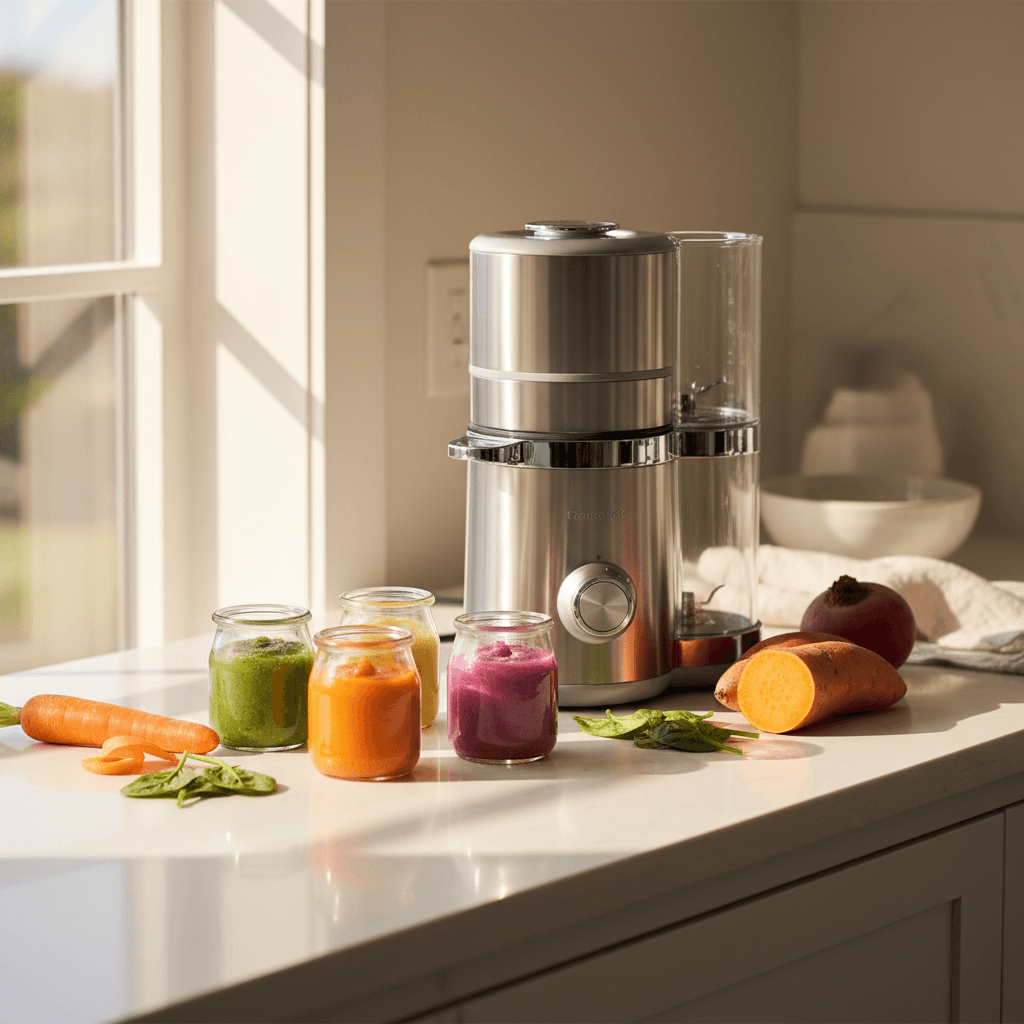
A good baby food maker can help you prepare soft-steamed foods quickly if you want to batch-prep BLW foods for the week.
Further Reading
Note: As an Amazon affiliate, we may earn from qualifying purchases. All recommendations are based on independent research and real parent feedback.
Hilly Shore Inc.
Editorial teamIndependent product research team behind Cribworthy. Reviews are grounded in published AAP / CDC / NHTSA / CPSC pediatric guidance, JPMA / GREENGUARD GOLD / OEKO-TEX certification verification, and aggregated buyer sentiment.
115 products reviewed · 20 categories covered · cites AAP, CDC, NHTSA, CPSC, FDA, ACOG.
Safety claims are verified against published pediatric guidelines and CPSC databases. See our editorial standards.