Baby-Proofing Grandparents' House: Fix These Five First
Quick Answer
Start with medicines, including pill organizers and purses, then sleep, water, furniture tip-overs and stairs. For a short visit, bring a portable crib, put pills up high, shut bathroom doors, keep the baby out of rooms with unanchored dressers, and use a pressure gate only at the bottom of the stairs. The top of the stairs needs a hardware-mounted gate.
As an Amazon Associate I earn from qualifying purchases. Product prices and availability are subject to change.
A grandparent's house was not built around a crawler, and you do not have to rebuild it. For a visit, five hazards carry most of the serious risk, and four of the five can be handled without a drill.
The short version: Put medicines away first, including the pill organizer on the counter. Then settle where the baby sleeps, block the water, deal with anything that can tip, and gate the stairs. Outlet covers and corner guards can wait.
The five fixes, ranked by risk
| Hazard | Why it is worse at a grandparent's | Fix for one visit | Fix for regular care |
|---|---|---|---|
| Medicines | Pills live in organizers, purses and bedside bottles | Everything up high, bags on a hook | One high or locked spot, every day |
| Sleep | Older cribs, adult beds, soft guest bedding | Bring a portable crib | A play yard that stays set up |
| Water | Tubs, buckets, pools | Bathroom doors shut, an adult at every bath | A four-sided pool fence |
| Tip-overs | Dressers that predate the federal rule | Keep the baby out of that room | Strap furniture to a wall stud |
| Stairs | Often no gates at all | Pressure gate at the bottom only | Hardware-mounted gate at the top |
The order follows the evidence, not the effort: a gate is the most visible purchase, but medicines and sleep carry the worst outcomes.
1. Medicines: the organizer is the gap
The risk is the pills that have left the bottle.
A 2020 study in The Journal of Pediatrics enrolled 4,496 poison-center callers whose young children had got into solid medicines. Two findings matter here:
- 51.5% of prescription-medicine exposures involved pills that had already been taken out of their original packaging.
- 30.7% of prescription-medicine exposures involved a grandparent's medicine.
So the rule is not only "medicine away." It is "organizer away, too." The AAP's guidance for grandparents says to keep medicines out of sight and out of reach in child-resistant containers, and to store purses and bags that hold medicine away from grandchildren.
Count the supplements: Emergency visits for melatonin exposures in children 5 and under rose 421% between 2009-2012 and 2017-2020, according to a 2023 national analysis. A bottle of gummies on a nightstand counts.
Save Poison Help, 1-800-222-1222, in every adult's phone. America's Poison Centers answers it 24/7 at no cost.
2. Sleep: bring the bed
The AAP tells grandparents not to let a grandchild sleep in their bed, and says a crib made before June 2011 will not meet today's safety standards.
A safe bed away from home is the same as at home: a crib, bassinet, portable crib or play yard that meets CPSC standards, with a fitted sheet only, per the AAP safe-sleep guide.
What works away from home:
- A play yard or travel crib you set up yourself
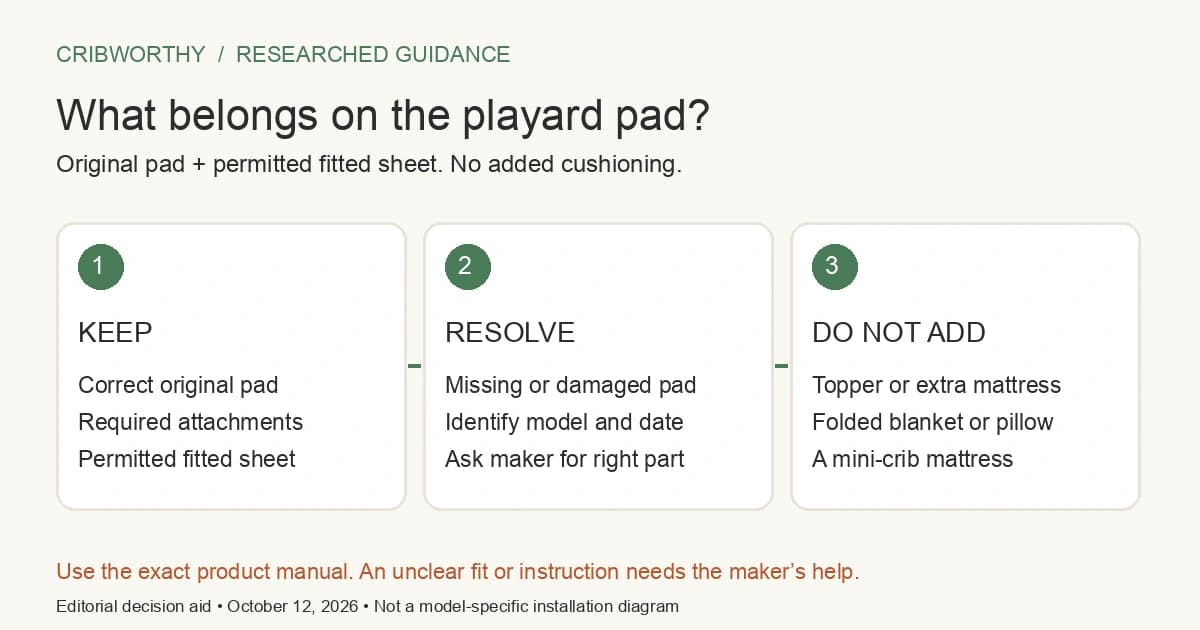
- Its own pad and a fitted sheet, nothing else
- A spot away from blind cords and heaters
What does not count:
- An adult bed, couch or armchair (the AAP puts the risk on a couch or soft armchair at up to 67 times higher)
- A saved crib from before June 2011
- A car seat or swing for the whole night
If your parents host often, a Graco Pack 'n Play Day2Dream can stay set up in their guest room. If you visit a few times a year, bring a folding crib such as the Guava Lotus. Our pack and play mattress guide covers the pad question.
3. Water: supervision, not products
The AAP grandparent guidance says never to leave a child alone in a tub or sink filled with water. Where there is a pool, it calls for a fence at least 4 feet high on all four sides, with a self-closing, self-latching gate.
For a weekend, that means bathroom doors shut, buckets emptied, and an adult in the room for every bath.
4. Tip-overs: check the dresser's age
CPSC says about 17,800 people are injured each year when TVs, furniture and appliances tip over, and children account for 71% of the deaths.
The federal stability rule for dressers, 16 CFR part 1261, covers only clothing storage units manufactured after September 1, 2023, and it is written to protect children up to 72 months old. The bedroom set your parents bought years ago was never held to it.
The honest one-visit fix: CPSC's answer is to anchor TVs and furniture to the wall. If you cannot do that for a short stay, keep the baby out of that room rather than counting on the dresser.
For regular care, a Quakehold Furniture Strap Kit ties one piece of furniture to a wall stud. It means screws in the wall and the furniture back, so it is the homeowner's call.
5. Stairs: the top needs hardware
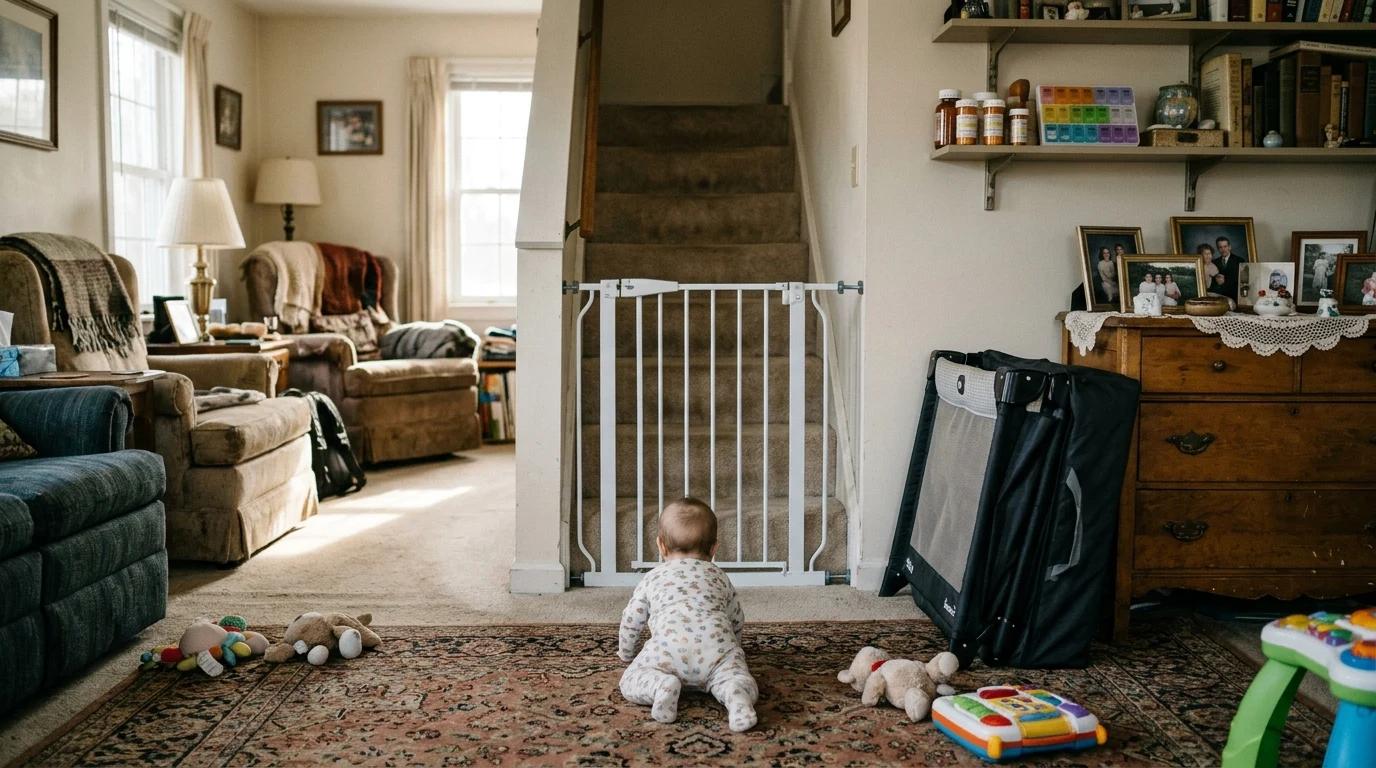
Nationwide Children's Hospital says to use only hardware-mounted gates at the top of stairs, because even a child who cannot walk may push a pressure-mounted gate down. It also reports about 5 children under 7 treated in emergency departments every day for gate-related injuries.
Pressure-mounted gates are fine for:
- The bottom of the stairs
- Doorways between rooms
- A weekend with no screws allowed
Hardware-mounted gates are needed for:
- The top of any staircase
- A house the baby stays in every week
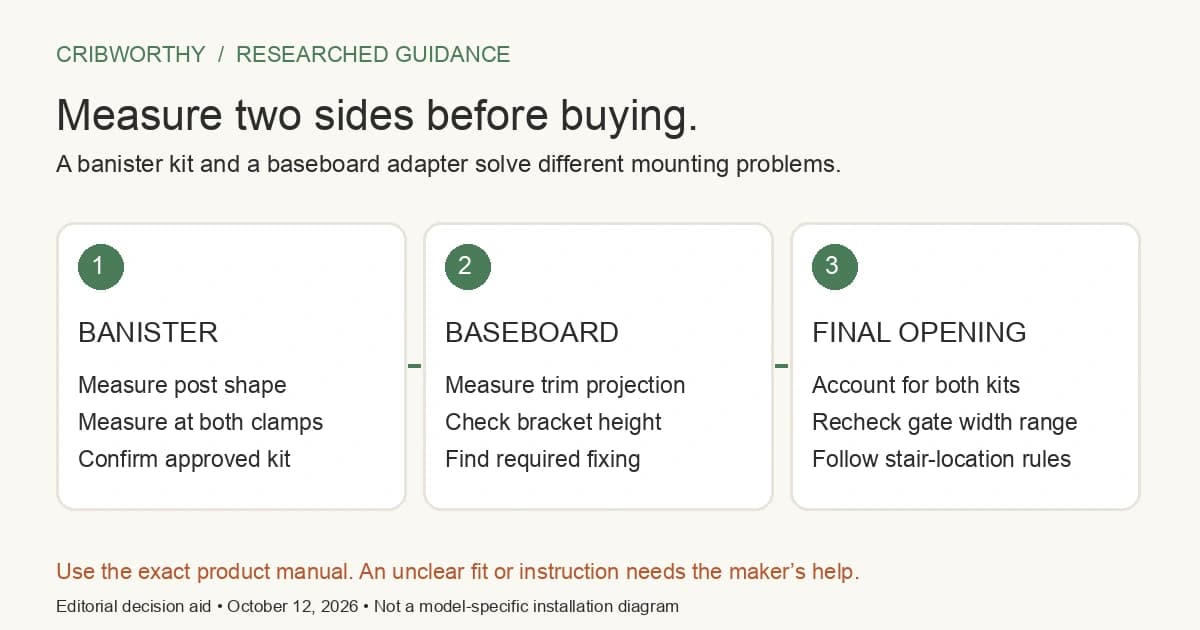
The Regalo Easy Step is a pressure gate for doorways and the bottom step, never the top. The Toddleroo Easy Swing & Lock is hardware-mounted and rated for the top, at the cost of holes in the trim. Our banister and baseboard guide covers mounting it.
Gear for a baby-ready grandparents' house
Regalo Easy Step Walk-Thru Gate
Pressure gate for a doorway or the bottom of the stairs. Regalo says never at the top.
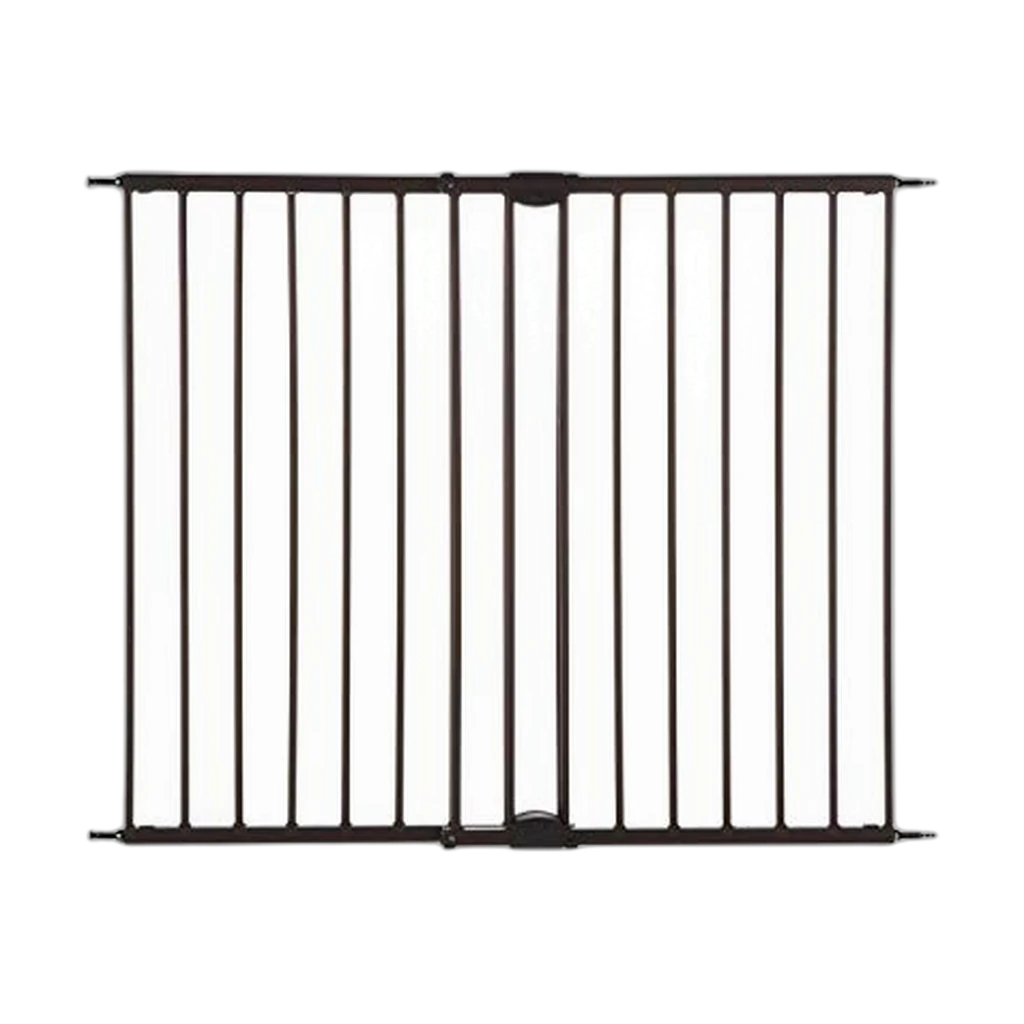
Toddleroo by North States Easy Swing & Lock Gate
Hardware-mounted and rated for the top of the stairs, for homes the baby visits every week.
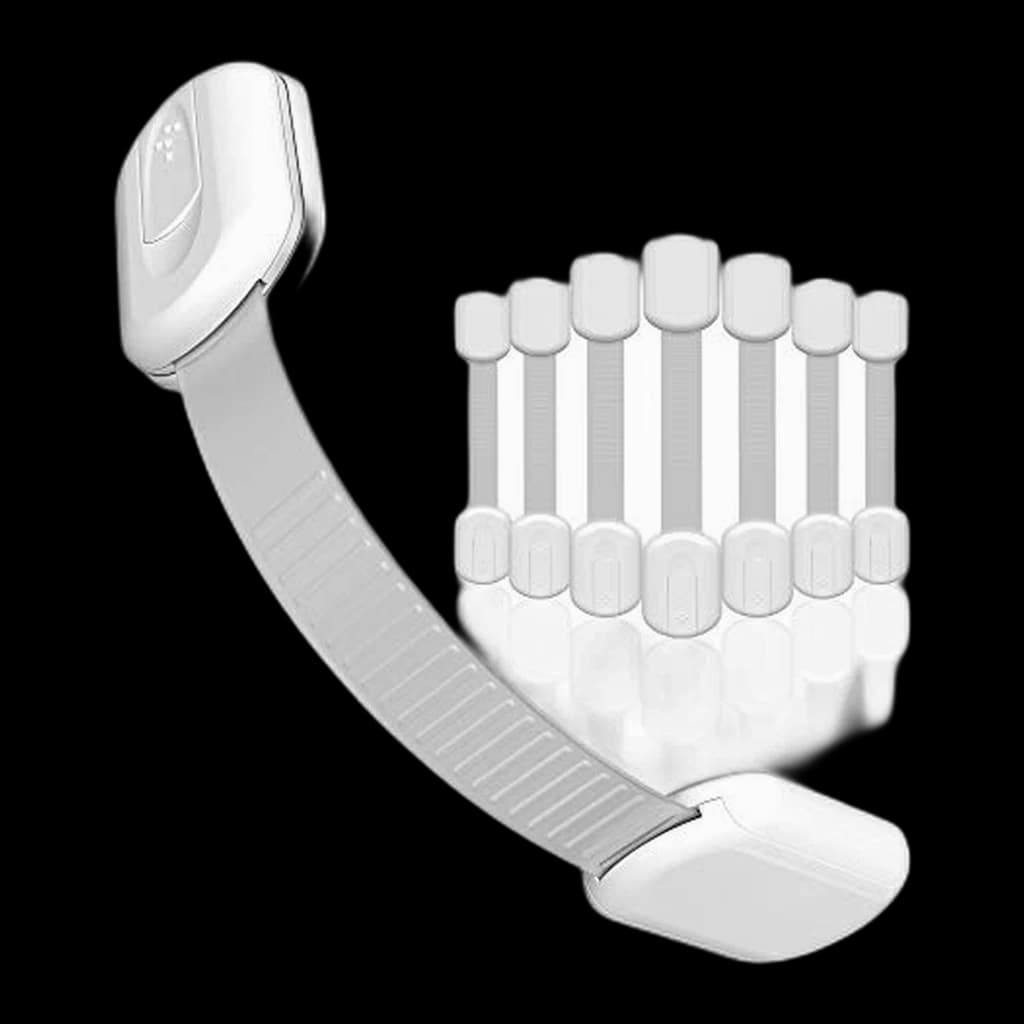
SKYLA HOMES Cabinet Strap Locks (8 Pack)
Adhesive cabinet straps that need no drilling. Fit them a day early so the bond can set.
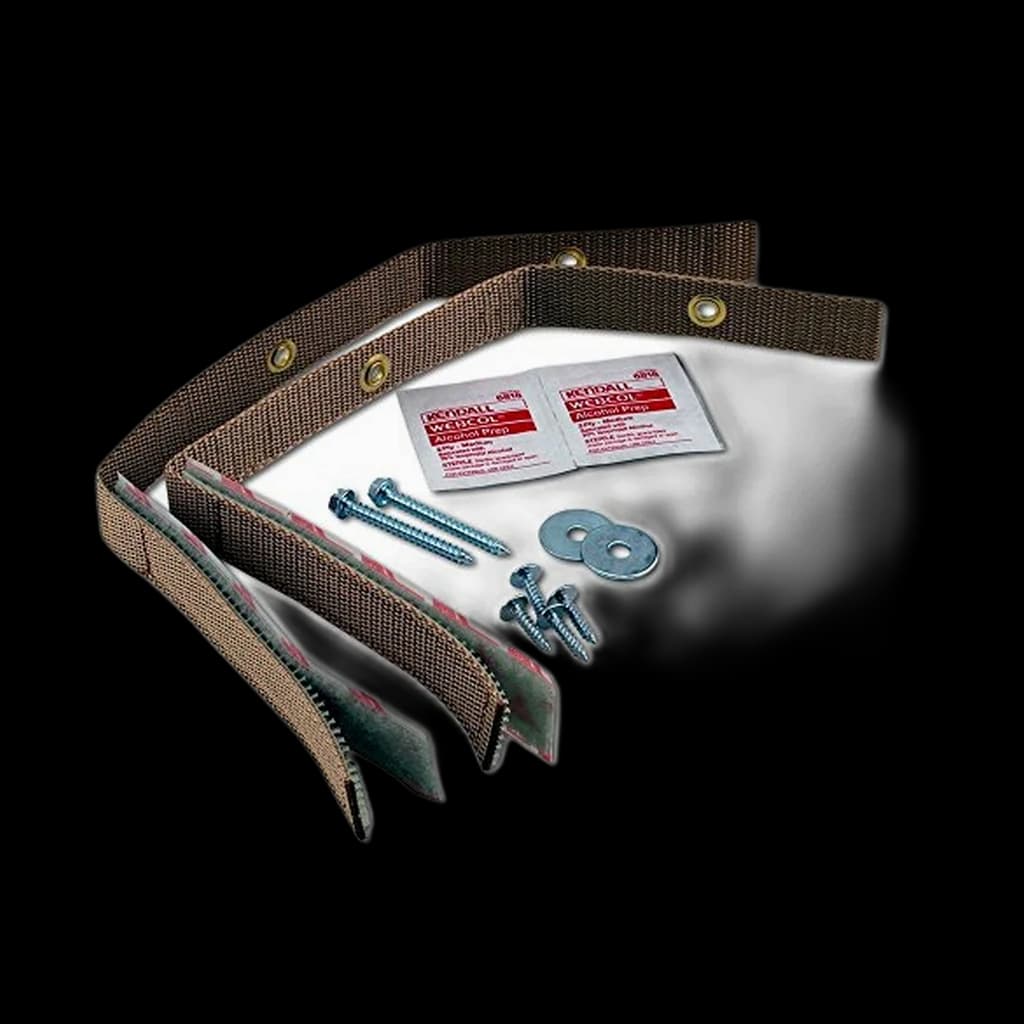
Quakehold Furniture Strap Kit
Ties one dresser or bookcase to a wall stud. Screws go into the wall, so ask the homeowner.
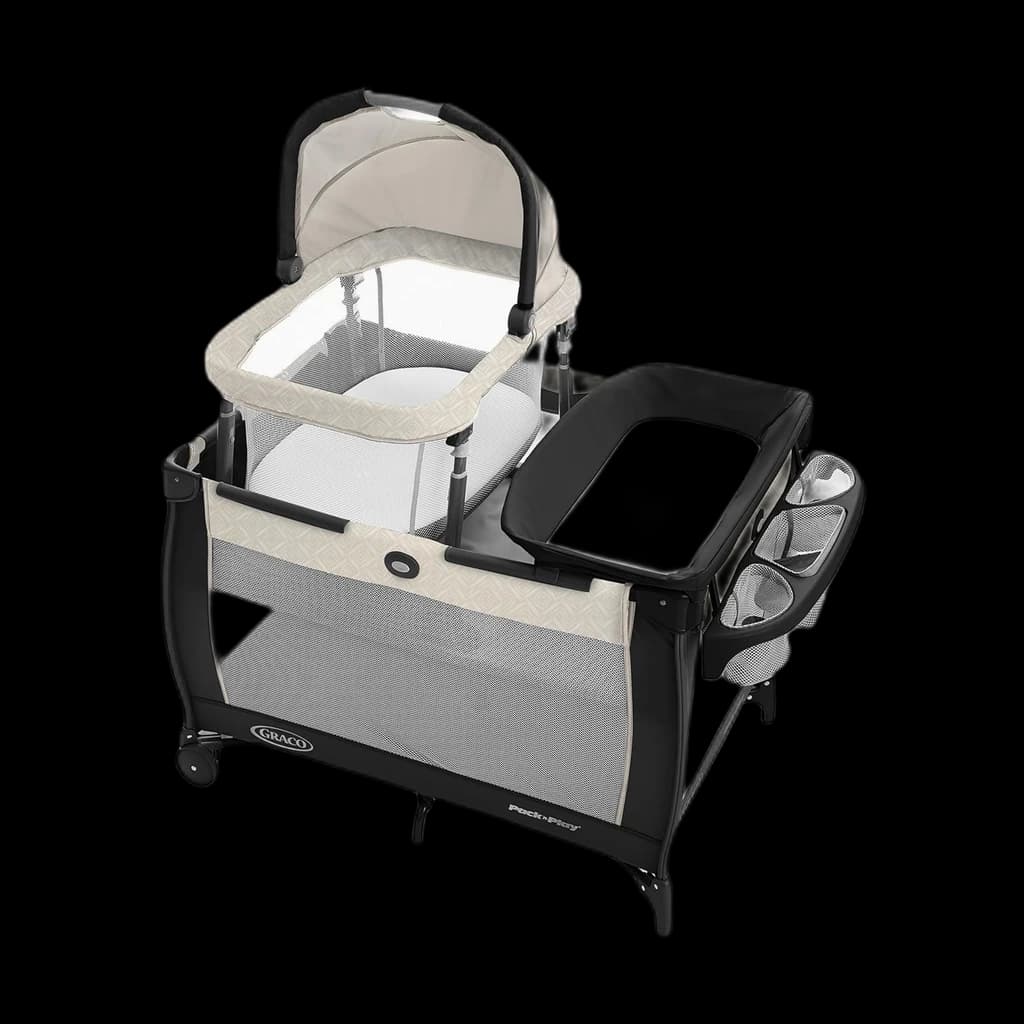
Graco Pack 'n Play Day2Dream Travel Bassinet Playard
A play yard with a removable bassinet that can stay set up in a grandparent's guest room.
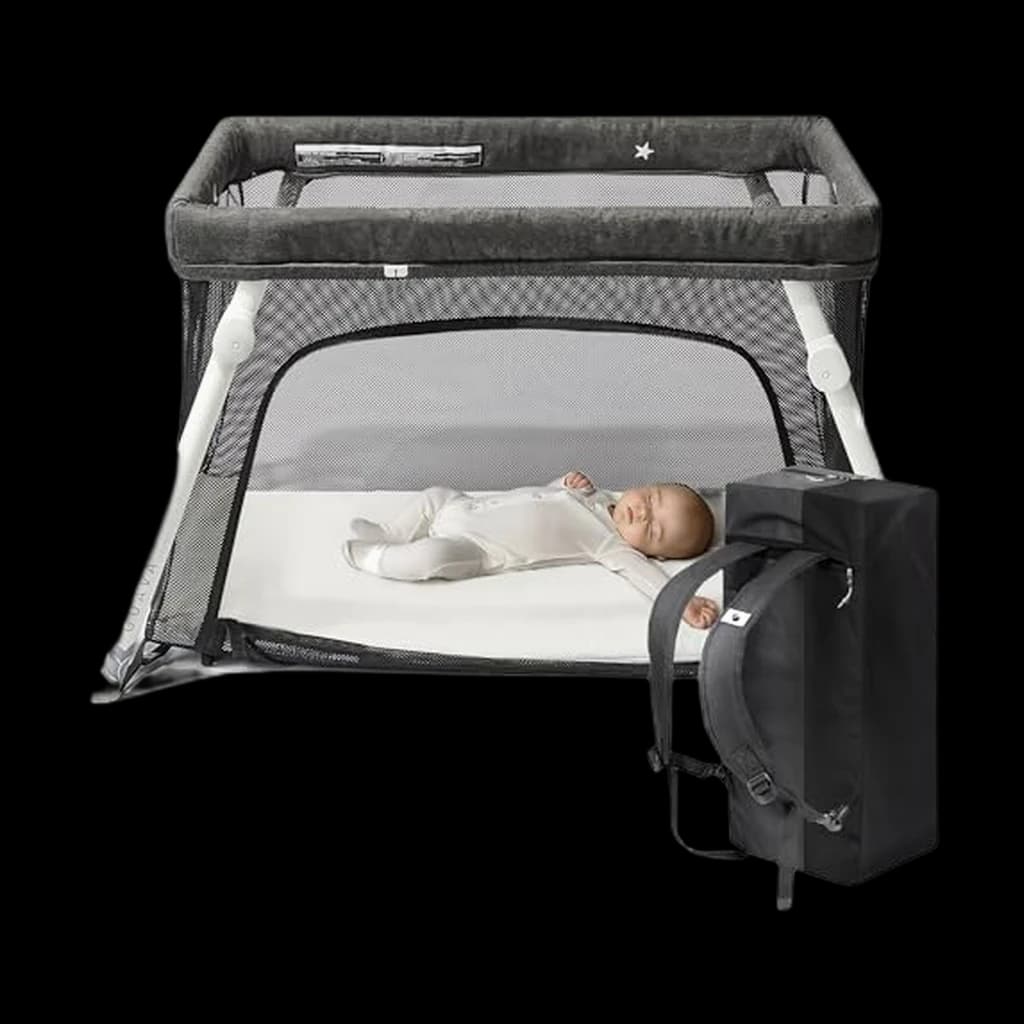
Guava Lotus Travel Crib
A folding travel crib in a backpack bag for families who bring the bed with them.
The 15-minute walk-through on arrival
- Gather every pill organizer, purse and bedside bottle into one high spot.
- Set up the travel crib and strip it to the fitted sheet.
- Close the bathroom doors and empty any buckets.
- Strap the under-sink cabinet shut. SKYLA HOMES Cabinet Strap Locks stick on without drilling, but the maker asks for a 24-hour bond before use, so fit them the night before.
- Close off any room with a dresser or TV that is not anchored.
- Put a gate at the bottom of the stairs and agree who watches the top.
- Get down to the baby's height and look for cords, coins and small objects.
Grandparents' house: quick questions
Do grandparents need to baby-proof the whole house?
No. For occasional visits, close off the rooms you are not using and handle the five hazards in the rooms you are. Regular care is different: the house becomes a second home, and our room-by-room checklist applies.
Can a baby sleep in a grandparent's old crib?
Not if it was made before June 2011, which the AAP says will not meet today's standards. If there is no date label, bring a portable crib.
Is a pressure-mounted gate safe at the top of the stairs?
No. Use a hardware-mounted gate at the top. Pressure gates belong at the bottom of the stairs and in doorways.
Our Verdict
Most of a grandparent's house can stay as it is for a visit. Spend your effort on the pill organizer, the place the baby sleeps and the stairs, and save hardware installs for homes where the baby stays every week.
Key Takeaways
- ✓The order follows the evidence, not the effort: a gate is the most visible purchase, but medicines and sleep carry the worst outcomes.
- ✓The risk is the pills that have left the bottle.
- ✓The AAP tells grandparents not to let a grandchild sleep in their bed, and says a crib made before June 2011 will not meet today's safety standards.
- ✓The AAP grandparent guidance says never to leave a child alone in a tub or sink filled with water.
- ✓CPSC says about 17,800 people are injured each year when TVs, furniture and appliances tip over, and children account for 71% of the deaths.
Medicine in the bathroom cabinet is already safe at a grandparent's house.
In a 2020 study of poison-center calls, about half of prescription-medicine exposures involved pills already out of their original packaging, such as in organizers or bags.
Any baby gate works at the top of the stairs for a weekend visit.
Nationwide Children's Hospital says to use only hardware-mounted gates at the top, because a child can push a pressure-mounted gate down.
Research Sources
- AAP on HealthyChildren.org: A Message for Grandparents, Keeping Your Grandchild Safe in Your Home
- AAP on HealthyChildren.org: A Parent's Guide to Safe Sleep
- The Journal of Pediatrics (2020): Circumstances Involved in Unsupervised Solid Dose Medication Exposures among Young Children
- American Journal of Preventive Medicine (2023): Trends in Emergency Department Visits for Unsupervised Pediatric Medication Exposures
- CPSC (February 8, 2024): CPSC Reminds Families to Tackle the Deadly Hazard of TV and Furniture Tip-Overs
- eCFR: 16 CFR Part 1261, Safety Standard for Clothing Storage Units
- Nationwide Children's Hospital: Baby Gates
- America's Poison Centers: Poison Help line
Hilly Shore Inc.
Editorial teamIndependent product research team behind Cribworthy. Reviews are grounded in published AAP / CDC / NHTSA / CPSC pediatric guidance, JPMA / GREENGUARD GOLD / OEKO-TEX certification verification, and aggregated buyer sentiment.
128 products reviewed · 22 categories covered · cites AAP, CDC, NHTSA, CPSC, FDA, ACOG.
Safety claims are verified against published pediatric guidelines and CPSC databases. See our editorial standards.