Best First Foods for Baby at 6 Months: A Research-Based Starting Guide
Our #1 Pick
Start with iron: pureed meat, iron-fortified cereal or mashed legumes, because the stores a baby is born with run down around six months. Then widen into vegetables, fruit and the common allergens, peanut, egg and tree nuts, early rather than late. The gear list is short: a Haakaa silicone feeder near $13 and a silicone spoon-and-bowl set.
Best for Self-Feeding Introduction
- Ease of use
- Ease of cleaning
- Quality
Also Great
Best Starter Utensil Set: Bumkins Silicone First Feeding Set ($25) — Best Starter Utensil Set
Best Prepared First Food: Beech-Nut Naturals Stage 1 Purees ($15 (10-pack)) — Best Prepared First Food
Our Verdict
Readiness is developmental, not calendar-driven. Look for steady head control, sitting with support, and real interest in what is on your plate. Purees and baby-led weaning both work and most families end up mixing them. No honey, no cow's milk as a drink, and nothing round and firm before the first birthday.
#1Haakaa Silicone Baby Food Feeder 4.2 | #2Bumkins Silicone Feeding Set with Suction 4.7 | #3Gerber Baby Food Banana Puree (Stage 1) 4.8 | |
|---|---|---|---|
| Verdict | Best for Self-Feeding Introduction | Best Starter Bowl + Spoon | Best Prepared First Food |
| Price | ~$12.99Buy on Amazon | ~$17.95Buy on Amazon | |
| Material | Food-grade silicone | Platinum silicone | — |
| Age Range | 4+ months | 4+ months | — |
| Dishwasher Safe | Yes | Yes | — |
| BPA Free | Yes | — | — |
| Includes | — | Suction bowl + lid + spoon | — |
| Ingredients | — | — | Single-ingredient (e.g., sweet potato, pear) |
| Container | — | — | Glass jar |
| Added Sugar | — | — | None |
| Stage | — | — | Stage 1 (4+ months) |
| Buyer sentiment | Ease of use Ease of cleaning Quality Leak-proof Squeezability Functionality Durability Buyers praise ease of use, ease of cleaning, quality and leak-proof. Some flag squeezability and functionality. Based on 89 user mentions | Quality Appearance Size Ease Of Cleaning Buyers praise quality, appearance, size and ease of cleaning. Mixed feedback on suction and grip. Based on 692 user mentions | — |
| Pros |
|
|
|
| Cons |
|
|
|
* Prices are approximate. Check the linked retailer for current pricing and availability.
Key Takeaways
- ✓Readiness is developmental, not calendar-driven. Look for steady head control, sitting with support, and real interest in what is on your plate. Purees and baby-led weaning both work and most families end up mixing them. No honey, no cow's milk as a drink, and nothing round and firm before the first birthday.
- ✓The best first foods for a 6-month-old are iron-rich options like pureed meat (beef, chicken, turkey), iron-fortified infant cereal, and mashed legumes — the AAP and WHO both recommend prioritizing...
- ✓*As an Amazon affiliate, Cribworthy may earn from qualifying purchases. Our recommendations are based on independent research and real parent feedback. Prices and availability are subject to change.*
💬 Real Talk from Parents
You'll develop strong opinions about bottle nipple flow rates, and that's okay.
Formula is not a failure. Fed is genuinely best.
Sterilizing bottles at 2 AM is a rite of passage nobody tells you about.
The 'best' bottle is whichever one your baby actually accepts.
The Dr. Brown's bottles are annoying to clean but genuinely reduce gas. Worth the extra parts for a gassy baby.
Paraphrased community consensus — not a direct quote.
Switching formula brands frequently is harmful.
Most standard formulas have very similar nutritional profiles (they're all regulated by the FDA). Switching brands is fine — the exception is specialty formulas for allergies or medical conditions, which should be discussed with your pediatrician.
You should sterilize bottles before every single use.
The CDC recommends sterilizing bottles once when new, then again only if your baby is premature, under 2 months, or immunocompromised. For healthy babies over 3 months, hot soapy water or a dishwasher is sufficient.
As an Amazon Associate I earn from qualifying purchases. Product prices and availability are subject to change.
Best First Foods for Baby at 6 Months: A Research-Based Starting Guide
The best first foods for a 6-month-old are iron-rich options like pureed meat (beef, chicken, turkey), iron-fortified infant cereal, and mashed legumes — the AAP and WHO both recommend prioritizing iron-rich foods because babies' iron stores from birth begin depleting around 6 months. After establishing iron sources, introduce a variety of vegetables, fruits, and early allergens including peanut, egg, and common tree nuts. A landmark 2015 study (the LEAP trial) published in the New England Journal of Medicine found that early introduction of peanut protein between 4-11 months reduced peanut allergy risk by 81% in high-risk infants, fundamentally changing how pediatricians approach allergen introduction.
How do you know when your baby is ready for solid food?
The AAP and WHO both recommend introducing solids around 6 months, but age is just one factor. Your baby should also:
The AAP and WHO both recommend introducing complementary solid foods at around 6 months of age while continuing breastfeeding (or formula feeding). A 2020 systematic review in JAMA Pediatrics confirmed that introduction before 4 months is associated with increased risk of obesity and celiac disease, while delaying beyond 6 months may increase the risk of iron deficiency and feeding difficulties.
- Sit upright with minimal support — good head and trunk control is essential for safe swallowing
- Show interest in food — reaching for your plate, watching you eat intently, opening their mouth when food approaches
- Have lost the tongue-thrust reflex — this is the reflex that pushes food out of the mouth; it fades around 4-6 months
- Be able to move food to the back of their mouth and swallow (rather than pushing it all out)
If your baby hits 6 months but isn't showing these signs, wait a week or two and try again. There's no rush. For a deeper dive into readiness and approaches, see our guide to starting solid foods.
What are the best first foods to give a 6-month-old?
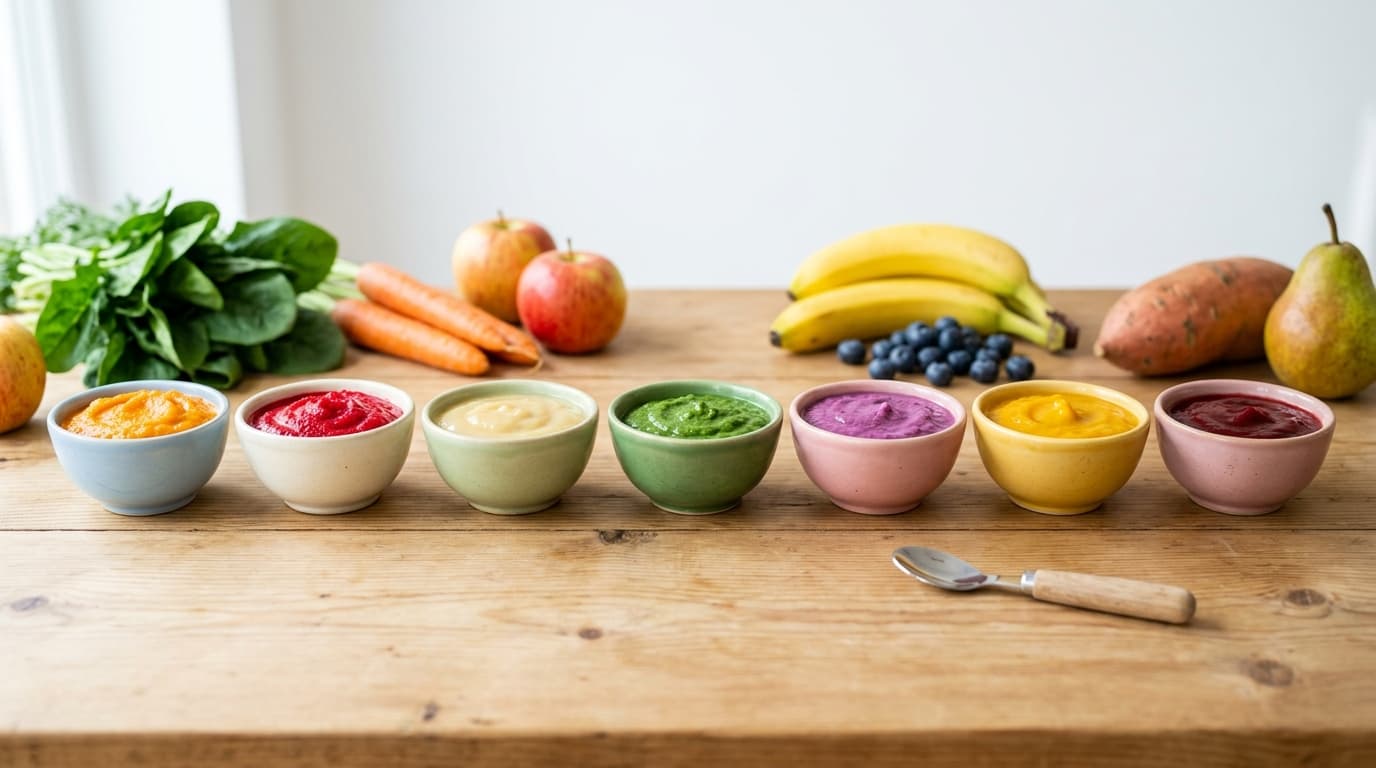
Modern pediatric guidelines have moved well beyond "start with rice cereal." Research now supports a wide variety of nutrient-dense first foods. Here are our top recommendations, categorized by nutrient profile:
Iron-Rich Foods (Start Here)
Babies' iron stores from birth begin depleting around 6 months, making iron-rich foods a priority.
The WHO reports that iron deficiency is the most common nutritional deficiency in children worldwide, affecting an estimated 40% of children under 5 in developing countries. The AAP recommends that breastfed infants begin receiving iron supplementation (1 mg/kg/day) at 4 months or start iron-rich complementary foods at 6 months, as breast milk alone does not provide sufficient iron after this age.
- Pureed meat (beef, chicken, turkey): This surprises many parents, but meat is one of the most nutrient-dense first foods. It provides heme iron (the most absorbable form), zinc, and B vitamins. Slow-cook until very tender, then puree with breast milk or formula to a smooth consistency.
- Iron-fortified infant oatmeal: Single-grain oatmeal (not rice cereal, which has been flagged for arsenic content) mixed with breast milk or formula to a thin consistency. It's easy to prepare and familiar in texture.
- Pureed lentils or beans: Excellent plant-based iron source. Cook until very soft, puree smooth, and thin with liquid as needed.
Vegetables
- Sweet potato: Naturally sweet, smooth when pureed, and packed with beta-carotene and fiber. Steam or roast, then puree. Most babies love it immediately.
- Avocado: One of nature's perfect baby foods — healthy fats, potassium, fiber, and a creamy texture that needs no cooking. Mash with a fork for young babies or offer slices for baby-led weaningBLWBaby-led weaning: skipping purees and offering finger-sized pieces of soft food from ~6 months so baby self-feeds. Reduces picky eating risk; does not increase choking when done right..
- Peas: High in protein for a vegetable, plus iron and fiber. Steam and puree (you may need to strain to remove skins for very young eaters).
- Butternut squash: Similar to sweet potato in sweetness and nutrient density. Roast and puree for a smooth, appealing first food.
Fruits
- Banana: Mash with a fork — done. The potassium, vitamin B6, and natural sweetness make it an easy win. Start with ripe bananas that mash smoothly.
- Pear: Gentle on digestion (helpful for constipation that sometimes occurs when starting solids), naturally sweet, and easy to steam and puree.
When and how should you introduce allergens to your baby?
This is where guidance has changed dramatically. The landmark LEAP study and subsequent research show that early introduction of common allergens (around 6 months) significantly reduces the risk of food allergies compared to delaying them.
The landmark LEAP trial (Learning Early About Peanut Allergy), published in the New England Journal of Medicine in 2015, demonstrated that early introduction of peanut protein between 4 and 11 months reduced peanut allergy development by 81% in high-risk infants. Based on this evidence, the AAP and NIAID now recommend introducing peanut-containing foods early and often, particularly for infants with eczema or egg allergy.
The top allergens to introduce early:
- Peanut (thinned peanut butter mixed into puree — never whole peanuts)
- Egg (well-cooked scrambled egg, pureed or mashed)
- Dairy (plain full-fat yogurt — not cow's milk as a drink until 12 months)
- Tree nuts (thinned almond or cashew butter)
- Wheat (infant oatmeal or soft cooked pasta)
- Soy (pureed tofu)
- Fish (pureed cooked salmon — also an excellent omega-3 source)
Introduce one new allergen every 2-3 days so you can identify any reaction. For babies with severe eczema or existing food allergies, consult your pediatrician before starting allergens.
How much solid food should a 6-month-old eat?
- Week 1-2: One meal per day, 1-2 tablespoons per sitting. This is about exploration, not nutrition. Breast milk or formula remains the primary food source.
- Week 3-4: Increase to 2 meals per day, 2-4 tablespoons each. Offer a variety of foods you've already introduced successfully.
- By 8-9 months: Three meals per day plus breast milk/formula. Textures can progress from smooth purees to mashed and soft finger foods.
Should you start with purees or baby-led weaning?
Both approaches are safe and effective when done correctly. Many families use a combination:
A 2021 randomized controlled trial published in JAMA Pediatrics (the BLISS study follow-up) found no significant difference in choking risk between baby-led weaning and traditional spoon-feeding when caregivers were educated on safe food preparation. Both approaches resulted in similar nutritional intake and growth trajectories through age 2.
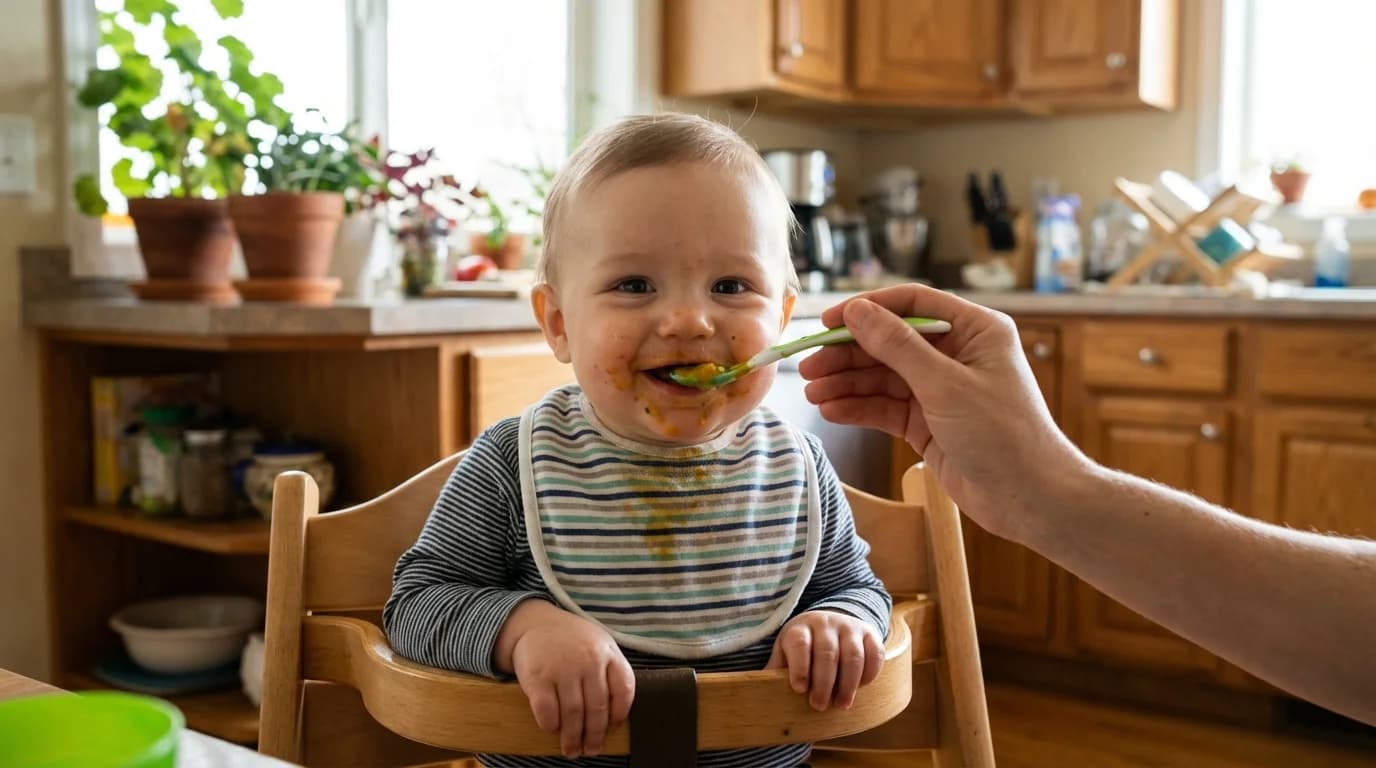
- Traditional purees: Parent spoon-feeds smooth foods, gradually increasing texture. Easy to control intake, less messy, works well for daycare.
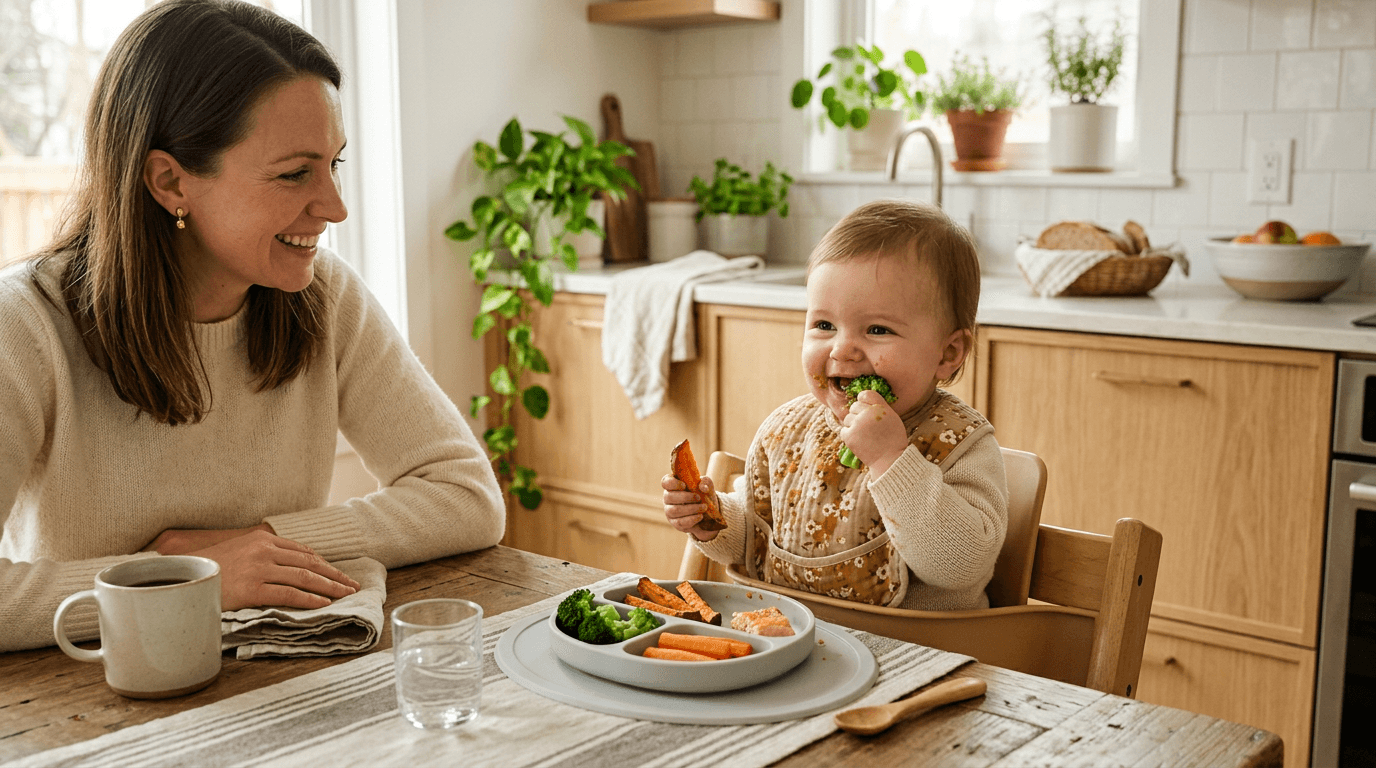
- Baby-led weaning (BLW): Baby self-feeds soft, appropriately shaped finger foods from the start. Promotes independence and fine motor skills, but messier. See our baby-led weaning guide for detailed instructions.
Either way, you'll need a good high chair — one with a wipeable surface and footrest support makes mealtime much easier.
What gear do you need to start feeding baby solid food?
- High chair with secure harness and easy-to-clean surfaces — see our high chair guide
- Soft-tipped spoons (silicone) that are gentle on gums
- Suction bowls that stay put on the tray
- Bibs with catch pocket for the inevitable mess
- Food processor or baby food maker if making your own purees — our baby food maker guide covers the best options
What foods should babies not eat before 12 months?
- Honey — risk of botulism
- Cow's milk as a drink (yogurt and cheese are fine)
- Added salt and sugar
- Whole nuts, popcorn, whole grapes, raw carrots — choking hazards
- Low-fat or reduced-fat products — babies need full-fat for brain development
The AAP warns against giving honey to infants under 12 months due to the risk of infant botulism — a serious illness caused by Clostridium botulinum spores that an infant's immature digestive system cannot neutralize. The CDC reports approximately 100 cases of infant botulism annually in the United States, with honey being a known source of spores.
What is the best way to start your baby on solid foods?
Start with iron-rich foods like pureed meat or iron-fortified oatmeal, add vegetables and fruits for variety, and introduce common allergens early (around 6 months). Go at your baby's pace, expect mess, and remember that food before one is primarily about exploration and skill-building — breast milk or formula is still the main nutrition source.
Related Reading
- When to Start Solid Foods
- How to Start Baby-Led Weaning
- Best Baby High Chairs of 2026
- Best Baby Food Makers of 2026
As an Amazon affiliate, Cribworthy may earn from qualifying purchases. Our recommendations are based on independent research and real parent feedback. Prices and availability are subject to change.
Hilly Shore Inc.
Editorial teamIndependent product research team behind Cribworthy. Reviews are grounded in published AAP / CDC / NHTSA / CPSC pediatric guidance, JPMA / GREENGUARD GOLD / OEKO-TEX certification verification, and aggregated buyer sentiment.
115 products reviewed · 20 categories covered · cites AAP, CDC, NHTSA, CPSC, FDA, ACOG.
Safety claims are verified against published pediatric guidelines and CPSC databases. See our editorial standards.