Best Baby Humidifiers 2026: Crane Drop Wins for Quiet Nights
Our #1 Pick
The Crane Drop, around $40, is the best nursery humidifier: cool mist only, quiet enough to sleep beside, and a one-gallon tank that runs overnight. Rinse it daily or it grows mould, which is the recurring owner complaint. For a bigger room, the Honeywell HCM-350 near $76 is the evaporative alternative with a germ-killing wick.
Best Overall
- Noise Level
- Effectiveness
- Humidifier
Also Great
Premium Pick: Levoit LV600S Smart Humidifier ($80) — Best Premium Pick
Budget Pick: Frida Baby 3-in-1 Humidifier ($50) — Best Budget Pick
Our Verdict
Never put a heated unit in a child's bedroom; hot water and steam cause burns. Match tank capacity to floor area, then scrub the reservoir at least weekly with vinegar or bleach solution, because a dirty machine sprays what grows inside it. Levoit's smart model justifies its cost only if you want automatic regulation.
#1Crane Drop Ultrasonic Cool Mist 4.4 | #2Levoit LV600S Smart Humidifier 4.4 | #3Frida Baby 3-in-1 Cool Mist Humidifier 4.4 | #4Honeywell HCM350B Germ Free Cool Mist Humidifier 4.4 | #5Frida Baby 3-in-1 Cool Mist Humidifier 4.4 | |
|---|---|---|---|---|---|
| Verdict | Best Overall | Best Premium Pick | Best Budget Pick | Best for Large Nurseries | Best Travel Humidifier |
| Price | ~$44.99Buy on Amazon | ~$109Buy on Amazon | ~$43.49Buy on Amazon | ~$76.42Buy on Amazon | ~$43.49Buy on Amazon |
| Type | Baby Humidifiers | Baby Humidifiers | Baby Humidifiers | — | Baby Humidifiers |
| Tank | — | — | — | 1.1 gallon | — |
| Tech | — | — | — | UV germ-killing, cool mist | — |
| Buyer sentiment | Noise Level Effectiveness Humidifier Appearance Reliability Buyers praise noise level, effectiveness, humidifier and appearance. Mixed feedback on ease of cleaning and mist output. Some flag reliability. Based on 10,168 user mentions | — | Quality Ease Of Cleaning Nightlight Ease Of Use Leakage Buyers praise quality, ease of cleaning, nightlight and ease of use. Mixed feedback on reliability. Some flag leakage. Based on 504 user mentions | — | Quality Ease Of Cleaning Nightlight Ease Of Use Leakage Buyers praise quality, ease of cleaning, nightlight and ease of use. Mixed feedback on reliability. Some flag leakage. Based on 504 user mentions |
| Pros |
|
|
|
|
|
| Cons |
|
|
|
|
|
* Prices are approximate. Check the linked retailer for current pricing and availability.
Key Takeaways
- ✓Never put a heated unit in a child's bedroom; hot water and steam cause burns. Match tank capacity to floor area, then scrub the reservoir at least weekly with vinegar or bleach solution, because a dirty machine sprays what grows inside it. Levoit's smart model justifies its cost only if you want automatic regulation.
- ✓The Crane Drop Ultrasonic Cool Mist Humidifier is our top pick for nurseries, offering whisper-quiet operation, easy cleaning, and a one-gallon tank that runs up to 24 hours. For larger rooms, the ...
- ✓The Crane Drop is an icon in nursery humidifiers for good reason. The teardrop shape is attractive and compact, the 1-gallon tank runs up to 24 hours on low, and the whisper-quiet operation won't d...
- ✓If you want set-it-and-forget-it control, the Levoit LV600S is worth the upgrade at around $80. The built-in humidity sensor automatically adjusts output to maintain your target humidity level. The...
- ✓Frida Baby knows what parents need. Their 3-in-1 humidifier combines:
💬 Real Talk from Parents
Buy less than you think you need. Babies mostly need you.
Every parent's 'essential' list is different because every baby is different.
The registry checklist is a starting point, not a shopping list.
Your second kid will use half the gear and be twice as chill about it.
The best baby gear advice I got: ask parents of 2+ kids what they'd buy again. First-time parents buy everything. Second-timers know what actually matters.
Paraphrased community consensus — not a direct quote.
You need everything on the registry checklist before baby arrives.
Most babies need surprisingly little: a safe sleep space, car seat, diapers, feeding supplies, and a few outfits. Everything else can be bought as needed after you learn your baby's preferences.
More expensive baby gear means better quality.
Many mid-range products match or outperform premium ones in safety tests and durability. Price often reflects brand name and aesthetics, not actual performance. Read reviews, not price tags.
As an Amazon Associate I earn from qualifying purchases. Product prices and availability are subject to change.
Best Baby Humidifiers for the Nursery: Quieter Nights and Easier Breathing
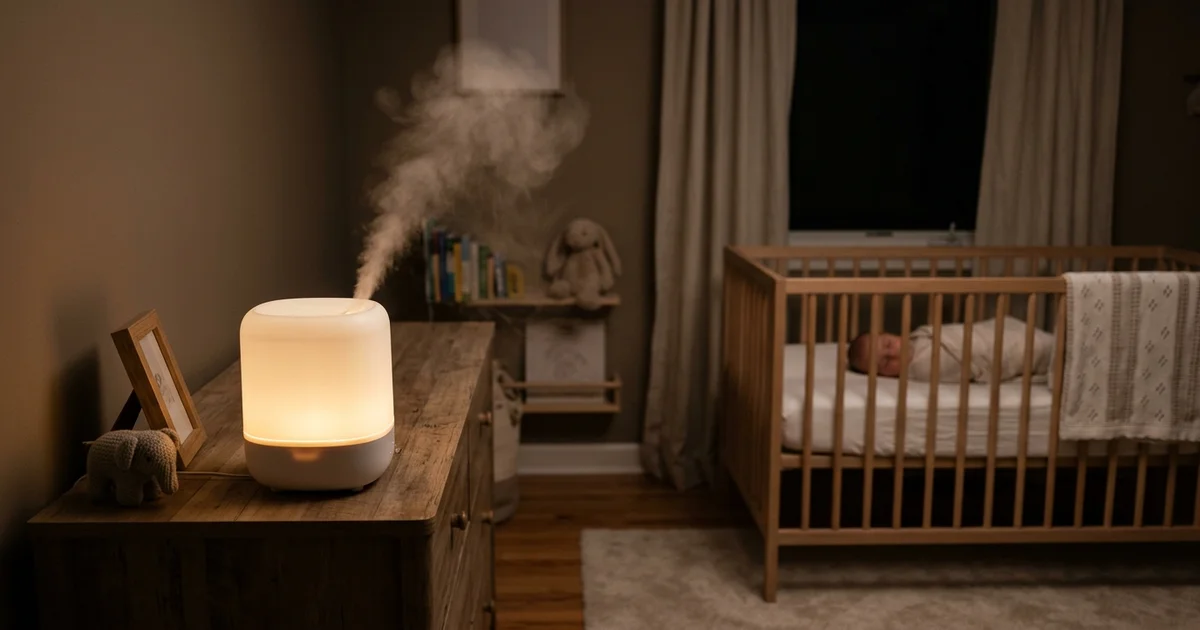
The Crane Drop Ultrasonic Cool Mist Humidifier is our top pick for nurseries, offering whisper-quiet operation, easy cleaning, and a one-gallon tank that runs up to 24 hours. For larger rooms, the Honeywell HCM-350 Germ Free is a superior evaporative option with UV germ-killing technology.
- The AAP recommends using a cool mist humidifier (never warm mist) in nurseries to help relieve congestion and maintain comfortable humidity levels of 40-60%.
- A 2020 study in Environmental Health Perspectives found that maintaining indoor humidity above 40% reduced the viability of airborne influenza virus by up to 70%.
- The CPSC warns against warm mist humidifiers in children's rooms due to the risk of burns from hot water and steam.
Why does my baby's nursery need a humidifier?
Pediatricians generally recommend keeping indoor humidity between 40-60%. During winter months with forced-air heating, or in dry climates year-round, humidity can drop well below 30%. That dry air can:
- Irritate your baby's nasal passages
- Worsen congestion during colds
- Dry out sensitive skin
- Contribute to more frequent nosebleeds in toddlers
The AAP notes that infants are obligate nose breathers for approximately the first 4-6 months of life, meaning nasal congestion can significantly interfere with feeding and sleep. A 2018 study in Pediatric Pulmonology found that maintaining indoor humidity between 40-60% reduced the duration of upper respiratory symptoms in infants by an average of 1.5 days compared to low-humidity environments (below 30%).
A humidifier is especially valuable during cold and flu season when your baby is congested and struggling to breathe through their nose. Since babies are obligate nose breathers for the first several months, nasal congestion can seriously disrupt sleep.
Is a cool mist or warm mist humidifier safer for babies?
Always choose cool mist for a nursery.
The American Academy of Pediatrics recommends cool mist humidifiers because warm mist models heat water to create steam, posing a burn risk if tipped over. Cool mist humidifiers use ultrasonic vibrations or evaporative wicking to add moisture without any heat.
The CPSCCPSCThe US federal agency that issues product recalls and enforces safety standards on cribs, strollers, car seats, and other juvenile products. and AAP both recommend cool mist humidifiers over warm mist models for nurseries and children's rooms. The CPSC has documented numerous scald injuries from warm mist humidifiers tipped over by toddlers, with the hot water causing second-degree burns. The AAP's Caring for Your Baby and Young Child specifically states that cool mist humidifiers provide the same therapeutic benefit without the burn risk.
Best Overall: Crane Drop Ultrasonic Cool Mist
Buy on Amazon · $44.99 →The Crane Drop is an icon in nursery humidifiers for good reason. The teardrop shape is attractive and compact, the 1-gallon tank runs up to 24 hours on low, and the whisper-quiet operation won't disturb your baby's sleep. It covers rooms up to 500 sq ft, which is more than enough for any nursery.
The variable output dial lets you fine-tune the mist level, and the auto-shutoff kicks in when the tank is empty. At around $45, the Crane Drop is an outstanding value. It comes in multiple colors to match your nursery decor.
Why we love it
- Whisper-quiet ultrasonic operation
- 1-gallon tank lasts up to 24 hours
- Auto-shutoff when empty
- Under $50 and available in nursery-friendly colors
The trade-off
No built-in hygrometer, so you'll want a separate humidity monitor to dial in the right level.
Best Premium Pick: Levoit LV600S Smart Humidifier
Buy on Amazon · $109 →If you want set-it-and-forget-it control, the Levoit LV600S is worth the upgrade at around $80. The built-in humidity sensor automatically adjusts output to maintain your target humidity level. The 6-liter tank is massive — running up to 50 hours on low — which means fewer middle-of-the-night refills.
The smart features are genuinely useful:
- App control lets you adjust settings from bed, schedule run times, and check humidity readings without entering the nursery
- Works with Alexa and Google Home
- Top-fill design makes refilling easy, and the wide tank opening simplifies cleaning
Best Budget Pick: Frida Baby 3-in-1 Humidifier
Frida Baby knows what parents need. Their 3-in-1 humidifier combines:
- A cool mist humidifier
- A diffuser (for natural vapor pads — no essential oils directly in the water)
- A nightlight
At around $50, it covers a small to medium nursery and runs quietly through the night.
The vapor pad tray is clever — during cold season, you can add Frida's menthol/eucalyptus vapor pads to help with congestion without putting anything in the water that could damage the unit. The soft glow nightlight is a nice bonus for nighttime diaper changes and feeds.
Best for Large Nurseries: Honeywell HCM-350 Germ Free
The Honeywell HCM-350 takes a different approach — it's an evaporative humidifier rather than ultrasonic. This means it uses a wicking filter to naturally evaporate water, which eliminates the white mineral dust that ultrasonic models can produce. The UV technology kills up to 99.9% of bacteria in the water.
At around $70, the HCM-350 covers rooms up to 500 sq ft and runs very quietly.
- The upside: the wicking filter eliminates the white mineral dust that ultrasonic models can produce.
- The downside: you need to replace that wicking filter every 1-2 months (~$8 each).
If you have hard water or are concerned about mineral dust settling on nursery surfaces, the evaporative design is worth it.
Best Travel Humidifier: Fridababy BreatheFrida
When you're traveling with a baby and the hotel room is bone-dry, the BreatheFrida is a lifesaver:
- Plugs into any standard water bottle, turning it into a personal cool mist humidifier
- Runs for up to 8 hours and fits in your diaper bag
- The vapor pad tray works with Frida's menthol pads for congestion relief on the go
At around $35, it's not a replacement for a full nursery humidifier, but it's perfect for hotel rooms, grandparents' houses, and anywhere you need portable humidity.
How do I clean and maintain a baby humidifier?
A dirty humidifier is worse than no humidifier: it can spread mold and bacteria into the air.
Follow these rules:
Clean weekly (at minimum)
Empty the tank, wipe all surfaces with white vinegar, rinse thoroughly, and air dry. For ultrasonic models, clean the vibrating plate with a soft brush.
The EPA recommends cleaning humidifiers every three days to prevent mold and bacterial growth, which can be dispersed into the air and worsen respiratory symptoms rather than improve them. A 2019 study in Indoor Air found that poorly maintained ultrasonic humidifiers released measurable quantities of bacteria and mineral particles into room air. Using distilled water and following manufacturer cleaning instructions significantly reduced these emissions.
Use distilled water when possible
Tap water minerals create white dust and can build up inside the unit. Distilled or filtered water reduces mineral buildup and keeps the air cleaner.
Replace filters on schedule
Evaporative models like the Honeywell have replaceable filters. Follow the manufacturer's schedule — a gunky filter defeats the purpose.
Don't over-humidify
Too much humidity (above 60%) promotes mold growth. Use a hygrometer to monitor levels, and aim for 40-50% in the nursery.
The EPA recommends keeping indoor humidity below 60% to prevent mold growth, which the CDC identifies as a risk factor for respiratory illness and allergic reactions in young children. A simple digital hygrometer (available for under $10) allows parents to monitor nursery humidity levels. The AAP recommends the 40-60% range as the ideal target for infant comfort and respiratory health.
Which humidifier is best for a baby's room?
For most nurseries, the Crane Drop Ultrasonic offers the best combination of quiet operation, adequate tank size, and value. Parents who want smart features and a larger tank should upgrade to the Levoit LV600S. Whatever you choose, commit to regular cleaning — a well-maintained humidifier makes a genuine difference in your baby's comfort and sleep quality.
Related Reading
- How to Set Up a Safe Sleep Space
- Best Sleep Essentials
- Best White Noise Machines for Babies
- Best Baby-Safe Cleaning Products
Best Baby Humidifiers 2026: Safe Picks for Nurseries and Sick Days
When a baby has a stuffy nose, they can't blow it — they just suffer (and so does everyone else at 3am). A good humidifier adds moisture to dry nursery air, which loosens congestion, soothes dry skin, and can make a meaningful difference on sick nights. Humidifiers are also one of the most pediatrician-recommended additions to a newborn nursery.
Here's what actually matters when choosing one — and which ones we recommend.
Cool Mist vs. Warm Mist: The Answer Is Clear
The American Academy of Pediatrics (AAP) recommends cool mist humidifiers for babies and children without exception. Warm mist humidifiers use heating elements that can cause burns if a child gets too close or tips the unit over. Cool mist produces the same humidity benefit with none of the burn risk.
Within cool mist, you'll encounter two types:
- Ultrasonic cool mist: Vibrates water into a fine mist. Very quiet, energy-efficient, but can disperse white mineral dust if you use hard tap water (use distilled water to prevent this).
- Evaporative cool mist: Uses a fan to blow air through a wet wick. Naturally filters some minerals, slightly louder than ultrasonic.
For most nurseries, ultrasonic is preferred for the silence — crying baby + humidifier fan noise is not a winning combination.
Our Top Picks
Best Overall: Crane Drop Ultrasonic Cool Mist Humidifier ($30–$40)
The Crane Drop Humidifier → is the most popular baby humidifier on the market and earns it. The 1-gallon tank runs up to 24 hours on a single fill, the teardrop design is compact and nursery-friendly, and it operates nearly silently. The adjustable mist output goes from a barely-there whisper to full output for seriously stuffy situations.
It comes apart for cleaning easily — important because humidifiers that are hard to clean grow mold and bacteria faster than you'd want near a baby.
Best for: Most nurseries, daily use, newborns through toddlers
Pros: Whisper quiet, 24-hour runtime, easy to clean, affordable
Cons: Uses tap water → can produce white mineral dust; use distilled water
Best for Sick Days: Frida Baby 3-in-1 Humidifier, Diffuser & Nightlight ($50–$60)
When the baby is sick and every tool matters, Frida Baby's 3-in-1 combines a cool mist humidifier with an essential oil diffuser (for baby-safe eucalyptus or lavender) and a soft nightlight in one unit. The 0.9-gallon tank runs 12 hours, and the combination of humidity plus aromatherapy is noticeably effective for nighttime congestion.
Best for: Sick days, multi-function nursery use
Pros: 3-in-1 functionality, soft nightlight reduces night wake disruption, diffuser for congestion relief
Cons: Shorter runtime than Crane, slightly more to clean
Best Budget: Pure Enrichment MistAire Ultrasonic Humidifier
The Pure Enrichment MistAire → is the most affordable option that doesn't compromise on the essentials: quiet operation, 1.5L tank for 16-hour runtime, optional nightlight, and auto shut-off. It's not as polished as the Crane, but for the price it performs well.
Best for: Budget-conscious families, backup nursery humidifier
Pros: Affordable, quiet, auto shut-off, nightlight included
Cons: Smaller tank than Crane, less refined design
Humidifier Comparison
| Humidifier | Tank Size | Runtime | Price |
|---|---|---|---|
| Crane Drop | 1 gallon | 24 hrs | $30–$40 |
| Frida Baby 3-in-1 | 0.9 gallon | 12 hrs | $50–$60 |
| Pure Enrichment MistAire | 1.5L | 16 hrs | $25–$30 |
Cleaning — The Most Important Thing You'll Do
An uncleaned humidifier becomes a mold and bacteria dispersal device. Clean your baby's humidifier every 3 days:
- Empty the water tank completely (never let water sit for more than 24 hours)
- Wipe the tank interior with a white vinegar solution (1:1 with water) — vinegar kills mineral buildup and bacteria
- Rinse thoroughly
- Air dry completely before refilling
Use distilled or filtered water if you have hard tap water — this eliminates white mineral dust and reduces cleaning frequency.
What Humidity Level Is Safe?
The AAP recommends nursery humidity between 40–60%. Below 40% and the air is too dry; above 60% creates conditions for mold growth on walls and furniture. A basic hygrometer (humidity gauge, $8–$12) lets you monitor precisely.
For other nursery health and sleep products, see our best sleep essentials guide and best white noise machines for babies.
🏆 Bottom Line: The Crane Drop is the right humidifier for most nurseries — quiet, long-running, and easy to clean. Add the Frida Baby 3-in-1 for sick days when you want diffuser support too. Clean every 3 days, use distilled water, and keep humidity at 40–60%.
Hilly Shore Inc.
Editorial teamIndependent product research team behind Cribworthy. Reviews are grounded in published AAP / CDC / NHTSA / CPSC pediatric guidance, JPMA / GREENGUARD GOLD / OEKO-TEX certification verification, and aggregated buyer sentiment.
115 products reviewed · 20 categories covered · cites AAP, CDC, NHTSA, CPSC, FDA, ACOG.
Safety claims are verified against published pediatric guidelines and CPSC databases. See our editorial standards.