Eating Enough Postpartum When You Have No Time to Cook
Quick Answer
The postpartum eating problem is usually access, not knowledge. Keep ready-to-eat food within reach, give one other person a whole meal task to own, and arrange a safe spot to set the baby down so you can eat with both hands. The NHS advises that breastfeeding does not require a special diet — a varied, balanced pattern is the goal. Individual needs, supplements and any dietary restrictions belong with your own clinician or a registered dietitian.
Our Verdict
Ask what is blocking the meal before deciding what the ideal meal should be. A short list of fallback combinations, three levels of effort kept available, and one helper who owns a complete outcome will do more than a better meal plan. Supplements, restrictions and any worrying symptom go to your clinician, not to an article.
Key Takeaways
- ✓Ask what is blocking the meal before deciding what the ideal meal should be. A short list of fallback combinations, three levels of effort kept available, and one helper who owns a complete outcome will do more than a better meal plan. Supplements, restrictions and any worrying symptom go to your clinician, not to an article.
- ✓Postpartum meal advice usually assumes the person recovering from birth has the time, attention and free hands to plan a balanced meal, prepare it, and eat it warm. In many households the real prob...
- ✓The NHS advises that breastfeeding does not require a special diet; the emphasis is a varied, balanced pattern of ordinary foods. The CDC notes that breastfeeding generally increases energy needs, ...
- ✓When deciding feels difficult, assemble a familiar carbohydrate, a protein-containing food, and something that adds variety or enjoyment: rice with beans and a prepared vegetable, toast with eggs a...
- ✓The first level is ready to eat — already assembled, or needing only opening and serving. The second is heat and assemble: cooked food, frozen vegetables and a familiar staple, recognizable enough ...
As an Amazon Associate I earn from qualifying purchases. Product prices and availability are subject to change.
Start with access, not an ideal menu
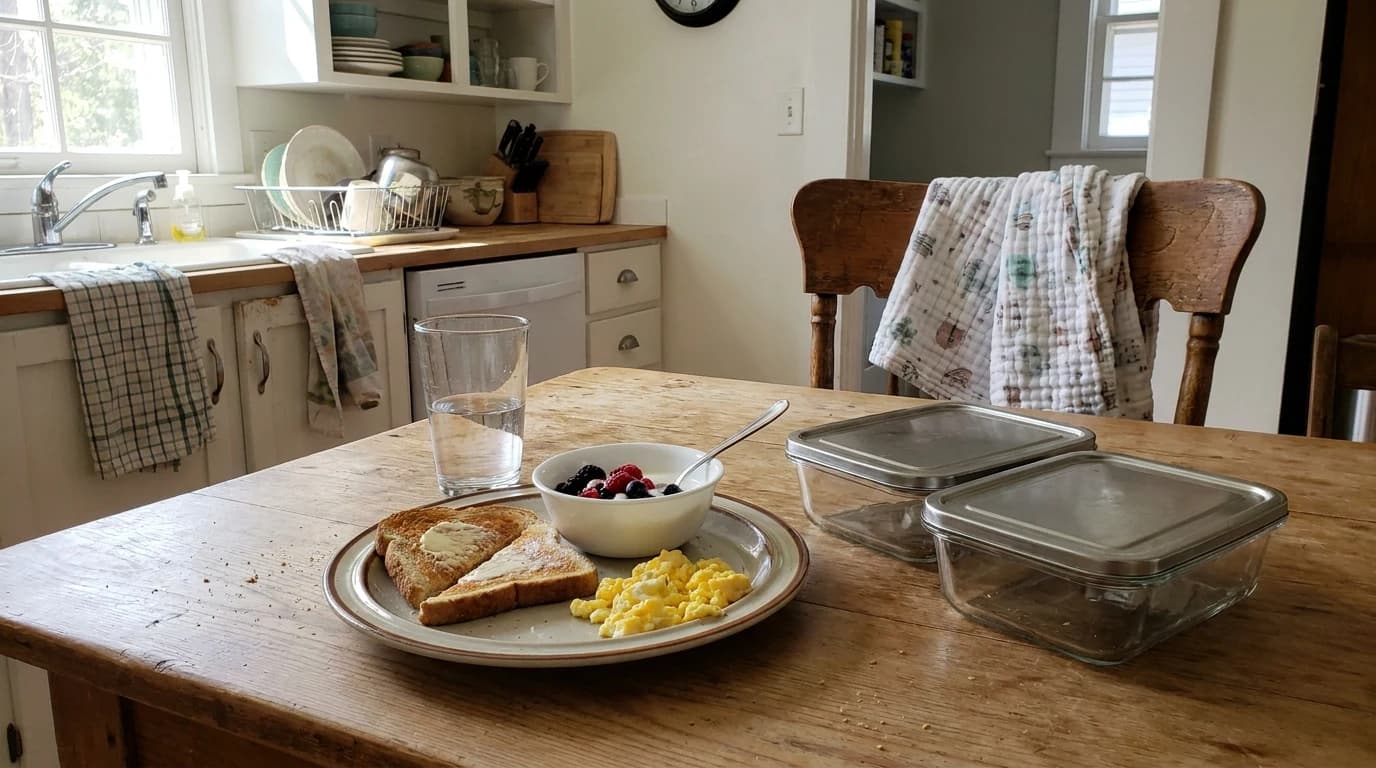
Postpartum meal advice usually assumes the person recovering from birth has the time, attention and free hands to plan a balanced meal, prepare it, and eat it warm. In many households the real problem is more basic: food exists somewhere in the kitchen, but turning it into something the parent actually eats keeps getting interrupted.
The fix is often not more nutrition knowledge. It may be a sandwich someone else assembles, a freezer portion that is easy to identify, or a household rule that the recovering parent eats before the next task begins. Needing accessible food is not conditional on a feeding method, though some nutritional considerations differ with lactation.
Find the step that actually fails
- Name the last meal you meant to eat and did not, and what interrupted it.
- Identify which step failed: no food, no preparation capacity, no free hands, or no permission you gave yourself.
- Make that one step smaller — not the whole system better.
- If the same step fails again tomorrow, the fix belongs to another person, not to your willpower.
A stocked refrigerator will not help when nobody can take over baby care, and a recipe will not help when appetite is low or standing in the kitchen is uncomfortable. The goal is not an attractive photograph. It is a reliable opportunity to eat.
Breastfeeding does not require a special cuisine
The NHS advises that breastfeeding does not require a special diet; the emphasis is a varied, balanced pattern of ordinary foods. The CDC notes that breastfeeding generally increases energy needs, with the amount influenced by factors including activity, body size, and whether feeding is exclusive or mixed — a reason to discuss individual needs with your own clinician, not to impose the same calorie target on every postpartum parent. Make enough food available, and do not treat hunger as a failure.
Use a meal-building pattern instead of a recipe
When deciding feels difficult, assemble a familiar carbohydrate, a protein-containing food, and something that adds variety or enjoyment: rice with beans and a prepared vegetable, toast with eggs and fruit, a sandwich with a filling you like and an easy side.
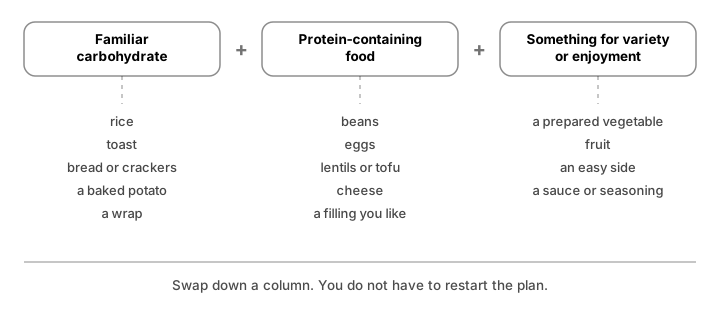
Examples only, not a claim that any combination meets every postpartum nutrient requirement. Portions depend on appetite, preferences and any medical guidance you have.
You can substitute whatever is available without restarting the whole plan. Keep pleasure in it: a sauce or a familiar texture makes an ordinary meal more appealing. Use restrictions that are actually necessary, not ones invented by a generic recovery checklist.
Keep three levels of effort available
The first level is ready to eat — already assembled, or needing only opening and serving. The second is heat and assemble: cooked food, frozen vegetables and a familiar staple, recognizable enough that another person can help without asking several questions. The third is actual cooking, for when there is capacity or someone else takes it on. Do not build the whole plan around the third level and then read reliance on the first two as failure.
Then choose a few combinations you already enjoy. Breakfast food works at any hour, and flexible bases help: a potato takes beans or cheese, rice takes lentils or tofu, a wrap holds a filling.
Make the fallback list usable by someone else
- Write down three combinations you already like and would eat cold.
- Confirm each one can be assembled by someone who does not cook.
- Check the components are in the house now, not on a shopping list.
- Note any allergy, intolerance or advised restriction beside the list.
- Put the list somewhere a helper can read it without asking you.
Protein matters, but it is not the whole meal
A large protein number does not make a food a complete answer to recovery or lactation. A varied diet also supplies energy, fats, carbohydrates, vitamins, minerals and fiber, and the NHS's breastfeeding guidance includes several food groups rather than treating protein as the priority. The most useful protein food is the one you can access and tolerate, not the one with the highest label number.
For days when a drink is easier than assembling food, ready-to-drink protein shakes are one possible convenience category. They are optional, not required postpartum supplies.
Make food easy to reach without making it unsafe
A feeding area can hold water, napkins and suitable shelf-stable snacks, stored safely away from the baby and other children. Keep refrigerated foods in the refrigerator until needed — an exhausted household benefits from fewer decisions, not a basket of perishables sitting out.
One-handed eating is convenient, but it is not a reason to handle hot drinks, hot food, knives or cooking equipment over a baby. Arrange a safe place to set the baby down within sight, or ask another adult to take over, when the task needs both hands. A blanket on the floor within sight costs nothing and solves that.
Let other people own complete tasks
"Tell me what to do" creates more work for someone already coordinating feeding, recovery and household logistics. Give a helper an outcome to own instead, and be specific about preferences, allergies, storage space and timing.
Two ways to accept help
What makes help usable
- "Bring a ready-to-eat lunch on Tuesday" — one person, one outcome
- Small labeled portions with a date and reheating instructions
- A named time window agreed in advance
- Preferences, allergies and fridge space stated up front
What quietly creates work
- "Tell me what you need" — hands planning back to someone with no capacity
- A large unlabeled casserole with nowhere to store it
- Help that arrives at an unpredictable hour
- A visit that adds a host to the parent's job list
Meal support does not have to mean cooking at all. Washing containers, taking another child to the table or holding the baby while the parent eats may address the barrier more directly.
Portion and store food so it stays usable
Large-batch cooking helps only when the results are accessible. Divide food into practical portions, label them, and include reheating instructions when someone else will use them. Freeze what will not be eaten within safe refrigerated storage times, and ask helpers to label preparation dates too.
- 40°F or below the refrigerator temperature FoodSafety.gov lists.
- 3 to 4 days the general refrigerated window FoodSafety.gov gives for soups, stews and many cooked leftovers.
- 2 hours FoodSafety.gov's guidance for refrigerating perishable food.
- 1 hour the same guidance when the surrounding temperature is above 90°F.
Source: FoodSafety.gov, Cold Food Storage Chart and 4 Steps to Food Safety.
Different foods have different limits, so use the relevant guidance rather than one lifespan for everything. Keep raw foods separate from ready-to-eat items, and use appropriate cooking and reheating temperatures rather than judging safety by appearance. When meals are repeatedly interrupted, decide what will be eaten now and return the rest to safe storage.
Avoid unnecessary restrictions, and get supplements reviewed
Blanket avoidance is generally not needed, per the CDC, and unnecessary restrictions make an already difficult meal routine harder to maintain. A food marketed for lactation is not a requirement either — a cookie or tea should not be assumed to increase milk supply, and questions about supply deserve feeding support rather than another item on the shopping list.
The CDC also highlights micronutrient considerations during lactation, including iodine, choline and vitamin B12, and recommends that clinicians help determine appropriate supplementation. Vegan or vegetarian eating can require particular attention to the overall pattern, and no generic article should prescribe a supplement stack. Bring your vitamins, medications and supplements to a review with your clinician or pharmacist rather than assuming everything used during pregnancy should continue. Where several restrictions, low appetite, medical issues or money constraints overlap, a registered dietitian may help.
Notice when the problem needs more than meal preparation
Difficulty accessing food is one problem; being unable to eat or drink, persistent vomiting, fainting or severe weakness is another. The CDC's urgent maternal warning signs include chest pain, trouble breathing, severe headache, heavy bleeding, and thoughts of harming yourself or your baby.
You do not have to earn a meal by finishing the household's needs first. A workable food plan is not proof that you are organized — it is support for a person recovering, caring for a baby, and still entitled to sit down and eat.
Common questions
Do I need a special diet while breastfeeding?
The NHS advises that breastfeeding does not require a special diet, only a varied, balanced pattern including starchy foods, protein sources, fruit and vegetables, and dairy or suitable alternatives. The CDC notes that energy needs generally increase, with the amount influenced by activity, body size and feeding pattern — discuss your own needs with a clinician rather than adopting a general target.
Should I cut out dairy, beans or spicy food if my baby seems fussy?
The CDC says breastfeeding parents generally do not need to avoid particular foods across the board, while noting specific considerations such as seafood choice and caffeine. Fussiness alone is not a reason to remove several major food groups. Discuss the symptoms with the baby's clinician and your own care team so any plan is individualized.
Are lactation cookies, teas or protein drinks necessary?
No. A lactation-marketed product is not essential and should not be assumed to increase milk supply, and a protein drink is not a complete meal replacement simply because it is filling. If you use one, read the full ingredient list for added stimulants, herbs or other active ingredients, and ask a clinician or pharmacist about suitability during breastfeeding.
Research Sources
Hilly Shore Inc.
Editorial teamIndependent product research team behind Cribworthy. Reviews are grounded in published AAP / CDC / NHTSA / CPSC pediatric guidance, JPMA / GREENGUARD GOLD / OEKO-TEX certification verification, and aggregated buyer sentiment.
115 products reviewed · 20 categories covered · cites AAP, CDC, NHTSA, CPSC, FDA, ACOG.
Safety claims are verified against published pediatric guidelines and CPSC databases. See our editorial standards.