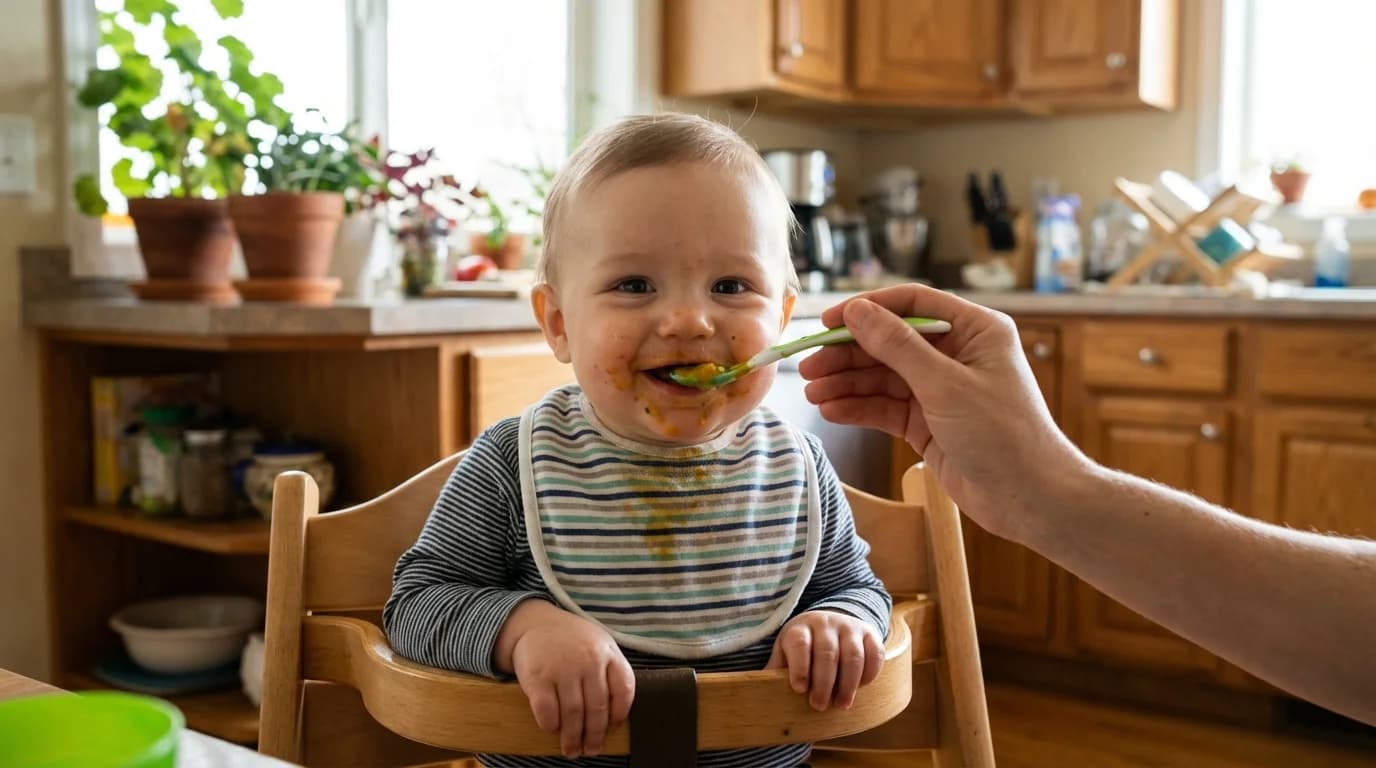
High Chair Safety: The Tray Was Never a Restraint
Quick Answer
The tray is not a restraint, and the federal warning label now has to say so. CPSC estimated 49,900 high chair injuries treated in U.S. emergency departments between 2011 and 2016, most of them falls, with the head involved in 65 percent of cases and most incidents happening between 7 and 23 months old. The three mechanisms CPSC names are climbing in or out, tipping when a child pushes back, and a restraint, tray or lock letting go. Buckling before the tray goes on, and tightening the harness until a shoulder cannot clear the strap, addresses all three. One more thing worth knowing: a convertible chair passes through three different federal standards as you change its mode, each with its own age or weight ceiling.
Our Verdict
Treat the tray as a table and the harness as the seat belt. Regulators had to force the sentence onto warning labels because caregivers told CPSC they considered the tray part of the restraint system, and because fall incidents kept happening to children who were technically buckled into a harness loose enough to wriggle out of. The one component that works without anyone remembering anything is the passive crotch restraint, which is why the standard requires it to be permanently attached before the chair ships.
Key Takeaways
- ✓Most were falls. CPSC names three mechanisms.
- ✓CPSC found a gap in the older voluntary standard: its warning "did not state that a tray is not intended to restrain a child." That mattered because "consumers have reported that they consider the tray, functionally, to be part of a high chair's restraint system."
- ✓Every high chair sold here carries a passive crotch restraint — CPSC describes it as "two separate bounded openings for the occupant's legs" — plus a three-point restraint.
- ✓A convertible chair changes product category as it converts — and each has its own ceiling.
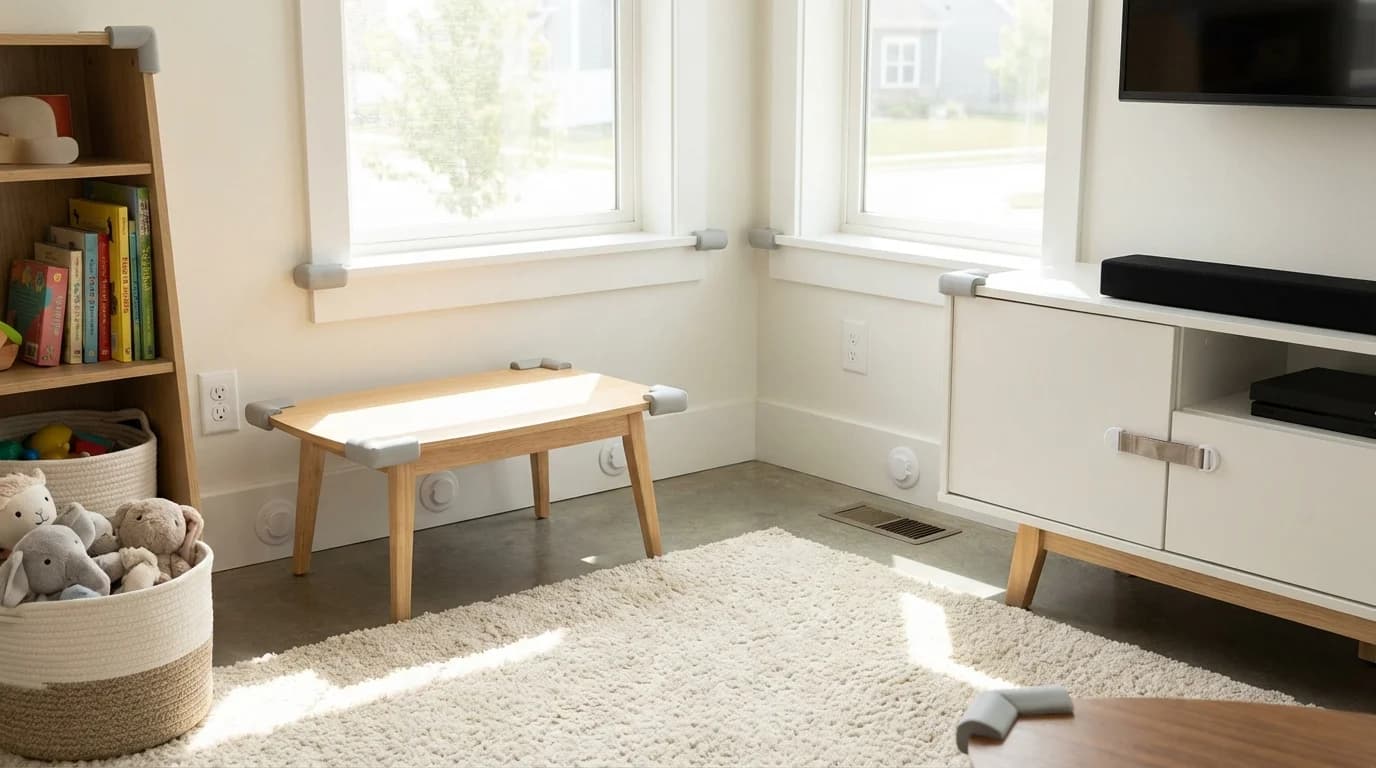
- ✓Once the chair passes, the room is the next job. Still choosing? Our high chairs and boosters category and high chair guide cover that side.
As an Amazon Associate I earn from qualifying purchases. Product prices and availability are subject to change.
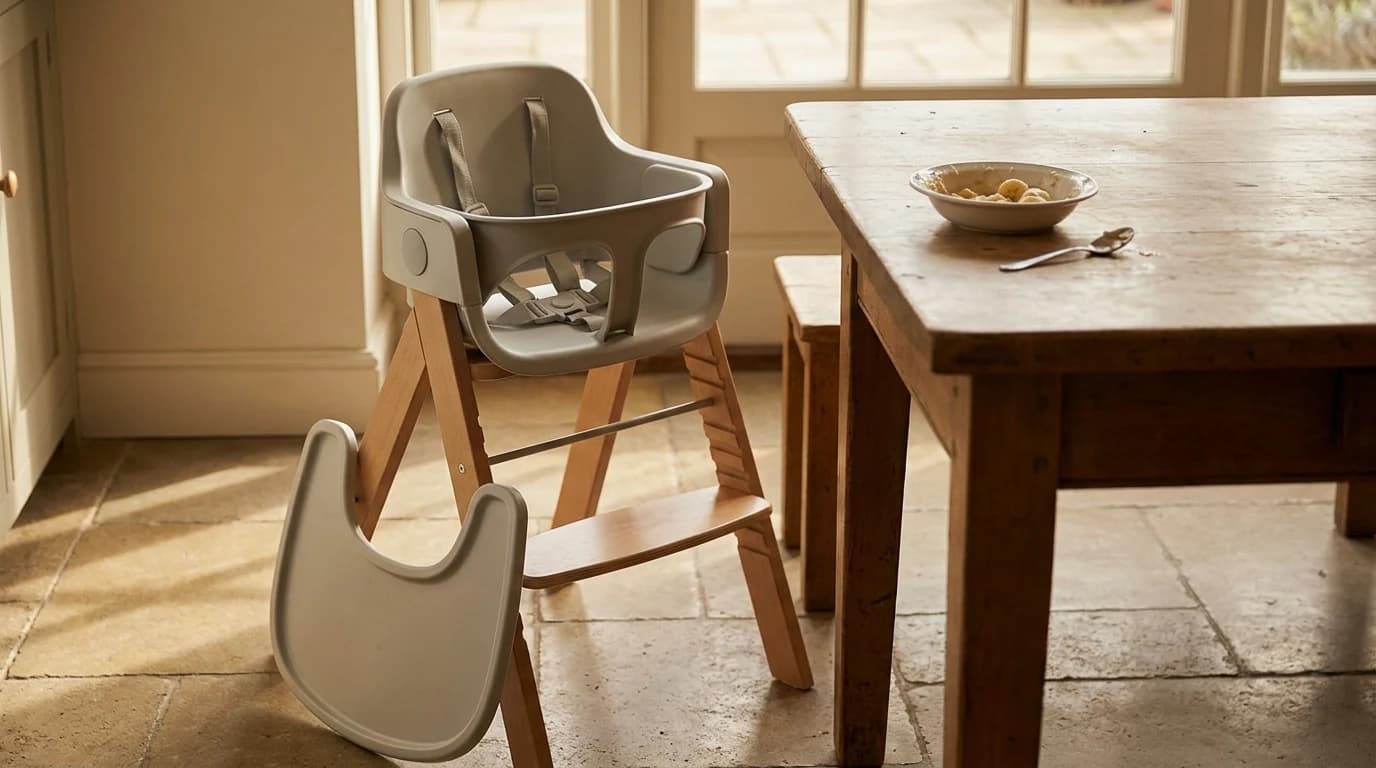
A high chair gets used three times a day for two years, and the manual gets read once. When the U.S. Consumer Product Safety Commission wrote the federal high chair rule, it published the incident record behind it. That record is narrower, and more fixable, than "watch them closely."
The one-line version: The tray holds food, not your child — regulators had that sentence added to the label because parents were treating the tray as a restraint.
What the federal record actually counted
From the NEISS emergency-department sample, CPSC staff estimated 49,900 high chair-related injuries treated in U.S. EDs between January 1, 2011 and December 31, 2016 — with no significant trend across the six years. Three details in the rule do more work than that number:
- It is a head-injury problem. The head was the injured body part in 65 percent of 2011–2016 cases; the face in another 17 percent.
- The window is narrow. Most incidents involved children between 7 and 23 months old — when a baby who used to sit still starts pushing and climbing.
- It is a component story. A specific component — frame, seat, restraint, armrest, tray, footrest — was involved in 95 to 96 percent of reported incidents; design and stability issues in 3 to 4 percent.
Most were falls. CPSC names three mechanisms.
| How the fall happens | What it looks like at your table | The lever you have |
|---|---|---|
| The child climbs | Feet find the footrest, and they stand up | Harness on before the tray goes on |
| The chair tips | Child pushes back or rocks against the table | Park it clear of anything to push off |
| A part lets go | Restraint, tray or lock disengages mid-meal | Check buckle and latch every meal |
The sentence regulators made manufacturers print
CPSC found a gap in the older voluntary standard: its warning "did not state that a tray is not intended to restrain a child." That mattered because "consumers have reported that they consider the tray, functionally, to be part of a high chair's restraint system."
It names the other substitution too: parents skip the restraint "because they think they can notice and stop emerging incidents in time." The Graco Blossom's manual now prints the fix twice, once per mode: "The tray is not designed to hold your child in the product."
CPSC also records falls "where children were restrained, but the restraint system was loose or otherwise allowed the child to wriggle out." Buckled is not the test.
What changes the outcome:
- Buckling before the tray goes on, every meal
- Tightening until a shoulder will not clear the strap
- Parking the chair out of push-off range of table or wall
What gets substituted:
- The tray, treated as a bar across the lap
- Standing nearby, assuming you would catch it
- A one-handed buckle that leaves slack
The part that works with no help from you
Every high chair sold here carries a passive crotch restraint — CPSC describes it as "two separate bounded openings for the occupant's legs" — plus a three-point restraint. Passive is the operative word: the fixed post between those openings stops a child sliding out whether or not anyone buckled anything.
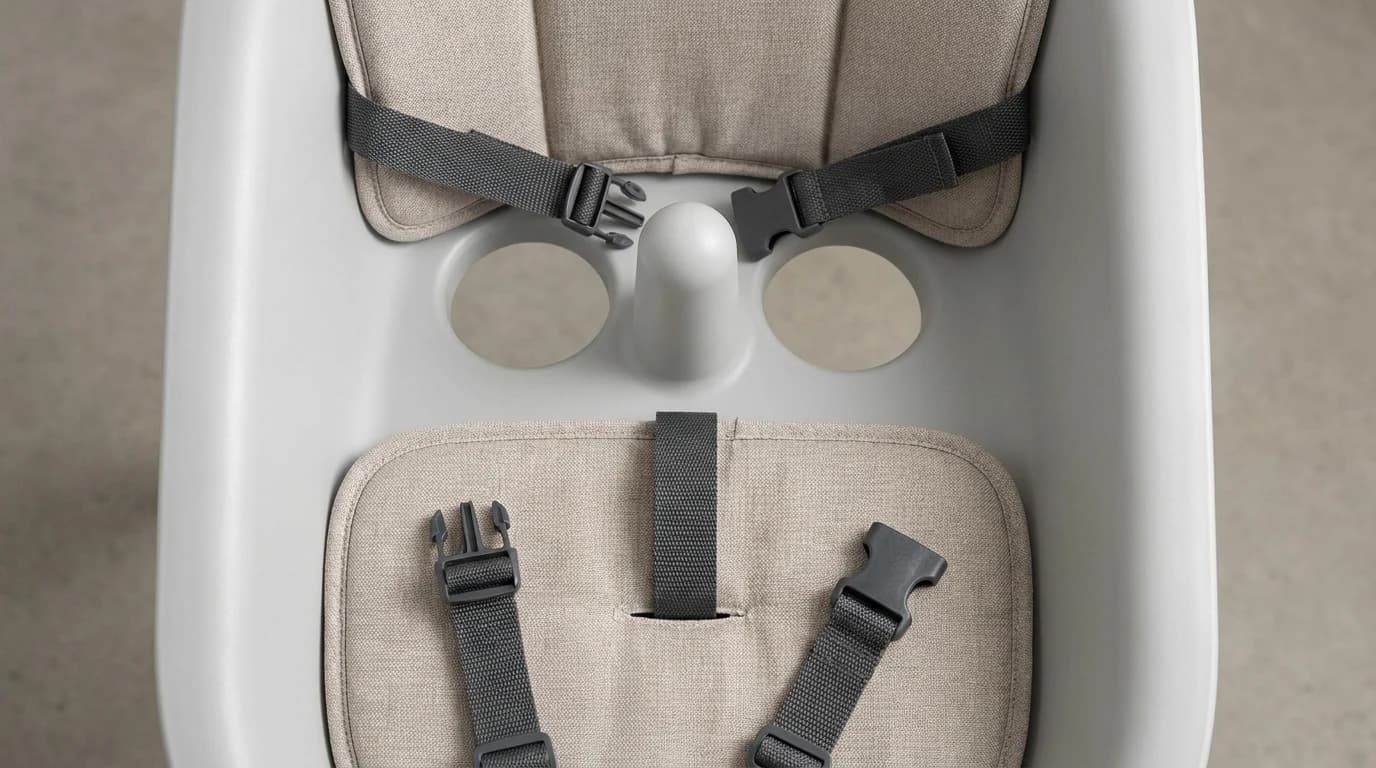
CPSC refused a request to exempt home-assembled chairs from that rule, because permanent attachment is "intended to reduce the likelihood of death from positional asphyxia."
One chair, three different federal rules
A convertible chair changes product category as it converts — and each has its own ceiling.
| Mode | Federal standard | How CPSC defines it |
|---|---|---|
| High chair | 16 CFR 1231 (ASTM F404-21) | Freestanding, child up to 3 years, seat over 15 inches high |
| Booster on an adult chair | 16 CFR 1237 (ASTM F2640) | Sits on an adult chair, child up to 5 years |
| Portable hook-on chair | 16 CFR 1233 (ASTM F1235) | Seat held solely by the table; 6 to 36 months, max 37 lb |
The Graco Blossom → prints both ceilings on one warning page: a high chair "for use with child up to 3 years of age" or a booster "for use with a child up to 6 years of age and up to 60 lbs." The Inglesina Fast Table Chair → has no high chair mode at all — it hangs off the table it clamps to, which is why its definition caps weight where the high chair rule caps age.
Rule of thumb: Read the manual page for the mode you are using this month, not the one you bought it in.
The 60-second check before the next meal
- Find the date of manufacture. Month and year must be permanently affixed to durable infant products, and CPSC maps that date to the version the chair had to meet: F404-18 after June 19, 2019; F404-20 after July 3, 2021; F404-21 after July 23, 2022. Anything older predates the mandatory rule.
- Send the registration form. It is a maker's only route to reach you on a recall.
- Pull the harness until a shoulder will not clear it, then put the tray on.
- Look under the seat pad for the fixed post between the leg openings.
- Move the chair clear of anything a toddler can push off.
Once the chair passes, the room is the next job. Still choosing? Our high chairs and boosters category and high chair guide cover that side.
Questions parents ask about high chair safety
When can a baby start using a high chair?
When they can sit in one with good head control. The American Academy of Pediatrics uses exactly that as a solids-readiness question: "Your baby should be able to sit in a high chair, a feeding seat or an infant seat with good head control." Most babies get there around six months. Graco draws the same line from the other side, recommending the upright position "only by children capable of sitting upright unassisted." The feeding half is in our solid foods guide.
Is a restaurant high chair held to the same standard?
It is. CPSC estimated 1,600 emergency-department injuries tied to restaurant high chairs across 2011–2016 — again mostly falls, when a child climbed in or out, the chair tipped, or restraints went unused or were defeated. Check the strap closes first.
How long do children stay in a high chair?
The federal definition tops out at three years; boosters run to five under their own standard. The more useful marker is in the Blossom's warnings: until a child can get in and out unaided — Graco puts that around two and a half years — they stay secured every time.
The tray keeps the child in the chair, so the harness is optional for a quick snack.
CPSC identified this belief specifically. The older voluntary standard's warning did not say a tray is not intended to restrain a child, and CPSC noted consumers report treating the tray as part of the restraint system. Manufacturers now print the correction outright: Graco's Blossom manual says the tray is not designed to hold your child in the product.
Research Sources
- CPSC, Safety Standard for High Chairs, final rule (83 FR 28358) — incident data, passive crotch restraint, tray warning
- CPSC High Chairs business guidance — 16 CFR part 1231 definition, requirements, ASTM F404 effective dates
- CPSC Booster Seats business guidance — 16 CFR part 1237 definition (child up to 5 years)
- CPSC Portable Hook-on Chairs business guidance — 16 CFR part 1233 definition (6-36 months, 37 lb)
- 16 CFR part 1231, Safety Standard for High Chairs (eCFR) — current incorporation of ASTM F404-21
- Graco Blossom owner's manual — tray warning and per-mode age and weight limits
- American Academy of Pediatrics (HealthyChildren.org) — Starting Solid Foods readiness signs
Hilly Shore Inc.
Editorial teamIndependent product research team behind Cribworthy. Reviews are grounded in published AAP / CDC / NHTSA / CPSC pediatric guidance, JPMA / GREENGUARD GOLD / OEKO-TEX certification verification, and aggregated buyer sentiment.
122 products reviewed · 22 categories covered · cites AAP, CDC, NHTSA, CPSC, FDA, ACOG.
Safety claims are verified against published pediatric guidelines and CPSC databases. See our editorial standards.