Pack-n-Play vs Travel Crib vs Mini Crib: Which Do You Need?
Quick Answer
All three — pack-n-play, travel crib, and mini crib — are safe for infant sleep as long as they meet current CPSC standards and you use only the firm, flat pad they come with. The decision is about space and use, not safety: choose a mini crib for a small nursery, a travel crib for trips, and a pack-n-play if you want one do-it-all for daily naps, play, and the occasional getaway.
Our Verdict
Don't agonize over safety here — any CPSC-compliant model is an AAP-acceptable sleep surface. Pick by use: a mini crib for a small nursery, a travel crib for trips, a pack-n-play for one do-it-all. Just never add your own mattress or padding to any of them.
Which one fits your situation
| If your situation is… | Pick | Why |
|---|---|---|
| Small nursery or shared room, want lasting furniture | Mini crib | Compact (~24x38 in.) real-crib footprint that looks like furniture and lasts ~18-24 months. |
| You travel, fly, or stay with family often | Travel crib | Lightest and fastest fold; built to pack down and pop up anywhere. |
| You want one product for daily naps, play, and changes | Pack-n-play (play yard) | Doubles as a bassinet level, playpen, and changer, and still folds for the occasional trip. |
| Newborn room-sharing for the first months | Pack-n-play with a bassinet level | Raised level keeps a newborn within reach and meets CPSC standards as a sleep surface. |
Use this row to shortcut by situation.
Key Takeaways
- ✓All three are real sleep surfaces.
- ✓The pack-n-play is the Swiss Army knife. It folds into a wheeled carry bag, sets up in under a minute, and most models add a raised bassinet level for the newborn months plus a clip-on changing station.
- ✓A travel crib strips the play yard down to its lightest, most packable form — think Guava Lotus or Graco Day2Dream, built to live in a backpack, pop up in seconds in a hotel room, and weigh a fraction of a pack-n-play.
- ✓A mini crib is a real crib, shrunk.
- ✓Once you choose the product class, check Pack and Play mattress safety before buying a pad or sheet. A mini-crib mattress is not interchangeable with a playard pad simply because its dimensions look similar.
As an Amazon Associate I earn from qualifying purchases. Product prices and availability are subject to change.
Three products, three price tags, and so much overlap that parents routinely buy two of them by accident. Here is the honest breakdown of what each one is actually for, plus the one safety fact that makes the decision far simpler than the marketing suggests.
The short version
All three are real sleep surfaces. A full-size crib, a mini crib, a portable crib, and a play yard (pack-n-play) sold in the US all have to meet federal CPSC safety standards for their product category, and the AAP names a "crib, bassinet, portable crib, or play yard that meets [CPSC] safety standards" as an acceptable place for a baby to sleep. So this is not a safety ranking. It is a space, portability, and longevity decision.
What changes between them is how you live with them: daily footprint, how fast they fold, and how long your baby fits.
✅ Any of the three is safe for sleep if it meets the current CPSC standard, sits firm and flat, and you use only the mattress or pad it came with — nothing added.
Quick comparison
| Pack-n-Play (play yard) | Travel Crib | Mini Crib | |
|---|---|---|---|
| Best for | One do-it-all for daily use | Trips, hotels, grandma's | Small nurseries, long-term |
| Portability | Folds into a carry bag, heavier | Lightest, fastest fold | Stationary (some fold flat) |
| Doubles as | Playpen, changer, bassinet level | Playpen on the road | Just a (smaller) crib |
| Mattress | Thin firm pad, included | Thin firm pad, included | Mini-crib mattress (~24x38 in.) |
| Typical lifespan | Newborn to ~2-3 yrs | Newborn to toddler (travel) | Newborn to ~18-24 mo |
Pack-n-Play (play yard): the workhorse
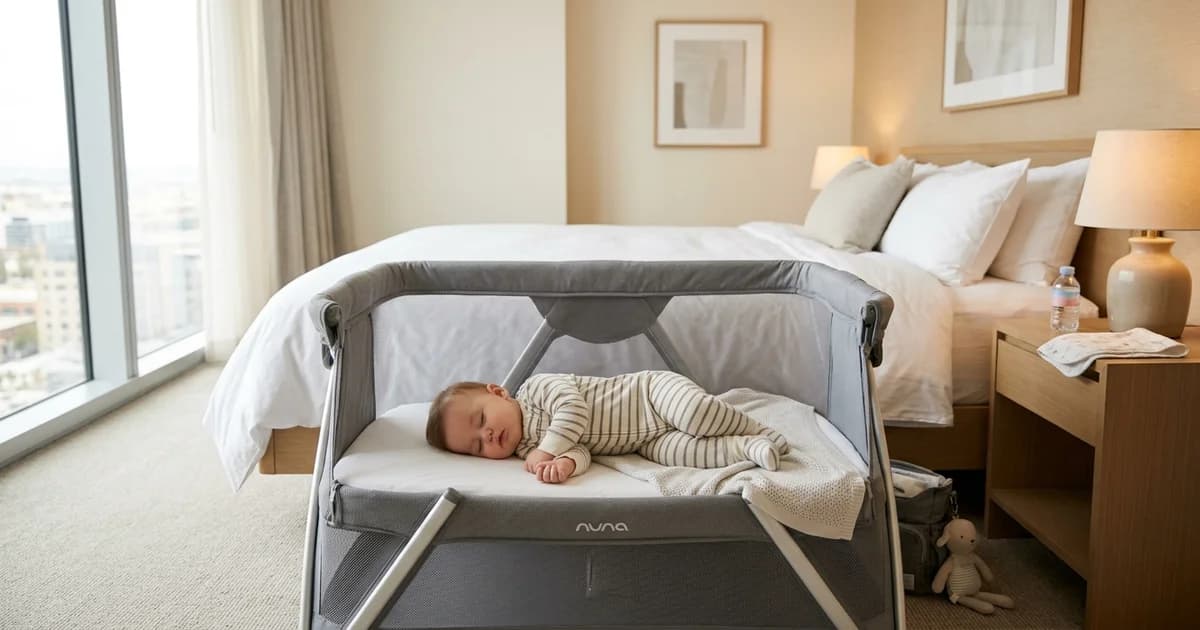
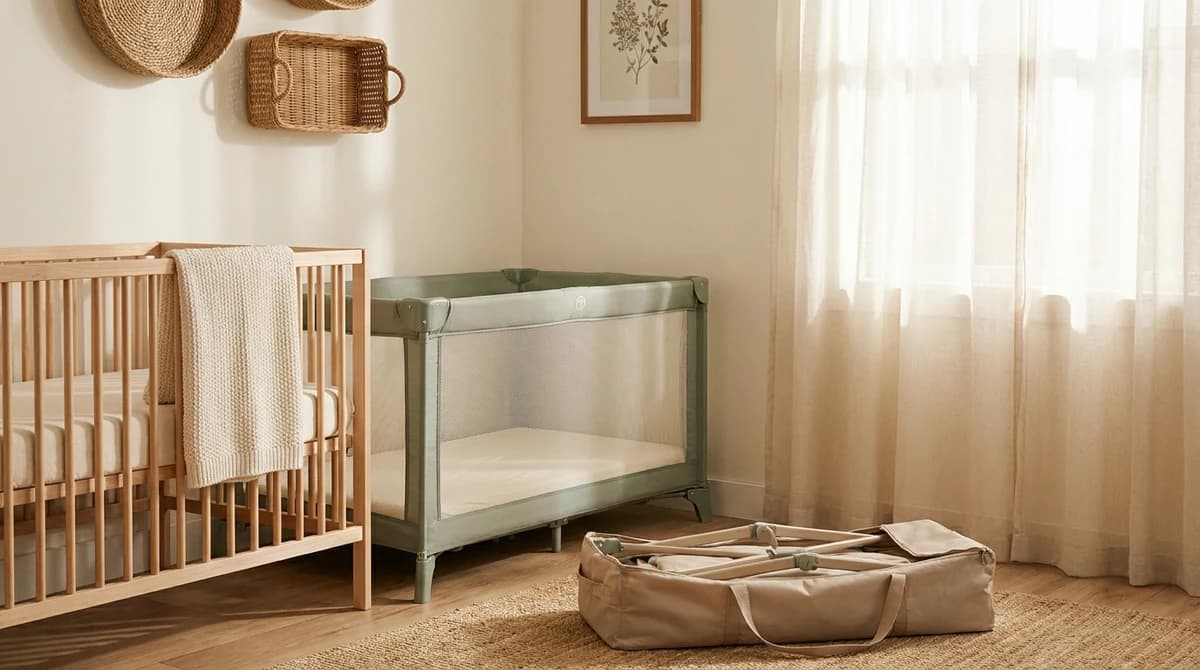
The pack-n-play is the Swiss Army knife. It folds into a wheeled carry bag, sets up in under a minute, and most models add a raised bassinet level for the newborn months plus a clip-on changing station. Mesh sides give airflow and let you see in.
Buy it if you want a single product that handles downstairs naps, contained play while you cook, diaper changes, and the occasional overnight at the in-laws. The trade-offs: it is the heaviest of the three to lug through an airport, and the included sleep pad is thin and firm by design — that is correct for safety, even if it looks spartan. Several of the play-yard hybrids show up in our best travel cribs guide too.
Travel crib: the suitcase sleeper
A travel crib strips the play yard down to its lightest, most packable form — think Guava Lotus or Graco Day2Dream, built to live in a backpack, pop up in seconds in a hotel room, and weigh a fraction of a pack-n-play.
What you give up is the daily-driver extras: usually no changer, often no bassinet level, and less ruggedness for constant in-home use. Buy this if your real problem is getting a safe sleep spot somewhere else — grandma's house, flights, Airbnbs. Our best travel cribs for 2026 has the current picks.
Mini crib: the small-space nursery
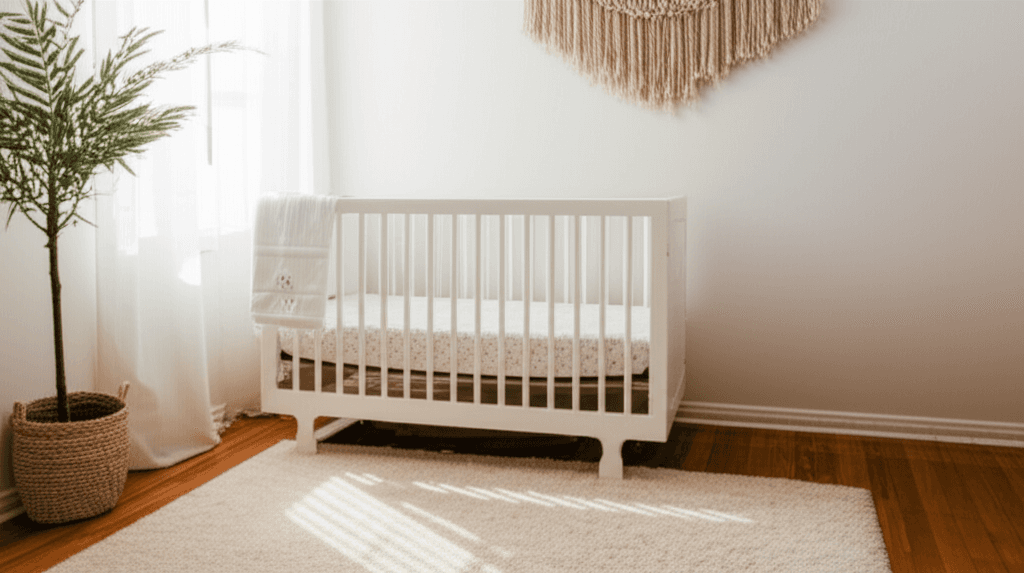
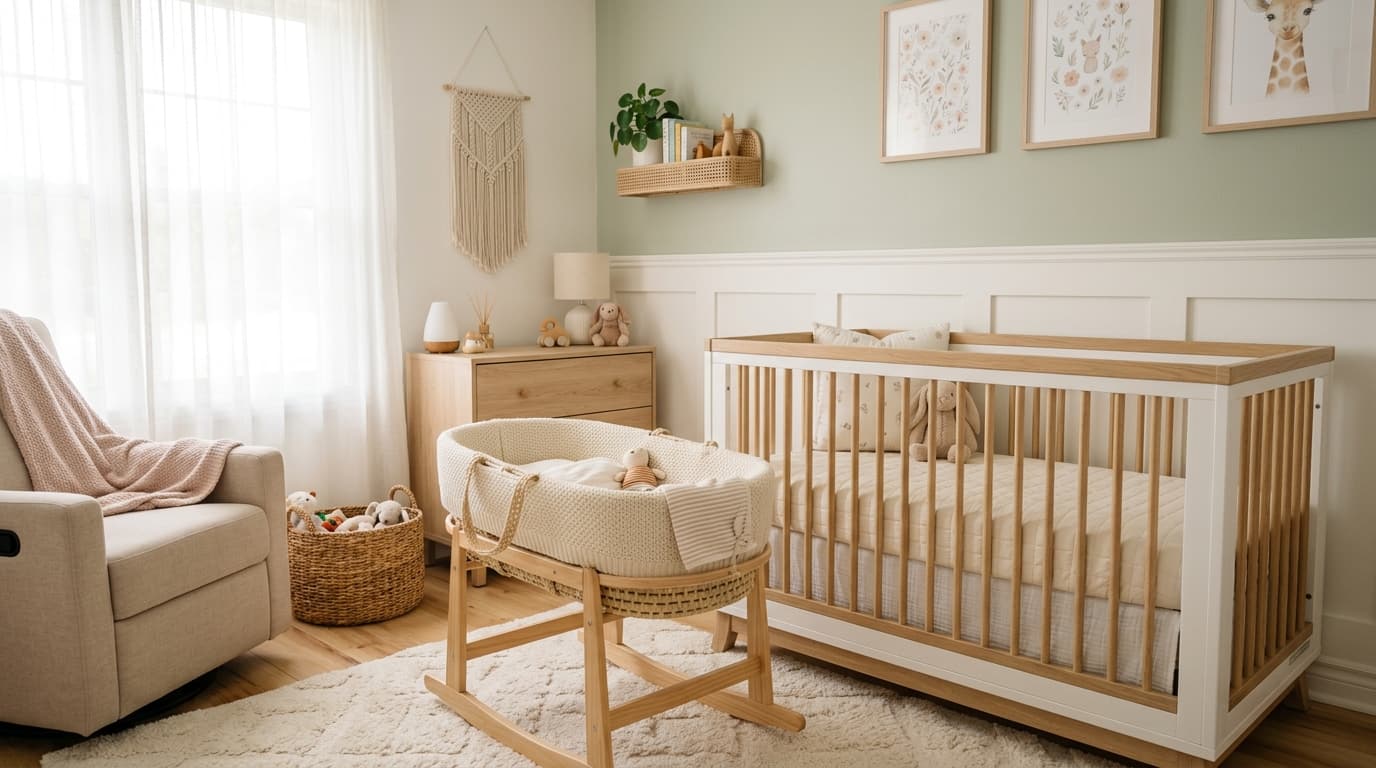
A mini crib is a real crib, shrunk. The standard footprint is about 24 by 38 inches — roughly a third less floor space than a full-size crib — so it fits a small bedroom, a shared room, or a grandparent's place that is becoming a second home. Most are wood and look like nursery furniture, not camping gear; some fold flat for storage. It takes a dedicated mini-crib mattress (thin and firm, like every infant mattress).
The catch is lifespan: most babies outgrow a mini crib somewhere around 18 to 24 months, sooner than a convertible full-size crib. If a small-space crib is your real need, our best cribs and bassinets guide compares mini and convertible options side by side.
What most people get wrong
Once you choose the product class, check Pack and Play mattress safety before buying a pad or sheet. A mini-crib mattress is not interchangeable with a playard pad simply because its dimensions look similar.
The biggest myth is that a pack-n-play is a "lesser" or less-safe place to sleep than a crib. It is not — a CPSC-compliant play yard is an AAP-acceptable sleep surface, full stop.
The real mistake is the opposite: making any of these less safe by adding an aftermarket mattress, a folded blanket, or a "more comfortable" pad. That changes the firmness and the fit, leaving gaps — a genuine suffocation risk. Use the pad it came with, keep the surface bare, and never use an inclined attachment for sleep.
The second common mistake is buying for the wrong timeline. A travel crib you use twice a year does not replace a daily sleep spot, and a mini crib you love at home does not fold into an overhead bin.
How to decide in one minute
- Tight on space and want something that looks like furniture → mini crib.
- You travel, visit family, or want grab-and-go → travel crib.
- You want one thing that naps, plays, changes, and occasionally travels → pack-n-play.
Plenty of families own two — a mini or full-size crib at home plus a travel crib for the road. That is not a failure; it is two different jobs. Still deciding where baby sleeps at home first? See when to move from a bassinet to a crib.
Sources
- American Academy of Pediatrics — A Parent's Guide to Safe Sleep
- U.S. Consumer Product Safety Commission — Play Yards Business Guidance
Your next step
Found your match? Here are the picks.
Research Sources
Hilly Shore Inc.
Editorial teamIndependent product research team behind Cribworthy. Reviews are grounded in published AAP / CDC / NHTSA / CPSC pediatric guidance, JPMA / GREENGUARD GOLD / OEKO-TEX certification verification, and aggregated buyer sentiment.
124 products reviewed · 22 categories covered · cites AAP, CDC, NHTSA, CPSC, FDA, ACOG.
Safety claims are verified against published pediatric guidelines and CPSC databases. See our editorial standards.