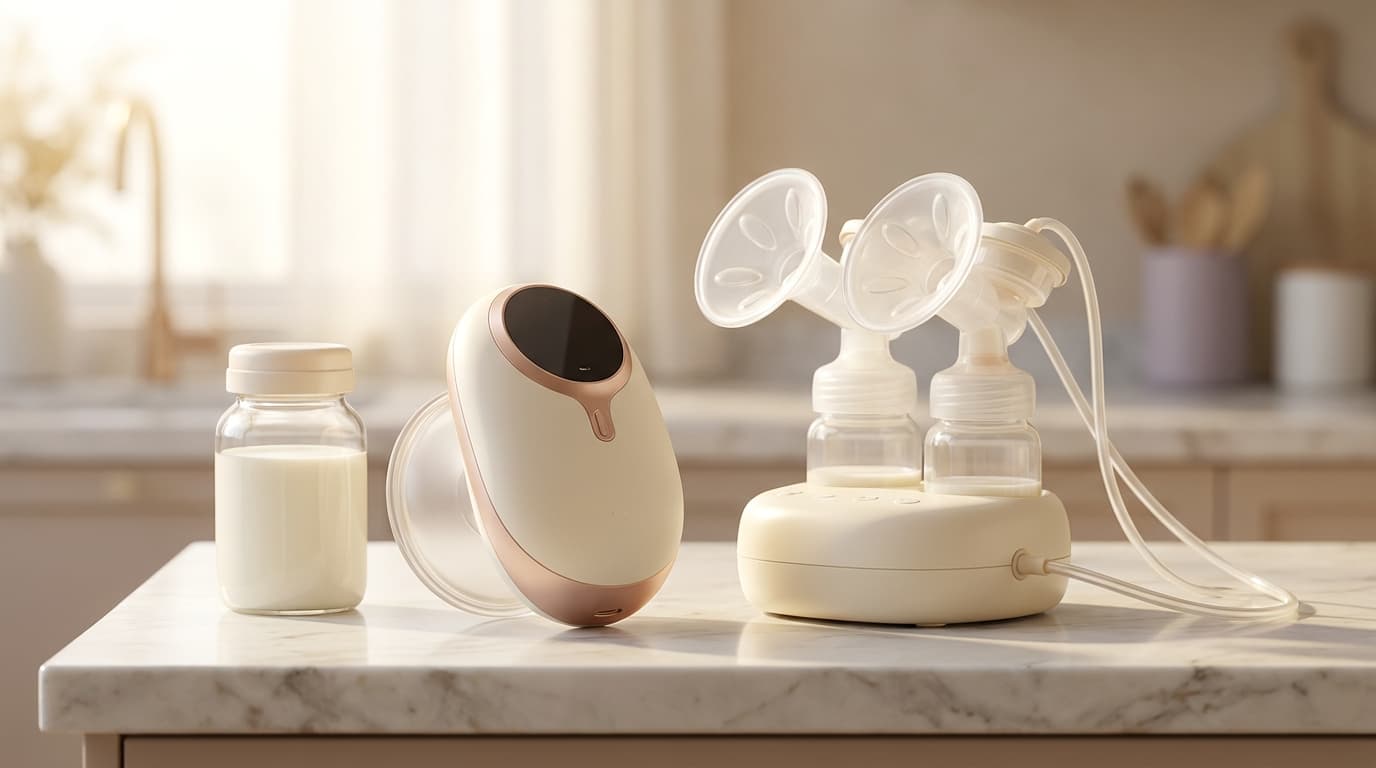
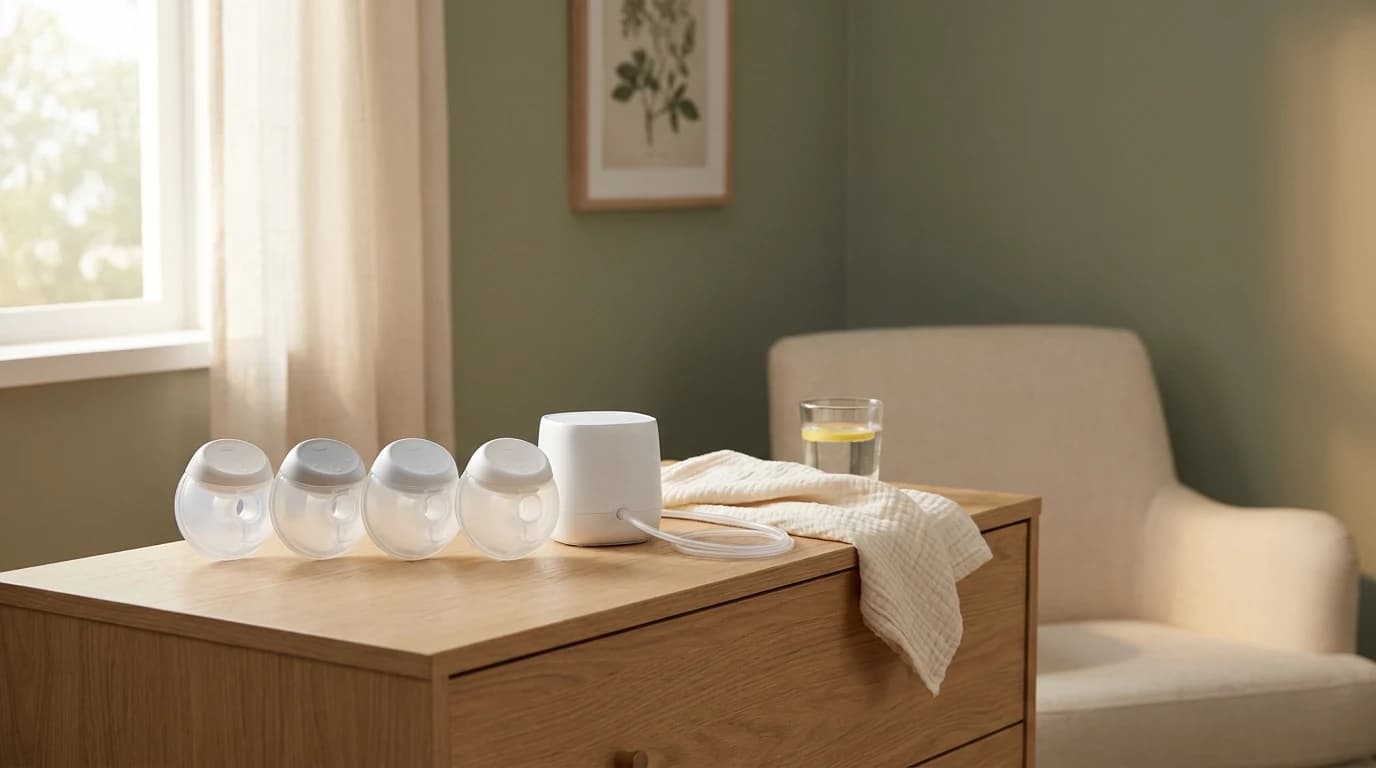
Power Pumping Schedule: What to Try and When to Stop
Quick Answer
Power pumping alternates pumping and rest to add breast stimulation. A common double-pump schedule is 20 minutes pumping, 10 resting, 10 pumping, 10 resting and 10 pumping. Evidence includes a small controlled trial in mothers of very-low-birth-weight infants; it does not guarantee a supply increase or replace an individual feeding plan.
Our Verdict
If low supply is confirmed, ask your IBCLC how a short power-pumping trial fits your feeding routine. Keep rests in the schedule, check flange fit and pump function, and seek prompt help if the baby may not be getting enough milk. Choose equipment for comfort and control rather than a promised output increase.
Match the pump layout to your routine
| If your situation is… | Pick | Why |
|---|---|---|
| You want bottles and a visible session timer | Spectra S1 Plus Breast Pump | Rechargeable bottle-based pump with a timer display. |
| You want a bottle-based alternative with setting indicators | Medela Pump In Style Pro+ Double Electric Breast Pump | Rechargeable Pro+ has 16 suction levels with display indicators. |
| You prefer two self-contained in-bra cups | Momcozy M5 Smart Wearable Breast Pump (2-Pack) | Two motor-in-cup pumps with app start/pause control. |
| You prefer a separate motor hub and in-bra cups | Elvie Stride App-Controlled Wearable Breast Pump | Hub-and-tube layout with app control, two modes and ten intensity settings. |
Each pick is one of the products ranked below — this row is for shortcutting based on your situation, not a separate recommendation.
Swipe to compare every product.
| Comparison field | #1  Spectra S1 Plus Breast Pump Spectra S1 Plus Breast PumpOwner rating | #2  Medela Pump In Style Pro+ Double Electric Breast Pump Medela Pump In Style Pro+ Double Electric Breast PumpOwner rating | #3 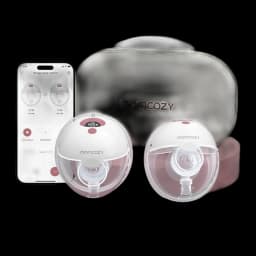 Momcozy M5 Smart Wearable Breast Pump (2-Pack) Momcozy M5 Smart Wearable Breast Pump (2-Pack)Owner rating | #4 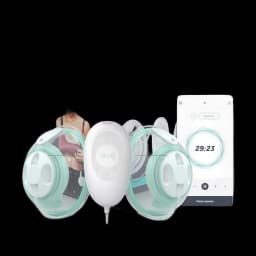 Elvie Stride App-Controlled Wearable Breast Pump Elvie Stride App-Controlled Wearable Breast PumpOwner rating |
|---|---|---|---|---|
| Verdict | Bottle-based sessions with a timer | Rechargeable bottle-based alternative | All-in-bra pair with app pause | In-bra cups with a separate hub |
| Price | ~$225.99Buy on Amazon | ~$169.99Buy on Amazon | ~$169.99Buy on Amazon | ~$139.99Buy on Amazon |
| Layout | Bottle-based, external pump | Bottle-based, external pump | Two motor-in-cup wearables | In-bra cups, external hub and tubing |
| Power | Rechargeable battery | Rechargeable battery | Rechargeable batteries | Rechargeable battery |
| Control for this routine | Timer display; manual block changes | 16 suction levels; manual block changes | App start/pause; three modes, nine levels | App control; two modes, ten levels |
| Pros |
|
|
|
|
| Cons |
|
|
|
|
* Prices are approximate. Check the linked retailer for current pricing and availability.
Key Takeaways
- ✓IBCLC Melissa Portunato's Spectra guide gives this double-breast pattern. The elapsed times below are the arithmetic of that schedule, not a separate clinical protocol.
- ✓The 2024 pilot randomized trial in the Indian Journal of Pediatrics enrolled mothers of very-low-birth-weight infants with low milk output on or after postnatal day 14.
- ✓The Academy of Breastfeeding Medicine's protocol calls for assessing the frequency and effectiveness of milk removal and evaluating medical causes of low supply.
- ✓These are researched hardware options, not four proven treatments for low supply. Start with a pump that already fits and works comfortably for you.
As an Amazon Associate I earn from qualifying purchases. Product prices and availability are subject to change.
Set the timer for five blocks
IBCLC Melissa Portunato's Spectra guide gives this double-breast pattern. The elapsed times below are the arithmetic of that schedule, not a separate clinical protocol.
| Elapsed time | What to do | Block length |
|---|---|---|
| Start to minute 20 | Pump both breasts | 20 minutes |
| Minute 20 to 30 | Rest | 10 minutes |
| Minute 30 to 40 | Pump both breasts | 10 minutes |
| Minute 40 to 50 | Rest | 10 minutes |
| Minute 50 to 60 | Pump both breasts | 10 minutes |
That totals 40 minutes pumping and 20 minutes resting. Use a timer for the blocks rather than treating a pump's automatic shutoff as the schedule. Spectra describes power pumping as usually additional to ordinary sessions, with some exceptions for exclusive pumpers. Agree on how it fits your own routine with an International Board Certified Lactation Consultant (IBCLC).
The rest is part of the plan: an hour-long appointment with the pump is not an hour of continuous suction.
One breast at a time is a different pattern
The same guide also gives six alternating blocks: left for ten minutes, right for ten, repeated three times. That still takes an hour. It says an electric or manual hand pump can be used; a double-electric pump is a convenience, not a universal prerequisite. Do not quietly turn the double-pump rest blocks into extra pumping.
A controlled trial exists, but its question was narrow
The 2024 pilot randomized trial in the Indian Journal of Pediatrics enrolled mothers of very-low-birth-weight infants with low milk output on or after postnatal day 14. Power pumping or routine pumping was used once daily for seven days. Both groups also received routine lactation support and hand expression every three hours.
The individual day-seven power-pumping session had a median output of 50 mL, versus 27 mL in the routine-pumping group. However, the primary outcome, exclusive breastfeeding at discharge, did not differ significantly between groups.
That is evidence about a particular strategy in a particular hospital population. It is not a forecast of your extra daily ounces, proof for healthy term babies, or evidence that one consumer pump outperforms another. A larger single-session amount and a lasting change in feeding outcomes are different questions.
Check the feeding problem before adding an hour
The Academy of Breastfeeding Medicine's protocol calls for assessing the frequency and effectiveness of milk removal and evaluating medical causes of low supply. Its list includes hypothyroidism, retained placenta, breast surgery, medications and other conditions. More minutes with a pump do not diagnose those problems.
Check the equipment with your IBCLC:
- Flange fit: Spectra's sizing guide describes a nipple moving freely in the tunnel without rubbing, with little areola drawn in. Use your own maker's guide rather than copying someone else's size.
- Assembly and worn parts: follow the exact model's instructions. Spectra's FAQ gives different valve and backflow-protector replacement intervals for exclusive pumping and occasional pumping; that is not a universal timetable for every brand.
- Comfort and suction: a harder setting is not the goal. Have painful pumping assessed instead of pushing through another block.
Check the baby's intake with the pediatrician:
- The AAP flags inadequate weight gain and too few wet diapers for the baby's age as warning signs.
- It also says persistent hunger after feeds, severe pain or significant nipple cracking deserve prompt help.
If intake is a concern, contact the pediatrician rather than waiting for a power-pumping experiment to work. Keep the agreed feeding plan, including supplemental feeds if advised. Our formula and breastfeeding guide covers the choices without treating feeding as a contest.
Check the cause, not just the clock: extra stimulation cannot replace an assessment of milk removal, equipment fit and the baby's growth.
Choose equipment for the session you can manage
These are researched hardware options, not four proven treatments for low supply. Start with a pump that already fits and works comfortably for you. The comparison above distinguishes bottle-based pumps, an all-in-bra pair and a hub-and-cup system; you need one suitable setup, not all four.
- Spectra S1 Plus has a rechargeable battery, bottle collection and a timer display. Its manufacturer page states a 30-minute automatic shutoff. You still control the shorter blocks and rests.
- Medela Pump In Style Pro+ is the current rechargeable, bottle-based model. Medela lists 16 suction levels; this is the Pro+ generation, not the older MaxFlow model.
- Momcozy M5 Smart two-pack puts the motors in the cups. Its support instructions cover app start/pause, three modes and nine levels, plus an automatic pause at 30 minutes. Set the rest blocks yourself.
- Elvie Stride separates the hub from the in-bra cups. Elvie lists two modes and ten intensity settings; its tubes are the trade-off for that different layout.
Read our pump comparison or Momcozy model guide if you are choosing equipment. A model's suction number or wearable label does not establish how your body will respond to power pumping.
Before spending, HealthCare.gov says covered plans must provide breast-pump benefits, except grandfathered plans. Coverage may be a rental or a new pump, and plans can specify manual versus electric equipment and timing. Confirm your benefit; do not assume any named model is free.
Questions about duration and timing
How many days should I try power pumping?
Spectra's guide suggests one or two sessions daily for four consecutive days and advises against doing it long term. The trial used seven days in a supported NICU population. Neither gives a guaranteed deadline for a supply increase. Set a review point with your IBCLC rather than adding sessions indefinitely.
What is the best time of day?
Spectra's guide suggests evening when help and an uninterrupted hour may be available. That is a practical suggestion, not a compulsory time. Choose a window that fits your feeding plan and support at home.
Should I keep going if pumping hurts?
Pause and get help with fit, suction and technique. The AAP advises medical or lactation assessment for severe pain and significant nipple damage; a timer is not a reason to tolerate an injury.
Research Sources
- Spectra Baby USA — What is Power Pumping? IBCLC-authored schedules and duration guidance
- Kalathingal et al., Indian Journal of Pediatrics (2024), PMID37794310 — pilot randomized trial abstract via EuropePMC
- Academy of Breastfeeding Medicine Clinical Protocol9 — assessment of low milk production, 2018
- American Academy of Pediatrics — Warning Signs of Breastfeeding Problems
- Spectra — Flange Sizing Guide
- Spectra — Frequently Asked Questions: parts replacement and assembly
- Spectra — S1 Plus rechargeable pump specifications
- Medela — Pump In Style Pro+ Traditional rechargeable pump
- Momcozy — M5 Smart app controls and automatic pause
- Elvie — Stride original model specifications and box contents
- HealthCare.gov — Breastfeeding benefits and breast-pump coverage
Hilly Shore Inc.
Editorial teamIndependent product research team behind Cribworthy. Reviews are grounded in published AAP / CDC / NHTSA / CPSC pediatric guidance, JPMA / GREENGUARD GOLD / OEKO-TEX certification verification, and aggregated buyer sentiment.
124 products reviewed · 22 categories covered · cites AAP, CDC, NHTSA, CPSC, FDA, ACOG.
Safety claims are verified against published pediatric guidelines and CPSC databases. See our editorial standards.