Wagon Stroller vs. Double Stroller: How to Decide
The Verdict
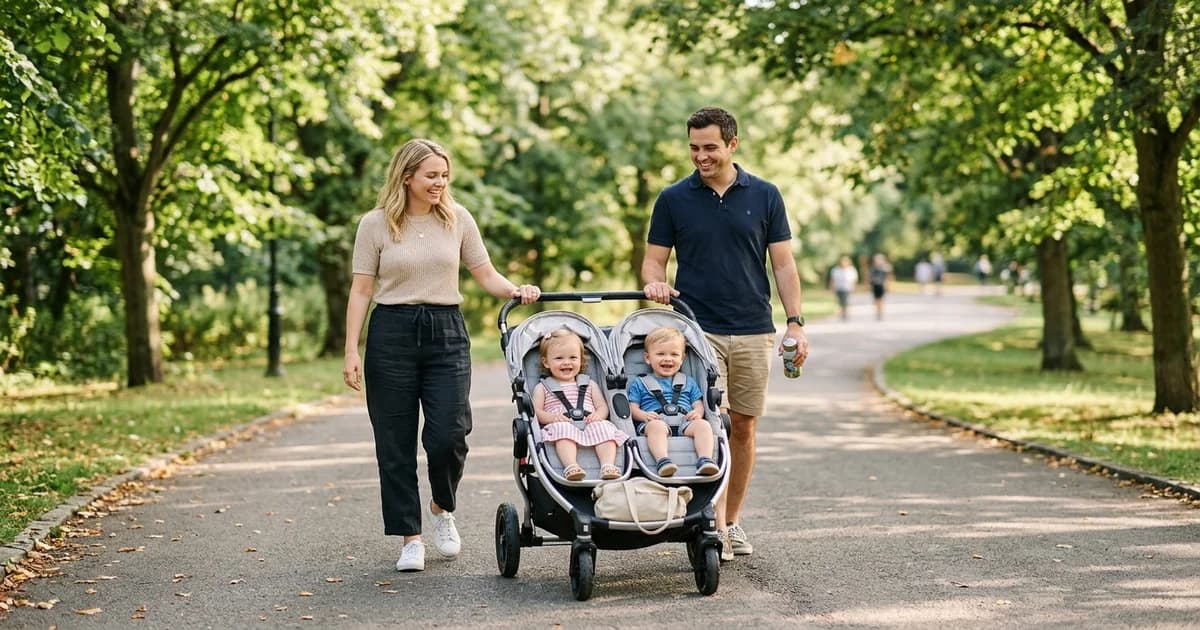
Default to a double stroller. It folds smaller, suits transit and airports, and is admitted where wagons get turned away, including Walt Disney World, which bans them outright. A wagon is the better buy only when you load from a driveway, haul genuine cargo, and walk on grass or wide paths with children who already sit unaided.
Our Verdict
The wagon-versus-double-stroller decision is settled by where you park and what you walk on, not by the product specs. Driveway parking, cargo hauls and grass or gravel favor a wagon; street parking, transit, airports, narrow shop aisles and theme parks favor a double stroller. Newborn use is possible in a wagon, but only through a separately sold lounger or car-seat adapter, and harness type is not standardized across wagon brands — verify the specific model's manual before buying either.
Fit by lifestyle, not by feature list
| If your situation is… | Pick | Why |
|---|---|---|
| You park in a driveway or garage | Stroller wagon | Loading happens at ground level, so the wagon's bulk never becomes a lift-and-carry problem. |
| You street-park, or live up a flight of stairs | Double stroller | It folds smaller and can be collapsed one-handed while you hold a child. |
| Grass, gravel, sand or sports fields most weekends | Stroller wagon | The open bed carries the cooler and kit that a stroller basket cannot. |
| Buses, trains and narrow shop aisles | Double stroller | A tandem clears standard doorways and ramps; side-by-side wagon widths often do not. |
| Theme parks are a regular family trip | Double stroller | Walt Disney World's rules prohibit stroller wagons and wagons outright, at any size. |
| A newborn will ride from day one | Double stroller | Recline or bassinet is usually built in; wagons need a separately sold lounger or car seat adapter. |
| You fly several times a year | Double stroller | Gate-check bags are built around folded stroller dimensions, not wagon beds. |
| Two walking kids who board and exit constantly | Stroller wagon | Self-boarding removes the buckle-and-unbuckle cycle that dominates short stops. |
Each pick is one of the products ranked below — this row is for shortcutting based on your situation, not a separate recommendation.
#1Baby Jogger City Mini GT2 Double Stroller 4.5 | #2 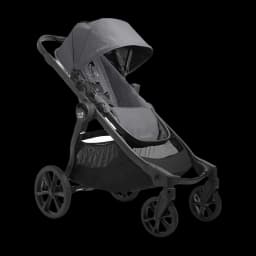 Baby Jogger City Select 2 Baby Jogger City Select 24.3 | #3 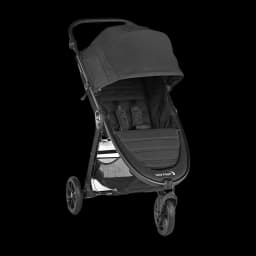 Baby Jogger City Mini GT2 Baby Jogger City Mini GT24.6 | #4 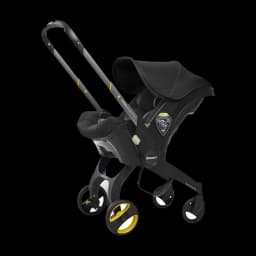 Doona Infant Car Seat & Stroller Doona Infant Car Seat & Stroller4.8 | |
|---|---|---|---|---|
| Verdict | Closest a double stroller gets to a wagon's terrain tolerance | Best for staggered ages — converts single to double and takes an infant seat | Best when one kid rides and the older sibling walks | Best if the real problem is car-to-sidewalk transitions, not seating two |
| Price | ~$749.99Buy on Amazon | ~$659.99Buy on Amazon | ~$349Buy on Amazon | ~$550.00Buy on Amazon |
| Current price | $749.99 | $659.99 | $399.99 | $550.00 |
| Configuration | Side-by-side double | Modular tandem, single to double or triple | Single, all-terrain | Single, car seat and stroller in one |
| Terrain | All-terrain wheels, all-wheel suspension | — | Forever-air rubber tires, all-wheel suspension | — |
| Car seat | Compatible with Britax, Cybex, Graco and Maxi-Cosi infant seats | Infant car seat compatible, adapters sold separately | Includes Baby Jogger infant car seat adapter | — |
| Fold | One-step quick fold | One-step compact fold | — | — |
| Seating options | — | 24 configurations | — | — |
| Brake | — | — | Hand-operated parking brake | — |
| Child range | — | — | — | 4–30 lb, rear-facing only |
| Weight | — | — | — | Seat and stroller 17.2 lb, base 9.7 lb |
| Air travel | — | — | — | FAA aircraft approved |
| Pros |
|
|
|
|
| Cons |
|
|
|
|
* Prices are approximate. Check the linked retailer for current pricing and availability.
Key Takeaways
- ✓The wagon-versus-double-stroller decision is settled by where you park and what you walk on, not by the product specs. Driveway parking, cargo hauls and grass or gravel favor a wagon; street parking, transit, airports, narrow shop aisles and theme parks favor a double stroller. Newborn use is possible in a wagon, but only through a separately sold lounger or car-seat adapter, and harness type is not standardized across wagon brands — verify the specific model's manual before buying either.
- ✓A wagon's genuine advantage: a walking toddler climbs in unaided and sits next to the cooler and the diaper bag. A double stroller makes you buckle each child into a fixed seat, and its basket hold...
- ✓If your car sits in a driveway ten steps from the door, a wagon is close to free: roll it out, load at waist height, roll it back. Street-park in a city and everything inverts — now it gets folded ...
- ✓This one catches families after the money is spent. Walt Disney World's park rules prohibit strollers greater than 31 inches wide and 52 inches long, then go further: stroller wagons are also prohi...
- ✓The blanket claim that wagons cannot take a newborn is wrong, and worth correcting. Veer states its Cruisers accommodate ages 0–5+ and that most major brands of infant car seat attach using an Infa...
As an Amazon Associate I earn from qualifying purchases. Product prices and availability are subject to change.
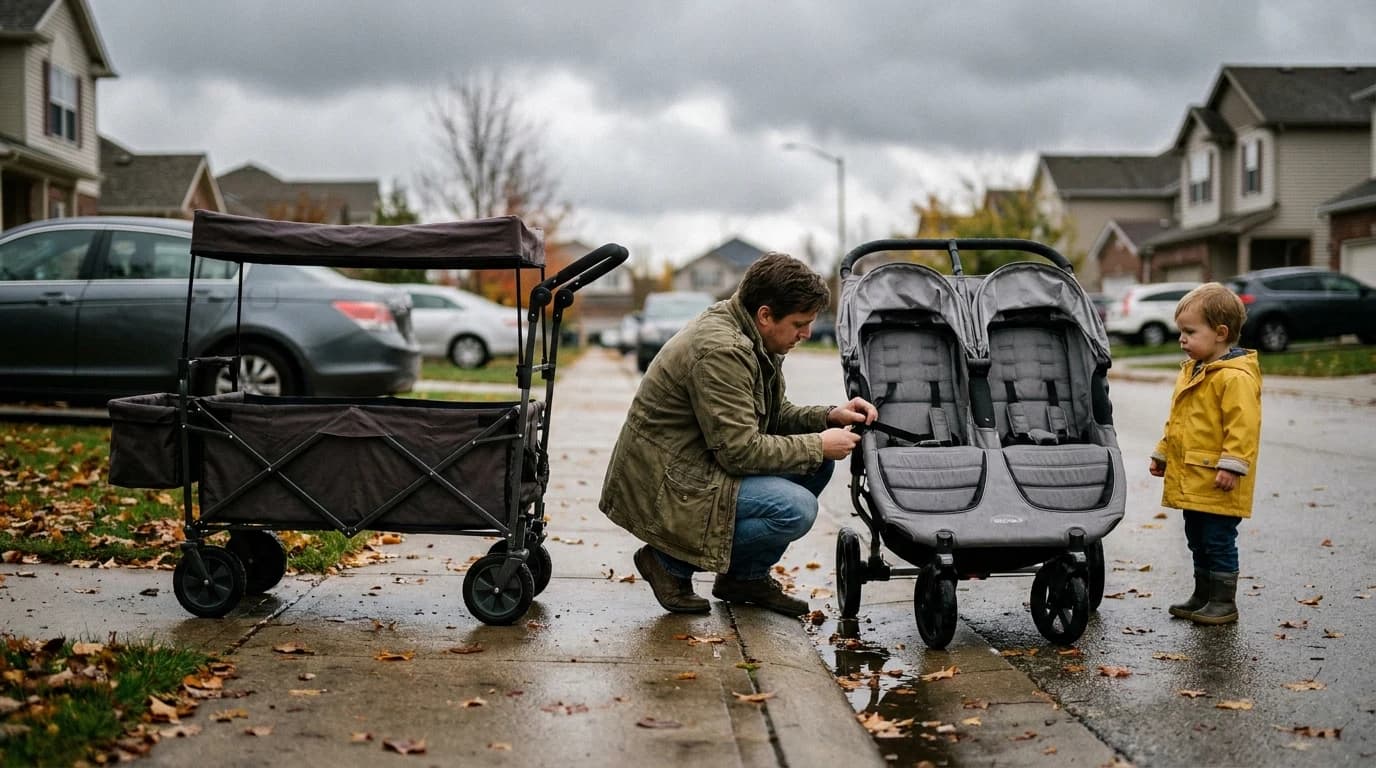
Two families with the same two kids can look at these products and reach opposite correct answers. The deciding variable is not the gear — it is the thirty feet between where the thing is stored and where the kids get loaded into it.
The real question: not "wagon or double stroller," but "what happens between my front door and the sidewalk, every single time I leave?"
Start with the loading problem, not the seating chart
A wagon's genuine advantage: a walking toddler climbs in unaided and sits next to the cooler and the diaper bag. A double stroller makes you buckle each child into a fixed seat, and its basket holds a fraction of a wagon bed. That difference is real, and it is why wagons keep selling.
The cost lands at both ends of the trip. A wagon is bigger folded, heavier to lift, and much harder to collapse one-handed while holding a baby.
A wagon usually earns its keep when:
- You park in a driveway or garage and load at ground level
- Two or more kids who sit up unaided, plus a real cargo haul
- Your surfaces are grass, gravel, sand, or wide paved paths
- A toddler who gets in and out ten times an outing
A wagon usually costs you when:
- You street-park, or carry gear up stairs to an apartment
- Your route has turnstiles, bus ramps, subway stairs, or narrow shop aisles
- You fly more than once or twice a year
- A newborn is riding and cannot yet sit unaided
Where you park decides more than the spec sheet

If your car sits in a driveway ten steps from the door, a wagon is close to free: roll it out, load at waist height, roll it back. Street-park in a city and everything inverts — now it gets folded on the sidewalk, carried, and lifted into a trunk that may already hold a car seat base, every trip.
The same split applies at home. A double stroller usually stands folded in a coat closet; a four-seat wagon often cannot, so it ends up living in the car and stops being the thing you grab for a quick walk.
The comparison, minus the marketing
| Stroller wagon | Double stroller | |
|---|---|---|
| Cargo | Whole open bed, shared with the kids | Under-seat basket only |
| Kid boarding | Walking toddler climbs in unassisted | Adult buckles each child in |
| Newborn use | Bassinet or car-seat adapter, sold separately | Recline or bassinet built in |
| Folded footprint | Large; often lives in the car | Usually closet-storable |
| Narrow aisles | Poor at side-by-side widths | Tandems clear standard doorways |
| Theme parks | Prohibited at Walt Disney World | Permitted within posted size limits |
| Air travel | Rarely gate-check friendly | Commonly gate-checked |
| Best surface | Grass, gravel, sand, wide paths | Sidewalks, shops, transit, airports |
Some venues will simply turn a wagon away
This one catches families after the money is spent. Walt Disney World's park rules prohibit strollers greater than 31 inches wide and 52 inches long, then go further: stroller wagons are also prohibited, and wagons are prohibited at any theme park or water park. There is no size you can buy your way under — the category itself is excluded.
Before you buy: check the rules page for the venues you visit most. Parks, zoos, stadiums and museums each publish a device policy, and a wagon is the device most often named.
Airlines are the second trap. Carriers publish their own gate-check limits, so verify yours. As a proxy, the J.L. Childress gate-check stroller bag → measures 46 by 20 by 13 inches and is described by its maker as fitting most single and some double strollers. Four-seat wagons do not fold near that envelope.
Newborns: wagons can do it, but read the fine print
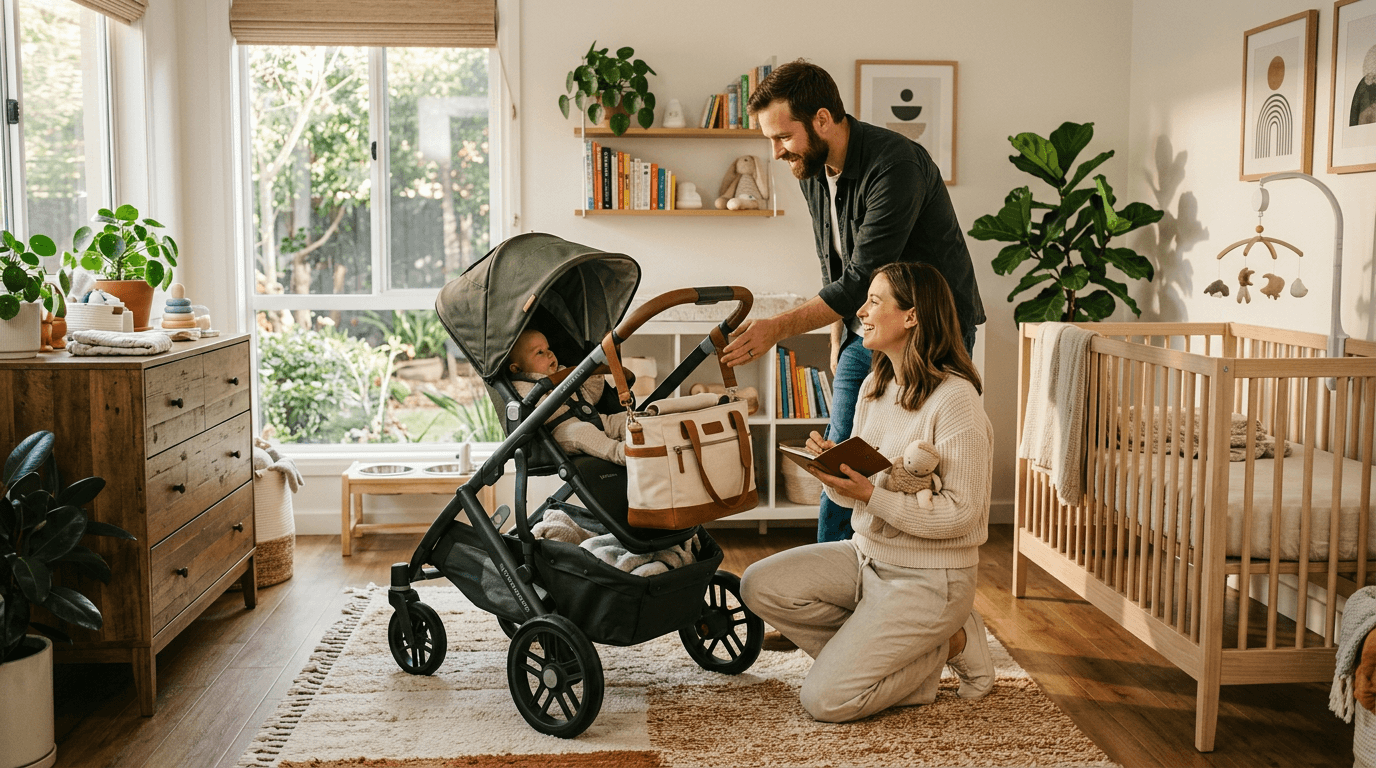
The blanket claim that wagons cannot take a newborn is wrong, and worth correcting. Veer states its Cruisers accommodate ages 0–5+ and that most major brands of infant car seat attach using an Infant Car Seat Adapter, sold separately. WonderFold sells a Lounger rated to 20 pounds that converts the wagon bed into a newborn space, listed at $89.95 for its W2, W4 and M1 wagons.
Note what both share: the newborn capability is an accessory, priced separately, tied to a model list. A comparable double stroller ships with a recline or bassinet in the box. So the honest framing is not "wagons exclude newborns" — it is that wagons make the newborn phase a second purchase and a second compatibility check.
Harness type is not standardized across this category
Strollers sold in the US fall under a mandatory federal rule: CPSCCPSCThe US federal agency that issues product recalls and enforces safety standards on cribs, strollers, car seats, and other juvenile products.'s 16 CFR part 1227 incorporates ASTM F833, and that rule defines a stroller as a wheeled vehicle powered by a person pushing on a handle. A wagon you pull does not obviously sit inside that definition, which is why wagon makers state compliance explicitly.
They also state different things. WonderFold says all its stroller wagons are third-party certified to ASTM F833-21 and use 5-point harnesses. Veer says Cruisers include a parking brake and 3-point harnesses, and meet ASTM, Canadian SOR and EN 1888.2 standards. Three-point and five-point are not the same restraint. Because this varies by model, read the manual and certificate for the exact wagon you are considering — not anything written about wagons generally.
If the answer turns out to be "double stroller"
For two kids side by side on rough ground, the Baby Jogger City Mini GT2 Double Stroller is the closest a stroller gets to a wagon's terrain tolerance. The Baby Jogger City Select 2 suits staggered ages — single to double, and it takes an infant car seat. If one kid rides and the older walks, the Baby Jogger City Mini GT2 covers the same ground for less. If the real problem is car-to-sidewalk transitions, the Doona Infant Car Seat & Stroller solves that instead.
Is a stroller wagon safer than a double stroller?
Neither is safer as a category. Strollers fall under a mandatory federal standard, wagon makers state compliance individually, and published harness types differ by brand. Compare the certificate and harness of the two exact models.
Can you gate-check a stroller wagon?
Often no. Most four-seat wagons exceed the folded envelope a standard gate-check bag is built around, and limits vary by carrier. If you fly more than occasionally, confirm your airline's published policy first.
Do I need a double stroller if my older kid walks?
Usually not. A single all-terrain stroller plus a ride-on board covers a walking older sibling for less money and far less bulk. Buy for the trips where the older child stops walking, not the average day.
Research Sources
- Walt Disney World — Park Rules (stroller size limits; stroller wagons and wagons prohibited)
- U.S. CPSC — Carriages and Strollers business guidance (16 CFR part 1227, ASTM F833)
- Veer — Is the Veer Cruiser safe? (3-point harnesses, parking brake, ASTM / SOR / EN 1888.2)
- Veer — What ages can ride in the Veer Cruiser? (ages 0–5+, infant car seat adapter sold separately)
- WonderFold — Stroller wagons certified to ASTM F833-21, 5-point harnesses
- WonderFold — Lounger newborn accessory (20 lb capacity; W2, W4, M1)
Hilly Shore Inc.
Editorial teamIndependent product research team behind Cribworthy. Reviews are grounded in published AAP / CDC / NHTSA / CPSC pediatric guidance, JPMA / GREENGUARD GOLD / OEKO-TEX certification verification, and aggregated buyer sentiment.
115 products reviewed · 20 categories covered · cites AAP, CDC, NHTSA, CPSC, FDA, ACOG.
Safety claims are verified against published pediatric guidelines and CPSC databases. See our editorial standards.