Best Baby Food Pouches 2026: Healthiest Store-Bought Options Reviewed
Our Verdict
The Plum Organics Stage 2 Pouches ($1.50–$2.50 each) is our top pick (~$3). Plum Organics Stage 2 Pouches ($1.50–$2.50 each) [Plum Organics](https://www.
💬 Real Talk from Parents
The 'best' bottle is whichever one your baby actually accepts.
You'll develop strong opinions about bottle nipple flow rates, and that's okay.
Your baby will reject the $40 bottle and love the $3 one. Every time.
Formula is not a failure. Fed is genuinely best.
“Try at least 3 different bottles before deciding your baby 'won't take a bottle.' Each one has a different flow and shape. Babies are picky.”
As an Amazon Associate I earn from qualifying purchases. Product prices and availability are subject to change.
Best Baby Food Pouches 2026: Healthiest Store-Bought Options Reviewed
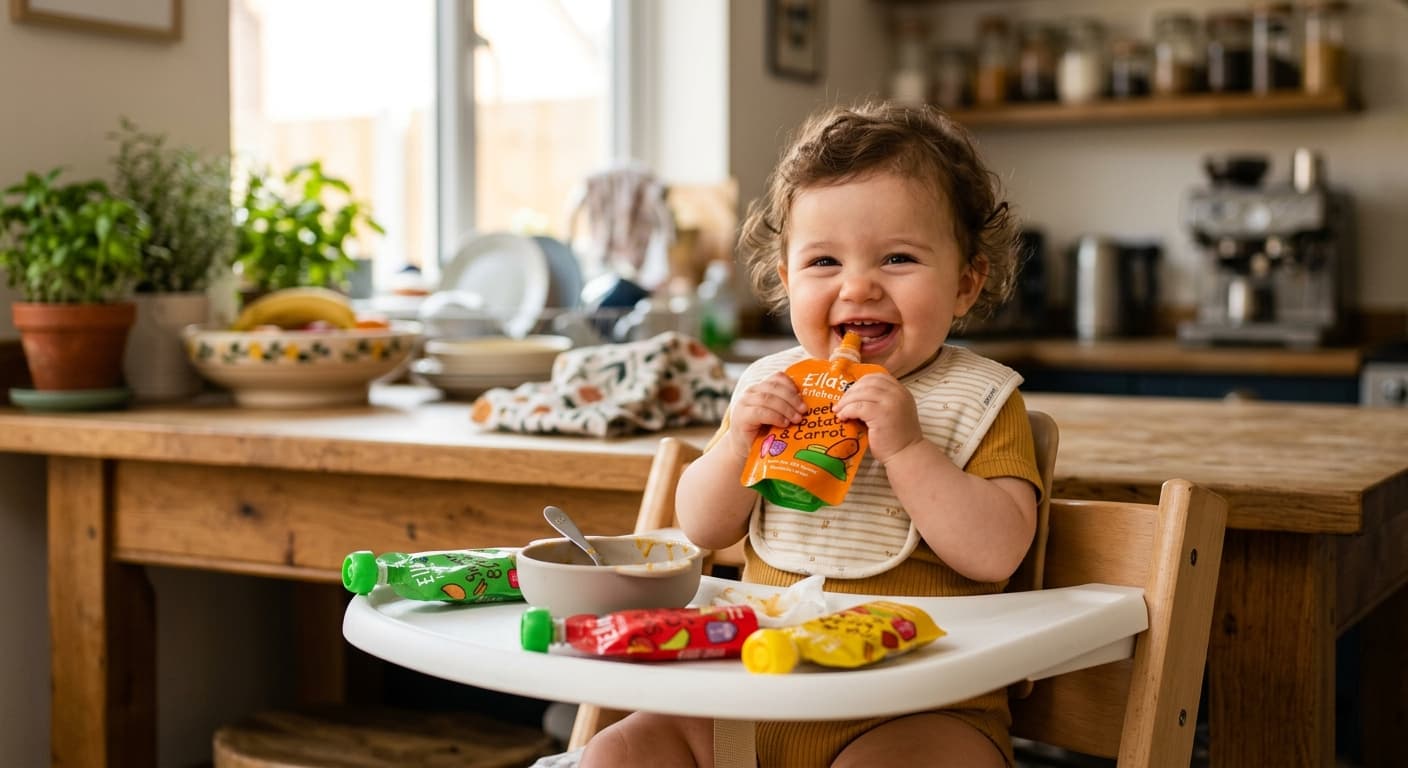
Baby food pouches are one of parenting's great conveniences — portable, mess-free, and accepted by most babies from 6 months onward. They're also one of those categories where the quality range is enormous. Some pouches are essentially fruit puree with very little nutritional density; others are genuinely well-formulated with vegetables, proteins, and healthy fats that support development.
Here's how to read pouch labels and which brands we actually recommend.
What to Look For on Pouch Labels
Vegetables listed before fruit. Fruit-dominant pouches taste great to babies but provide mostly sugar and little of the vegetables that establish diverse palate acceptance. Look for pouches where vegetables are listed first or equal.
No added sugar. "No added sugar" means any sweetness comes from the fruit/vegetable content itself. Some pouches add fruit juice concentrate as a sweetener — this counts as added sugar even when it doesn't say "sugar" on the label.
Some fat and/or protein. Pure fruit and vegetable purees are mostly carbohydrates. Pouches with added avocado, beans, lentils, chicken, or olive oil provide fat and protein that support brain development and sustained satiety.
Organic certification. Not essential, but the EWG's Dirty Dozen list includes several baby food ingredients. USDA organic certification eliminates pesticide concerns on those items.
Our Top Picks
Best Overall: Plum Organics Stage 2 Pouches ($1.50–$2.50 each)
Plum Organics makes the most consistently well-formulated pouches across their Stage 2 line. Standout flavors include Spinach, Peas & Pear (vegetables first, meaningful iron content) and Mango, Banana & Pumpkin (vitamin A from pumpkin, not just sugar). The B Corp certification reflects genuine commitment to ingredient quality.
Best for: Stage 2 (6+ months), daily rotation feeding
Pros: Vegetables prominently included, organic, B Corp certified, wide flavor variety
Cons: Slightly more expensive than mainstream brands
Best for Protein: Serenity Kids Pouches ($3–$4 each)
Serenity Kids is the only mainstream baby food pouch brand that makes meat-and-vegetable combinations as their core product — not as an afterthought. Flavors like Grass-Fed Beef & Organic Vegetables and Free-Range Turkey & Organic Butternut Squash provide genuine protein and fat alongside vegetables. These are especially valuable for iron intake in babies who aren't eating much in the way of solid meats yet.
Best for: Protein-focused feeding, iron intake, Stage 2+ babies
Pros: Actual meat protein, high quality fats (avocado oil), very clean ingredients
Cons: Premium price, fewer sweet flavor options (by design)
Best Budget: Gerber Organic 2nd Foods Pouches ($1–$1.50 each)
Gerber Organic provides a reliable baseline at the most accessible price point. Not as creative or vegetable-forward as Plum or Serenity Kids, but organic-certified, widely available, and broadly accepted by most babies. Good for travel, daycare, and supplementing more nutritionally diverse options at home.
Best for: Budget-conscious families, travel and convenience, Stage 2
Pros: Widely available, affordable, organic certified
Cons: More fruit-dominant recipes than competitors, less protein variety
Pouch Comparison
| Brand | Starting Price | Protein? | Organic? | Vegetables First? |
|---|---|---|---|---|
| Plum Organics | $1.50 | Some flavors | Yes | Often |
| Serenity Kids | $3.00 | Core feature | Yes | Yes |
| Gerber Organic | $1.00 | Limited | Yes | Sometimes |
Important Caveats About Pouches
Pouches should supplement, not replace, spoon feeding and texture progression. Babies who eat exclusively from pouches miss the opportunity to develop comfort with varied textures — an important step toward table food acceptance. By 8–9 months, start introducing some of the same pureed foods from a spoon rather than always from a pouch.
Limit to 1–2 pouches per day. Even healthy pouches don't provide the sensory experience of being fed from a bowl, which helps babies recognize hunger and fullness cues better.
Squeeze pouches directly into mouth vs. spoon: Research suggests spooning from a bowl leads to better self-regulation than sucking from a pouch. For younger babies especially, empty the pouch into a bowl and spoon it.
For transitioning to solid foods, see our baby-led weaning guide and BLW first foods guide.
🏆 Bottom Line: Plum Organics for the best balance of nutrition and value. Serenity Kids if you prioritize protein and fat. Gerber Organic for budget-friendly everyday use. All pouches should supplement spoon feeding, not replace it.
Sources
- American Academy of Pediatrics (AAP) — Complementary feeding guidelines for infants. healthychildren.org.
- Mennella JA et al. — "Vegetable and fruit acceptance during infancy." Pediatrics, 2008.
- Environmental Working Group (EWG) — Baby food safety and heavy metals report. ewg.org.
- USDA Agricultural Marketing Service — USDA Organic certification standards.
- Pediatric Nutrition, Boston Children's Hospital — Introduction of solid foods and pouch feeding. childrenshospital.org.
Hilly Shore Labs
Editorial teamIndependent product research team behind Cribworthy. Reviews are grounded in published AAP / CDC / NHTSA / CPSC pediatric guidance, JPMA / GREENGUARD GOLD / OEKO-TEX certification verification, and aggregated buyer sentiment.
115 products reviewed · 20 categories covered · cites AAP, CDC, NHTSA, CPSC, FDA, ACOG.
Safety claims are verified against published pediatric guidelines and CPSC databases. See our editorial standards.