The Ultimate Newborn Essentials Checklist: What You Actually Need
Quick Answer
Seven things cover the first 48 hours: a firm, flat sleep space; an installed car seat; diapers and wipes; a feeding method; five to seven sleepers and onesies; three or four swaddles; and burp cloths. Nothing goes into that sleep space except a fitted sheet. Monitor, tub, sound machine, and play mat can all be bought during the first month as you need them.
Our Verdict
Under-buying is the cheap mistake and over-buying the expensive one, so start short and restock from your couch. Spend where failure matters and economize on clothing your baby outgrows in six weeks. What people skip and then want at 3 a.m. is a second set of crib sheets and a spare pack of burp cloths — buy doubles of the boring things.
As an Amazon Associate I earn from qualifying purchases. Product prices and availability are subject to change.
The Ultimate Newborn Essentials Checklist: What You Actually Need
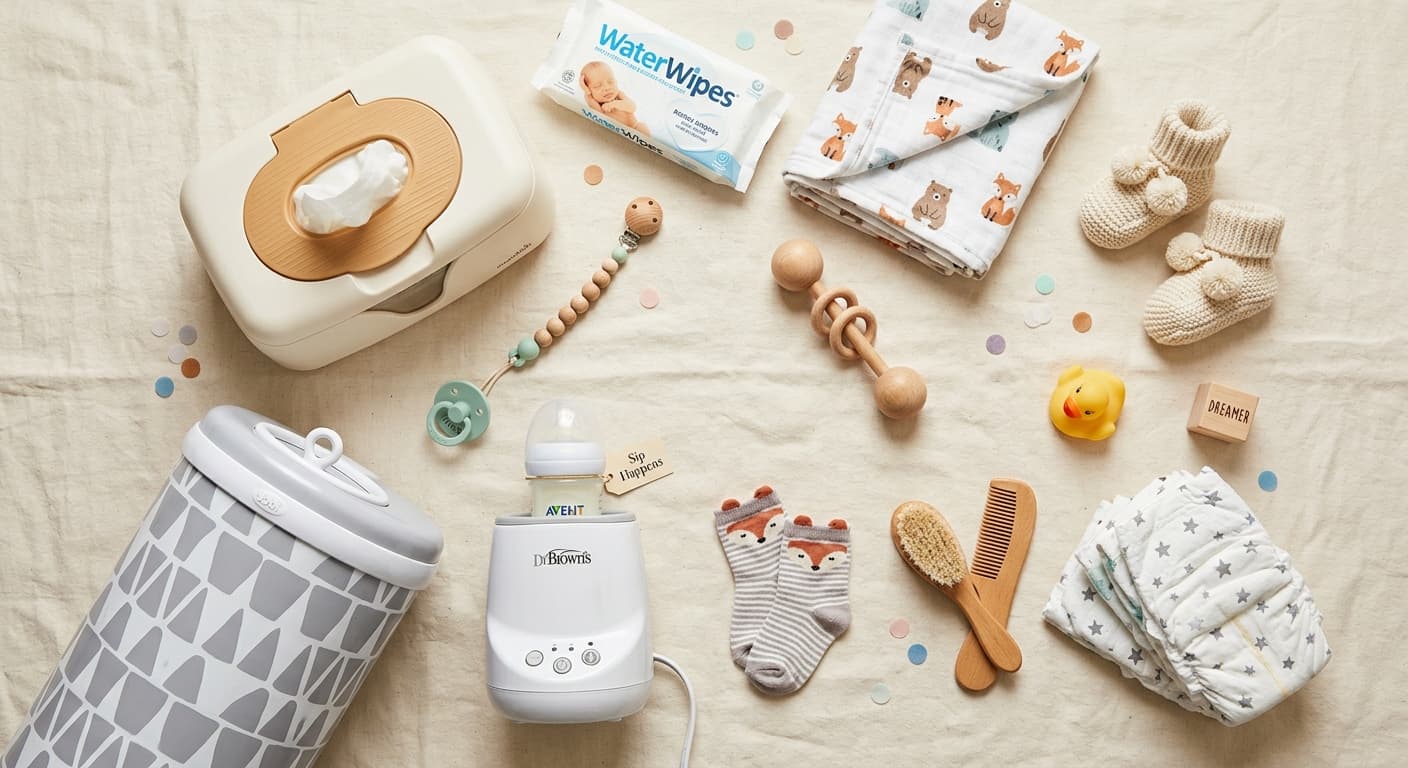
For the first 48 hours at home, you need exactly seven things: a safe sleep space (crib or bassinet with firm mattress), an installed car seat, diapers and wipes, a way to feed baby, 5-7 sleepers and onesies, 3-4 swaddles, and burp cloths. That's it. Everything else can be bought as needed in the first month. The AAP's safe sleep guidelines emphasize that the sleep surface should be firm, flat, and completely bare — no blankets, pillows, or bumpers — which is the single most important safety step you can take before bringing baby home.
What do you need for the first 48 hours with a newborn?
When you come home from the hospital, you need surprisingly little. Here's what should be ready and waiting:
Non-negotiable items
- A safe place to sleep: A crib or bassinet with a firm mattress and fitted sheet. Nothing else in the sleep space. See our safe sleep guide.
- A car seat: Legally required to leave the hospital. Have it installed and checked before your due date. Read our car seat guide.
- Diapers and wipes: Newborn size and size 1. Some bigger babies skip newborn size entirely. See what size diapers to stock up on before baby for pack counts.
- A way to feed baby: Whether that's your body, bottles and formula, or both. Don't stockpile bottles until you know what baby likes.
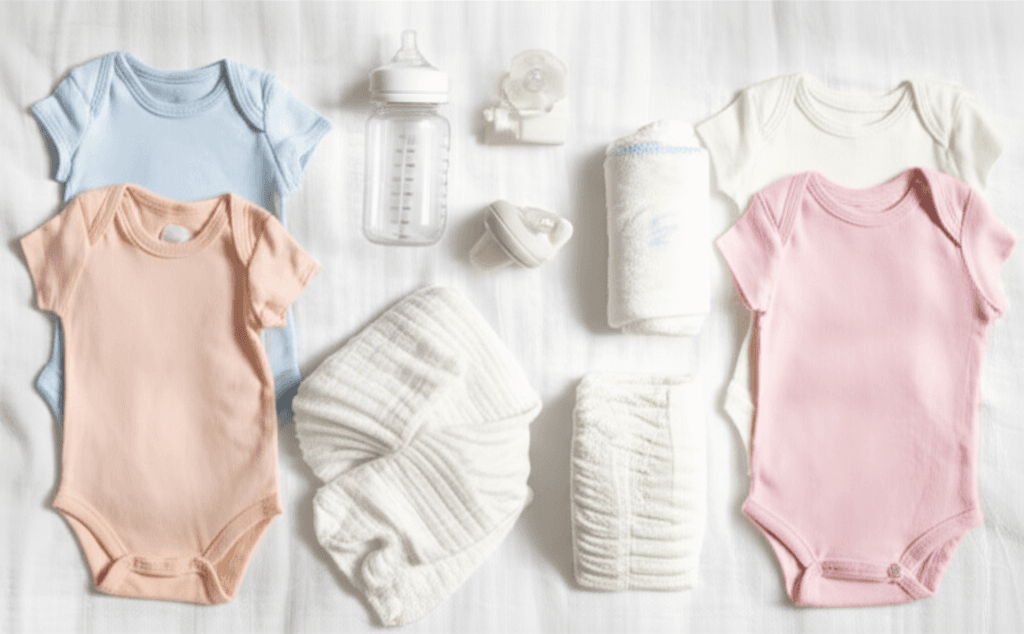
- Basic clothing: 5-7 onesies, 5-7 footed sleepers, a hat, and socks. Newborns live in sleepers. Skip the cute outfits for now.
- Swaddles: 3-4 swaddle blankets or swaddle wraps. The Love to Dream Swaddle UP and Halo SleepSack swaddle are parent favorites.
- Burp cloths: Get at least 10. You'll go through more than you expect. Cloth diapers make excellent burp cloths.
The AAP's 2022 updated safe sleep policy recommends that infants sleep on a firm, flat surface in a safety-approved crib or bassinet, in the parents' room (but not in the parents' bed) for at least the first 6 months. This room-sharing arrangement can reduce the risk of SIDS by as much as 50%, according to the AAP.
That's genuinely it
Everything else can be ordered online and arrive within a day or two if you discover you need it. Amazon Prime and Target same-day delivery exist for a reason. Don't stress about having every item in advance.
What should you add during the first week?
As you settle into life with a newborn, these items quickly become important:
Feeding supplies
If breastfeeding: a nursing pillow (Boppy or My Brest Friend), nursing pads, nipple cream (Lansinoh lanolin), and a Haakaa silicone pump to catch letdown. If you're pumping, your breast pump — check insurance coverage, as most plans cover one. Read our feeding gear guide for specific picks.
The WHO and AAP both recommend exclusive breastfeeding for the first 6 months when possible. However, a 2023 CDC Breastfeeding Report Card found that while 83.2% of U.S. mothers initiate breastfeeding, only 24.9% exclusively breastfeed through 6 months. Having both breastfeeding and bottle-feeding supplies ready ensures you're prepared regardless of how feeding evolves.
If formula feeding: 4-6 bottles, formula, a bottle brush, and a drying rack. Start with Dr. Brown's Options+ or Comotomo, but buy a variety to test baby's preference before committing to one brand.
Diapering supplies
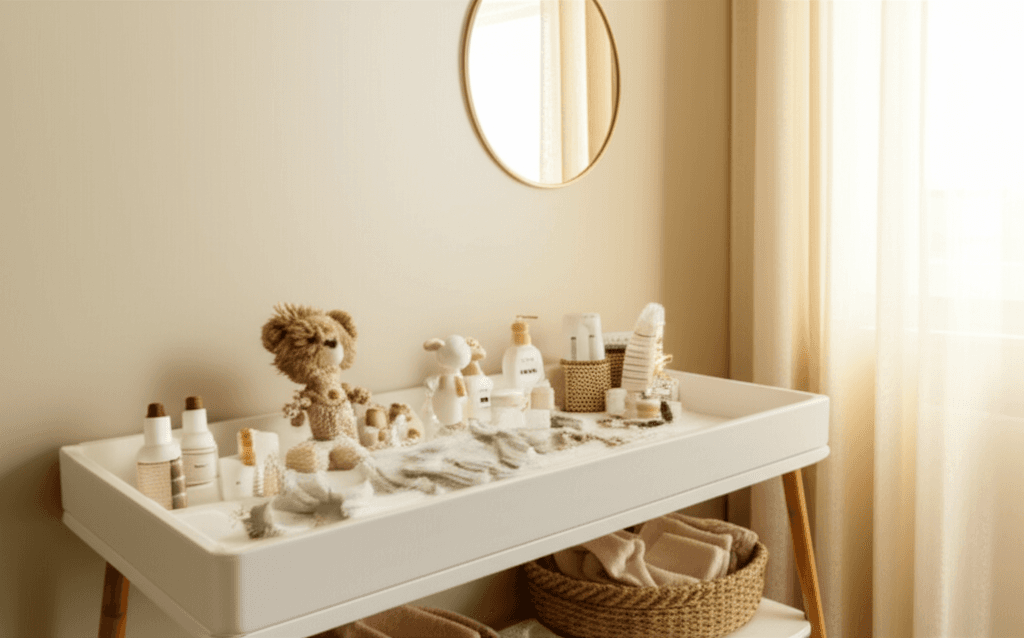
A changing pad (just a contoured foam pad on a dresser works great), diaper cream (Aquaphor or Desitin), and a dedicated spot for diaper changes. A diaper pail like the Ubbi keeps smells contained.
Comfort items
A baby carrier for hands-free soothing — the Ergobaby Omni 360 or a stretchy wrap for newborn cuddles. A bouncer like the BabyBjörn Bouncer Bliss for a safe place to set baby down (or a floor lounger for supervised awake time). A pacifier if baby is interested (many breastfed babies prefer to wait a few weeks).
What do you need by the end of the first month?
Monitor
A baby monitor becomes important when baby starts sleeping in their own room or when you want to check on them from another part of the house. The Nanit Pro is our top pick.
The AAP does not recommend consumer health-monitoring devices (like wearable oxygen monitors) as a strategy to prevent SIDS, as these products have not been shown to reduce risk. A standard video or audio monitor for supervision is sufficient. The CPSC recommends keeping monitor cords at least 3 feet from the crib to prevent strangulation hazards.
Bath supplies
Babies only need sponge baths until the umbilical cord stump falls off (1-3 weeks). After that, get a baby tub, gentle wash, and soft towels. See our bath time guide.
Sound machine
A sound machine for the nursery. White noise helps babies sleep and masks household sounds. The Hatch Rest is our recommendation.
Tummy time gear
A simple play mat with a few dangling toys encourages tummy time, which is crucial for motor development. Start with short sessions (2-3 minutes) several times a day.
What baby items can you skip in the beginning?
Save these for later
- High chair: Not needed until 5-6 months when starting solids
- Stroller with full features: An infant car seat frame or carrier works for the first few months
- Toys: Newborns can barely see past 12 inches. A few high-contrast cards are sufficient
- Baby shoes: Not until walking
- Nursery decor: Baby won't notice or care
- Wipe warmer: Most babies don't care about cold wipes (do you need a baby wipe warmer?)
Items that are marketing more than necessity
- Dedicated diaper bag dispenser — just throw a roll in your diaper bag
- Special laundry detergent — most regular free-and-clear detergents are fine
- Nursery air purifier — unless you have specific air quality concerns
- Baby water — regular water is fine for mixing formula
Where should you spend more and where should you save?
Where to spend more
- Car seat: Safety is worth investing in
- Crib mattress: Firmness and quality matter for safe sleep
- Carrier: A comfortable carrier saves your back and sanity
- Breast pump: Quality affects output and comfort
Where to save
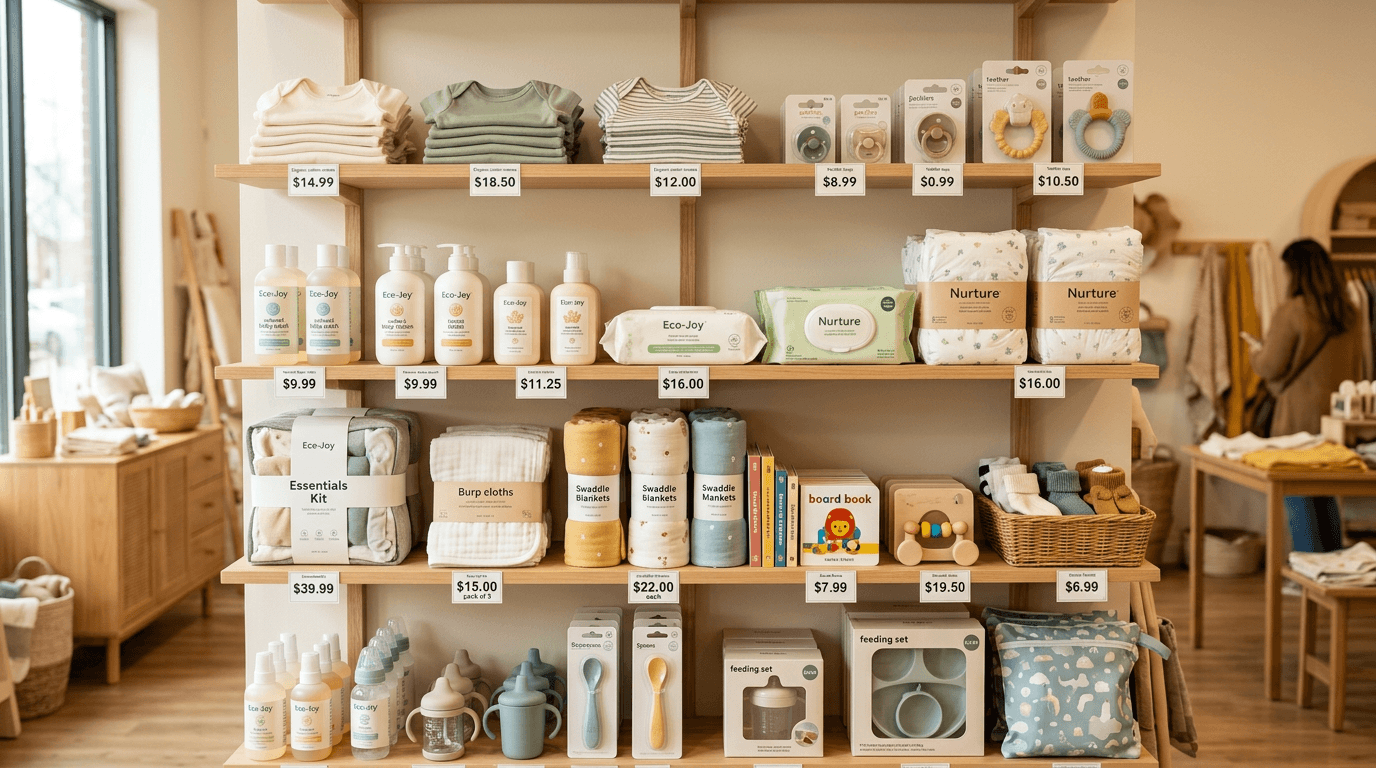
- Clothing: Babies outgrow everything in weeks. Buy secondhand or accept hand-me-downs
- Blankets and swaddles: Target and Amazon basics work great
- Burp cloths: Cloth diapers from Amazon are $1 each and superior to fancy burp cloths
- Diaper pail bags: Regular 13-gallon kitchen bags work in bag-type pails like the Ubbi (refill costs compared)
What non-product essentials do new parents need?
Not everything you need is a physical product. These matter too:
Meal support
Arrange for meal deliveries, meal trains, or freezer meals before baby arrives. You will not want to cook, and you need to eat well.
Help
Say yes to every offer of help. Grandma wants to come fold laundry? Yes. Neighbor wants to drop off food? Absolutely. Friend wants to hold baby while you shower? Please and thank you.
Realistic expectations
The first two weeks are survival mode. The goal is to keep baby fed, safe, and loved while you recover. Everything else — thank-you notes, a tidy house, returning texts promptly — can wait.
What's the minimum a newborn actually needs?
You need far less than the baby industry suggests. Start with the basics, see what your specific baby needs, and add from there. Every baby is different — the product your friend swears by might not work for your child, and that's normal. For detailed product recommendations in every category, explore our full category guides across the site. Trust your instincts, ask for help, and remember that the best baby gear in the world is no substitute for your presence and love.
Further Reading
💬 Real Talk from Parents
Buy less than you think you need. Babies mostly need you.
The baby gear you think you need and the gear you actually use are two very different lists.
The best baby gear advice I got: ask parents of 2+ kids what they'd buy again. First-time parents buy everything. Second-timers know what actually matters.
Paraphrased community consensus — not a direct quote.
You need everything on the registry checklist before baby arrives.
Most babies need surprisingly little: a safe sleep space, car seat, diapers, feeding supplies, and a few outfits. Everything else can be bought as needed after you learn your baby's preferences.
Your next step
Stock up on the essentials.
Research Sources
Hilly Shore Inc.
Editorial teamIndependent product research team behind Cribworthy. Reviews are grounded in published AAP / CDC / NHTSA / CPSC pediatric guidance, JPMA / GREENGUARD GOLD / OEKO-TEX certification verification, and aggregated buyer sentiment.
124 products reviewed · 22 categories covered · cites AAP, CDC, NHTSA, CPSC, FDA, ACOG.
Safety claims are verified against published pediatric guidelines and CPSC databases. See our editorial standards.