Best Baby Humidifiers 2026: Safe Picks for Nurseries and Sick Days
As an Amazon Associate I earn from qualifying purchases. Product prices and availability are subject to change.
Best Baby Humidifiers 2026: Safe Picks for Nurseries and Sick Days
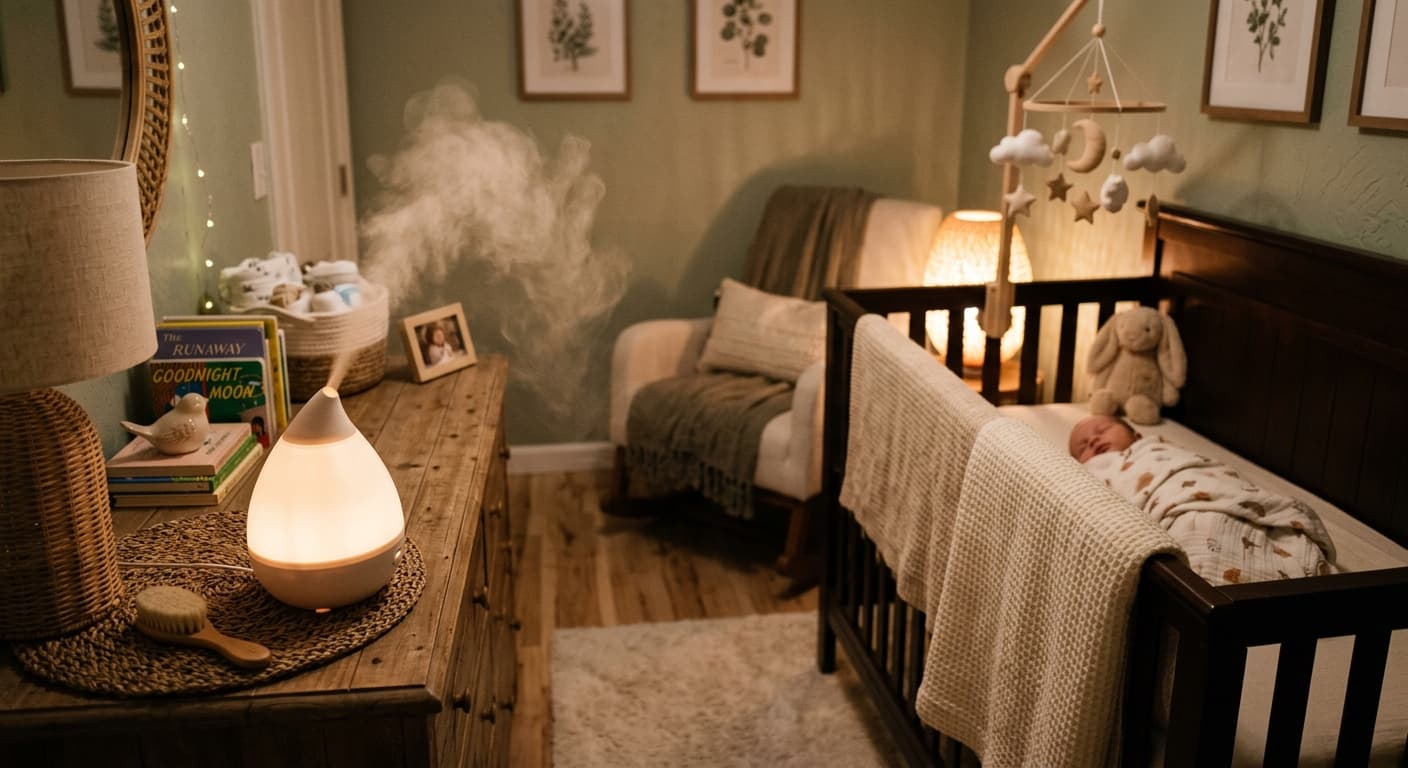
When a baby has a stuffy nose, they can't blow it — they just suffer (and so does everyone else at 3am). A good humidifier adds moisture to dry nursery air, which loosens congestion, soothes dry skin, and can make a meaningful difference on sick nights. Humidifiers are also one of the most pediatrician-recommended additions to a newborn nursery.
Here's what actually matters when choosing one — and which ones we recommend.
Cool Mist vs. Warm Mist: The Answer Is Clear
The American Academy of Pediatrics (AAP) recommends cool mist humidifiers for babies and children without exception. Warm mist humidifiers use heating elements that can cause burns if a child gets too close or tips the unit over. Cool mist produces the same humidity benefit with none of the burn risk.
Within cool mist, you'll encounter two types:
- Ultrasonic cool mist: Vibrates water into a fine mist. Very quiet, energy-efficient, but can disperse white mineral dust if you use hard tap water (use distilled water to prevent this).
- Evaporative cool mist: Uses a fan to blow air through a wet wick. Naturally filters some minerals, slightly louder than ultrasonic.
For most nurseries, ultrasonic is preferred for the silence — crying baby + humidifier fan noise is not a winning combination.
Our Top Picks
Best Overall: Crane Drop Ultrasonic Cool Mist Humidifier ($30–$40)
The Crane Drop Humidifier is the most popular baby humidifier on the market and earns it. The 1-gallon tank runs up to 24 hours on a single fill, the teardrop design is compact and nursery-friendly, and it operates nearly silently. The adjustable mist output goes from a barely-there whisper to full output for seriously stuffy situations.
It comes apart for cleaning easily — important because humidifiers that are hard to clean grow mold and bacteria faster than you'd want near a baby.
Best for: Most nurseries, daily use, newborns through toddlers
Pros: Whisper quiet, 24-hour runtime, easy to clean, affordable
Cons: Uses tap water → can produce white mineral dust; use distilled water
Best for Sick Days: Frida Baby 3-in-1 Humidifier, Diffuser & Nightlight ($50–$60)
When the baby is sick and every tool matters, Frida Baby's 3-in-1 combines a cool mist humidifier with an essential oil diffuser (for baby-safe eucalyptus or lavender) and a soft nightlight in one unit. The 0.9-gallon tank runs 12 hours, and the combination of humidity plus aromatherapy is noticeably effective for nighttime congestion.
Best for: Sick days, multi-function nursery use
Pros: 3-in-1 functionality, soft nightlight reduces night wake disruption, diffuser for congestion relief
Cons: Shorter runtime than Crane, slightly more to clean
Best Budget: Pure Enrichment MistAire Ultrasonic Humidifier ($25–$30)
The Pure Enrichment MistAire is the most affordable option that doesn't compromise on the essentials: quiet operation, 1.5L tank for 16-hour runtime, optional nightlight, and auto shut-off. It's not as polished as the Crane, but for the price it performs well.
Best for: Budget-conscious families, backup nursery humidifier
Pros: Affordable, quiet, auto shut-off, nightlight included
Cons: Smaller tank than Crane, less refined design
Humidifier Comparison
| Humidifier | Tank Size | Runtime | Price |
|---|---|---|---|
| Crane Drop | 1 gallon | 24 hrs | $30–$40 |
| Frida Baby 3-in-1 | 0.9 gallon | 12 hrs | $50–$60 |
| Pure Enrichment MistAire | 1.5L | 16 hrs | $25–$30 |
Cleaning — The Most Important Thing You'll Do
An uncleaned humidifier becomes a mold and bacteria dispersal device. Clean your baby's humidifier every 3 days:
- Empty the water tank completely (never let water sit for more than 24 hours)
- Wipe the tank interior with a white vinegar solution (1:1 with water) — vinegar kills mineral buildup and bacteria
- Rinse thoroughly
- Air dry completely before refilling
Use distilled or filtered water if you have hard tap water — this eliminates white mineral dust and reduces cleaning frequency.
What Humidity Level Is Safe?
The AAP recommends nursery humidity between 40–60%. Below 40% and the air is too dry; above 60% creates conditions for mold growth on walls and furniture. A basic hygrometer (humidity gauge, $8–$12) lets you monitor precisely.
For other nursery health and sleep products, see our best sleep essentials guide and best white noise machines for babies.
🏆 Bottom Line: The Crane Drop is the right humidifier for most nurseries — quiet, long-running, and easy to clean. Add the Frida Baby 3-in-1 for sick days when you want diffuser support too. Clean every 3 days, use distilled water, and keep humidity at 40–60%.
Sources
- American Academy of Pediatrics (AAP) — Humidifier recommendations for infants. healthychildren.org.
- CDC — Mold and humidifier safety guidelines. cdc.gov.
- Crane USA — Drop humidifier specifications. craneusa.com.
- Consumer Product Safety Commission (CPSC) — Humidifier safety standards. cpsc.gov.
- Tufts Medical Center — Pediatric respiratory health and humidity. tuftsmedicalcenter.org.
Lloyd D'Silva
Founder & EditorNew parent and product researcher. Every Cribworthy recommendation is cross-referenced with AAP (American Academy of Pediatrics) guidelines, CPSC safety data, and real parent experiences from thousands of verified reviews.
Safety claims are verified against published pediatric guidelines and CPSC databases. See our research methodology.