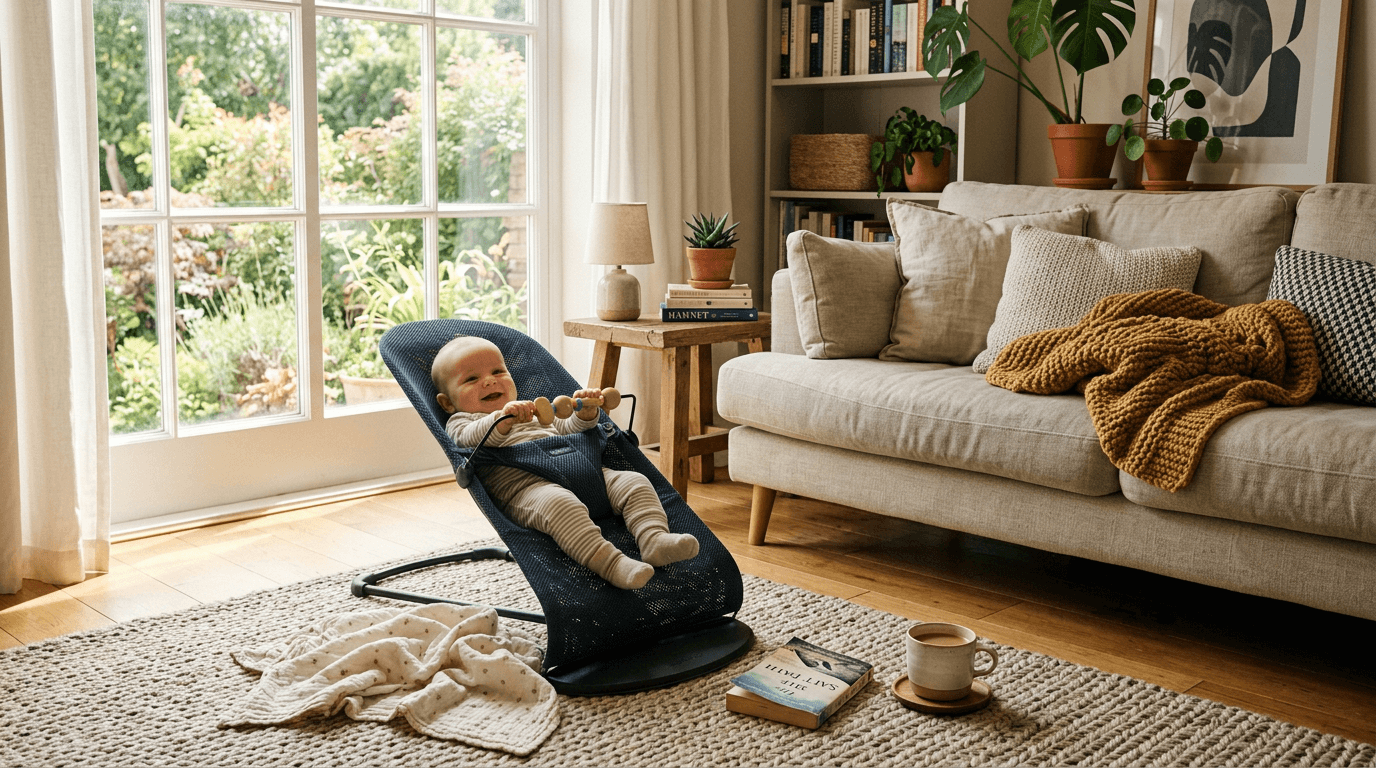
How Long Can a Baby Be in a Bouncer? Safe Time Limits by Age
Quick Answer
Keep each bouncer session to roughly 20 or 30 minutes and under about two hours total across a day, always awake and supervised. Most families use one from a few weeks old until around six months, and it retires the moment your child can sit unassisted or reaches the stated weight ceiling. A bouncer is never a sleep surface; move a sleeping baby to a flat crib.
Our Verdict
Keep the bouncer if you need somewhere safe to set your child down during the first four months, and know that a forty-dollar seat does that job as well as a two-hundred-dollar one. Swap to a floor mat once rolling and pushing up begin. Refuse any model advertised for overnight rest, and retire yours entirely at the first real sign of sitting.
#1 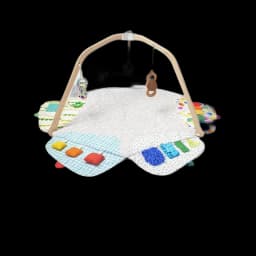 Lovevery The Play Gym Lovevery The Play Gym4.8 | #2 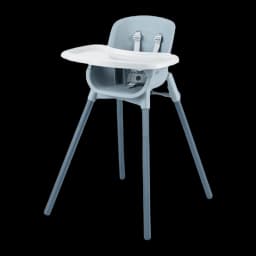 Chicco Zest 4-in-1 High Chair Chicco Zest 4-in-1 High Chair4.4 | #3  Tushbaby Hip Carrier Tushbaby Hip Carrier4.6 | |
|---|---|---|---|
| Verdict | Floor time that grows from newborn to toddler — the bouncer's real successor | For when solids start — converts to a booster so it outlasts the high-chair phase | For the held-all-day months — hands back without a full carrier |
| Price | ~$145Buy on Amazon | ~$69.99Buy on Amazon | ~$63.70Buy on Amazon |
| ageRange | 0 to 12 months | — | — |
| matMaterial | Organic cotton, GOTS-certified components | — | — |
| footprint | 40 x 40 inches | — | — |
| washable | Cover machine washable | — | — |
| includes | Mat, two arches, batting toys, teething ring, high-contrast cards, mirror, play guide | — | — |
| Type | — | 4-in-1 convertible | Hip seat carrier |
| Modes | — | High chair / feeding / toddler / stool | — |
| Fold | — | Compact fold | — |
| Tray | — | Removable, BPA-free | — |
| Cleaning | — | One-piece wipe-clean seat | — |
| Carry Positions | — | — | 1 (hip seat) |
| Weight Range | — | — | 8–45 lbs |
| Carrier Weight | — | — | 1.25 lbs (empty) |
| Lumbar Support | — | — | Yes (memory foam seat) |
| Machine Washable | — | — | Spot clean only |
| Buyer sentiment | Quality Educational Value for money Entertainment Buyers praise quality, educational, value for money and entertainment. Based on 1,634 user mentions | Ease of cleaning Quality Assembly Stability Ease of use Size Buyers praise ease of cleaning, quality, assembly and stability. Some flag ease of use and size. Based on 414 user mentions | Back support Quality Comfort Pockets Buyers praise back support, quality, comfort and pockets. Based on 2,113 user mentions |
| Pros |
|
|
|
| Cons |
|
|
|
* Prices are approximate. Check the linked retailer for current pricing and availability.
Key Takeaways
- ✓Keep the bouncer if you need somewhere safe to set your child down during the first four months, and know that a forty-dollar seat does that job as well as a two-hundred-dollar one. Swap to a floor mat once rolling and pushing up begin. Refuse any model advertised for overnight rest, and retire yours entirely at the first real sign of sitting.
- ✓What You Actually Need vs. What You Don't
💬 Real Talk from Parents
Every parent's 'essential' list is different because every baby is different.
Your second kid will use half the gear and be twice as chill about it.
The baby gear you think you need and the gear you actually use are two very different lists.
The registry checklist is a starting point, not a shopping list.
Buy used when you can, new when safety matters. Car seats new, toys used. Books used, crib mattress new. That's the rule.
Paraphrased community consensus — not a direct quote.
You need everything on the registry checklist before baby arrives.
Most babies need surprisingly little: a safe sleep space, car seat, diapers, feeding supplies, and a few outfits. Everything else can be bought as needed after you learn your baby's preferences.
More expensive baby gear means better quality.
Many mid-range products match or outperform premium ones in safety tests and durability. Price often reflects brand name and aesthetics, not actual performance. Read reviews, not price tags.
As an Amazon Associate I earn from qualifying purchases. Product prices and availability are subject to change.
How Long Do Babies Use Bouncers? A Complete Timeline Guide
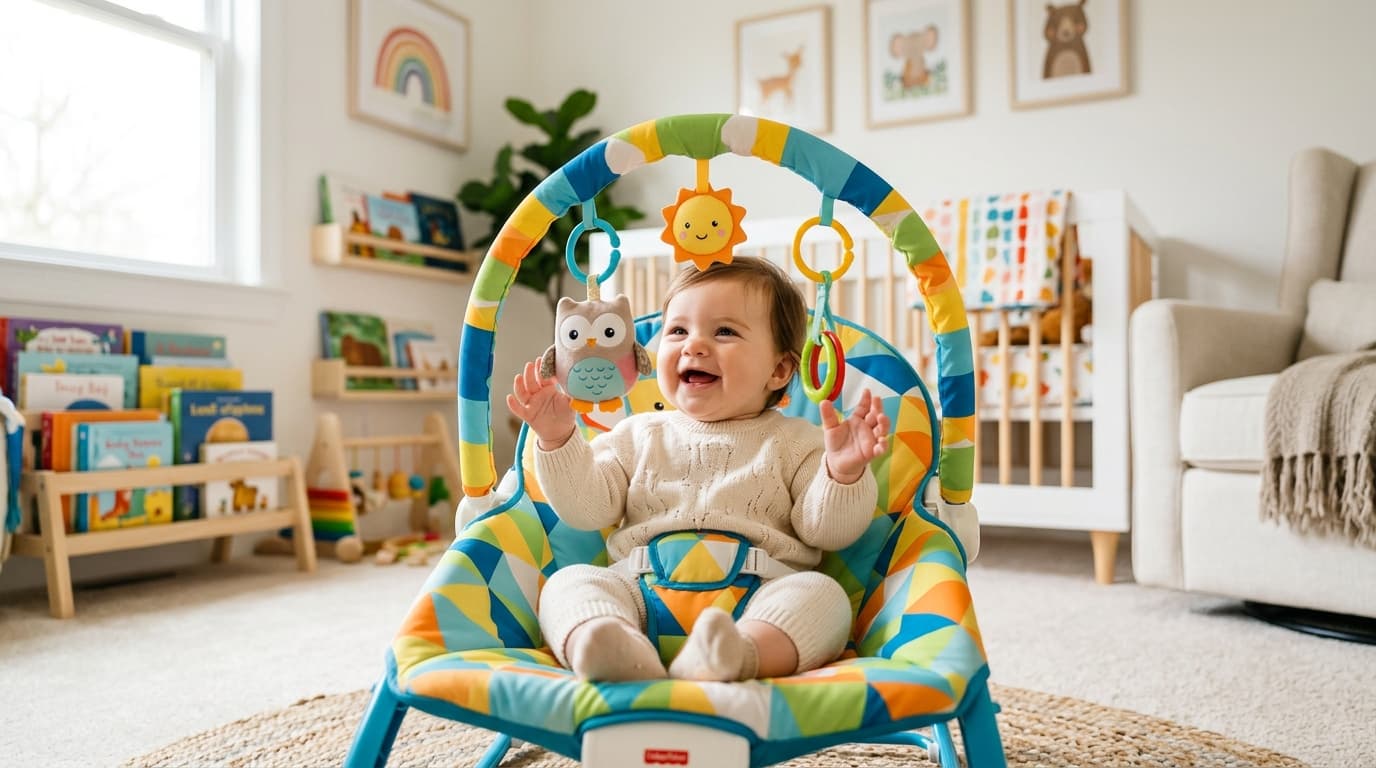
Most babies use bouncers from around 3-4 weeks old until about 6 months, with the peak usage window between 1 and 4 months. The exact endpoint depends on your baby's weight, mobility, and the bouncer's specific weight limit — once a baby can sit up unassisted or exceeds the weight limit, it is time to stop using the bouncer. The AAP emphasizes that bouncers are for supervised, awake time only and should never be used as a sleep surface, as inclined products have been linked to infant suffocation deaths, prompting both the Safe Sleepsafe sleepAAP guideline: baby sleeps Alone (no blankets, pillows, bumpers, or toys), on their Back, in a Crib or bassinet with a firm flat mattress. Room-sharing without bed-sharing is recommended for the first 6-12 months. for Babies Act of 2021 and CPSCCPSCThe US federal agency that issues product recalls and enforces safety standards on cribs, strollers, car seats, and other juvenile products.'s separate infant sleep products rule at 16 CFR Part 1236, which requires products marketed for infant sleep to have a flat sleeping surface.
How long can babies use a bouncer?
Most babies use bouncers from birth (or 3-4 weeks) to about 6 months, with peak usage between 1 and 4 months. The exact endpoint depends on your baby's weight, mobility, and the specific bouncer's limits. Once a baby can sit up unassisted or reaches the weight limit, bouncer time is over.
What is the typical bouncer timeline by age?
| Age | What's happening | Session length |
|---|---|---|
| Newborn to 1 month | Often too early; newborns want to be held | 10-15 minutes |
| 1-3 months | Peak season — alert, but not yet mobile | 15-30 minutes |
| 3-5 months | Stronger, reaching, maybe rolling | 15-20 minutes |
| 5-6+ months | Sitting up or at the weight limit — time to stop | — |
The container rule: pediatric physical therapists advise limiting time in any "container" device — including bouncers, swings, and car seats — to 15-20 minute sessions to avoid flat head syndrome (positional plagiocephaly) and to encourage free movement. The AAP and the WHO recommend that infants get at least 30 minutes of supervised tummy timetummy timeSupervised awake time on the stomach — builds neck, back, and arm strength and prevents flat-head syndrome. Aim for a few minutes several times a day from day one. per day by 3 months of age to support motor development.
Newborn to 1 Month: Getting Started
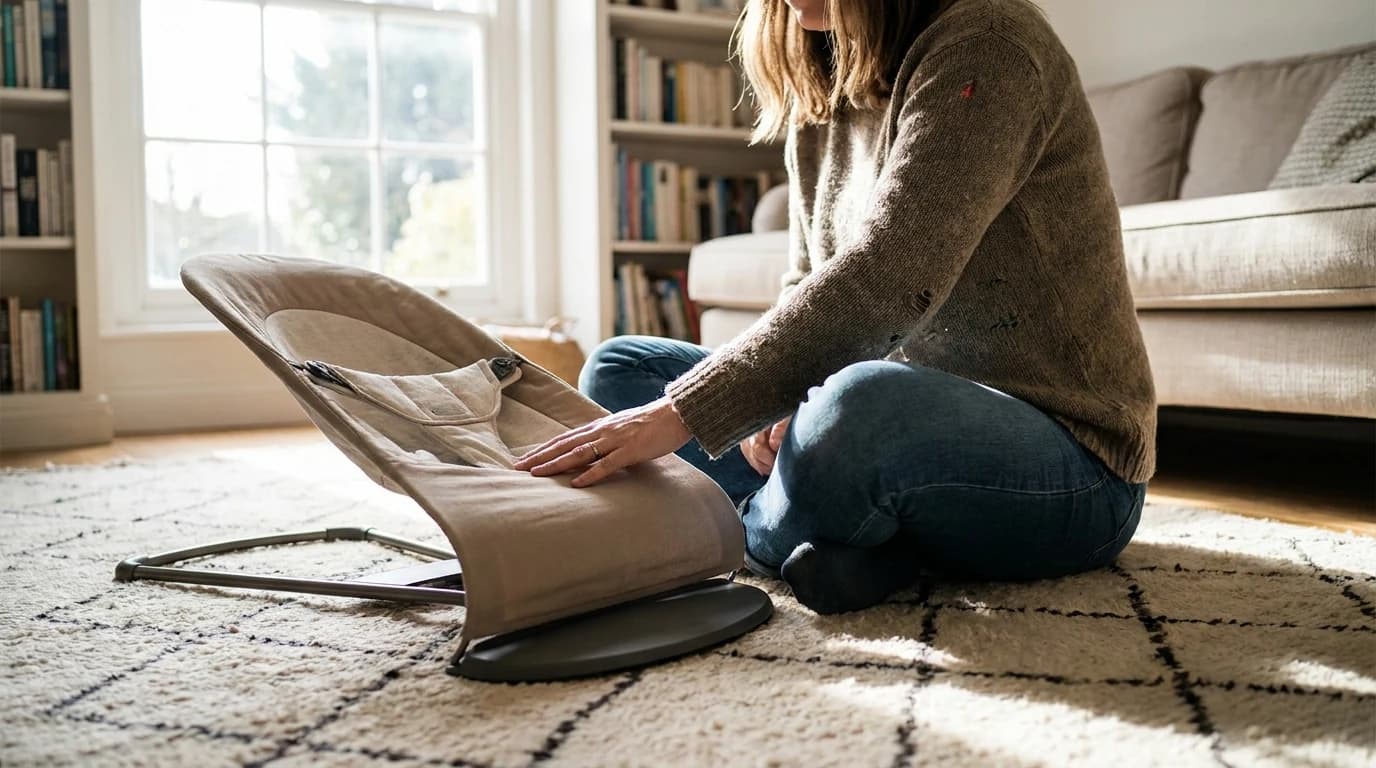
Most bouncers are rated from birth, but many parents find the first 2-3 weeks too early — newborns are often happiest being held, and they haven't yet developed the alertness that makes a bouncer interesting. By 3-4 weeks, many babies start tolerating (and even enjoying) short stretches in a bouncer.
At this stage: Use for 10-15 minute stretches, always supervised. The gentle bounce or vibration can be calming for fussy newborns. Keep the bouncer on the floor (never on a counter, table, or elevated surface).
1-3 Months: Peak Bouncer Season
This is the sweet spot. Baby is alert enough to enjoy the motion and visual stimulation but not yet mobile enough to be unsafe. Many parents report that a good bouncer is their single most-used piece of baby gear during this window.
At this stage: Baby may happily sit in the bouncer for 15-30 minute stretches while you eat, work, or take a shower. The vibration function (if your bouncer has one) is often the secret weapon for fussy periods. The 4moms MamaRoo and BabyBjörn Bouncer Bliss are particularly popular for this age.
3-5 Months: Still Useful, Watch for Signs
Baby is getting stronger and more active. They're reaching for toys, kicking with purpose, and may be starting to roll. The bouncer still works but you'll notice baby getting more restless in it, wanting more freedom of movement.
At this stage: Keep sessions to 15-20 minutes and always supervise. If baby is trying to lean or rock aggressively, it may be time to transition to a play mat or activity center.
5-6+ Months: Transition Time
Once baby can sit independently (or is close to it), most bouncers become either unsafe or simply uninteresting. Baby wants to move, explore, and practice new skills — a bouncer restricts all of that. Many babies will protest being placed in a bouncer at this stage, which is their way of telling you they've graduated.
Weight limits matter too. Most bouncers have a weight limit of 20-25 lbs. Check your specific model's manual. Some babies hit this limit before 6 months.
What are the safety guidelines for baby bouncers?
The AAP and CPSC are clear on bouncer safety:
- Always place on the floor. Never on countertops, tables, beds, or other elevated surfaces. The bouncing motion can move the bouncer to the edge.
- Always use the harness. Even for newborns who "can't go anywhere" — they can slide down or out.
- Never use for sleep. Bouncers are inclined, and inclined sleep surfaces increase the risk of positional asphyxia. If baby falls asleep, move them to a firm, flat surface like their crib or bassinet.
- Supervise at all times. A bouncer is not a babysitter. Keep baby in your line of sight.
- Stop use when baby can roll or sit up. At this point, the risk of tipping the bouncer increases significantly.
CPSC's infant sleep products rule at 16 CFR Part 1236 requires products marketed for infant sleep to provide a firm, flat surface at an angle of 10 degrees or less, and the separate Safe Sleep for Babies Act of 2021 bans inclined sleepers outright. While bouncers are not classified as sleep products, CPSC received reports of 73 infant deaths involving inclined sleep products between January 2005 and June 2019, leading to multiple recalls.
If baby falls asleep in it: the AAP strongly recommends that if a baby falls asleep in a bouncer, they should be moved to a firm, flat crib or bassinet immediately.
Is a baby bouncer worth the money?
A 2021 survey published in the Journal of Pediatric Health Care found that 74% of parents rated bouncers among their top 5 most-used baby products during the first 4 months. However, the same study noted that the average bouncer usage window was only 3.5 months, making it one of the shortest-lifespan baby gear purchases. This is why many pediatric occupational therapists recommend borrowing or buying secondhand when possible.
Buy if:
- You're a first-time parent and need hands-free moments
- You don't have another safe place to set baby down (like a play mat or pack-n-play)
- Your baby enjoys motion and is hard to put down
Borrow or buy used if:
- You want to try before committing
- You're on a tight budget — check local buy-nothing groups
- You already have a swing (there's significant overlap)
Skip entirely if:
- You already have a baby swing — many babies are happy with one or the other, and swings typically have a longer useful life
- You're very budget-conscious and can use a play mat with an activity gym instead
For our specific bouncer and swing recommendations, visit our bouncers and swings category and our full 2026 roundup.
What should you use after your baby outgrows the bouncer?
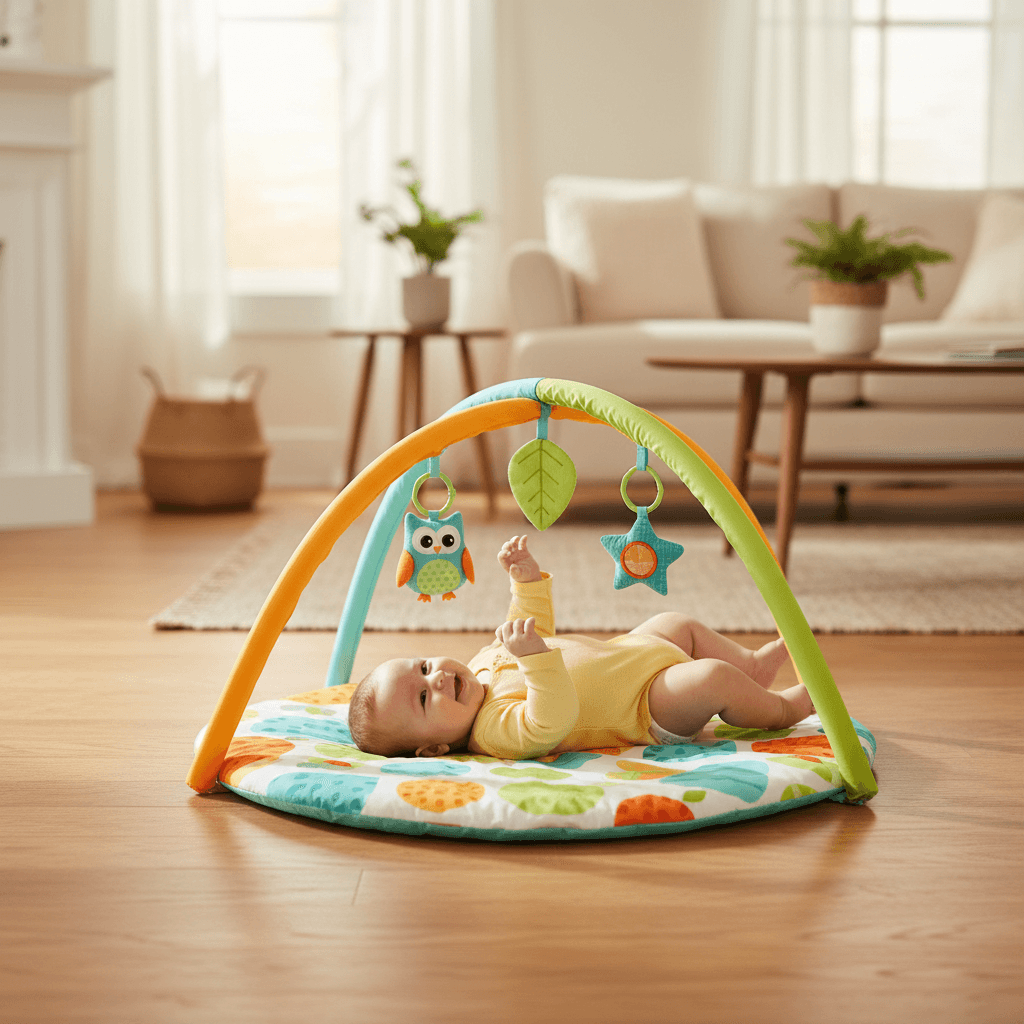
The AAP recommends that once babies can sit independently (typically 5-7 months), they benefit most from floor-based play that encourages crawling, reaching, and exploratory movement. Activity gyms, floor mats, and age-appropriate toys placed slightly out of reach promote gross motor development more effectively than any containment device.
- Play mat / activity gym — great for tummy time and reaching for toys. See our baby gym guide.
- Activity center / jumper (typically 4-6+ months) — keeps baby upright and engaged. Our walker and activity center guide covers the best options.
- High chair (when starting solids, around 6 months) — gives baby a safe, contained seat during meals and play. See our high chair recommendations.
- Pack-n-play — a contained, safe floor space for play when you need to step away briefly.
What we'd actually buy for the next stage. Three things cover the 5–12 month gap a bouncer leaves: a Lovevery Play Gym → for floor time that grows with the baby, a Chicco Zest 4-in-1 high chair → once solids start (it converts to a booster later), and a Tushbaby hip carrier → for the stretch where they want to be held but you need a hand back. None of these are bouncer replacements — they replace the job the bouncer was doing.
What is the difference between a baby bouncer and a swing?
| Feature | Bouncer | Swing |
|---|---|---|
| Motion | Baby-powered bounce or vibration | Powered rocking/swinging |
| Size | Compact, portable | Larger, stationary |
| Age range | Birth to ~6 months | Birth to ~9 months |
| Best for | Quick hands-free moments | Longer soothing sessions |
| Typical cost | $30-$250 | $80-$250 |
| Sleep safe? | No | No |
Many families end up with both (or start with one and buy the other after discovering what their baby prefers). If you can only pick one, a swing typically has a longer useful life.
How long will your baby actually use a bouncer?
Babies typically use bouncers from about 3-4 weeks to 5-6 months, with the heaviest use between 1 and 4 months. It's a short window, but during that time a good bouncer can be a sanity-saver. Buy one you can resell, borrow from a friend, or invest in a quality model that holds its value (the BabyBjörn Bouncer Bliss resells for close to retail).
Whatever you choose, remember: the bouncer is for supervised awake time only. For safe sleep, always use a firm, flat surface.
Related Reading
- Best Bouncers and Swings of 2026
- Best Baby Gyms and Play Mats
- Best Baby Walkers and Activity Centers
- What You Actually Need vs. What You Don't
As an Amazon affiliate, Cribworthy may earn from qualifying purchases. Our recommendations are based on independent research and real parent feedback. Prices and availability are subject to change.
Your next step
Shopping for a safe bouncer or swing? Start here.
Research Sources
Hilly Shore Inc.
Editorial teamIndependent product research team behind Cribworthy. Reviews are grounded in published AAP / CDC / NHTSA / CPSC pediatric guidance, JPMA / GREENGUARD GOLD / OEKO-TEX certification verification, and aggregated buyer sentiment.
115 products reviewed · 20 categories covered · cites AAP, CDC, NHTSA, CPSC, FDA, ACOG.
Safety claims are verified against published pediatric guidelines and CPSC databases. See our editorial standards.