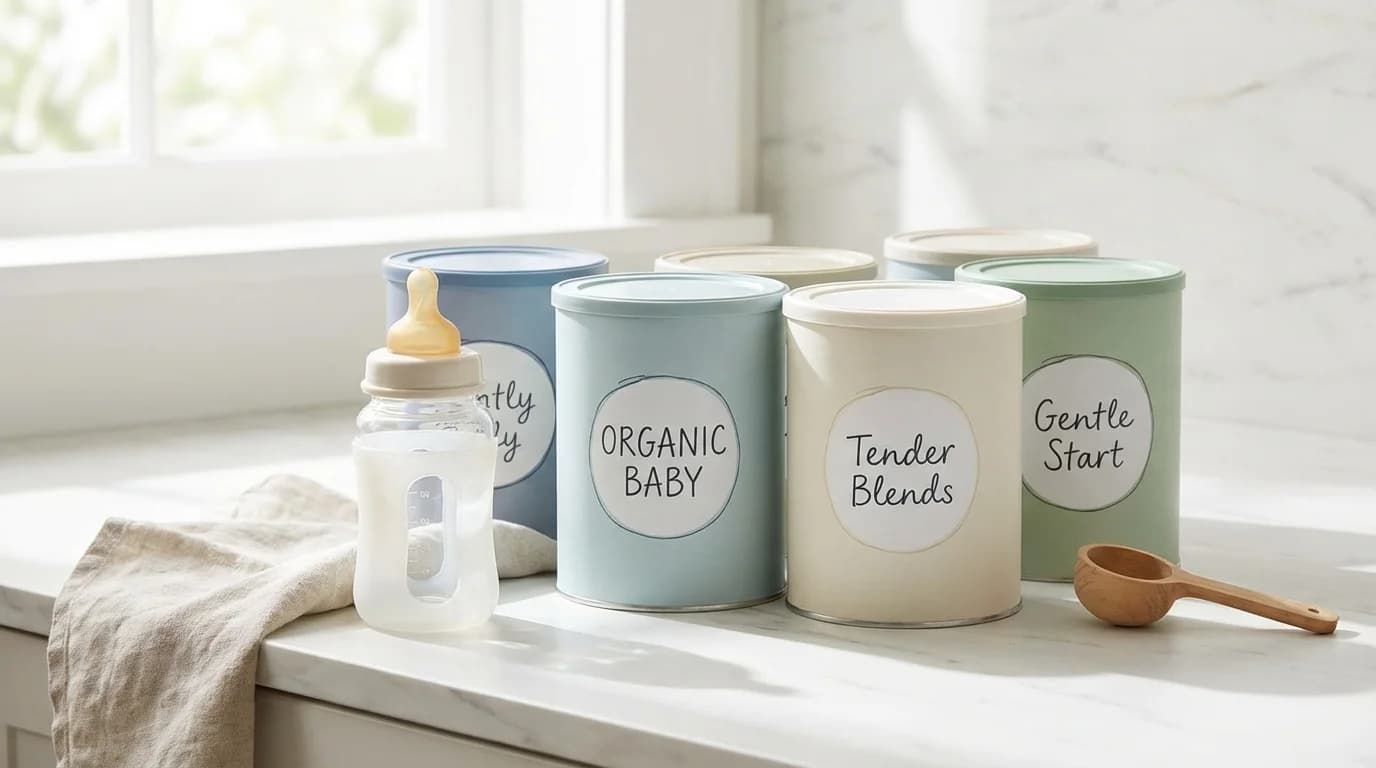
How to Switch Baby Formula Safely (Without Making It Worse)
Quick Answer
Switching between standard, iron-fortified, cow's milk-based formulas is safe to do at any time and does not require a slow taper, because every infant formula sold in the United States is FDA-regulated and contains the same required nutrients. If your baby has a sensitive stomach, blend the old and new formula over one to two weeks to make the change gentler, mixing each one to its own instructions first. Expect a temporary change in poop color and texture, which is normal. Do not switch to a soy, sensitive, hypoallergenic, or specialty formula on your own to fix fussiness. Fussiness and colic are common in all babies and usually are not caused by the formula. Call your pediatrician before any specialty switch, and right away if you see blood or mucus in the stool, hives, vomiting, wheezing, diarrhea, or poor weight gain.
Our Verdict
You can switch between standard, iron-fortified, cow's milk-based formulas anytime, no taper required, because every U.S. formula meets the same FDA nutrient standards. Blend over 1 to 2 weeks if your baby has a sensitive stomach. But fussiness usually is not the formula's fault, and any switch to soy, hypoallergenic, or specialty formula should go through your pediatrician first, not a fussy evening.
Key Takeaways
- ✓The thing most parents get wrong: they treat a fussy, gassy baby as proof the formula is wrong.
- ✓Switching for price, availability, or convenience is fine.
- ✓If your baby has a sensitive stomach, or you just want to be gentle, blend the two formulas over one to two weeks instead of switching cold.
- ✓Specialty formulas are a different category from "try a new brand," and the major pediatric sources are consistent here.
- ✓Marketing terms like gentle, sensitive, comfort, and added probiotics are not FDA-defined medical categories.

As an Amazon Associate I earn from qualifying purchases. Product prices and availability are subject to change.
Switching your baby's formula feels high-stakes, and the internet does not help. One thread says a "gentle" formula fixed everything; the next says you ruined your baby's gut by changing brands too fast. The reassuring truth is that switching formula is usually simple and safe, and that the bigger mistake is switching for the wrong reason in the first place.
The short answer
You can switch your baby between standard, iron-fortified, cow's milk-based formulas at any time, and you do not have to taper slowly. Every infant formula sold in the United States is regulated by the FDA and must contain the same set of required nutrients, so the nutrition does not change when the brand on the label does. If your baby is genuinely sensitive to one product, a one-to-two-week transition can make the swap gentler on their stomach, but it is optional, not a medical rule. The real caution is the opposite of what most parents think: a switch to a soy, "sensitive," or hypoallergenic formula should usually wait for your pediatrician, not a fussy evening.
🎯 The thing most parents get wrong: they treat a fussy, gassy baby as proof the formula is wrong. According to the NIH's MedlinePlus, fussiness and colic are common in all babies, and cow's milk formula is usually not the cause. Chasing the "right" brand rarely fixes normal newborn fussiness, and it can hide the real issue.
When switching is fine to do yourself
Plenty of reasons to switch have nothing to do with your baby's health, and those are the safe, do-it-yourself ones:
✅ Switching for price, availability, or convenience is fine. Because the FDA sets a nutrient floor every formula must meet, a store brand and a name brand of the same type (standard cow's milk, iron-fortified) are nutritionally comparable. You are allowed to buy whatever fits your budget and your shelf.
- Cost. Powdered formula costs the least, concentrated liquid is in the middle, and ready-to-use costs the most. The type you can afford to use consistently is the right one.
- A shortage or a switch in what your store stocks. During the 2022 shortage the U.S. even imported formula brands that met its safety review so families had options. Moving between comparable standard formulas does not shortchange your baby.
- Form, not brand. Going from ready-to-use to powder of the same brand is also a "switch," and an easy one.
For any of these, you can change at the next feeding. There is no medical need to phase it in.
How to actually do the transition
If your baby has a sensitive stomach, or you just want to be gentle, blend the two formulas over one to two weeks instead of switching cold. Always mix each formula to its own instructions first, then combine the prepared bottles. Never just dump two different powders into one bottle of water, because the brands can call for different powder-to-water ratios.
| Days | Old formula | New formula |
|---|---|---|
| 1 to 3 | 3/4 of the bottle | 1/4 of the bottle |
| 4 to 6 | 1/2 | 1/2 |
| 7 to 9 | 1/4 | 3/4 |
| 10+ | none | full bottle |
⚠️ Expect some change in poop. A new formula can shift the color, smell, and firmness of your baby's stools for a few days. On its own, that is normal adjustment, not a sign the formula is "wrong." What is not normal is in the next section.
Go slower than this if your baby seems unsettled, and there is no prize for finishing fast. A gradual blend mostly helps you tell a real reaction apart from coincidence.
The switches that need a pediatrician first
Specialty formulas are a different category from "try a new brand," and the major pediatric sources are consistent here.
- Soy formula. The American Academy of Pediatrics says there are few situations where soy should be chosen over cow's milk-based formula, and that there is no evidence it prevents or eases colic or fussiness. Importantly, soy is not the answer for a true cow's milk allergy, because up to half of those babies react to soy protein too.
- Hypoallergenic (extensively hydrolyzed) and amino-acid/elemental formulas. These are for diagnosed milk-protein allergy and specific medical conditions, they cost significantly more, and the AAP says they are often overused. Ask your pediatrician to recommend one rather than self-prescribing.
- Goat's milk formula. Now FDA-permitted and sold in the U.S., but the AAP notes a baby allergic to cow's milk should not use it, because of high cross-reactivity with cow's milk protein.
✅ Call the pediatrician, do not just switch, if you see: blood or mucus in the stool, hives or a rash with feeding, vomiting (not ordinary spit-up), wheezing, diarrhea, or poor weight gain. Those are signs of a possible allergy or medical issue, and the fix is a diagnosis, not a new can off the shelf.
What "gentle" and "sensitive" labels actually mean
Marketing terms like gentle, sensitive, comfort, and added probiotics are not FDA-defined medical categories. Some are partially hydrolyzed (milk protein broken into smaller pieces that are, in theory, easier to digest), some are lower in lactose, and some are simply a standard formula with a softer name. They can be worth trying for a mildly unsettled baby, but they are not a substitute for a hypoallergenic formula if a real allergy is on the table, and they will not turn a normally fussy newborn into a calm one.
The honest framing: pick a standard, iron-fortified formula you can get and afford, give any new formula a real chance (about a week, barring red flags), and bring genuine symptoms to your pediatrician instead of cycling through cans. Most "formula problems" resolve with time and consistency, not with the next brand.
If you're still deciding which formula to start with, our best baby formula comparison breaks down the major brands, and our best organic baby formula picks cover the certified-organic options. For the bigger feeding picture, see our complete baby feeding guide and the right feeding bottles for 2026.
Cribworthy researches and analyzes baby products and parenting topics using authoritative pediatric and government sources. This article is informational and is not a substitute for medical advice from your child's doctor.
Sources
- American Academy of Pediatrics (HealthyChildren.org), Choosing an Infant Formula: FDA regulation and the 30 required nutrients, soy formula guidance (no evidence it eases colic, cross-reactivity with cow's milk allergy), hydrolyzed and goat's milk formula notes.
- American Academy of Pediatrics (HealthyChildren.org), imported and unfamiliar formula brands: imported formulas have comparable calories and nutrition, and prepare to their own instructions.
- NIH MedlinePlus Medical Encyclopedia, Infant formulas: all U.S. formulas have the nutrients babies need, fussiness/colic is usually not the formula's fault, iron-fortified recommendation, hypoallergenic formulas cost more, and special formulas only on a provider's advice.
Spent a month and a small fortune switching between sensitive and gentle formulas chasing a gassy baby, convinced each one was the problem. Pediatrician said the gas was just a newborn being a newborn, told me to pick one and stick with it, and within two weeks of staying consistent things settled. The constant switching was making it harder to tell what was actually going on.
Paraphrased community consensus — not a direct quote.
A fussy, gassy baby means you picked the wrong formula and need to switch brands.
Fussiness and colic are common in all babies, and the NIH's MedlinePlus notes that cow's milk formula is usually not the cause. The American Academy of Pediatrics also says there is no evidence that soy formula prevents or eases colic. Cycling through brands rarely fixes normal newborn fussiness and can delay finding a real cause. Give a new formula about a week, barring red flags, before deciding it failed.
Expensive name-brand formula is more nutritious than the store brand.
The FDA requires every infant formula sold in the U.S. to contain the same set of required nutrients, so a store brand and a name brand of the same type (standard, iron-fortified, cow's milk-based) are nutritionally comparable. Price buys packaging and marketing, not a better-fed baby. Choose the formula you can afford to use consistently.
Research Sources
Hilly Shore Inc.
Editorial teamIndependent product research team behind Cribworthy. Reviews are grounded in published AAP / CDC / NHTSA / CPSC pediatric guidance, JPMA / GREENGUARD GOLD / OEKO-TEX certification verification, and aggregated buyer sentiment.
124 products reviewed · 22 categories covered · cites AAP, CDC, NHTSA, CPSC, FDA, ACOG.
Safety claims are verified against published pediatric guidelines and CPSC databases. See our editorial standards.