Nanit Pro vs. Owlet Dream Duo 2: Smart Baby Monitor Showdown
The Verdict
The Nanit Pro is the better single purchase, since an overhead camera and computer-vision sleep reports need nothing attached to your baby. The Owlet Dream Duo 2 adds a wearable sock reporting pulse and oxygen, which appeals to anxious parents but is not a proven safeguard against sudden infant death. Both carry subscriptions for their fuller feature sets.
Our Verdict
Buy the Nanit Pro if you want a genuinely good camera plus sleep data and expect to keep using it into toddlerhood. Buy the Owlet Dream Duo 2 only when a clinician has raised a specific concern, or when the wearable will meaningfully reduce your own anxiety and you understand its limits. Buy a plain closed-circuit monitor instead if neither subscription appeals.
#1Nanit Pro Camera 4.2 | #2Owlet Dream Duo 2 4.4 | |
|---|---|---|
| Verdict | Best Overall Smart Monitor | Best for Health Monitoring |
| Price | ~$249Buy on Amazon | ~$299.99Buy on Amazon |
| Resolution | 1080p HD | 1080p HD |
| Sleep Tracking | Computer vision (no wearable) | — |
| Audio | Two-way | — |
| Connectivity | WiFi 2.4GHz/5GHz | — |
| Health Tracking | — | Heart rate + O2 levels |
| Alert | — | Real-time notifications |
| Sock Battery | — | ~16 hours |
| Buyer sentiment | Quality Peace Of Mind Reliability Value for money Connectivity Buyers praise quality and peace of mind. Mixed feedback on video quality and setup. Some flag reliability and value for money. Based on 339 user mentions | — |
| Pros |
|
|
| Cons |
|
|
* Prices are approximate. Check the linked retailer for current pricing and availability.
Key Takeaways
- ✓Buy the Nanit Pro if you want a genuinely good camera plus sleep data and expect to keep using it into toddlerhood. Buy the Owlet Dream Duo 2 only when a clinician has raised a specific concern, or when the wearable will meaningfully reduce your own anxiety and you understand its limits. Buy a plain closed-circuit monitor instead if neither subscription appeals.
- ✓Choose the Nanit Pro if you want excellent sleep tracking and analytics through computer vision — it monitors sleep patterns without touching baby. Choose the Owlet Dream Duo 2 if you want real-tim...
💬 Real Talk from Parents
The night vision on these things is better than most security cameras.
The breathing monitor will give you peace of mind and also occasional false alarms at 3 AM.
Every shadow on the monitor will look like the baby has escaped. They haven't.
Wi-Fi monitors sound great until your internet goes out at 2 AM.
The Owlet gave me MORE anxiety, not less. Every false alarm at 3am aged me a year. YMMV but keep that in mind.
Paraphrased community consensus — not a direct quote.
You need a breathing/oxygen monitor for safe sleep.
The AAP does not recommend consumer breathing monitors. They produce false alarms that increase anxiety and are not clinically validated to prevent SIDS. Safe sleep practices (back sleeping, firm surface, no loose bedding) are what matter.
Audio-only monitors are outdated and useless.
Audio monitors have zero lag, no app crashes, unlimited range indoors, and cost a fraction of video monitors. Many experienced parents say they wish they'd kept it simple.
As an Amazon Associate I earn from qualifying purchases. Product prices and availability are subject to change.
Nanit Pro vs. Owlet Dream Duo 2: Smart Baby Monitor Showdown
Buy on Amazon · $299.99 →Choose the Nanit Pro if you want excellent sleep tracking and analytics through computer vision — it monitors sleep patterns without touching baby. Choose the Owlet Dream Duo 2 if you want real-time heart rate and blood oxygen monitoring through a wearable sock sensor. The Nanit is better for data-driven sleep optimization; the Owlet is better for parents with health anxiety or babies with known medical concerns. Importantly, the AAP does not recommend consumer health-monitoring devices as a strategy to prevent SIDSSIDSSudden Infant Death Syndrome: unexplained death of an otherwise healthy infant under 1, usually during sleep. The AAP's ABCs of safe sleep (Alone, on Back, in a Crib) cut the risk by more than half., noting that no commercially available monitor has been proven to reduce the risk of sudden infant death.
What's the difference between Nanit and Owlet's approach?
The AAP's 2022 safe sleepsafe sleepAAP guideline: baby sleeps Alone (no blankets, pillows, bumpers, or toys), on their Back, in a Crib or bassinet with a firm flat mattress. Room-sharing without bed-sharing is recommended for the first 6-12 months. policy statement notes that "there is no evidence that commercial devices that are designed to monitor infant vital signs reduce the risk of SIDS." The FDA cleared the Owlet Dream Sock as a wellness device — not a medical device — meaning it is not intended to diagnose, treat, or prevent any medical condition. Parents should not rely on any consumer monitor as a substitute for safe sleep practices.
Nanit Pro
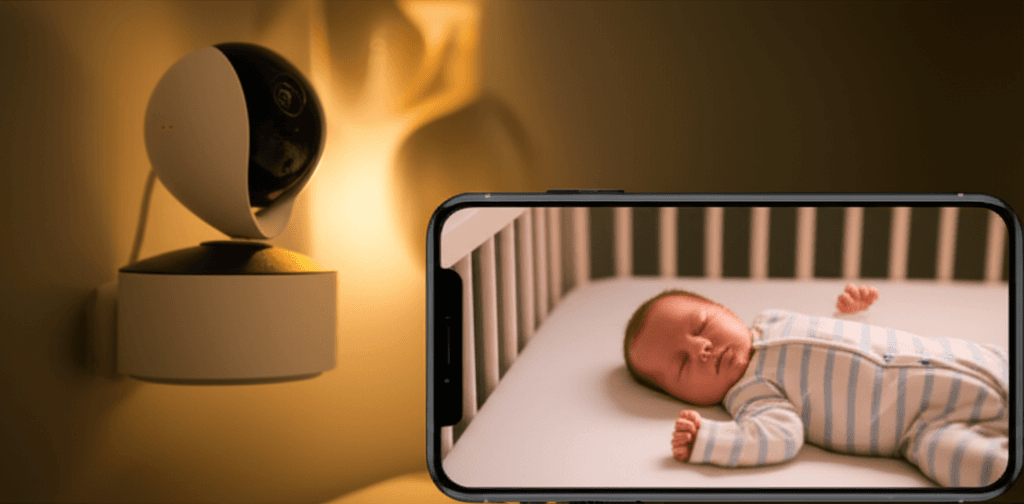
Nanit uses a camera with computer vision algorithms to track baby's sleep. The overhead camera watches baby and detects sleep patterns, movements, and breathing motion (with optional Breathing Wear) — all without touching baby. It's monitoring through observation.
Owlet Dream Duo 2
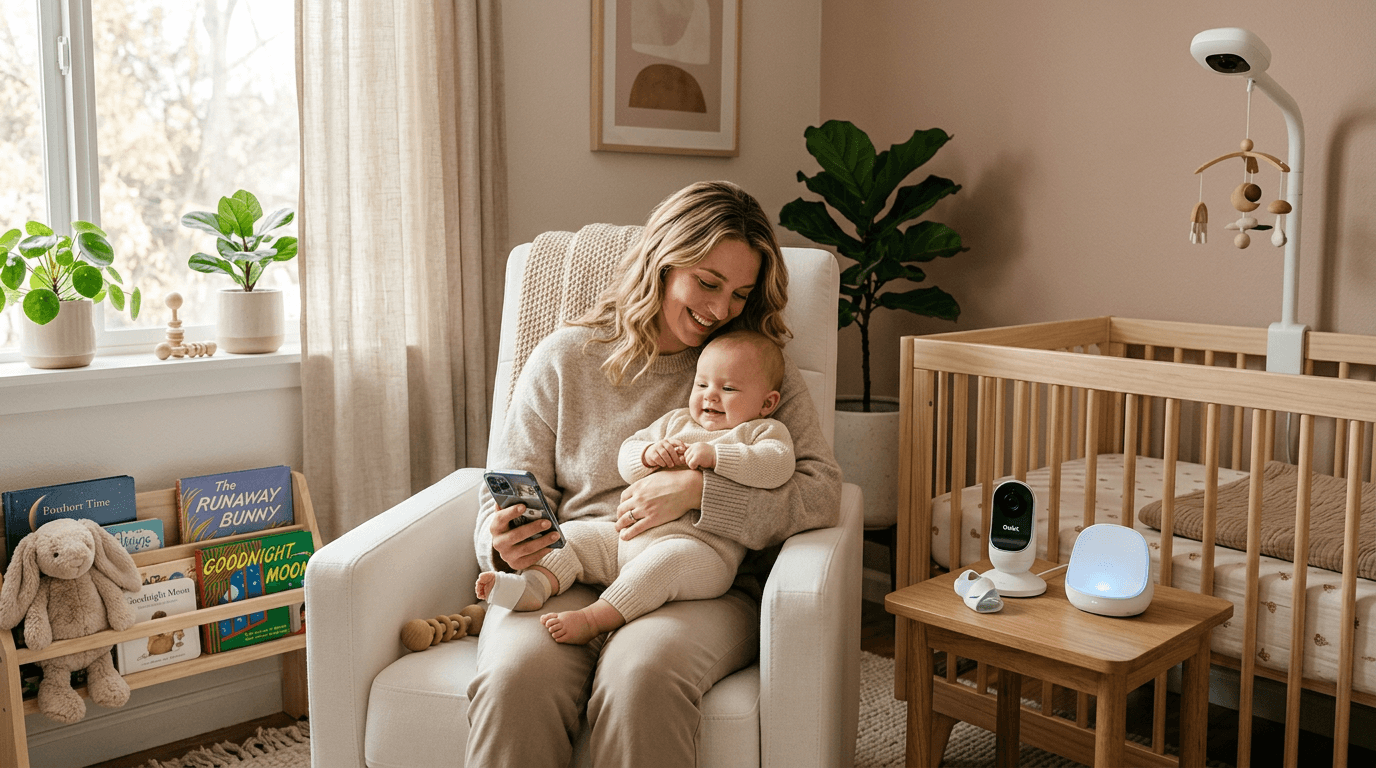
Owlet combines a camera with a wearable sock sensor that tracks heart rate and blood oxygen levels in real-time. When readings fall outside safe ranges, the sock sends an alert to your phone. It's monitoring through direct measurement.
This fundamental difference determines which product is right for you. If you want sleep data and analytics, lean Nanit. If you want real-time health metrics, lean Owlet.
Which has better camera quality — Nanit or Owlet?
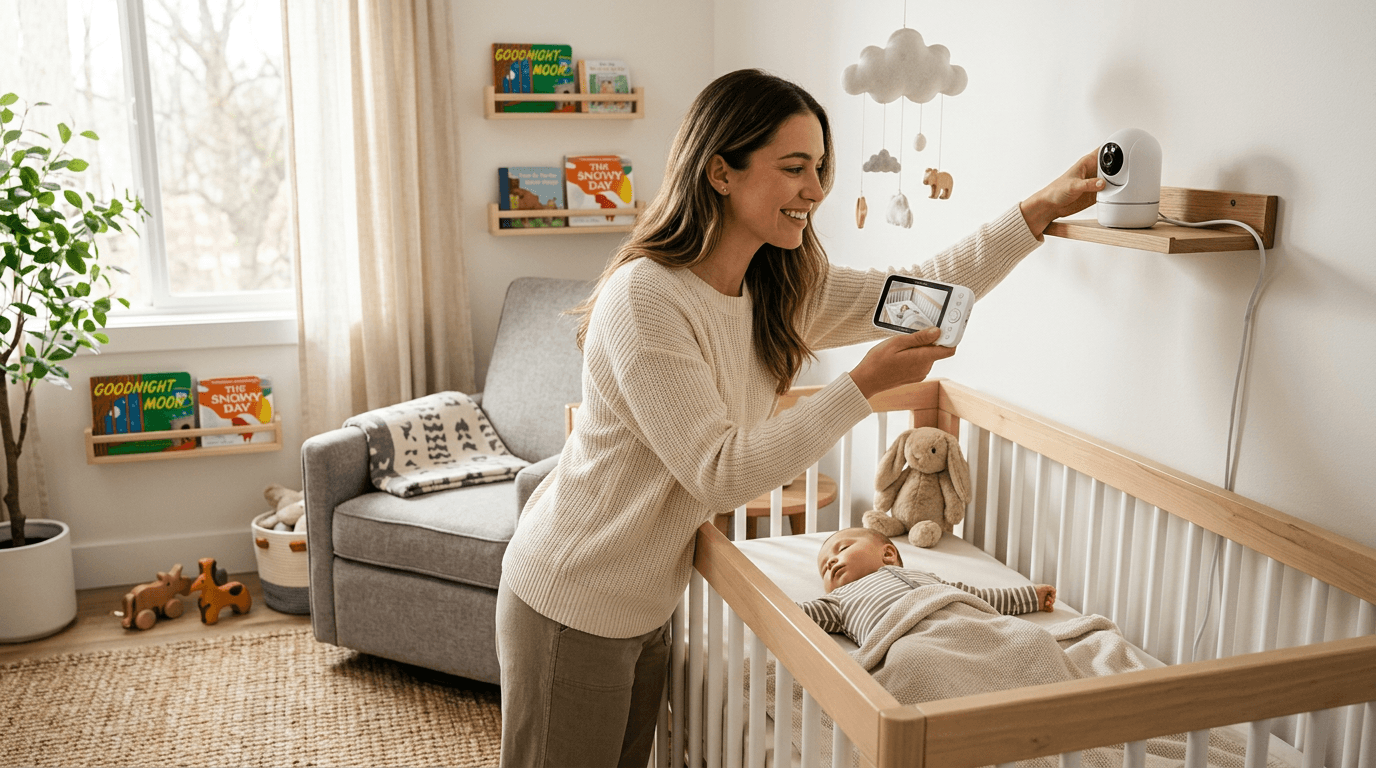
The CPSCCPSCThe US federal agency that issues product recalls and enforces safety standards on cribs, strollers, car seats, and other juvenile products. recommends that all baby monitor cords and cameras be placed at least 3 feet away from the crib to prevent strangulation hazards. Nanit's ceiling-mount design inherently maintains this distance, while the Owlet camera should be mounted on a wall or shelf with the cord secured and out of reach. Cord-related incidents with baby monitors have been linked to over a dozen infant deaths, according to CPSC incident reports.
Nanit Pro
The Nanit camera shoots 1080p HD video with excellent night vision. The overhead mounting angle provides a clear, full-crib view that's ideal for monitoring. The two-way audio is reliable and the video stream has minimal lag in the app. The camera also has a built-in temperature and humidity sensor for room conditions.
Owlet Dream Duo 2 Camera
The Owlet camera is 1080p HD and provides good but not exceptional video quality. It mounts on the wall or a shelf (not overhead like the Nanit). Night vision is adequate. The two-way audio works well. It's a competent camera but the Nanit's video and mounting system is superior.
Winner: Nanit Pro — better camera quality and smarter mounting
Which monitor tracks sleep better?
Nanit Pro
This is Nanit's strength. The computer vision system tracks sleep duration, sleep quality, time to fall asleep, number of visits, and generates detailed sleep reports. Over time, these reports reveal patterns that help you optimize baby's schedule. The Nanit also provides personalized sleep tips based on your baby's data.
The optional Breathing Wear (bands that wrap around baby's torso) enables breathing motion monitoring. The camera detects the pattern on the band to track breathing — no direct sensors on baby's skin.
Owlet Dream Duo 2
Owlet provides basic sleep tracking through its Dream App, but it's not as detailed or analytically useful as Nanit's system. The focus is on health alerts rather than sleep optimization.
Winner: Nanit Pro — sleep tracking is leagues ahead
How does health monitoring compare between Nanit and Owlet?
In 2021, the FDA issued a warning letter to Owlet regarding the original Smart Sock for marketing it with unauthorized medical claims. The Owlet Dream Sock (the successor) is marketed as a wellness product. A 2018 study in JAMA found that consumer pulse oximeters for infants produced both false alarms and missed true desaturation events, highlighting the limitations of consumer-grade health monitoring.
Nanit Pro
Nanit monitors room temperature, humidity, and (with Breathing Wear) breathing motion. It does not track heart rate or blood oxygen. It will alert you if breathing motion isn't detected for a period, but it's monitoring through visual detection, not direct measurement.
Owlet Dream Duo 2
The Owlet Dream Sock directly measures heart rate and blood oxygen saturation through pulse oximetry — the same technology used in hospital nurseries. When readings fall outside customizable ranges, you receive an immediate alert. This is genuine health data, not visual estimation.
For parents with specific health concerns — premature babies, babies with respiratory issues, or anyone who wants medical-grade monitoring — the Owlet provides data the Nanit simply cannot.
Winner: Owlet Dream Duo 2 — direct health measurement is its entire purpose
Which smart baby monitor is easier to use?
Nanit Pro
Setup involves mounting the camera (wall mount or stand) and connecting to WiFi. The app is well-designed and responsive. Once set up, there's nothing to do — the camera runs continuously. If using Breathing Wear, you dress baby in the band, which adds a step to the bedtime routine.
Owlet Dream Duo 2
Setup involves mounting the camera, connecting to WiFi, and putting the sock on baby. The sock needs to be charged regularly (it lasts about 16 hours per charge). Getting the sock positioned correctly on baby's foot takes practice, and many parents report initial frustration with false alerts from improper sock placement. Once you master the placement, it becomes routine.
Winner: Nanit Pro — simpler daily use with no wearable to manage
What are the subscription costs for Nanit vs. Owlet?
Nanit Pro
- Camera: ~$300
- Nanit Insights subscription: Free tier available; Pro tier $10/month or $100/year for advanced analytics, clip saving, and historical data
- Breathing Wear bands: ~$50 for a multi-pack (ongoing cost as baby grows)
Owlet Dream Duo 2
- Duo (camera + sock): ~$400
- No required subscription for core monitoring alerts
- Optional Owlet+ subscription: $10/month for extended history and data
Long-term cost comparison: Nanit is cheaper upfront but subscription-dependent for full features. Owlet is more expensive upfront but core functionality works without subscription.
Which baby monitor is more reliable?
Nanit Pro
WiFi-dependent, so Internet outages affect functionality. The app occasionally experiences lag, though it's generally reliable. The camera itself is stable and rarely needs troubleshooting.
Owlet Dream Duo 2
The sock's Bluetooth connection to the base station is generally reliable, but the sock can trigger false alerts when it shifts on baby's foot. This is the most common complaint — being jolted awake by an alert only to find baby is perfectly fine and the sock just moved. It improves as you learn optimal placement.
Winner: Nanit Pro — fewer false alarms, more consistent experience
How do Nanit and Owlet handle privacy and data security?
Both systems require WiFi and cloud connectivity, which means your baby's video and health data travels through the internet. Both companies use encryption, but cloud-connected cameras always carry some privacy consideration.
The AAP Council on Communications and Media recommends that parents research data privacy policies before using any connected nursery device. Both Nanit and Owlet collect sensitive data including video footage, sleep patterns, and (in Owlet's case) health metrics. Parents should enable two-factor authentication, use strong unique passwords, and regularly update firmware to minimize security risks.
Nanit stores video clips in the cloud (with end-to-end encryption). Owlet transmits health data to its servers. Both require creating accounts with personal information. If privacy is a primary concern, a non-WiFi monitor like the eufy E21 eliminates internet connectivity entirely — though you lose all smart features. See our full monitor roundup for more options.
Which smart baby monitor should you buy?
Buy the Nanit Pro if:
- Sleep tracking and optimization is your priority
- You want the best camera quality and overhead angle
- You prefer a non-contact monitoring approach
- Data-driven sleep improvement appeals to you
Buy the Owlet Dream Duo 2 if:
- Your baby has health conditions that warrant oxygen and heart rate monitoring
- Peace of mind from real-time health data is your primary goal
- Your baby was premature or has respiratory concerns
- You want medical-grade monitoring at home
Consider a basic monitor if:
Neither smart monitor is necessary for healthy, full-term babies with no specific health concerns. A quality basic monitor like the eufy E21 (~$180) provides excellent video and audio without subscriptions, apps, or Internet dependency.
Is the Nanit or Owlet the better smart baby monitor?
The Nanit Pro excels at sleep intelligence. The Owlet Dream Duo 2 excels at health monitoring. They're solving different problems for different families. For most healthy full-term babies, the Nanit is our recommendation — the sleep data is genuinely useful and the camera quality is superior. For families with health-related monitoring needs, the Owlet provides reassurance that no other consumer product can match. Visit our baby monitors category for all our reviewed options.
Further Reading
Research Sources
Hilly Shore Inc.
Editorial teamIndependent product research team behind Cribworthy. Reviews are grounded in published AAP / CDC / NHTSA / CPSC pediatric guidance, JPMA / GREENGUARD GOLD / OEKO-TEX certification verification, and aggregated buyer sentiment.
115 products reviewed · 20 categories covered · cites AAP, CDC, NHTSA, CPSC, FDA, ACOG.
Safety claims are verified against published pediatric guidelines and CPSC databases. See our editorial standards.