SNOO vs. MamaRoo: Smart Baby Gear Face-Off
The Verdict
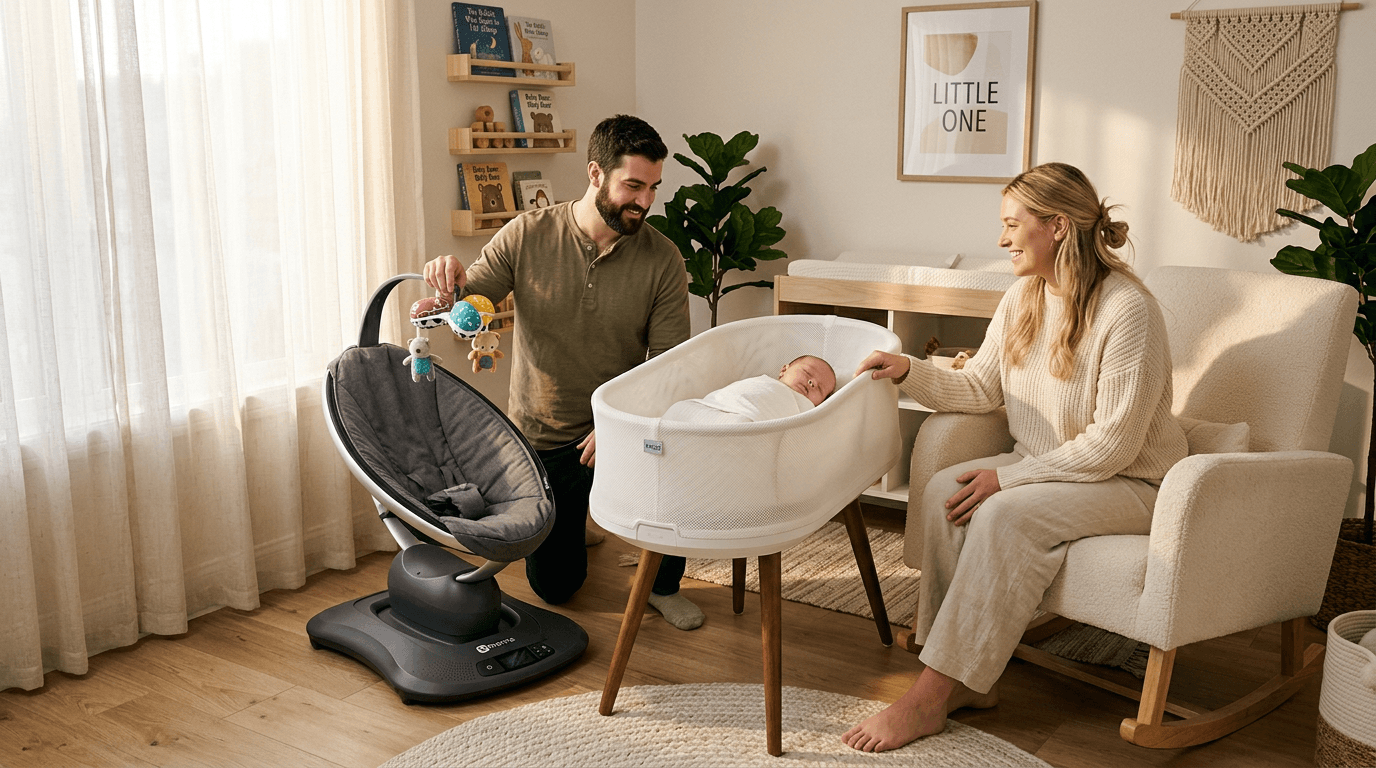
These are not competing products. The SNOO, $1,695 to buy or roughly $160 a month to rent, is a bassinet for overnight sleep; the MamaRoo, about $350, is a swing for supervised awake time and is never a safe sleep surface. If you can only fund one, rent the bassinet, because nights are the problem worth spending on.
Our Verdict
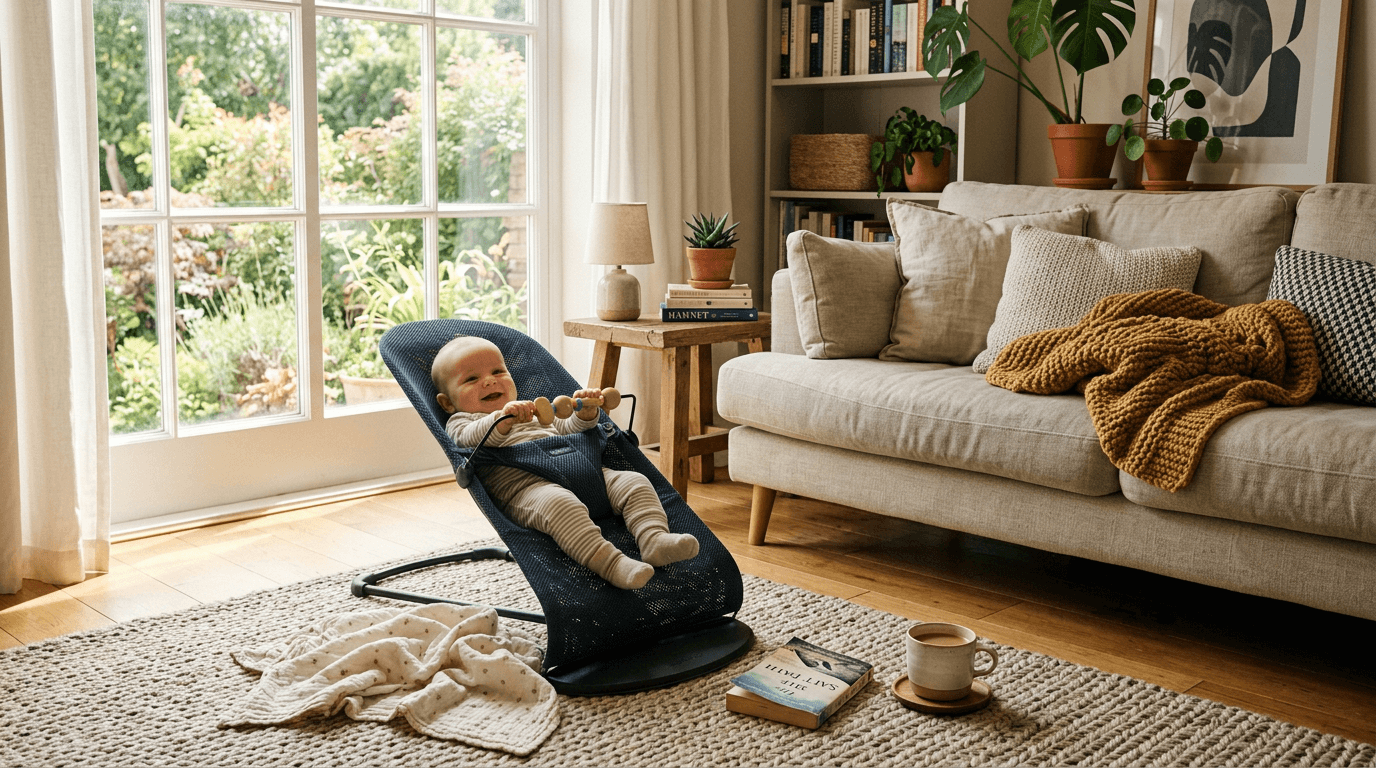
Renting beats buying unless several children are planned, since the useful window closes around six months. A powered swing earns its floor space only with an infant who will not settle flat. The BabyBjorn bouncer costs a fraction and does most of the same work. Expect a rough week when you wean off the smart bassinet.
#1SNOO Smart Sleeper Bassinet 3.9 | #2UPPAbaby Mamaroo Smart Swing 4.5 | #3BabyBjörn Bouncer Bliss 4.8 | |
|---|---|---|---|
| Verdict | Best Smart Sleeper | Best Smart Swing | Best Non-Electric Alternative |
| Price | Discontinued | ~$347.99Buy on Amazon | ~$227.78Buy on Amazon |
| Use Period | 0-6 months | — | — |
| Connectivity | WiFi + Bluetooth | Bluetooth app control | — |
| Sound Options | White noise auto-adjusts | — | — |
| Safety | Built-in swaddle clip | — | — |
| Weight Limit | — | 25 lbs | — |
| Motions | — | 5 unique patterns | — |
| Speeds | — | 5 speed settings | — |
| Weight Range | — | — | 8-29 lbs |
| Material | — | — | Mesh or Cotton/Jersey |
| Fold | — | — | Flat fold |
| Power | — | — | None — baby-powered |
| Buyer sentiment | Sleep Time Quality Appearance Noise Durability Buyers praise sleep time, quality and appearance. Mixed feedback on value for money and functionality. Some flag noise and durability. Based on 272 user mentions | Quality Soothing Assembly Reliability Value for money Noise Buyers praise quality, soothing and assembly. Mixed feedback on swing and bluetooth connectivity. Some flag reliability and value for money. Based on 639 user mentions | Quality Washability Portability Bounce Buyers praise quality, washability, portability and bounce. Mixed feedback on value for money. Based on 814 user mentions |
| Pros |
|
|
|
| Cons |
|
|
|
* Prices are approximate. Check the linked retailer for current pricing and availability.
Key Takeaways
- ✓Renting beats buying unless several children are planned, since the useful window closes around six months. A powered swing earns its floor space only with an infant who will not settle flat. The BabyBjorn bouncer costs a fraction and does most of the same work. Expect a rough week when you wean off the smart bassinet.
- ✓The SNOO and MamaRoo serve completely different purposes — the SNOO ($1,695 or ~$160/month rental) is a smart bassinet for overnight sleep, while the MamaRoo (~$350) is a swing for supervised awake...
- ✓Heads up — the SNOO Smart Sleeper no longer has an active Amazon listing, so its buy button above shows as unavailable. Happiest Baby still sells and rents the SNOO directly, so the comparison hold...
💬 Real Talk from Parents
The swaddle is magic until the day it isn't, and that day comes without warning.
White noise machines are not for the baby. They're for your sanity.
Sleep training is 50% technique and 50% parental willpower.
You'll google 'baby sleep regression' at least once a month for the first year.
If your baby is sleeping safely, you're doing it right. Ignore anyone who says otherwise.
Paraphrased community consensus — not a direct quote.
Adding cereal to a bottle helps babies sleep longer.
The AAP advises against adding cereal to bottles. It doesn't improve sleep, increases choking risk, and can lead to overfeeding. Solid readiness signs usually appear around 6 months.
Sleep training damages your baby's attachment.
Multiple peer-reviewed studies (including a 2012 Pediatrics study following children for 5 years) found zero difference in emotional health, behavior, or parent-child attachment between sleep-trained and non-sleep-trained children.
6-month reality check
What parents say after living with this half a year — paraphrased community consensus from the subreddits below.
The SNOO is a 4-to-5-month product. Parents who bought rather than rented overwhelmingly wish they'd rented — resale is decent but effort is real.
r/beyondthebumpThe drop-off at the 6-month transition out of the SNOO is steeper than the marketing implies. The 'weaning' mode helps but doesn't eliminate the cliff.
r/sleeptrainThe MamaRoo is a nap chair, not a sleep solution. Parents who treat it that way love it; parents who expected SNOO-level sleep regret the purchase.
r/NewParents
As an Amazon Associate I earn from qualifying purchases. Product prices and availability are subject to change.
SNOO vs. MamaRoo: Smart Baby Gear Face-Off
The SNOO and MamaRoo serve completely different purposes — the SNOO ($1,695 or $160/month rental) is a smart bassinet for overnight sleep, while the MamaRoo ($350) is a swing for supervised awake time. You cannot substitute one for the other. If you can only afford one, prioritize the SNOO (or rent it) for its impact on overnight sleep. A 2023 study in the Journal of Clinical Sleep Medicine found the SNOO was associated with approximately 1 extra hour of infant sleep per night. The AAP classifies swings like the MamaRoo as non-sleep surfaces and warns that babies should never be left to sleep in them unsupervised.
Are the SNOO and MamaRoo the same thing?
This is the most important thing to understand before comparing:
The AAP's safe sleepsafe sleepAAP guideline: baby sleeps Alone (no blankets, pillows, bumpers, or toys), on their Back, in a Crib or bassinet with a firm flat mattress. Room-sharing without bed-sharing is recommended for the first 6-12 months. guidelines are clear: the only safe sleep environments for infants are firm, flat surfaces such as cribs, bassinets, and play yards that meet CPSCCPSCThe US federal agency that issues product recalls and enforces safety standards on cribs, strollers, car seats, and other juvenile products. standards. Swings, bouncers, and inclined sleepers are NOT approved for sleep. The SNOO is classified as a bassinet and meets CPSC standards for infant sleep surfaces; the MamaRoo is classified as a swing and should only be used for supervised awake time.
- SNOO Smart Sleeper ($1,695 retail / ~$160/month rental) — a smart bassinet designed for overnight sleep. It's a sleep space.
- UPPAbaby Mamaroo Smart Swing (~$350) — a smart swing designed for soothing and supervised awake time. It's NOT a sleep space. (UPPAbaby acquired 4moms in 2024 and now sells this swing under its own name; the motions are the same ones the 4moms MamaRoo was known for.)
You cannot substitute one for the other. The SNOO is where baby sleeps. The MamaRoo is where baby hangs out while you eat dinner. Both use technology to soothe, but for different purposes and different times of day.
How does the SNOO Smart Sleeper work?
What it does
Developed by Dr. Harvey Karp (of "Happiest Baby on the Block" fame), the SNOO is a bassinet that automatically responds to baby's fussing. When baby cries, sensors detect it and the SNOO increases its rocking motion and white noise through progressive levels. If baby doesn't settle, it eventually alerts you to intervene.
How well it works
Many parents report that the SNOO adds 1-2 hours of sleep per night. Some babies respond dramatically, sleeping 6-8 hour stretches from an early age. Other babies are less impressed and still wake frequently. There's no guarantee, which is why the rental option exists.
The built-in swaddle
The SNOO uses a proprietary swaddle that clips to the bassinet, keeping baby safely on their back. This is a genuine safety feature — back-sleeping is the foundation of safe sleep. However, you must use SNOO-specific swaddles, which cost $30-40 each and you'll want at least three in rotation.
Transition concerns
Many parents worry about transitioning from the SNOO to a regular crib. The SNOO has a weaning mode that gradually reduces motion and sound, easing the transition. Most parents report the transition is smoother than they feared, especially if done around 5-6 months.
Is it worth $1,695?
That's genuinely personal. If sleep deprivation is affecting your mental health, relationship, or ability to function, the SNOO can be worth every penny. The rental option ($160/month for roughly 5-6 months = ~$800-960) makes more financial sense than buying for most families. Some insurance FSA/HSA accounts cover SNOO rentals as a medical device.
A 2023 study published in the Journal of Clinical Sleep Medicine evaluated SNOO outcomes and found that SNOO users reported approximately 1 additional hour of infant sleep per night compared to standard bassinets, as well as faster self-soothing. The rental option (~$160/month for 6 months = ~$960) significantly reduces cost. The AAP has not specifically endorsed the SNOO but recognizes it as meeting bassinet safety standards.
How does the MamaRoo swing work?
What it does
The MamaRoo offers five unique motions (car ride, kangaroo, tree swing, rock-a-bye, and ocean wave) at five speeds, plus built-in nature sounds and Bluetooth connectivity for playing your own music. It's designed to mimic the soothing motions parents naturally use when holding baby.
How well it works
The MamaRoo is genuinely soothing for many babies. The car ride motion is a particular favorite — it mimics the rhythm of driving that many babies find calming. Bluetooth control is convenient for adjusting settings without disturbing a drowsy baby.
The caveat
Not every baby likes the MamaRoo. The motion is different from traditional swings (compact, mechanical movement vs. wide arcing swing), and some babies strongly prefer one over the other. If you can try before you buy — at a friend's house or a store display — do so.
Safety reminders
The MamaRoo is for supervised awake time only. Baby should never sleep in the MamaRoo. The inclined position isn't safe for unsupervised sleep. If baby falls asleep in the MamaRoo, move them to a firm, flat sleep surface. Read more about safe sleep in our safe sleep guide.
The CPSC has issued multiple warnings about infant deaths in swings and inclined products when used for unsupervised sleep. Between 2011 and 2022, at least 14 infant deaths were associated with swing products when infants were left to sleep unattended. The AAP recommends transferring babies to a firm, flat sleep surface as soon as they fall asleep in a swing, bouncer, or car seat.
How do the SNOO and MamaRoo compare side by side?
According to a 2022 report from Grand View Research, the global smart baby monitor and sleep aid market exceeded $1.5 billion. Despite the popularity of smart nursery products, the AAP emphasizes that no consumer device has been proven to prevent SIDSSIDSSudden Infant Death Syndrome: unexplained death of an otherwise healthy infant under 1, usually during sleep. The AAP's ABCs of safe sleep (Alone, on Back, in a Crib) cut the risk by more than half.. Parents should follow the ABCs of safe sleep — Alone, on their Back, in a Crib — regardless of what technology they use.
Price
- SNOO: $1,695 retail / ~$160/month rental (sold direct by Happiest Baby; the Amazon listing is no longer active)
- Mamaroo Smart Swing: ~$350
The Mamaroo is still far less expensive, though the gap narrowed when UPPAbaby repriced the swing above the old 4moms $250. They serve different purposes, so this isn't really an either/or financial decision for most families.
Soothing effectiveness
Both are effective soothers, but in different contexts. The SNOO's rocking and white noise are designed for sustained sleep. The MamaRoo's varied motions are designed for short-term soothing and entertainment. Different tools for different jobs.
Usable period
- SNOO: Birth to ~6 months (or when baby can push up on hands and knees)
- MamaRoo: Birth to ~6 months (25 lb weight limit) for full use; can sit up in it longer but most babies lose interest
Both are relatively short-lived products, which affects value calculations.
App and technology
The SNOO's app provides detailed sleep data, remote control, and the ability to adjust settings without entering the nursery. The MamaRoo's Bluetooth app controls motion and sound from your phone. Both apps work well, though the SNOO's sleep data is more useful long-term.
Space requirements
The SNOO is a full bassinet and sits beside your bed. The MamaRoo has a compact footprint compared to traditional swings but still needs dedicated floor space. Most nurseries can accommodate both, but smaller spaces may need to choose.
Do You Need Both?
Ideal scenario
If budget allows, having both serves different needs beautifully. The SNOO handles nighttime sleep, buying you precious extra hours. The MamaRoo handles daytime soothing, buying you hands-free time to eat, shower, or manage other tasks. They complement rather than replace each other.
If choosing one
If you can only pick one, prioritize the SNOO (or rental) if sleep is your biggest struggle. Prioritize the MamaRoo if you primarily need a daytime soothing solution and baby sleeps reasonably in their regular crib or bassinet. Our bouncers and swings guide covers more daytime soothing options.
Budget alternative to both
If neither fits your budget, a regular bassinet (the Halo BassiNest at $250) and a BabyBjörn Bouncer Bliss ($230) or Fisher-Price rocker (~$35) cover the same functional needs without the smart technology.
What do parents report about the SNOO vs. MamaRoo?
The themes below are paraphrased community consensus from parent forums and retailer reviews — not direct quotes from individual parents.
Where SNOO owners agree
- Renting is the value play. The most common positive is that the sleep gain justified the rental cost, with longer stretches showing up inside the first week or two.
- The built-in swaddle keeping baby on their back is repeatedly called worth it on its own, separate from any sleep gain.
- Many find the crib transition easier than expected — though this is also the most divided point (see below).
Where SNOO owners push back
- A real minority report their baby simply never settled in it, which at this price lands as an expensive disappointment.
- The proprietary swaddles are a recurring cost parents resent.
- For some the crib transition is rough — the mirror image of the point above.
Where MamaRoo owners agree
- The most-cited benefit is mundane and real: hands-free time to eat a meal or take a shower.
- The car-ride motion setting is the standout for fussy babies.
- App control lets you adjust without walking into the room and disturbing a settling baby.
Where MamaRoo owners push back
- Plenty of babies want nothing to do with it, and a common refrain is preferring a $35 bouncer to a premium smart swing — a complaint that only sharpened at the current ~$350 price.
Which should you buy — SNOO or MamaRoo?
The SNOO and MamaRoo serve different purposes and aren't directly competing products. The SNOO is a sleep investment for nighttime; the MamaRoo is a soothing tool for daytime. If budget forces a choice, base it on your biggest pain point: sleep struggles point to the SNOO, daytime fussiness points to the MamaRoo. Either way, try before you commit if possible. Browse our bouncers and swings and sleep essentials categories for more options.
Further Reading
What to buy instead (2026 update)
Heads up — the SNOO Smart Sleeper no longer has an active Amazon listing, so its buy button above shows as unavailable. Happiest Baby still sells and rents the SNOO directly, so the comparison holds — you just cannot buy it on Amazon.
The 4moms MamaRoo was discontinued after UPPAbaby acquired 4moms in 2024, but the swing itself lives on as the UPPAbaby Mamaroo Smart Swing, which is what the buy button above now points to (~$350).
If you would rather spend less on daytime motion soothing:
- For hands-free motion soothing at a lower price: the Graco Soothe 'n Sway LX → — two swing directions, adjustable speeds and a seat that lifts out as a portable bouncer, around $180.
- For a smart, motion-and-sound bassinet (what the SNOO did): see our current picks in the best cribs & bassinets guide and best baby swings for colicky babies.
Hilly Shore Inc.
Editorial teamIndependent product research team behind Cribworthy. Reviews are grounded in published AAP / CDC / NHTSA / CPSC pediatric guidance, JPMA / GREENGUARD GOLD / OEKO-TEX certification verification, and aggregated buyer sentiment.
115 products reviewed · 20 categories covered · cites AAP, CDC, NHTSA, CPSC, FDA, ACOG.
Safety claims are verified against published pediatric guidelines and CPSC databases. See our editorial standards.