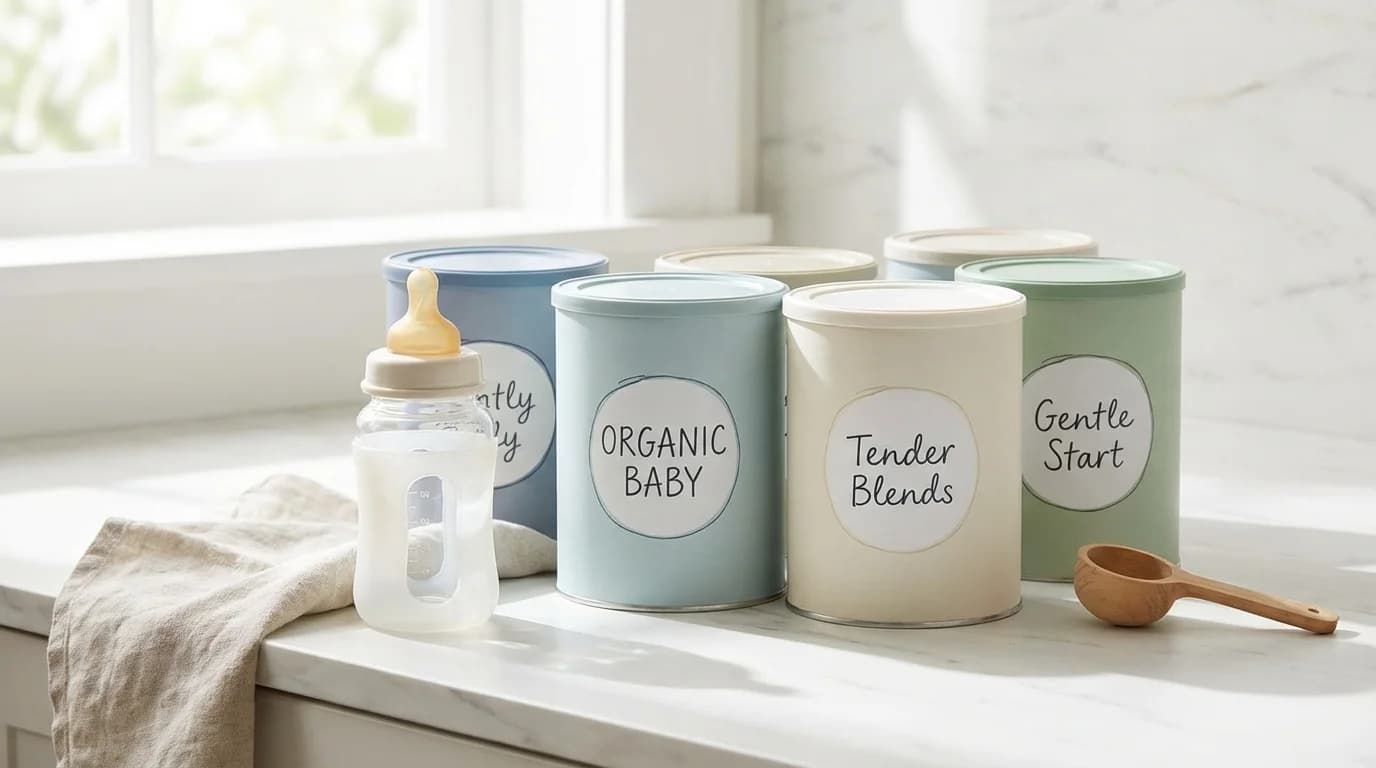
Types of Baby Formula Explained: How to Read the Label
Quick Answer
Infant formula comes in only a few real categories defined by its protein: standard cow's-milk based, soy, partially or extensively hydrolyzed, and amino-acid based. The FDA requires every formula sold in the United States to meet the same federal nutrient minimums, so a store brand and a premium brand in the same category are nutritionally comparable. Almost all healthy, full-term babies do well on a standard iron-fortified cow's-milk formula. The specialty types exist for specific medical reasons and should usually be started on a pediatrician's advice, not to chase ordinary fussiness. Powder, concentrate, and ready-to-feed differ in cost and convenience, not core nutrition, but powder is not sterile, which matters for newborns and fragile babies.
Our Verdict
Start with a standard iron-fortified cow's-milk formula, choose a form that fits your budget and routine, and buy the brand your wallet prefers since the same category clears the same federal floor. Only move to soy, hydrolyzed, or amino-acid formula when a pediatrician identifies a real reason. The label argues more than the nutrition behind it.
Key Takeaways
- ✓Almost every baby thrives on a standard, iron-fortified, cow's-milk-based formula.
- ✓The American Academy of Pediatrics is blunt about the specialty end: there are few situations in which soy should be chosen over cow's-milk formula, and the expensive amino-acid and elemental formulas are "often widely overused." Soy is not the answer for a cow's-milk allergy either, because up to half of milk-allergic babies also react to soy protein.
- ✓Most of the words on the front of the can are not regulated categories. Here is what they tend to mean.
- ✓The form is a cost-and-safety decision, not a nutrition one.
- ✓The biggest mistake is treating normal newborn behavior as a formula problem. Spit-up, gas, grunting, and irregular stools are typical and usually have nothing to do with the brand on the can.

As an Amazon Associate I earn from qualifying purchases. Product prices and availability are subject to change.
Walk down the formula aisle and you will see dozens of brands shouting "gentle," "sensitive," "organic," and "advanced." Most of those words are marketing. Underneath them, infant formula comes in only a handful of real categories, and U.S. law holds every one of them to the same nutritional floor. Once you can read the label, the wall of brands collapses into about five decisions.
Quick answer
Almost every baby thrives on a standard, iron-fortified, cow's-milk-based formula. The Food and Drug Administration requires all infant formula sold in the United States to meet the same federal nutrient minimums, so a store brand and a premium brand in the same category are nutritionally comparable. The specialty categories (soy, partially or extensively hydrolyzed, amino-acid based) exist for specific medical reasons, not for everyday fussiness, and most should be started only on a pediatrician's advice. The form you buy (powder, concentrate, or ready-to-feed) changes cost and convenience, not the core nutrition.
Key takeaways
- The base protein is the real category. Cow's-milk, soy, hydrolyzed, and amino-acid based are the meaningful divisions. Everything else is a feature or a flavor of marketing.
- The FDA sets a floor every formula must clear. All U.S. formulas meet the same federal nutrient requirements, which is why generic and name-brand in the same category are nutritionally comparable.
- "Sensitive" and "gentle" are not regulated categories. They usually mean reduced lactose or partially broken-down protein, not a true allergy formula.
- Powder is not sterile. That matters for newborns, preemies, and immune-compromised babies, who need extra preparation steps.
The five real categories
| Category | What it is | Who it is usually for |
|---|---|---|
| Cow's-milk based, iron-fortified | The standard. Cow's milk altered with added lactose, vegetable oils, iron, DHA and ARA | Nearly all healthy, full-term babies |
| Soy based | Plant protein with glucose or sucrose instead of lactose | Galactosemia, or vegan families (rarely a milk-allergy fix) |
| Partially hydrolyzed ("sensitive") | Protein broken into smaller pieces; still contains intact milk protein | Babies with mild fussiness, not a true allergy |
| Extensively hydrolyzed ("hypoallergenic") | Protein broken down so far it rarely triggers a reaction | Diagnosed cow's-milk protein allergy, on doctor's advice |
| Amino-acid based (elemental) | Protein built from individual amino acids; the most processed and costly | Severe allergy when extensively hydrolyzed still fails |
The American Academy of Pediatrics is blunt about the specialty end: there are few situations in which soy should be chosen over cow's-milk formula, and the expensive amino-acid and elemental formulas are "often widely overused." Soy is not the answer for a cow's-milk allergy either, because up to half of milk-allergic babies also react to soy protein.
Decoding the label words
Most of the words on the front of the can are not regulated categories. Here is what they tend to mean.
| Label word | What it usually signals | Does it matter for most babies |
|---|---|---|
| Iron-fortified | Standard added iron the AAP recommends for all formula-fed infants | Yes, choose it. Low-iron formula should not be used |
| Sensitive / Gentle | Reduced lactose or partially hydrolyzed protein | Only if your baby is genuinely lactose-sensitive |
| Hypoallergenic | Extensively hydrolyzed or amino-acid based | Only for a diagnosed allergy |
| Added DHA and ARA | Fatty acids for brain and eye development, in most formulas | Common; not a reason to pay a premium alone |
| Organic | Certified organic ingredients | A values choice, not a nutrition upgrade |
| Goat's milk | Adapted goat-milk protein | Not safe for cow's-milk-allergic babies due to cross-reactivity |
The most useful myth to retire: a higher price tag does not buy a different nutrient profile. Per the FDA, every formula marketed in the U.S. must hit at least the federal minimums for all required nutrients. Manufacturers can add proprietary blends on top, but the floor is identical. That is why a pediatric dietitian will tell you a store-brand cow's-milk formula and a flagship brand in the same category are nutritionally comparable. For what the extra money on a premium tin does buy, see what you're paying for with formula brands.
Powder, concentrate, or ready-to-feed
The form is a cost-and-safety decision, not a nutrition one.
| Form | Cost | Best for |
|---|---|---|
| Powder | Lowest cost per ounce; you add water | Most families day to day |
| Liquid concentrate | Middle cost; mix equal parts water | A convenience step up from powder |
| Ready-to-feed | Highest cost; no mixing, sterile | Travel, night feeds, and medically fragile newborns |
There is one safety catch that the marketing never mentions: powdered formula is not sterile. The CDC warns that for babies who are under two months old, were born prematurely, or have a weakened immune system, powder should be mixed with water boiled and then cooled for about five minutes to kill germs such as Cronobacter, or you should use ready-to-feed formula instead. For a healthy full-term baby past those early weeks, ordinary safe tap water prepared per the label is fine.
What most parents get wrong
The biggest mistake is treating normal newborn behavior as a formula problem. Spit-up, gas, grunting, and irregular stools are typical and usually have nothing to do with the brand on the can. Switching to a "sensitive," soy, or hypoallergenic formula to chase fussiness rarely helps and can cost two to four times more. The research does not support soy or specialty formula for ordinary colic or gas; the AAP notes there is no evidence soy prevents or eases colic.
The second mistake is importing European formula on the assumption it is superior. Foreign formulas can be excellent, but a can bought through unofficial channels has not been confirmed to meet U.S. safety and labeling standards, and the AAP advises against self-importing. If you want a European-style product, look for one reviewed and properly imported for the U.S. market, and check with your pediatrician.
How to actually choose
- Start standard. Pick an iron-fortified, cow's-milk-based formula. This is right for the large majority of babies.
- Pick a form by your budget and routine. Powder for value, ready-to-feed for the newborn weeks or travel.
- Match the brand to your wallet, not the hype. A store brand in the same category clears the same federal floor.
- Only escalate with a diagnosis. Move to soy, hydrolyzed, or amino-acid formula when your pediatrician identifies a real reason, such as galactosemia or a confirmed cow's-milk protein allergy.
- Give a switch time. A new formula can take several days for stools and tummy to settle. Real warning signs (blood in stool, hives, vomiting, poor weight gain, breathing trouble) mean call the doctor, not the next can.
A formula that lets your baby grow, feed comfortably, and stay on a schedule you can sustain is the right one. The label is doing more arguing than the nutrition behind it.
Sources
Research Sources
Hilly Shore Inc.
Editorial teamIndependent product research team behind Cribworthy. Reviews are grounded in published AAP / CDC / NHTSA / CPSC pediatric guidance, JPMA / GREENGUARD GOLD / OEKO-TEX certification verification, and aggregated buyer sentiment.
131 products reviewed · 22 categories covered · cites AAP, CDC, NHTSA, CPSC, FDA, ACOG.
Safety claims are verified against published pediatric guidelines and CPSC databases. See our editorial standards.