Water Table vs. Splash Pad: Best Toddler Water Play
The Verdict
For a child under three, buy a water table. It needs no plumbing, just a bucket, and it works from roughly twelve to eighteen months, as soon as a toddler can pull upright and reach in. A splash pad suits a confident walker, a genuinely hot afternoon, and a garden with somewhere to attach a hose.
Our Verdict
For a child under three, start with a water table — it works without a hose and suits an unsteady toddler. Choose a splash pad instead when the weather is hot, the yard has a hose, your toddler is steady on their feet, or a dog will join in. Whichever you pick, supervise within arm's reach and empty it after every use.
Key Takeaways
- ✓The whole call in one line: match those two facts — age and water access — and the choice usually makes itself.
- ✓For the 1-to-3 crowd, a water table is the more reliable buy.
- ✓On a genuinely hot day, nothing beats moving water. A sprinkler splash pad hooks to a garden hose and throws a gentle arc kids run through — cooling and active in a way a static table isn't.
- ✓None of this is a reason to skip water play — it's just the price of doing it right.
As an Amazon Associate I earn from qualifying purchases. Product prices and availability are subject to change.
Two very different toys get lumped into every "best toddler water play" list: the water table and the splash pad. They solve different problems, suit different ages, and need different amounts of space and hose access. Buy the wrong one for your kid and it sits in the garage; buy the right one and it's the thing that saves July afternoons.
We researched the toddler water toys trending this summer and sorted out who each one is actually for.
The real question: your kid's age and your water access
Forget "which is better." The honest split is this:
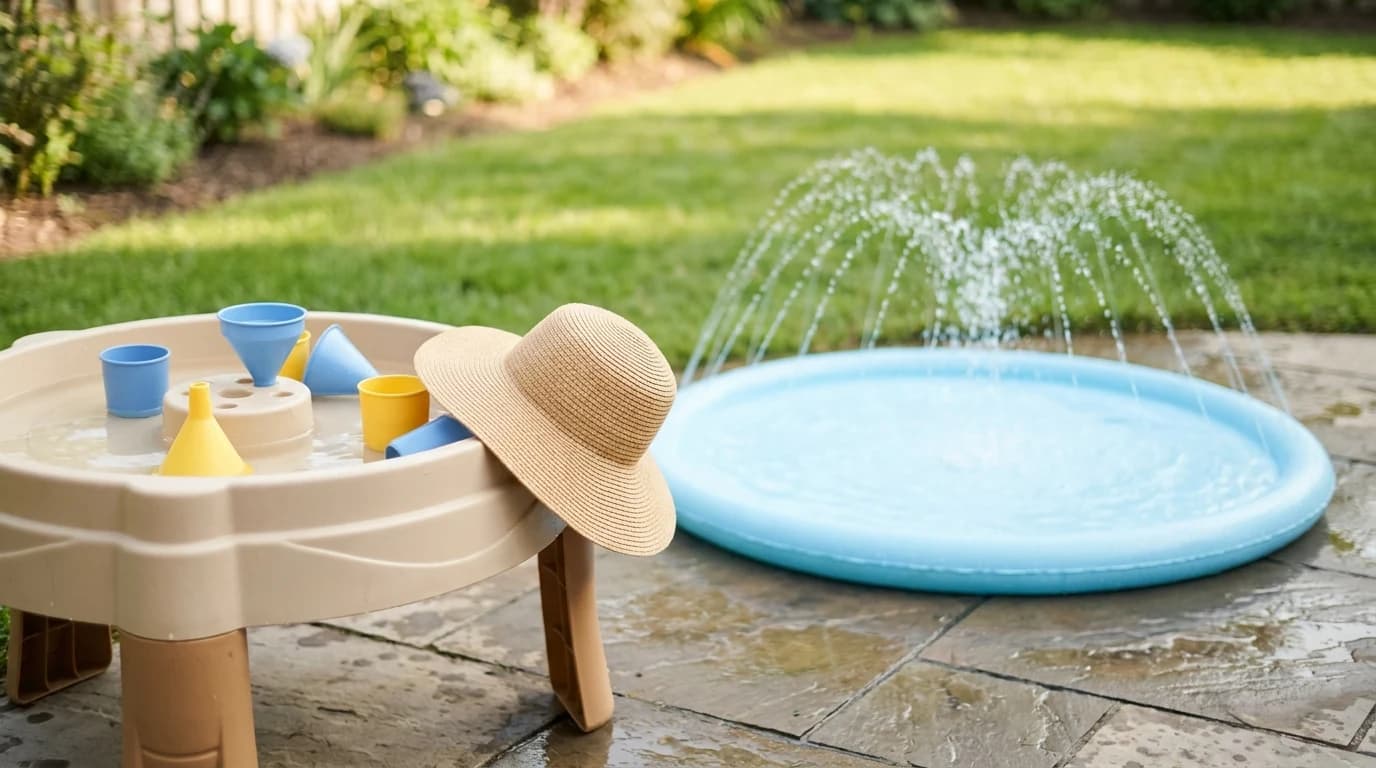
- A water table is stationary, standing-height play with a fixed amount of water. It works the moment a toddler can pull to stand and reach in — roughly 12–18 months and up — and it needs no hose, just a bucket to fill it.
- A splash pad is active, wet, moving play. It needs a hose hookup and a kid steady enough to toddle around getting soaked. It shines in hot weather and open yards, and it's the better pick if a dog is part of the family.
The whole call in one line: match those two facts — age and water access — and the choice usually makes itself.
| Pick | Type | Best for | Roughly |
|---|---|---|---|
| 4-in-1 Toddler Water Table (ages 1–3) → | Water table | Younger toddlers, no hose needed | ~$30 |
| Sand & Water Activity Table (28 pc) → | Water + sand table | Older toddlers who want more to do | ~$85 |
| Sprinkler Splash Pad (3-in-1) → | Splash pad | Hot days, active toddlers, hose yards | ~$33 |
| Splash Pad for Kids & Pets → | Non-slip splash mat | Yards with a dog in the mix | ~$16 |
When a water table wins
For the 1-to-3 crowd, a water table is the more reliable buy. A young toddler who isn't steady on their feet can still stand at a dedicated toddler water table →, pour, splash, and scoop for a surprisingly long stretch — no hose, no soaking, easy to set up on a balcony or a shaded patio. That "works without a hose" point matters more than it sounds: apartment and townhouse families often can't run a sprinkler, and a water table needs nothing but a filled basin.
Move up to an older, busier toddler and a combined sand-and-water table → earns its higher price by adding a second activity — the sand side keeps them engaged after the novelty of splashing wears off. The trade-off is more mess and more cleanup, so it's a better fit for a yard than a deck.
When a splash pad wins
On a genuinely hot day, nothing beats moving water. A sprinkler splash pad → hooks to a garden hose and throws a gentle arc kids run through — cooling and active in a way a static table isn't. It packs flat for storage, which a bulky table never will.
The catch is setup. A splash pad needs:
- A hose
- A fairly level spot
- A toddler confident enough on their feet to enjoy it rather than slip
If a dog will inevitably join in, a non-slip splash pad rated for kids and pets → is built for exactly that — sturdier mat, better grip.
Safety: the part every list skips
Water play is low-drama until it isn't. Young children can drown quickly and silently in very little water, so the rules are non-negotiable no matter which toy you pick:
- Stay within arm's reach and actively watching the whole time — not glancing up from a phone.
- Empty the table or pad completely the moment play ends so there's no standing water left for a wandering toddler to find.
- Add a sun hat and shade. A water table on an unshaded deck at noon is a sunburn waiting to happen.
None of this is a reason to skip water play — it's just the price of doing it right.
FAQ
What age is a water table good for?
Most toddlers can enjoy a water table once they can pull to stand and reach in — around 12 to 18 months. A dedicated toddler-height table sized for ages 1–3 fits that stage best; taller multi-kid tables suit 2s and 3s.
Do I need a hose for a water table?
No — that's a water table's main advantage. You fill it from a bucket or watering can, so it works on balconies, patios, and apartments where a splash pad's hose hookup isn't an option. Splash pads do require a hose.
Which is less messy, a water table or a splash pad?
A water table, especially a water-only one. It contains the water in a basin and keeps the kid mostly dry. Splash pads soak everything by design, and sand-and-water tables add sand cleanup. Match the mess to your space.
Can we leave the water in overnight?
No. Empty water tables and splash pads after every use.
Standing water is the hazard: it is a drowning risk for young children and quickly grows algae and mosquitoes. Refill fresh next time.
Research Sources
Hilly Shore Inc.
Editorial teamIndependent product research team behind Cribworthy. Reviews are grounded in published AAP / CDC / NHTSA / CPSC pediatric guidance, JPMA / GREENGUARD GOLD / OEKO-TEX certification verification, and aggregated buyer sentiment.
124 products reviewed · 22 categories covered · cites AAP, CDC, NHTSA, CPSC, FDA, ACOG.
Safety claims are verified against published pediatric guidelines and CPSC databases. See our editorial standards.