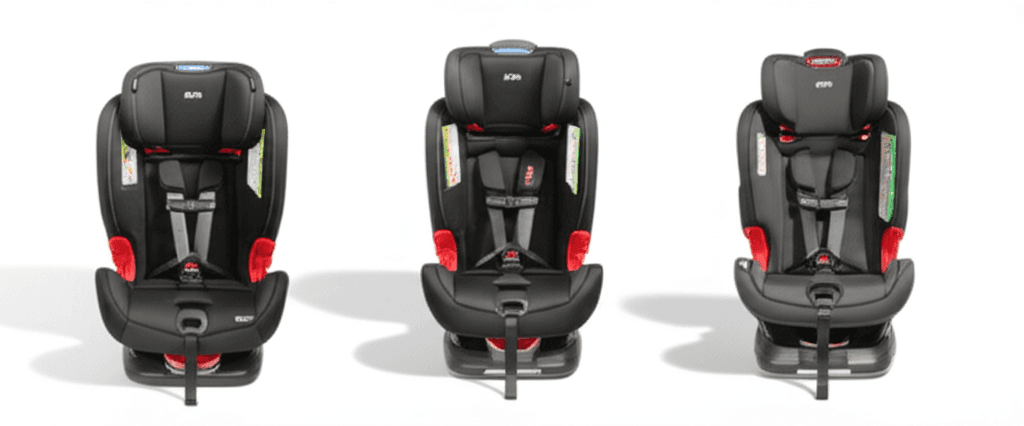
When to Switch Car Seat Stages: The Limit, Not the Age
Quick Answer
Move to the next car seat stage only when your child reaches the top height or weight limit printed by the manufacturer on their current seat, not at a set age. Ride rear-facing as long as the convertible seat allows, which for most seats is 2 years or well beyond. Then forward-facing with a harness and top tether, ideally to at least age 4 and as long as the harness fits. Then a belt-positioning booster, often until age 8 to 12. A child is ready for the seat belt alone only when it fits right: lap belt low across the upper thighs, shoulder belt across the center of the shoulder and chest, knees bending at the seat edge, usually around 4 feet 9 inches and ages 9 to 12. Every child under 13 rides in the back seat. The seat's limit decides each switch, not the birthday.
Our Verdict
Let the seat's printed height and weight limits decide each transition, not your child's age. Stay rear-facing until the convertible seat's limit is reached, keep the harness as long as it fits, and use a booster until the adult belt passes the 5-point fit test, usually around ages 9 to 12. Every stage you move to is slightly less protective than the last, so there is no advantage to graduating early. When unsure, a certified technician at a free inspection station will confirm the fit in person.
Key Takeaways
- ✓Let the seat's printed height and weight limits decide each transition, not your child's age. Stay rear-facing until the convertible seat's limit is reached, keep the harness as long as it fits, and use a booster until the adult belt passes the 5-point fit test, usually around ages 9 to 12. Every stage you move to is slightly less protective than the last, so there is no advantage to graduating early. When unsure, a certified technician at a free inspection station will confirm the fit in person.
- ✓Move to the next stage only when your child reaches the top height or weight limit printed by the manufacturer on their current seat, not at a set age. Ride rear-facing as long as the convertible s...
- ✓The limit, not the birthday. Each switch is triggered by your child hitting the seat's max height or weight, which you will find on a label on the seat and in the manual.
- ✓The single most common mistake is treating each transition as a milestone to celebrate, like crawling or first words. It is the opposite. Every stage you move to is slightly less protective than th...
- ✓Age bands are guides, not triggers. NHTSA frames the stages in those ranges; the CDC notes rear-facing typically runs from birth to about age 2 to 4 and that a proper belt fit usually arrives aroun...
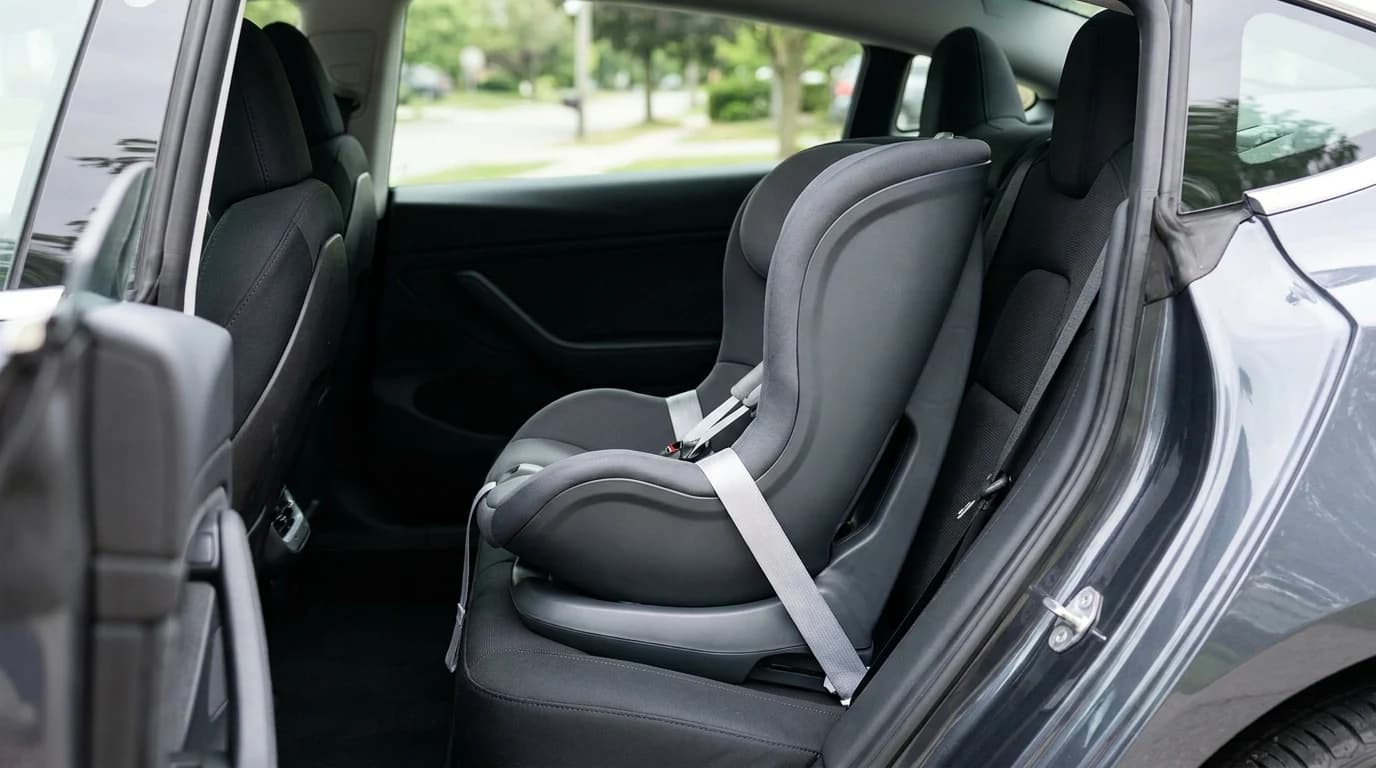
As an Amazon Associate I earn from qualifying purchases. Product prices and availability are subject to change.
Your child has a birthday and suddenly everyone has an opinion: "She's two now, you can turn her around." Here is the thing almost nobody updated their advice on: the calendar is not what decides when to move your child to the next car seat. The limit printed on the seat is. A child is safest in each stage until they physically outgrow it, and outgrowing it has nothing to do with a birthday.
Quick answer
Move to the next stage only when your child reaches the top height or weight limit printed by the manufacturer on their current seat, not at a set age. Ride rear-facingrear-facingThe safest car seat orientation until at least age 2 (and ideally 4+). A child's head, neck, and spine are cradled by the seat shell in a frontal crash. as long as the convertible seat allows (most go to 2 years or well beyond). Then forward-facing with a harness and top tether, ideally to at least age 4 and as long as the harness allows. Then a belt-positioning booster, often until age 8 to 12. A child is ready for the seat belt alone only when it fits right: lap belt low across the upper thighs, shoulder belt across the center of the shoulder and chest, knees bending at the seat edge, usually around 4 feet 9 inches and ages 9 to 12. Every child under 13 rides in the back seat.
Key takeaways
- The limit, not the birthday. Each switch is triggered by your child hitting the seat's max height or weight, which you will find on a label on the seat and in the manual.
- AAP dropped the "age 2" rule in 2018. Rear-facing is no longer about turning at a certain age. The guidance is to stay rear-facing until the convertible seat's rear-facing limit is reached, which for many seats happens at 3, 4, or later.
- Each move down is a small step down in protection. Rear-facing protects the head and neck best; a harness beats a booster; a booster beats a bare seat belt. There is no prize for graduating early.
- The seat belt is the last graduation, and it is a fit test, not an age. The 5-point fit check below is how you know, not the number of candles on the cake.
What most parents get wrong
The single most common mistake is treating each transition as a milestone to celebrate, like crawling or first words. It is the opposite. Every stage you move to is slightly less protective than the one before it. Turning a toddler forward-facing, swapping a harness for a booster, or dropping the booster for a seat belt all trade some safety for convenience.
For years the rule of thumb was "rear-facing until 2." The American Academy of Pediatrics retired the firm age in its 2018 policy update. Their current advice is explicitly weight- and height-based: keep a child rear-facing "as long as possible until they reach the highest weight or height allowed by their car safety seat manufacturer," noting that "most convertible seats have limits that will allow children to ride rear-facing for 2 years or more." So if your three-year-old still fits within the rear-facing limits of their convertible seat, the correct move is to leave them rear-facing.
The flip side mistake: switching too late because the limits feel invisible. The triggers are concrete. For rear-facing, the limit is usually the child's head reaching within an inch of the top of the seat shell, or hitting the stated weight. For forward-facing, it is the harness slots being too low for the shoulders or the ears cresting the shell. Read the label.
The four stages at a glance
| Stage | Typical age band | What it is | The switch trigger |
|---|---|---|---|
| Rear-facing | Birth to ~2-4 years | Infant-only or convertible seat facing the back | Reaches the seat's top rear-facing height or weight |
| Forward-facing, harness + tether | ~1 to 7 years (stay as long as it fits) | Convertible/all-in-one turned forward, 5-point harness, top tether attached | Outgrows the forward-facing harness height or weight |
| Belt-positioning booster | ~4 to 12 years | Lifts the child so the adult belt sits right | Passes the 5-point seat belt fit test |
| Seat belt alone | ~9 to 12+ years | Vehicle lap-and-shoulder belt, back seat | Belt fits correctly on its own (see test below) |
Age bands are guides, not triggers. NHTSA frames the stages in those ranges; the CDC notes rear-facing typically runs from birth to about age 2 to 4 and that a proper belt fit usually arrives around ages 9 to 12. The seat label is the decider.
Stage 1 to 2: rear-facing to forward-facing
Switch when your child's head reaches within one inch of the top of the rear-facing shell, or they hit the stated rear-facing weight, whichever comes first. Legs folded or crossed against the seat back are not a reason to turn around.
When they do outgrow rear-facing, move to a forward-facing seat with a harness and always attach the top tether (the strap that anchors the top of the seat to the vehicle). AAP advises keeping a child in a harnessed seat "as long as possible, at least to 4 years of age." A child who turns 2 but still fits rear-facing should stay rear-facing.
Stage 2 to 3: harness to booster
Move to a booster only when your child outgrows the forward-facing harness (shoulders above the top harness slots, or over the weight limit). A booster does one job: it raises the child so the adult seat belt lands on bone, not soft belly and neck. A booster only works with a lap-and-shoulder belt, never a lap belt alone, and your child must be mature enough to sit properly the whole ride.
Stage 3 to seat belt: the 5-point fit test
This is the transition parents rush most. A booster comes out only when the seat belt genuinely fits. Run all five checks with the child sitting all the way back:
- The child's back is flat against the vehicle seat.
- Knees bend naturally at the edge of the seat.
- The lap belt lies low and snug across the upper thighs, not the stomach.
- The shoulder belt crosses the center of the shoulder and chest, not the neck or face, and is not tucked behind the back or under the arm.
- The child can stay seated like this for the entire trip.
The CDC notes a proper fit "usually occurs when children are age 9 to 12." Many kids reach the often-cited 4 feet 9 inches before the belt actually fits in a given vehicle, so test it in your car, in each seating position, rather than going by height alone. And keep every child in the back seat until age 13.
When to recheck
Recheck the fit at the start of each season and after any growth spurt, and reread the harness height every few months for toddlers. If you are between seats or unsure a transition is right, a free car seat inspection station staffed by a certified technician will check the fit in person. Choosing the seats themselves is a separate question, covered in our best convertible car seats guide and our roundup of the best car seats for 2026.
Sources
Research Sources
Hilly Shore Inc.
Editorial teamIndependent product research team behind Cribworthy. Reviews are grounded in published AAP / CDC / NHTSA / CPSC pediatric guidance, JPMA / GREENGUARD GOLD / OEKO-TEX certification verification, and aggregated buyer sentiment.
115 products reviewed · 20 categories covered · cites AAP, CDC, NHTSA, CPSC, FDA, ACOG.
Safety claims are verified against published pediatric guidelines and CPSC databases. See our editorial standards.