Baby Eczema in Winter: The 3-Minute Soak-and-Seal Routine
Quick Answer
Bathe your baby in lukewarm water for 5 to 10 minutes, pat dry, and apply a thick fragrance-free ointment or cream within three minutes. Moisturize at least twice a day, dress baby in cotton, keep the crib away from heat vents, and use a humidifier only when the air feels dry. Call the pediatrician for oozing, crusting, pus bumps or a rash that isn't improving.
Our Verdict
In winter, the moisturizer's texture matters more than its brand. A brief lukewarm bath sealed with an ointment or thick cream within three minutes, repeated twice a day, is what the AAD, NEA and AAP all point to. Anything medicated starts with the pediatrician.
Pick the move for the moment
| If your situation is… | Pick | Why |
|---|---|---|
| Right after the evening bath on dry winter skin | An ointment, within three minutes | The NEA ranks ointments highest for oil content and sealing in moisture, and the AAD says they hold more water in the skin. |
| Your baby fights the greasy feel | A thick, fragrance-free cream | The NEA names a cream as the next best choice when an ointment feels too heavy. |
| Red, irritated cheeks and chin from drool | Plain petroleum jelly around the mouth before feeds and naps | This is the AAD's own example of blocking a saliva trigger. |
| Oozing, honey-colored crusts or pus bumps | Call the pediatrician, not a new cream | The AAP and AAD list these as possible signs of infection that need a doctor. |
Each pick is one of the products ranked below — this row is for shortcutting based on your situation, not a separate recommendation.
#1Aquaphor Baby Healing Ointment 4.9 | #2Tubby Todd All Over Ointment 4.7 | |
|---|---|---|
| Verdict | Best for the Post-Bath Seal | Oatmeal Ointment Alternative |
| Price | ~$16.49Buy on Amazon | ~$58Buy on Amazon |
| Type | Ointment | Ointment |
| Base | Petrolatum | — |
| Key ingredient | — | 1% colloidal oatmeal |
| Pros |
|
|
| Cons |
|
|
* Prices are approximate. Check the linked retailer for current pricing and availability.
Key Takeaways
- ✓In winter, the moisturizer's texture matters more than its brand. A brief lukewarm bath sealed with an ointment or thick cream within three minutes, repeated twice a day, is what the AAD, NEA and AAP all point to. Anything medicated starts with the pediatrician.
- ✓Eczema is a skin-barrier problem. The AAP's HealthyChildren guide to eczema explains that many children with eczema lack enough filaggrin, a protein that helps the outer layer of skin hold in water...
- ✓"Soak and seal" means bathing briefly, then locking the water in. The National Eczema Association explains that bathing increases water loss from the skin, and moisturizing afterward holds that moi...
- ✓The NEA sorts moisturizers by their oil and water content. More oil means a better seal.
- ✓Why the steroid caution? The AAD notes that babies are more sensitive to corticosteroids than adults, and its page on when a child should see a dermatologist says to talk with your pediatrician bef...
Lotion is the gentlest choice for a baby's eczema.
The National Eczema Association says lotions hold the least oil, are less effective than creams or ointments, and can burn because of their alcohol content. Ointments generally don't burn on sensitive skin.
Once the rash clears, you can stop moisturizing.
The AAP advises moisturizing once or twice every day even when the rash is gone, because gentle daily skin care is one of the most important ways to prevent the next flare.
Certain foods cause baby eczema, so cutting them out will clear it.
The AAP says many children with eczema also have food allergies, but foods themselves do not cause eczema. Talk to your doctor before trying any restrictive diet.
Eczema is contagious.
It is not. The AAP explains that infections on top of eczema usually come from germs that live harmlessly on everyone's skin but get in more easily through a weak barrier.
As an Amazon Associate I earn from qualifying purchases. Product prices and availability are subject to change.
Here is the short version. Give a lukewarm bath of 5 to 10 minutes, pat the skin dry, and get a thick, fragrance-free moisturizer on within three minutes. In winter, reach for an ointment or a thick cream rather than a lotion, moisturize at least twice a day, and keep your baby back from heating vents. That is the core of the American Academy of Dermatology's winter skin care advice for childhood eczema, and it is where flare control starts.
Below: why each step works, ointment vs cream vs lotion, and when to call the pediatrician. This is background for that conversation, not a treatment plan.
Why winter is hard on eczema-prone skin
Eczema is a skin-barrier problem. The AAP's HealthyChildren guide to eczema explains that many children with eczema lack enough filaggrin, a protein that helps the outer layer of skin hold in water and keep out irritants.
Worth knowing: The AAD's winter page names dry air, cold temperatures and indoor heating as the three things that irritate a child's skin and set off flares in cold months.
| Winter trigger | What the source says | Try this instead |
|---|---|---|
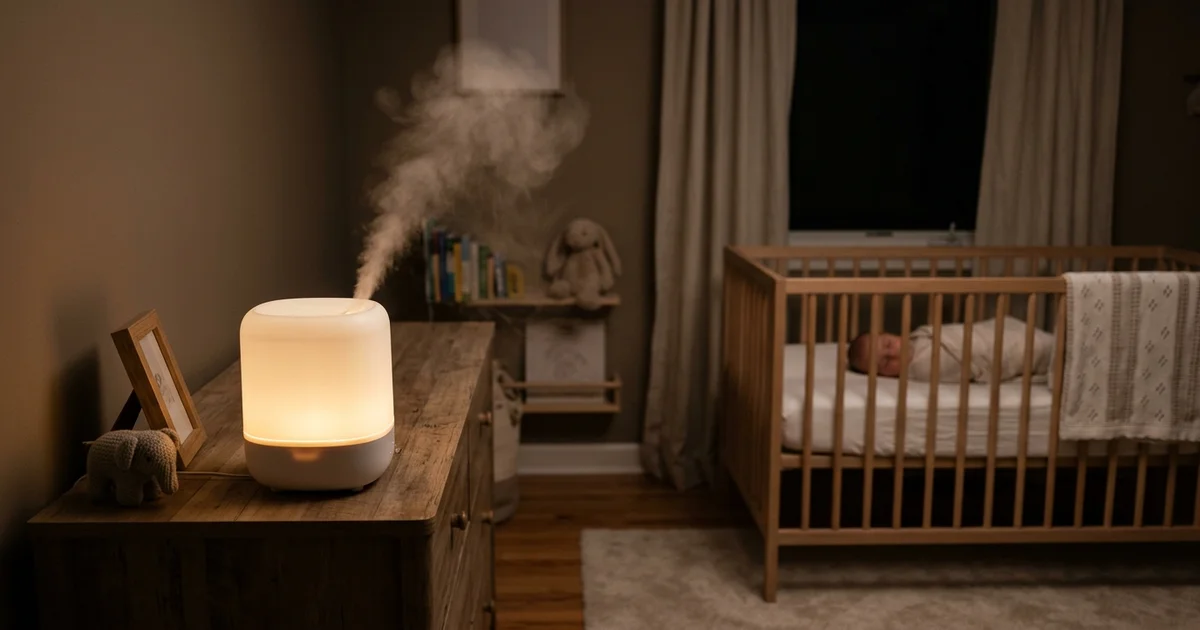
| Dry, heated indoor air | Dry air can trigger flares (AAD) | A humidifier when the air feels dry, kept at a comfortable level, not muggy |
| Radiators, vents, fireplaces | Direct heat warms the skin (AAD) | Keep baby far enough away that the skin stays cool |
| Wool, acrylic, polyester | These fibers can irritate skin (AAD) | Loose layers of 100% cotton |
| Overheating and sweat | Heat and sweat are common triggers (AAP) | Layers you can peel off; not too many covers at night |
| Fragrance | Includes air fresheners and candles, not just lotions (AAP) | Fragrance-free cleansers and detergent, no dryer sheets |
| Wet mittens after snow | Damp fabric irritates (AAD) | Change wet clothes as soon as you come inside |
One nuance: the AAD's indoor trigger chart also lists humidity itself as a trigger for some children, so the goal is comfortable air, not a steamy room. Our baby humidifier guide covers the options.
The soak-and-seal routine, step by step
"Soak and seal" means bathing briefly, then locking the water in. The National Eczema Association explains that bathing increases water loss from the skin, and moisturizing afterward holds that moisture in.
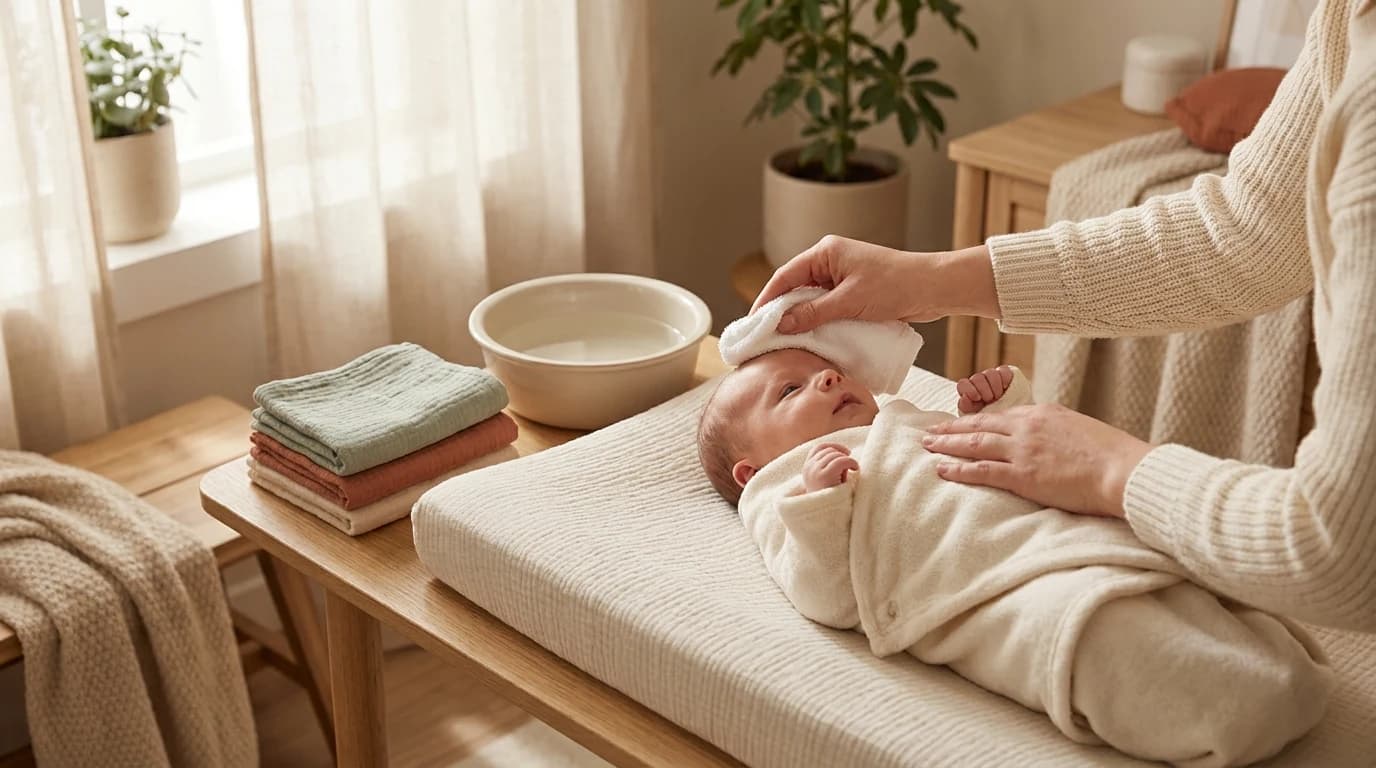
- Soak briefly. Lukewarm water, 5 to 10 minutes. The AAD's guidance on treating eczema in babies says to wash only the dirty or smelly parts with a mild, fragrance-free cleanser and to avoid scrubbing. Skip bubble bath.
- Pat, don't rub. Leave the skin slightly damp. The AAP's eczema treatment guide calls for patting dry.
- Medicine first, if prescribed. Put any prescribed cream on the rash before moisturizer, and don't layer moisturizer over it.
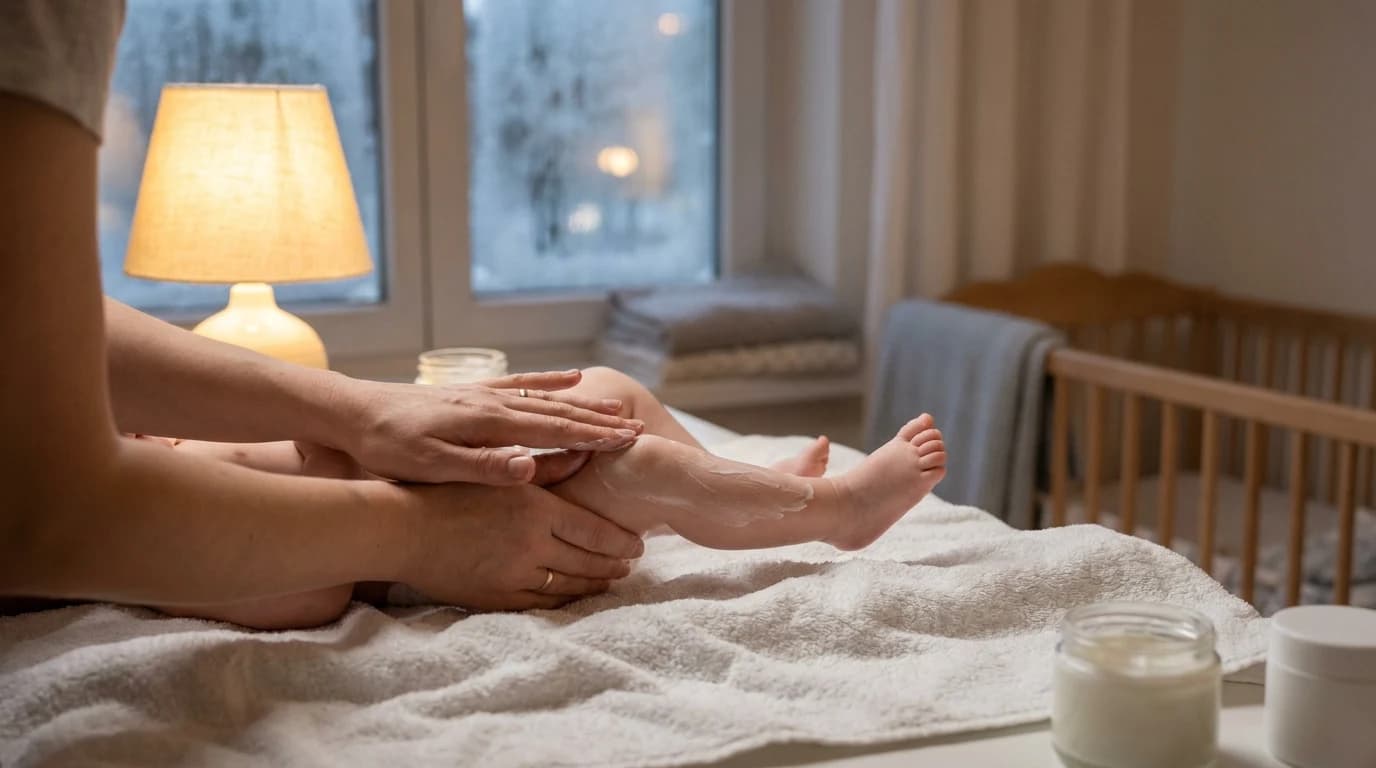
- Seal within three minutes. Spread a thick layer over the whole body while the skin is still damp. The NEA and the AAD both give the three-minute window.
- Repeat through the day. At least twice daily, after hand washing and before bed, and keep going once the rash clears. The AAP says daily moisturizing is one of the best ways to prevent the next flare.
New to baths? Start with how to bathe a newborn.
The bedtime checklist
- Ointment or thick cream on after the evening bath, within three minutes
- Nails trimmed short; cotton mittens or gloves at night can cut scratching (AAP)
- Cotton sleepwear, with no wool blanket against the skin
- A room warm enough, never hot: see our nursery temperature guide
- Crib away from the radiator or heating vent
- For drool rash, plain petroleum jelly around the mouth before feeds and naps (AAD)
Ointment vs cream vs lotion
The NEA sorts moisturizers by their oil and water content. More oil means a better seal.
| Form | What it is | On eczema skin | Best winter use | Trade-off |
|---|---|---|---|---|
| Ointment | Oil-based; the most oil of the three | Very good at sealing in moisture and generally doesn't burn (NEA); holds more water in the skin (AAD) | The post-bath seal, very dry patches, bedtime | Greasy feel |
| Cream | Water plus oil | Very good at sealing in moisture, less greasy (NEA) | Daytime, or a baby who fights the ointment | Less effective than an ointment on very dry skin (NEA) |
| Lotion | Water plus alcohol; the least oil | Lightest, and less effective than creams or ointments (NEA); thinner (AAP) | Mild dryness only, or under an ointment | The alcohol can sting broken skin (NEA) |
Worth knowing: The AAD tells parents that thick creams and ointments generally work better than lotions or oils. If your baby hates the feel of an ointment, the NEA says a cream is the next best choice.
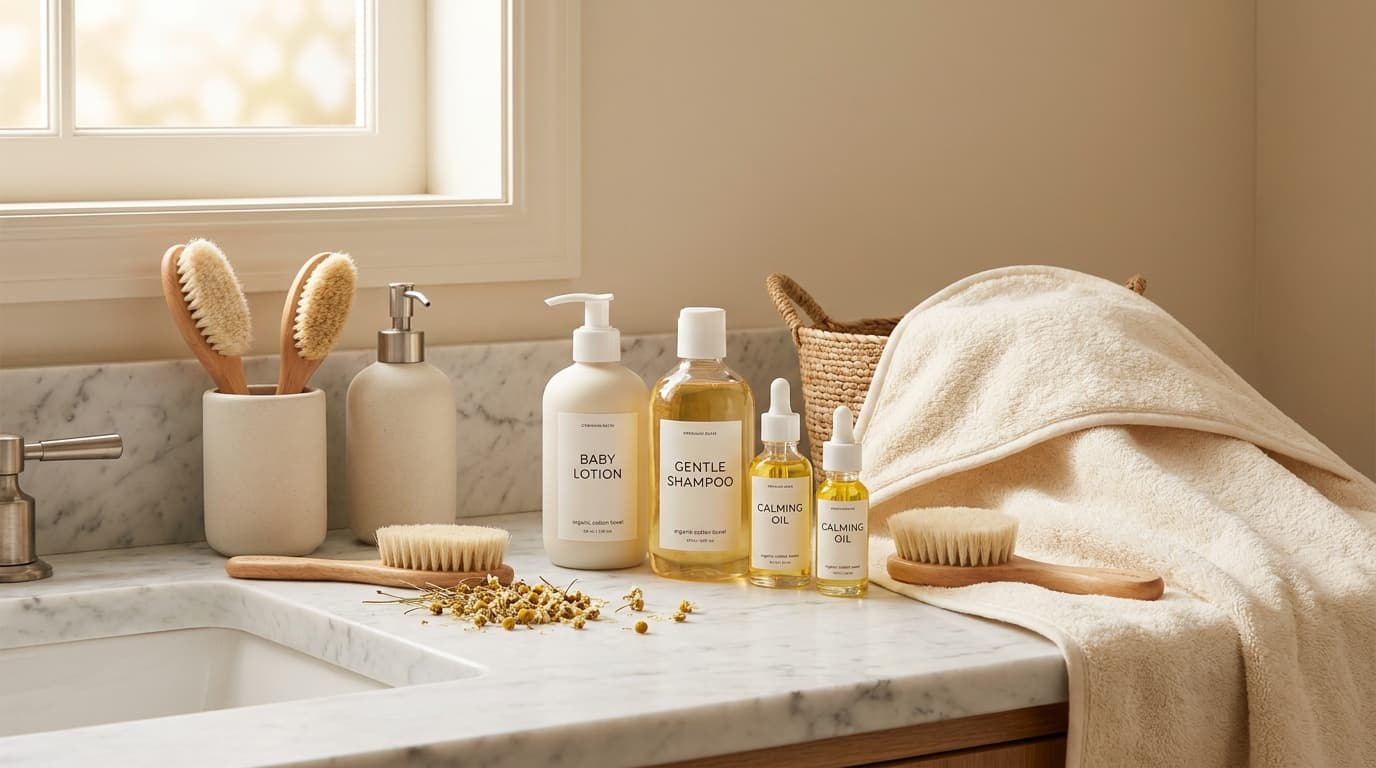
Two ointments already appear in our baby skincare roundup. Aquaphor Baby Healing Ointment → is a fragrance-free, petrolatum-based ointment, the simplest fit for the seal step. Tubby Todd All Over Ointment → is a steroid-free option made with colloidal oatmeal, at a noticeably higher price. Neither is a prescription treatment. The NEA suggests a patch test first: a pea-sized dab on the wrist or inner elbow, then watch for redness or itch.
Do this, not that
| Do this | Not that |
|---|---|
| Lukewarm, short baths | Long, hot soaks |
| Fragrance-free, dye-free laundry detergent | Fabric softener or dryer sheets |
| Ask the pediatrician before any over-the-counter hydrocortisone | Starting a steroid cream on your own |
| Follow the prescribed amount, how long, and how often | Stretching or doubling a steroid course |
Why the steroid caution? The AAD notes that babies are more sensitive to corticosteroids than adults, and its page on when a child should see a dermatologist says to talk with your pediatrician before using any eczema medicine sold without a prescription. The AAP adds that prescribed topical steroids are effective and safe when used appropriately. For detergent picks, see our baby laundry detergent guide.
When to call the pediatrician
Eczema lets germs into the skin more easily, the AAD explains, so watch for infection. Call your pediatrician if you see:
- Yellow or honey-colored crusting or scabs
- Weepy or oozing skin
- Blisters or pus bumps
- A rash that isn't improving with your usual routine
- Itch that keeps your baby from sleeping
The AAD also stresses treating eczema as soon as you notice it, and says moderate to severe eczema needs a dermatologist.
Eczema usually spares the diaper area, the AAP notes; a rash there is covered in our diaper rash guide.
What is the soak-and-seal method for baby eczema?
A short, lukewarm bath, then a thick moisturizer within three minutes while the skin is still damp, so the water stays in the skin.
Should I use a humidifier for baby eczema?
The AAD suggests one when the air feels dry, common with winter heating. It also flags high humidity as a trigger for some children, so aim for comfortable air.
How often should I bathe a baby with eczema?
The AAP suggests a 5 to 10 minute bath every day or every other day, and the AAD says to follow your dermatologist's advice on frequency. Moisturize after every bath.
Research Sources
- American Academy of Dermatology - Winter skin care for childhood eczema
- American Academy of Dermatology - How to treat eczema in babies
- American Academy of Dermatology - How can I find indoor eczema triggers?
- American Academy of Dermatology - Should a child who has eczema see a dermatologist?
- National Eczema Association - Moisturizing for eczema (lotion, cream and ointment)
- AAP HealthyChildren - Eczema in Babies and Children: Symptoms and Causes
- AAP HealthyChildren - How to Treat and Control Eczema Rashes in Children
Hilly Shore Inc.
Editorial teamIndependent product research team behind Cribworthy. Reviews are grounded in published AAP / CDC / NHTSA / CPSC pediatric guidance, JPMA / GREENGUARD GOLD / OEKO-TEX certification verification, and aggregated buyer sentiment.
115 products reviewed · 20 categories covered · cites AAP, CDC, NHTSA, CPSC, FDA, ACOG.
Safety claims are verified against published pediatric guidelines and CPSC databases. See our editorial standards.