New Baby Lounger Safety Rule: What Changed, What to Check
Quick Answer
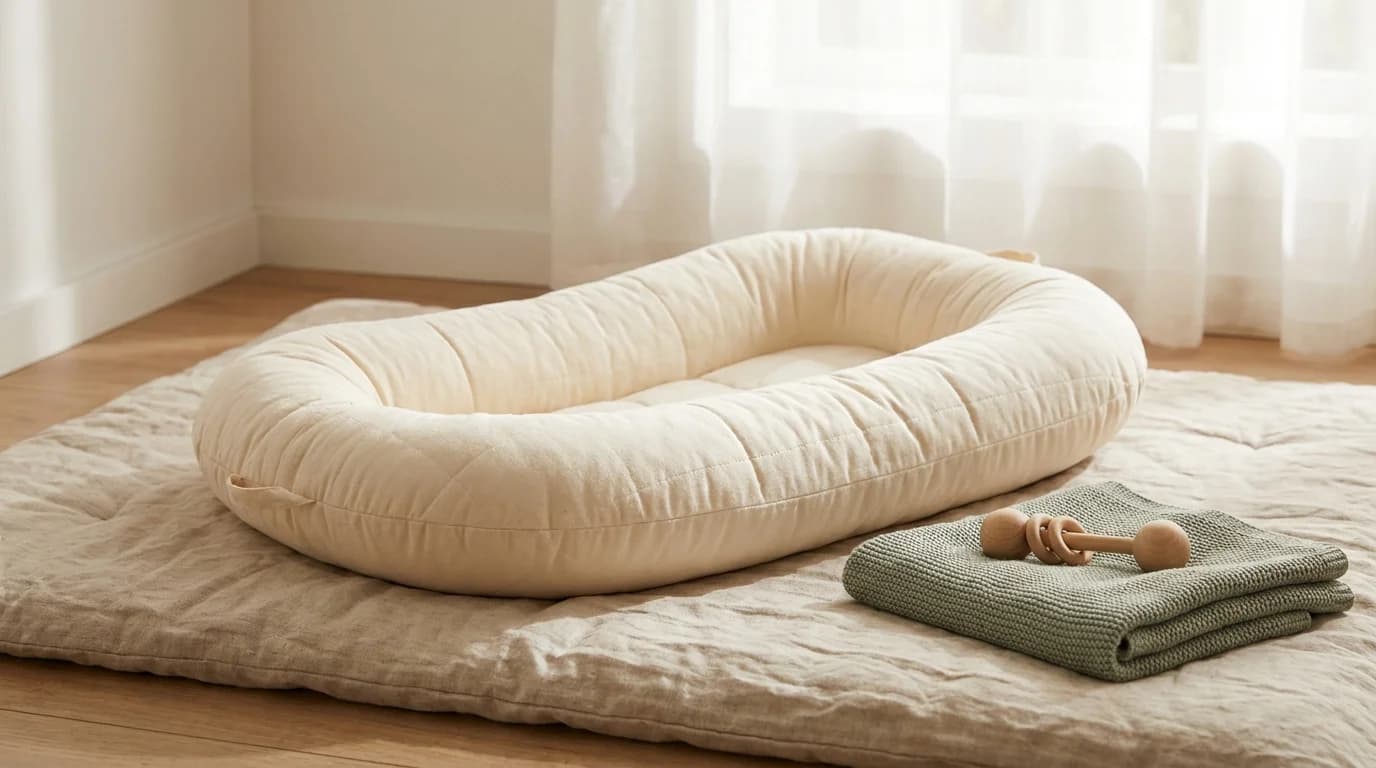
Infant support cushions — loungers, head positioners, tummy time pillows and pillows marketed for both nursing and lounging — are covered by a federal safety standard for the first time. Cushions manufactured after May 5, 2025 must cap incline at 10 degrees, open the sidewall angle past 90 degrees, pass a firmness test, carry no restraints, and show a permanent warning panel and manufacture date. The rule changes the product, not the rules for using it: a lounger is still for supervised, awake, floor-level time only.
Our Verdict
Check the manufacture date code before you check anything else. The standard applies by date of manufacture, so it is the one label that tells you which version of the rules a cushion was built to — and hand-me-downs and older shelf stock are legally exempt from all of it.
Key Takeaways
- ✓Check the manufacture date code before you check anything else. The standard applies by date of manufacture, so it is the one label that tells you which version of the rules a cushion was built to — and hand-me-downs and older shelf stock are legally exempt from all of it.
- ✓For years the soft nest you put a newborn in for supervised floor time sat in a regulatory gap: sold beside cribs and bassinets, covered by no standard of its own. That changed quietly. In October ...
- ✓The category is much wider than the word "lounger" suggests, which is the first thing most shopping guides get wrong.
- ✓Every requirement below is a pass-or-fail lab test, not a marketing claim; the numbers come from the performance requirements themselves.
- ✓The part almost nobody tells shoppers: because the standard applies by date of manufacture, two identical-looking cushions on one shelf can sit on opposite sides of the line, and neither price nor ...
As an Amazon Associate I earn from qualifying purchases. Product prices and availability are subject to change.
The rule that arrived without a headline
For years the soft nest you put a newborn in for supervised floor time sat in a regulatory gap: sold beside cribs and bassinets, covered by no standard of its own. That changed quietly. In October 2024 the Consumer Product Safety CommissionCPSCThe US federal agency that issues product recalls and enforces safety standards on cribs, strollers, car seats, and other juvenile products. approved a mandatory standard for infant support cushions on a 5-0 vote, and that rule — 16 CFR Part 1243 — applies to every cushion of this kind manufactured after May 5, 2025.
The case behind it is blunt. CPSC says it is aware of 79 infant deaths and 124 injuries associated with these cushions between 2010 and 2022, most among babies younger than three months, and the majority involving a cushion used in or on something else a baby sleeps on: an adult bed, a bassinet, a crib, a couch.
The short version: the product is now regulated and the marketing is now constrained. The hazard is not. A lounger was a supervised, floor-level, awake-time object before this rule, and it still is.
What actually counts as an infant support cushion
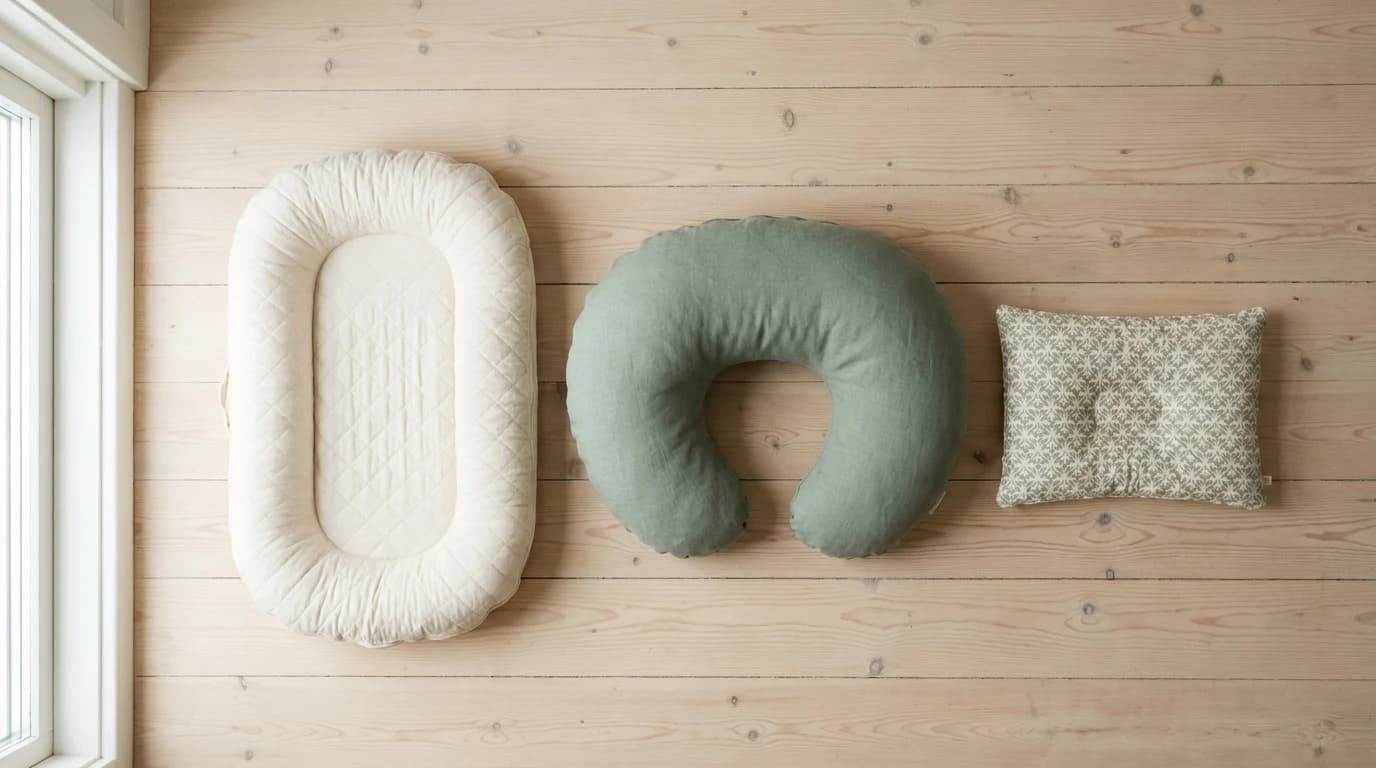
The category is much wider than the word "lounger" suggests, which is the first thing most shopping guides get wrong.
Covered by the rule:
- Infant loungers and nests with a raised perimeter or a recess
- Head positioners, sleep positioners and anti-rollover pillows
- Infant wedge pillows and crib pillows
- Tummy timetummy timeSupervised awake time on the stomach — builds neck, back, and arm strength and prevents flat-head syndrome. Aim for a few minutes several times a day from day one. pillows, and pads or mats sold for infant support
- Multi-purpose pillows marketed for both nursing and lounging
Outside it:
- A nursing pillow sold only for nursing, unless it also meets the rule's own definition of an infant lounger
- Products already covered by another federal infant standard: a crib, bassinet or play yard
The four things a compliant cushion must now do
Every requirement below is a pass-or-fail lab test, not a marketing claim; the numbers come from the performance requirements themselves.
| Requirement | What the standard sets | The hazard it targets |
|---|---|---|
| Incline | 10 degrees maximum | Head and neck slumping into an airway-blocking position |
| Sidewall angle | Greater than 90 degrees where the wall meets the surface | Wedging and suffocation in the crease of a bucket-shaped nest |
| Firmness | More than 10 newtons to push a 3-inch probe in by one inch — surface, sidewall and join | A surface that molds around a face |
| Restraints | Not permitted at all | A harness implying the baby can be left there |
CPSC notes the 10-degree ceiling effectively limits side height to slightly under two inches — deliberate, because a low product reads as a floor product. The rule also requires a conspicuous, permanent warning panel on the product itself, not just on the box.
Why the date on the label decides it
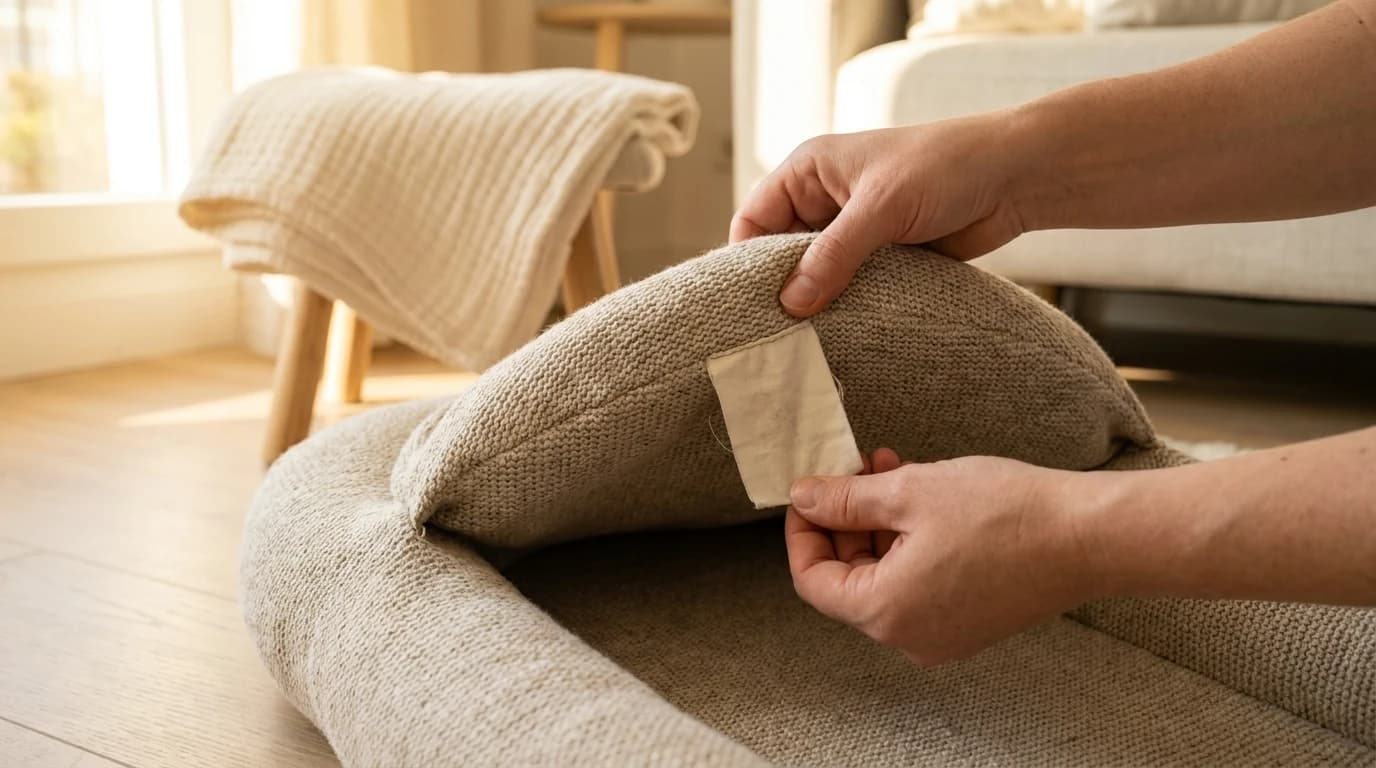
The part almost nobody tells shoppers: because the standard applies by date of manufacture, two identical-looking cushions on one shelf can sit on opposite sides of the line, and neither price nor packaging will say so. The rule closes that gap itself, requiring each product to carry a permanent code identifying at least the month and year it was made.
Rule of thumb: if you cannot find a permanent manufacture date on the product, you cannot tell which set of rules it was built to.
What to check, in order:
- A permanent date code showing month and year of manufacture
- The maker's name and address on the product, or visible through the packaging
- A warning panel attached to the product, not only a hangtag or a box print
- No strap, buckle or harness anywhere on it
Firmness is the one thing you cannot check at home: 10 newtons over a one-inch displacement is a rig measurement, and a hand press does not reproduce it. The label is the part of this standard a parent can actually read.
Hand-me-downs are where this bites
Nothing in the rule clears older stock from shelves, closets or buy-nothing groups. A cushion made before May 2025 can still be sold, resold and gifted legally, and much of what circulates secondhand predates the standard entirely.
Recalled products are different: federal law prohibits selling them. The clearest case is still in basements: in September 2021 The Boppy Company recalled about 3.3 million newborn loungers after eight infant deaths, with a refund as the remedy. Those are not to be used, resold or handed on, however clean.
Before you accept a secondhand cushion:
- Check the model against CPSC's recall list before it enters the house
- No date code means no way to place it
- Refuse anything with straps, a deep bucket shape or a sinking surface
What the rule does not do
What the standard fixes: the physical traps that made some of these products dangerous even when used as intended — the soft crease, the sinking surface, the steep incline, the restraint that invited walking away.
What it cannot fix: where the product ends up. The deaths CPSC counted mostly happened with the cushion placed in a crib, on an adult bed or on a couch — and on a mattress, a compliant cushion behaves exactly like a non-compliant one.
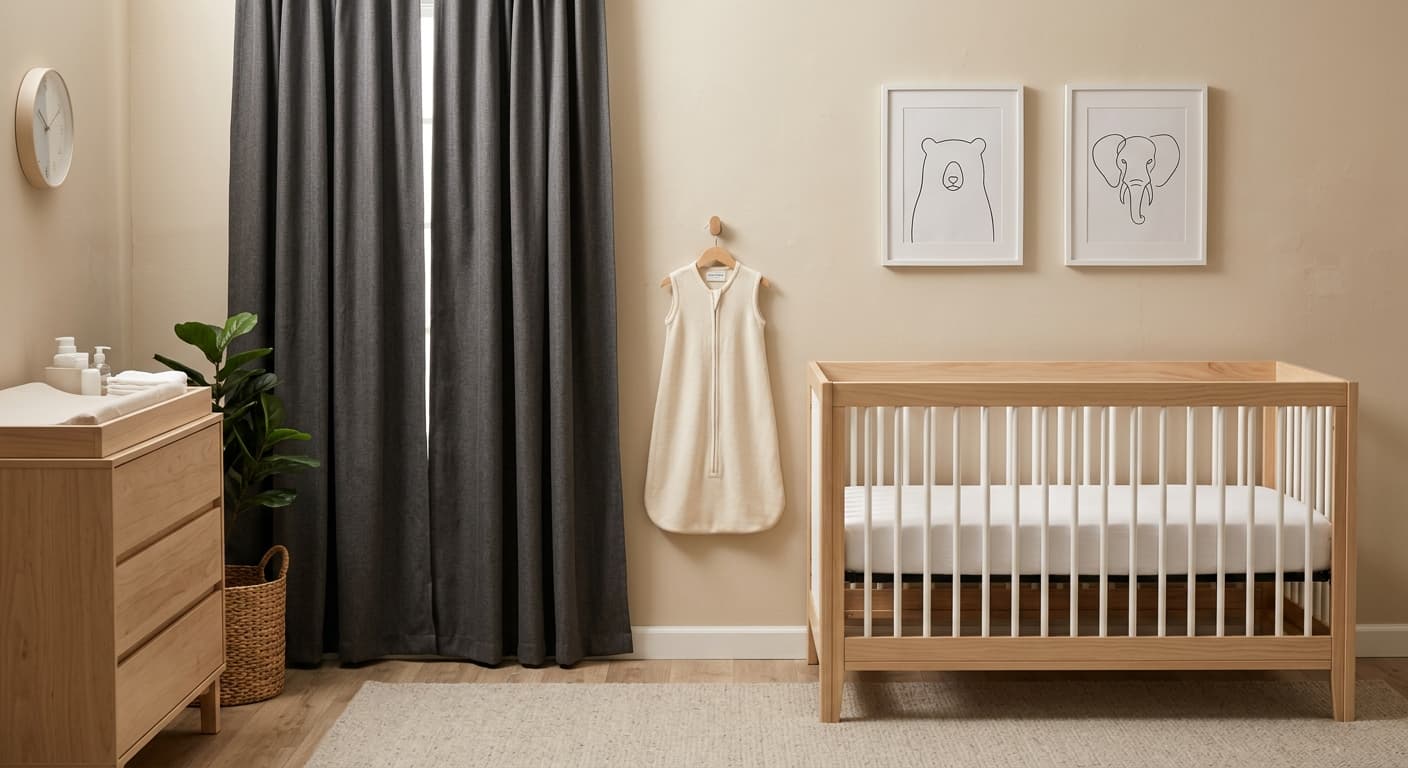
So the usage guidance shipped with the rule is unchanged from our safe sleep environment checklist: never for sleep or naps, move the baby to a crib, bassinet or play yard if they doze off, stay within reach, floor only. If you are shortlisting products, our lounger and infant seat comparison covers the picks; this rule is the filter to apply to them.
Does a compliant lounger make sleep safe?
No, and this is the misreading worth heading off. A compliant cushion is capped at 10 degrees of incline — the same threshold the AAP uses when it says any surface inclining more than 10 degrees is not safe for sleep. Meeting that number is necessary, not sufficient. Sleep surfaces are also flat, firm, bare and free of raised sides, and the AAP is explicit that products not marketed specifically for infant sleep should not be used for it — and an infant support cushion is not one. The same logic retired inclined sleepers entirely.
Is a nursing pillow covered by the rule?
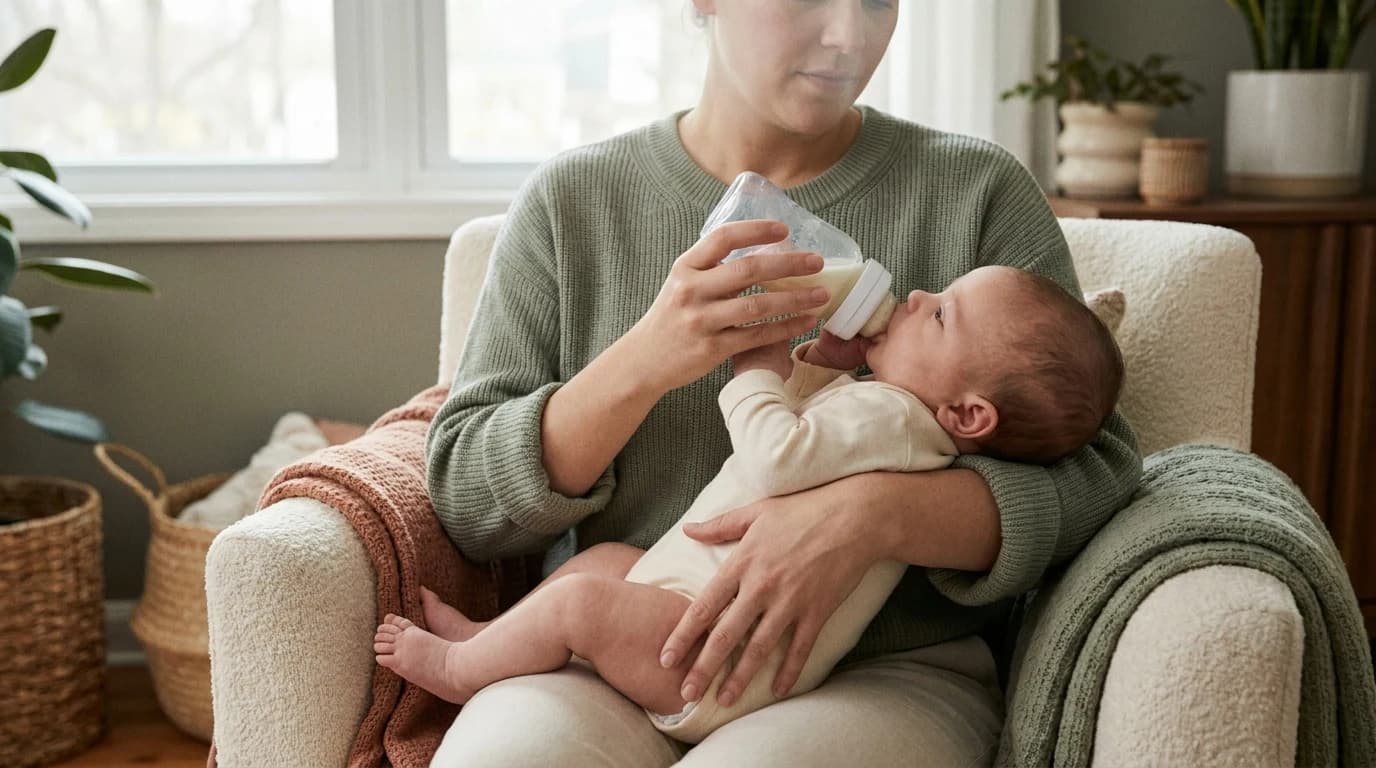
It depends on how it is sold. A pillow marketed purely as a nursing aid falls outside Part 1243; the same shape marketed for nursing and lounging is inside it, and a nursing pillow meeting the definition of an infant lounger is explicitly not exempt. The practical read: the moment a brand suggests a baby can rest on a product, it is in scope — worth remembering when a feeding cushion starts doubling as a nap spot, the same failure pattern behind bottle-feeding pillows.
Research Sources
Hilly Shore Inc.
Editorial teamIndependent product research team behind Cribworthy. Reviews are grounded in published AAP / CDC / NHTSA / CPSC pediatric guidance, JPMA / GREENGUARD GOLD / OEKO-TEX certification verification, and aggregated buyer sentiment.
115 products reviewed · 20 categories covered · cites AAP, CDC, NHTSA, CPSC, FDA, ACOG.
Safety claims are verified against published pediatric guidelines and CPSC databases. See our editorial standards.