Safe Sleep Environment: The AAP Checklist for 2026
Quick Answer
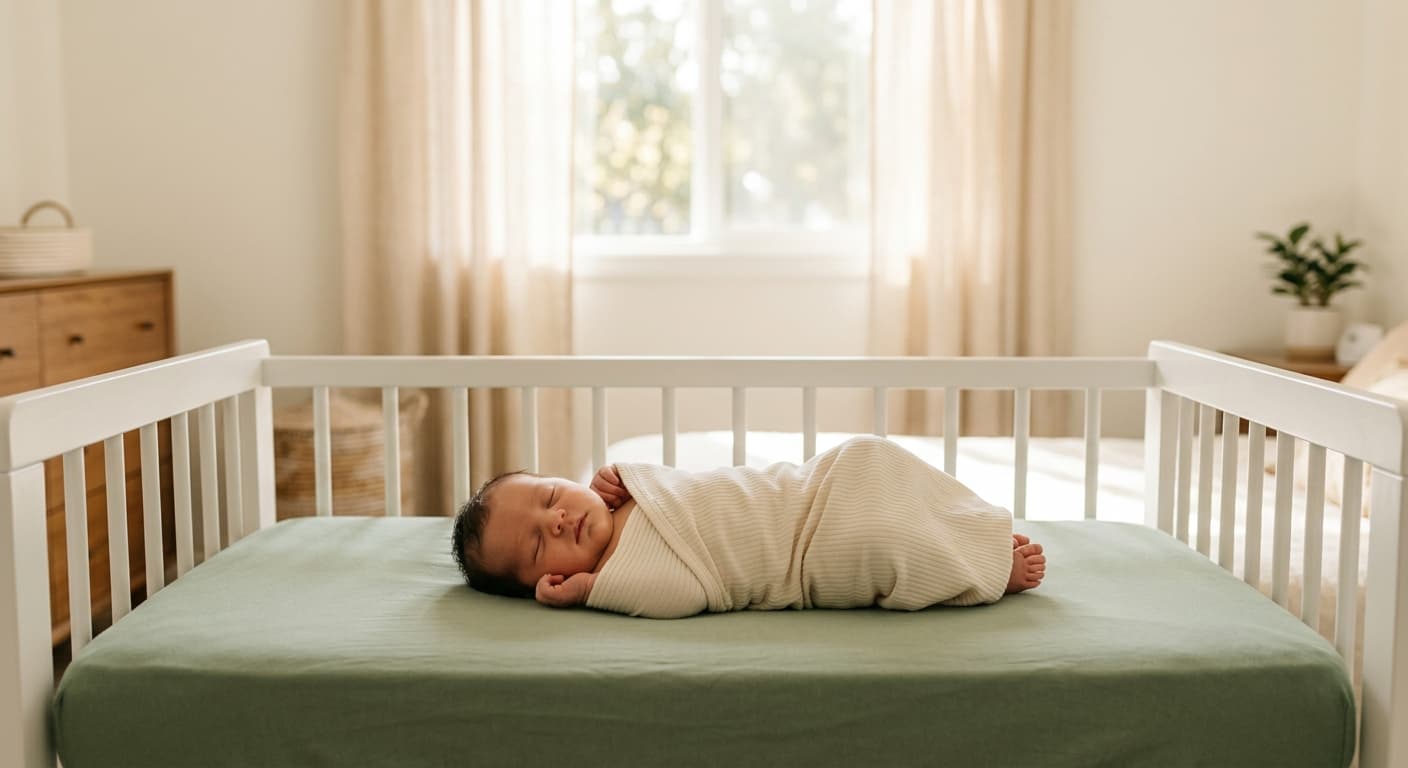
The AAP safe sleep setup is simple: baby sleeps alone, on their back, on a firm, flat, non-inclined crib, bassinet, or play-yard surface with only a fitted sheet. Keep pillows, blankets, bumpers, positioners, stuffed toys, weighted products, and loose bedding out of the sleep space. Room-share without bed-sharing for at least the first 6 months, and move baby out of any bassinet once they hit the product limit or start rolling or pushing up.
Our Verdict
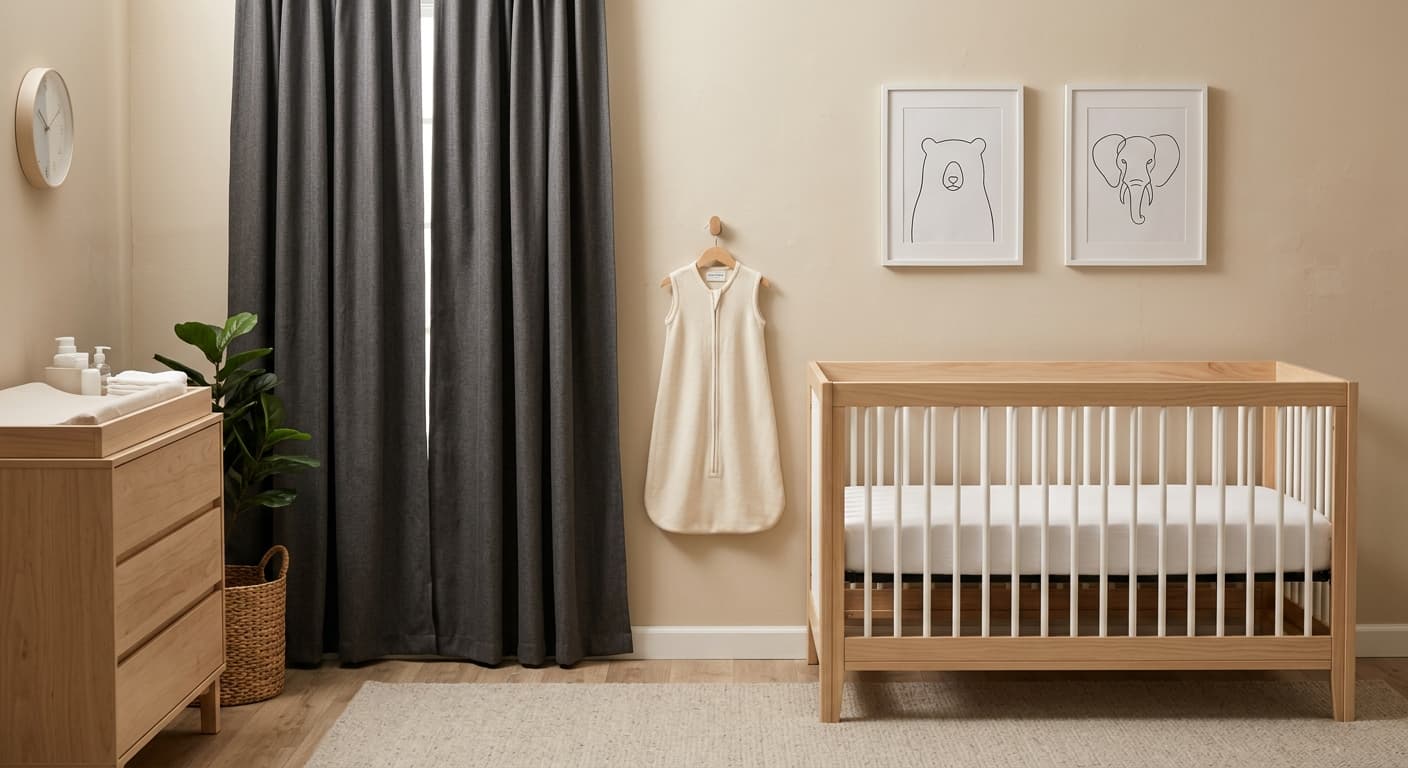
The safest baby sleep space looks boring: firm, flat, empty, and close to your bed but not in it. Do not add comfort items to make it look cozier; the absence of pillows, blankets, bumpers, wedges, and toys is the safety feature.
Key Takeaways
- ✓Setting up a safe sleep environment is one of the most important things you can do for your baby.
- ✓These are the rules. They're boring. They save lives.
- ✓The shopping list is short: four things, and the first two have a mandatory federal safety standard behind them.
- ✓Let's walk through setting one up, piece by piece.
- ✓The AAP recommends baby sleeps in your room (on their own surface) for at least the first 6 months. The AAP says this alone can lower SIDS risk by as much as 50%.
As an Amazon Associate I earn from qualifying purchases. Product prices and availability are subject to change.
Safe Sleep Environment: The AAP Checklist for 2026
Setting up a safe sleep environment is one of the most important things you can do for your baby. The American Academy of Pediatrics (AAP) issues updated safe sleep guidelines periodically, and the current guidance (2022 update) is the foundation of everything in this article.
The whole guide, compressed: firm flat surface, empty crib, baby on their back, in your room. Everything below is detail on those four things.
Every year, around 3,500 babies in the United States die suddenly and unexpectedly while sleeping, according to the AAP's parent guide to safe sleep. The AAP's 2022 policy statement is the current standard: back to sleep for every sleep, on a firm, flat surface, with nothing else in the sleep space. Any crib, bassinet, portable crib or play yard you use should meet the safety standards of the Consumer Product Safety Commission (CPSC).
The non-negotiables (AAP Safe Sleep 2022 guidelines)
These are the rules. They're boring. They save lives.
- Always place baby on their back to sleep for every sleep — naps and nighttime, until they're 1 year old.
- Use a firm, flat sleep surface. A crib mattress should not compress more than about half an inch under your hand's weight. Products with a sleep surface inclined more than 10 degrees (like Rock 'n Plays) are banned for infant sleep by the Safe Sleep for Babies Act of 2021.
- The sleep surface should be empty. No blankets, pillows, bumpers, stuffed animals, loose sheets, or positioners. Just a fitted sheet on a firm mattress.
- Room-share for at least the first 6 months. Baby sleeps in your room, but on their own sleep surface (bassinet, bedside sleeper, or crib). The AAP says room-sharing can lower SIDS risk by as much as 50%. For timing the move after that, see when baby can sleep in their own room.
- Never sleep with baby on a couch, armchair, or soft surface. Bed-sharing on these surfaces has the highest risk of all sleep scenarios.
- Avoid overheating. In general, dress baby in only one more layer than you would wear comfortably in the same room, and watch for sweating, a hot chest, or flushed skin.
- Keep baby away from smoke and e-cigarettes before and after birth.
- Offer a pacifier at nap and bedtime (not required, but the AAP notes it's associated with reduced SIDS risk).
- Breastfeed if possible. The AAP notes breastfeeding is associated with lower SIDS risk.
- Stay up to date on vaccinations. The AAP notes that evidence suggests infant vaccinations may help protect against SIDS.
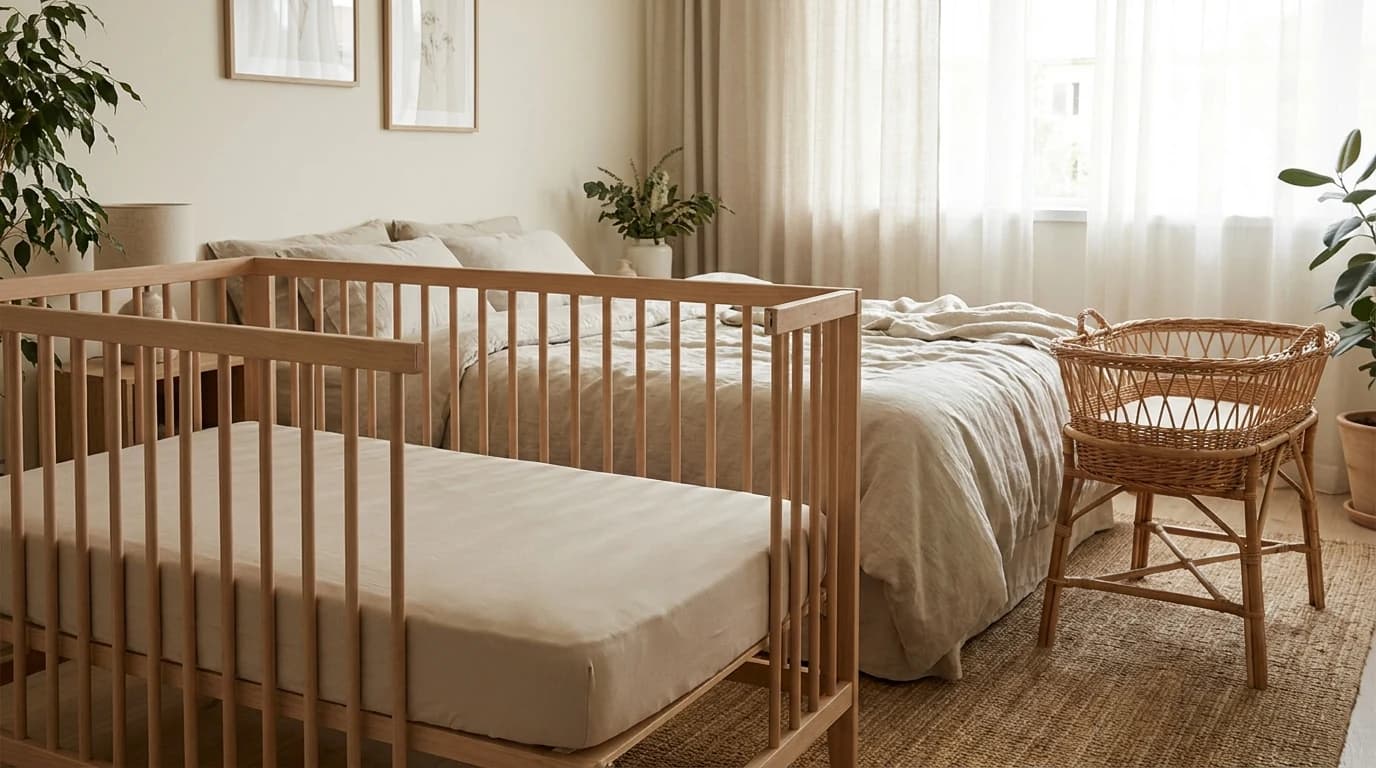
What you actually need for a safe sleep space
The shopping list is short: four things, and the first two have a mandatory federal safety standard behind them.
| Item | What to look for | Compare options |
|---|---|---|
| Crib, bassinet or play yard | Meets the CPSC standard for its type: full-size cribs (16 CFR 1219), non-full-size cribs (16 CFR 1220), bassinets and cradles (16 CFR 1218), play yards (16 CFR 1221) | Best cribs and bassinets, best pack and plays |
| Firm, flat mattress | Crib mattresses made since August 15, 2022 must meet the federal crib mattress standard, 16 CFR 1241, which includes a firmness test. In a play yard, use the mattress it came with or an after-market mattress made for that model | Best cribs and bassinets |
| Fitted sheet | Made for that mattress size and pulled tight; the only thing in the crib with your baby | — |
| Wearable blanket or sleep sack | Non-weighted, the right size, and a TOG rating matched to the room | Swaddles and sleep sacks, TOG rating chart |
If you want a starting point from those guides:
- Babyletto Hudson 3-in-1 → is our top crib pick, a convertible crib with four mattress heights.
- HALO SleepSack → is a 1.5 TOG cotton wearable blanket for rooms that sit around 68-72°F.
Nothing else on a registry list is required for safe sleep. Monitors and sound machines are optional conveniences, not safety equipment.
What a safe sleep space actually looks like
Let's walk through setting one up, piece by piece.
The sleep surface
Your options:
- Bassinet (0-6 months typical): portable, fits beside your bed, good for the newborn phase
- Full-size crib (0-36 months): the long-term solution (compared in our best cribs and bassinets guide)
- Bedside sleeper / bedside bassinet: attaches to your bed at the same height but baby has their own flat, firm surface
- Mini crib: smaller than a standard crib, good for small spaces
What matters:
- Certified to current CPSC safety standards — look for a JPMA certification seal or check the CPSC recall database
- No drop-side cribs (banned in the US since 2011, but still sold secondhand)
- Slats no more than 2⅜ inches apart (a soda can should not fit through)
- Firm mattress that fits tightly — no more than 2 fingers should fit between the mattress and the crib side
The mattress: firm and flat, no exceptions
AAP guidance: firm and flat. No exceptions.
Firmness test: press down on the mattress. It should spring back almost immediately with no significant compression. A mattress that feels "cozy" or conforms to your hand is too soft.
Matters:
- Firmness (non-negotiable)
- Fits the crib tightly
- Has a waterproof cover (for the millions of diaper leaks ahead)
- Has been certified (Greenguard Gold, CertiPUR-US, etc.)
Doesn't matter for safety:
- Dual-sided (infant-firm side, toddler-softer side) — just use the firm side
- "Premium" materials (organic cotton, wool, etc.) — nice to have, not a safety feature
- Price (a $50 certified mattress is as safe as a $400 one)
What goes IN the crib
In the crib:
- Fitted sheet
- Baby (on their back, dressed appropriately)
Not in the crib:
- Blankets of any kind
- Pillows
- Stuffed animals
- Bumpers (federally banned, and universally not recommended)
- Positioners, wedges, or sleep "nests"
- Crib tents
- Mesh liners
- Mobiles hanging low enough for baby to reach
What baby should be wearing
The rule: one layer more than you would wear comfortably in the same room temperature.
| Situation | AAP-aligned response |
|---|---|
| You are comfortable in the room | Dress baby in no more than one additional layer |
| Baby is sweating, has a hot chest, or has flushed skin | Remove a layer and check again |
| You are worried baby will get cold | Use a wearable blanket rather than a loose blanket |
| Baby is indoors after leaving the hospital | Skip hats to reduce overheating |
If you use a sleep sack, follow that specific product's sizing and warmth instructions instead of treating a TOG chart as a universal medical rule. Our sleep sack TOG guide shows how far the brand charts disagree.
Avoid: loose socks or booties that can come off, and anything with ribbons or strings.
Room-sharing: the unglamorous life-saver
The AAP recommends baby sleeps in your room (on their own surface) for at least the first 6 months. The AAP says this alone can lower SIDS risk by as much as 50%.
Room-sharing is not bed-sharing. Baby has their own sleep surface. You're just in the same room.
What room-sharing looks like:
- Bassinet or bedside sleeper within arm's reach of your bed
- Or a pack 'n' play in a corner of your bedroom
- Or a mini-crib
If you're upgrading from bassinet to crib and the crib doesn't fit in your room, the AAP's priority is room-sharing over surface type. A pack 'n' play in your room beats a crib in the nursery.
What changed in the 2022 update
The current AAP policy statement was published in Pediatrics in July 2022 and replaced the 2016 version. If your reference point is an older sibling or a grandparent's advice, these are the changes that matter:
- Room-sharing has a firmer minimum. The 2016 statement said room-share ideally for the first year; 2022 recommends at least the first 6 months, the window where risk is concentrated.
- "Flat" has a number. Any sleep surface inclined more than 10 degrees is unsafe, and the Safe Sleep for Babies Act of 2021 banned the sale of inclined sleepers and padded crib bumpers.
- Weighted products are named. No weighted blankets, sleepers or swaddles on or near a sleeping baby.
- Substances are spelled out. Beyond smoke exposure, the statement names nicotine, alcohol, marijuana and opioids, which multiply the danger of bed-sharing.
- Monitors are not SIDS prevention. Home heart-rate and oxygen monitors are not recommended as a way to reduce SIDS risk. A camera is a convenience tool; it doesn't replace anything on this list.
Interactive safe sleep checklist
Go through this list every night for your baby's first year. Most parents find it takes 30 seconds once it's routine.
- Baby is on their back
- Crib/bassinet mattress is firm and flat (no incline)
- Fitted sheet is the only thing in the crib
- No blankets, pillows, bumpers, or stuffed animals
- No monitor cords, blind cords, or other strings within 3 feet
- Baby is dressed in appropriate layers (one more than you)
- Baby shows no signs of overheating (sweating, hot chest, or flushed skin)
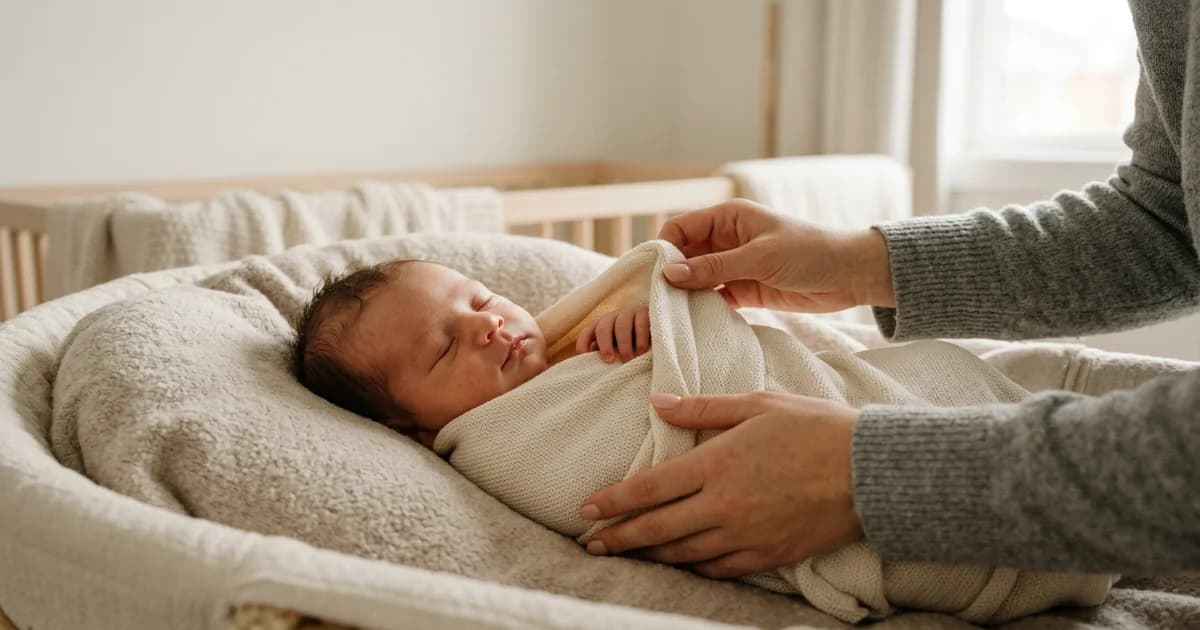
- Swaddle is off if baby is rolling
- White noise machine is at least 6.5 feet (200 cm) from the crib, well below max volume, and under 50 dB at the crib (why 50 dB)
- Baby is in your room (for at least the first 6 months)
Common safe sleep mistakes (and the fixes)
| The thought | The fix |
|---|---|
| "My baby sleeps so much better on their tummy." | Once baby can independently roll from back to tummy AND from tummy to back, you can put them down on their back and let them find their position. Before that, always back-sleeping. |
| "I keep a little hat on my baby because the room gets cold." | Don't. Overheating is a SIDS risk factor. Use an appropriate sleep sack and check baby's chest/tummy for warmth (not their extremities, which will always be cool). |
| "The Dock-a-Tot / Snuggle Me / Baby Nest keeps my baby feeling secure." | These products are not approved for unsupervised sleep by the AAP and are associated with multiple infant deaths. They are fine for supervised lounging but not for naps or nighttime sleep. |
| "The crib bumpers look so cute, and they're 'breathable' mesh." | Padded bumpers, vinyl bumper guards and vertical slat covers are banned by the federal Safe Sleep for Babies Act of 2021. Non-padded mesh liners are exempt from that ban, but the AAP still advises keeping bumper pads and anything that attaches to crib slats or sides out of the sleep area. They pose a strangulation and entrapment risk. |
The one that deserves more than a table row: "I co-sleep safely following the Safe Sleep Seven."
The AAP recommends against bed-sharing under any circumstances. We understand families make their own choices based on culture and circumstance, and we'd rather you be informed than misinformed. If there is any chance you will fall asleep while feeding at night, the AAP's advice is to feed on your adult bed cleared of pillows and blankets rather than on a couch or armchair, then move the baby back to their own surface as soon as you wake.
FAQ
Can I use a crib that's been passed down from my older child? Yes, as long as it meets current CPSC standards (made after June 2011 when drop-side cribs were banned), has no missing parts, and no recalls are active for that model. Always check the CPSC recall database.
Are products sold as "breathable" or "SIDS-reducing" AAP-approved? No. The AAP does not certify or endorse commercial sleep products. What matters is whether the product is a firm, flat sleep surface that meets CPSC standards, used with nothing else in it.
My baby hates sleeping on their back. What can I do? Many babies resist it at first. Keep the room dark and calm, give it time, and if your baby consistently arches and cries on their back, mention it to your pediatrician — reflux may be involved. Healthy babies protect their airways on their backs, even babies who spit up.
Can I put my baby to sleep in a car seat, swing or carrier? Not for routine sleep. The guidelines apply to every sleep, naps and travel included, and car seats, strollers, swings and carriers are not sleep surfaces. If baby falls asleep in one, move them to a firm, flat surface as soon as practical.
What about a SNOO or other smart bassinet? The SNOO is FDA-cleared as a Class II medical device for safe sleep. It has a built-in swaddle-like restraint that keeps baby on their back, making it compliant with AAP back-sleep guidelines. See our SNOO vs alternatives comparison for the full analysis.
Bottom line
Getting the basics right (firm flat surface, empty crib, back sleeping, room-sharing) is worth more than any premium product or sleep gadget. Print the checklist and run it nightly until it becomes automatic.
Related reading:
- The Complete Baby Sleep Guide
- The 4-Month Sleep Regression
- How to Transition Out of the Swaddle
- SNOO vs Mamaroo vs Halo Bassinet
- Complete Baby Registry Guide
Frequently Asked Questions
What are the AAP ABCs of safe sleep?
Alone, on the Back, in a bare Crib. No bumpers, blankets, pillows, or soft toys. Room-share (not bed-share) for at least the first 6 months.
Are weighted sleep sacks safe?
No. The AAP advises against weighted swaddles and sacks — they can restrict breathing and movement. Use a plain, correctly-sized sleep sack instead — our best baby swaddles and sleep sacks guide covers non-weighted options.
When can my baby have a blanket in the crib?
After 12 months. Before the first birthday, keep the crib completely bare and use a wearable blanket (sleep sack) for warmth.
💬 Real Talk from Parents
Sleep training is 50% technique and 50% parental willpower.
You'll google 'baby sleep regression' at least once a month for the first year.
Every baby sleep book contradicts the last one you read. That's normal.
We tried every sleep method. What actually worked? Blackout curtains, white noise, and a consistent bedtime routine. The boring stuff.
Paraphrased community consensus — not a direct quote.
Your next step
Build a safe sleep space with these picks.
Research Sources
- Safe Sleep - American Academy of Pediatrics
- How to Keep Your Sleeping Baby Safe - HealthyChildren.org
- Providing Care for Babies to Sleep Safely - CDC
- Safe Sleep for Babies Act — Public Law 117-126
- Infant Sleep Machines and Hazardous Sound Pressure Levels — Pediatrics (2014), PubMed abstract
- Sleep-Related Infant Deaths: Updated 2022 Recommendations for Reducing Infant Deaths in the Sleep Environment — Moon RY, Carlin RF, Hand I; Pediatrics 150(1):e2022057990 (2022), PubMed abstract
- Crib Mattresses business guidance (16 CFR part 1241) — U.S. Consumer Product Safety Commission
Hilly Shore Inc.
Editorial teamIndependent product research team behind Cribworthy. Reviews are grounded in published AAP / CDC / NHTSA / CPSC pediatric guidance, JPMA / GREENGUARD GOLD / OEKO-TEX certification verification, and aggregated buyer sentiment.
122 products reviewed · 22 categories covered · cites AAP, CDC, NHTSA, CPSC, FDA, ACOG.
Safety claims are verified against published pediatric guidelines and CPSC databases. See our editorial standards.