The 4-Month Sleep Regression: Real Science and Real Solutions
Quick Answer
The four-month sleep regression is a permanent change in how your baby's brain organizes rest, not a phase that reverses. Expect two to six weeks of frequent night waking, short naps, and early rising, beginning anywhere from 3.5 to 5 months. Darkening the room, retiring the swaddle once rolling starts, and holding one predictable wind-down sequence shorten it far more reliably than any product.
Our Verdict
Ride it out if your child still drifts off independently, because the extra waking fades on its own within about a month. Treat the window as a teaching opportunity instead if you were already rocking or feeding all the way to sleep every single time, since that habit hardens after this age. Skip the paid consultant and the wearable vitals tracker until darkness, daytime calories, and an earlier bedtime have each been tried.
Key Takeaways
- ✓If you're reading this at 3 AM wondering what happened to your previously-good sleeper, you've found the right article.
- ✓Around 3.5 to 5 months, babies undergo a permanent neurological shift. Before this, newborn sleep is simple — they drift into deep sleep almost immediately and stay there.
- ✓If any of these don't match, it might not actually be the 4-month regression. Teething, growth spurts, illness, and travel can all cause sleep disruptions that look similar.
- ✓The 4-month sleep regression is real, developmental, and temporary. It's the messy transition from newborn sleep to mature sleep patterns, and every baby goes through some version of it.
As an Amazon Associate I earn from qualifying purchases. Product prices and availability are subject to change.
The 4-Month Sleep Regression: Real Science, Real Solutions
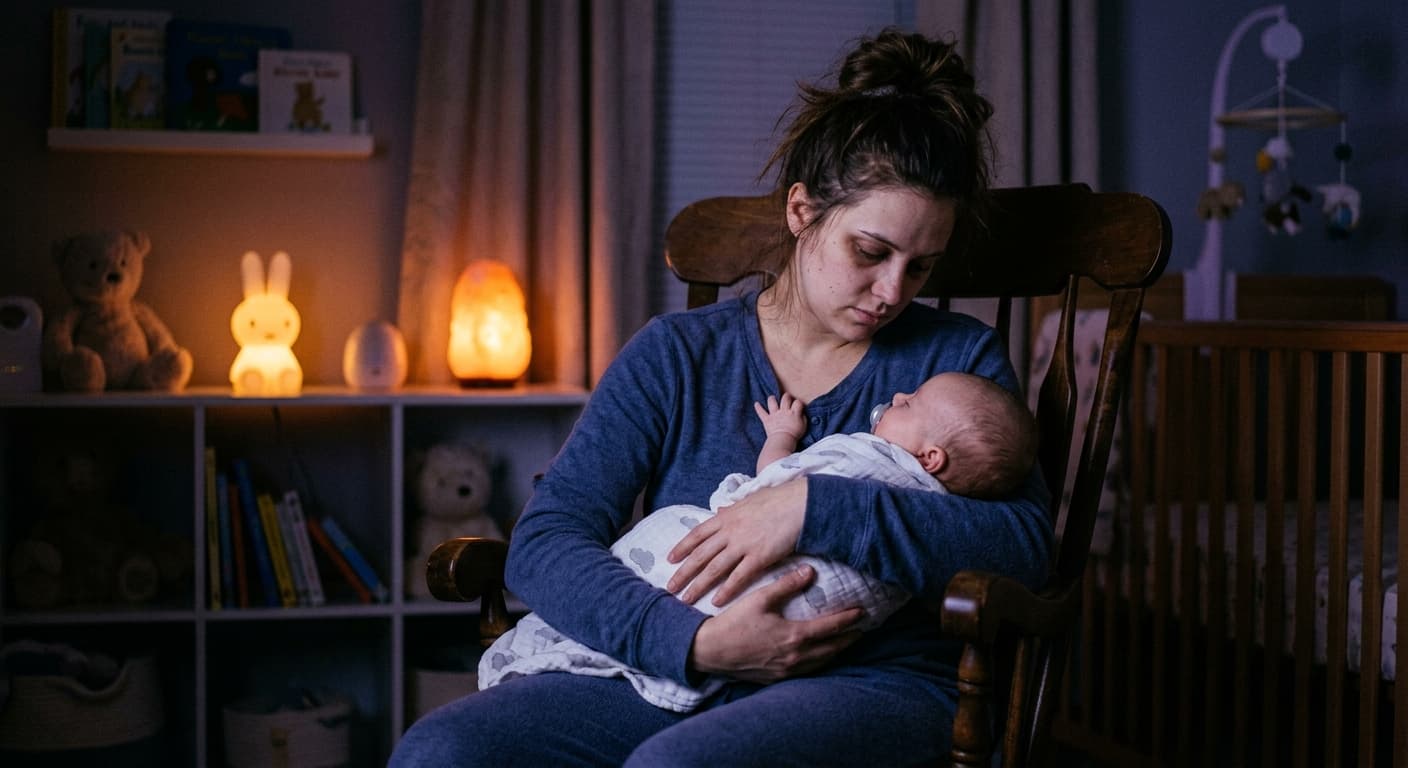
If you're reading this at 3 AM wondering what happened to your previously-good sleeper, you've found the right article. The 4-month sleep regression is real, it's developmental, and it's one of the most universal and disorienting experiences of early parenthood.
Here's the honest news: your baby isn't broken, you didn't do anything wrong, and this will end.
And the more honest news: it usually takes 2-6 weeks to pass, and what you do during this window matters.
What's actually happening in your baby's brain
Around 3.5 to 5 months, babies undergo a permanent neurological shift. Before this, newborn sleep is simple — they drift into deep sleep almost immediately and stay there. After this shift, babies cycle through four stages of sleep, similar to adult sleep cycles, with brief arousal periods between each cycle.
In adults, we briefly wake between cycles too — we just don't notice because we know how to fall back asleep. Your baby doesn't have that skill yet. So what was a smooth 7-hour stretch becomes a fragmented 2-hour stretch with multiple arousals where your baby calls out for help.
Key fact: This is not a regression at all — it's actually a permanent developmental progression. The sleep patterns your baby is learning now are the sleep patterns they'll have for the rest of their life. Everyone calls it a "regression" because sleep temporarily gets worse, but there's no going back. The only way out is through.
The unmistakable signs of the 4-month regression
You're probably in it if:
- Your previously-sleeping baby is suddenly waking every 45-90 minutes at night
- Naps have gotten shorter (30-45 minutes) when they used to be 1.5-2 hours
- Baby fights going down for sleep when they used to be easy
- They wake up more alert than before (noticing their surroundings)
- There's no obvious cause — no illness, no teething, no schedule change
- It started somewhere between 3 and 5 months old
If any of these don't match, it might not actually be the 4-month regression. Teething, growth spurts, illness, and travel can all cause sleep disruptions that look similar.
How long does it last?
Most babies work through the regression in 2-6 weeks. Some are faster. Some take longer, especially if parents accidentally create new sleep associations during the regression that then need to be unwound.
The two approaches: which is right for your family?
There's no universal answer here, but there are two main camps, and both can work.
Approach 1: Ride it out
What it looks like: You maintain whatever you were doing before, respond to wake-ups the same way, and wait for baby's brain to adjust to the new sleep cycles on its own. You accept that you'll be sleep-deprived for 2-6 weeks, then things will gradually improve.
Who this works for:
- Parents who strongly prefer not to let baby cry
- Breastfeeding parents who were already doing night feeds
- Families where maternal mental health is stable and sleep deprivation isn't dangerous
- Parents who don't want to risk creating new sleep associations that need unwinding later
The catch: If you were rocking/nursing to sleep before and you continue during the regression, those associations will strengthen. You may end up needing to address sleep skills later anyway.
Approach 2: Use the regression as a teaching window
What it looks like: You treat the regression as a signal that your baby is neurologically ready to start learning independent sleep skills. You begin putting baby down drowsy-but-awake, stop sleep-rocking, and potentially start a sleep training method (gradual, Ferber, chair, etc.).
Who this works for:
- Families who planned to sleep train anyway
- Parents who are approaching a sleep-deprivation breaking point
- Situations where one parent is going back to work and needs consistent sleep
- Parents comfortable with structured sleep approaches
The catch: Sleep training during a regression can be harder than sleep training before or after. Baby is already more sensitive to changes. If you try this and it feels wrong after 5-7 days, stop and wait.
There's a third option many families land on: hybrid approach. Pick the one or two things you want to change (like stopping to rock to sleep) but keep everything else the same. Don't try to change all your sleep habits at once during a regression.
For a detailed walkthrough of the methods, read our Ferber vs gradual vs no-cry sleep training comparison.
What actually helps during the 4-month regression
Regardless of which approach you choose:
1. Blackout curtains and total darkness
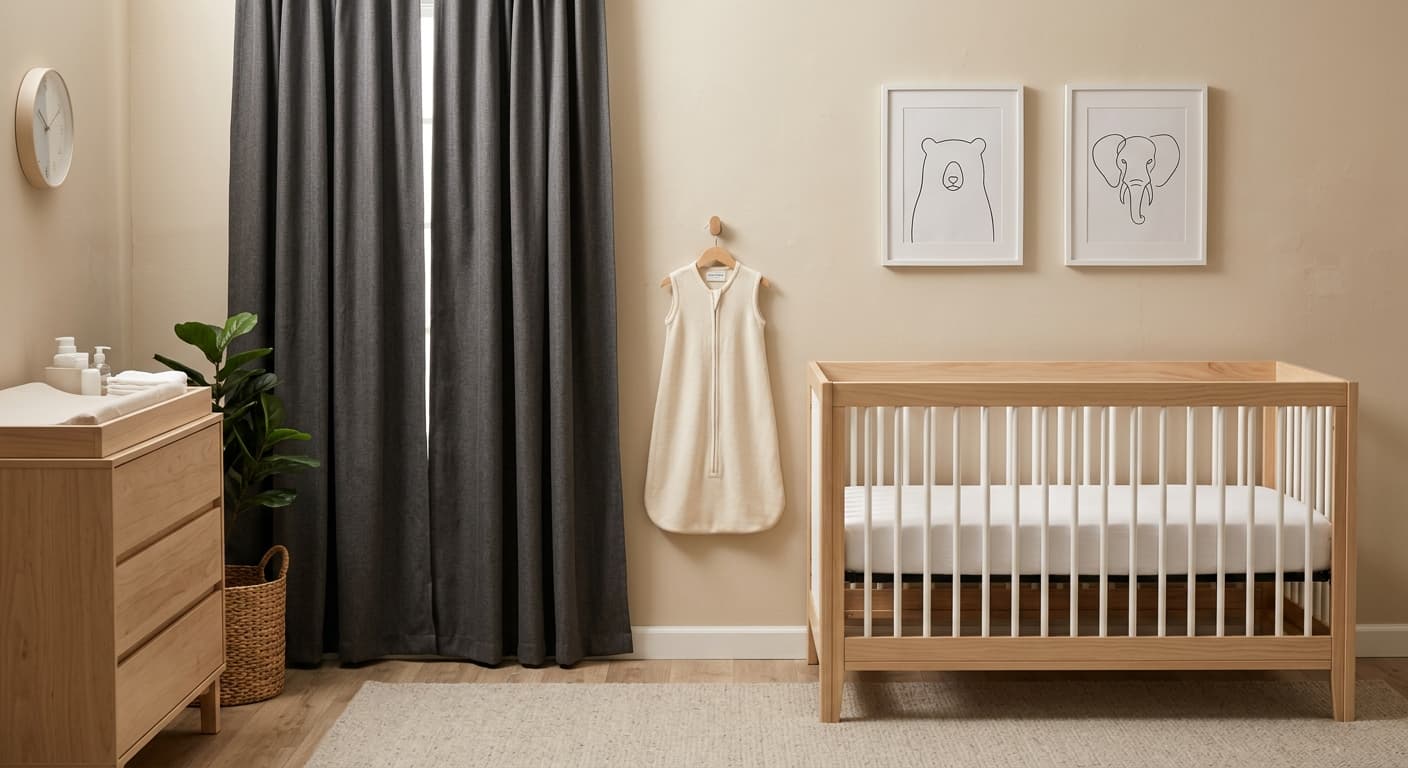
If there's any light in the room, fix this first. At 4 months, babies are developing melatonin production, and ambient light delays it. The nursery should be dark enough that you can't see your own hand. Blackout curtains ($30-60 on Amazon) are the single highest-impact product investment you can make.
2. White noise at the right level
A white noise machine at about 50 decibels (roughly the volume of a quiet shower) blocks out the household sounds that trigger baby's brief arousals. Hatch Rest, Yogasleep Dohm, and LectroFan all work well. See our white noise machine comparison.
Important: Don't turn the volume too high. In a 2014 Pediatrics study, all 14 infant sleep machines tested at maximum volume exceeded 50 dB, the recommended noise limit for hospital nurseries, at 30 cm. Use the lowest setting that masks household noise and place the machine across the room, well away from baby's head.
3. Drop the swaddle (if you haven't already)
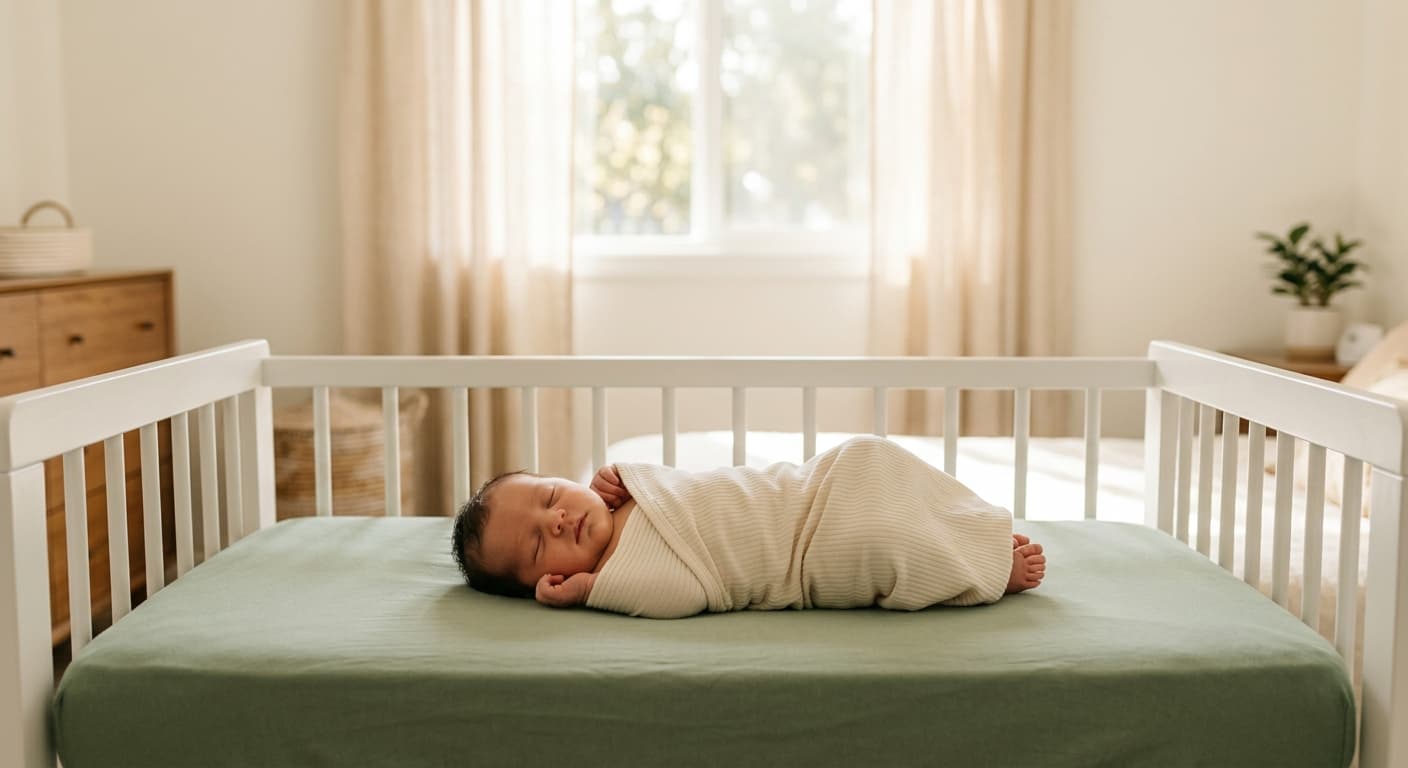
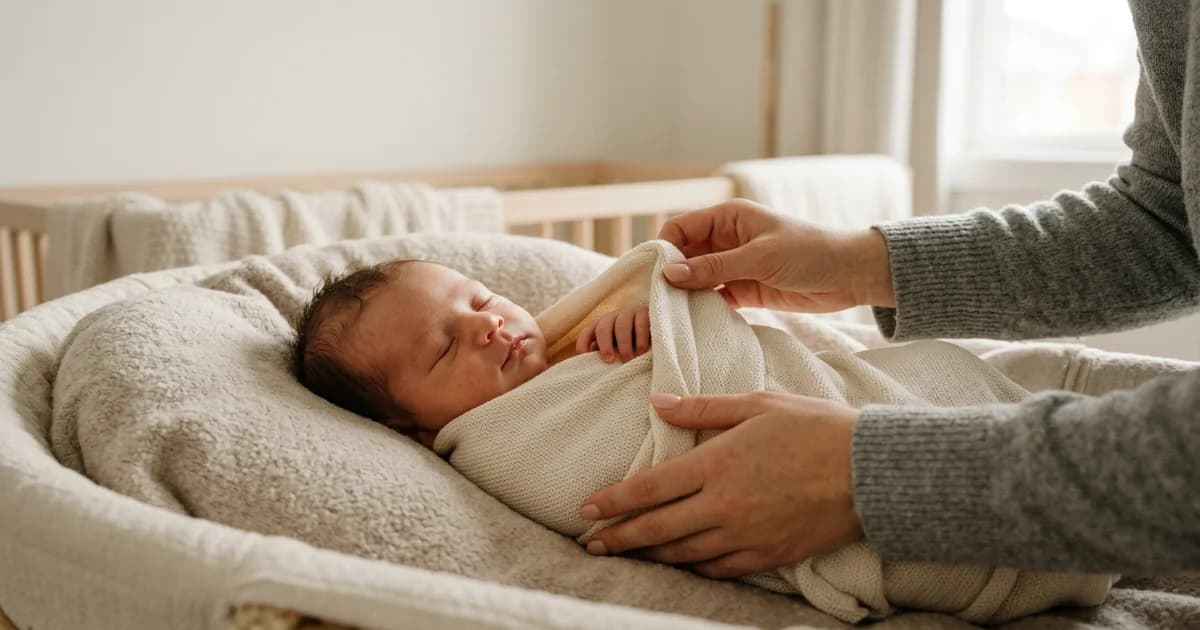
If you're still swaddling at 4 months, this is the time to transition. Most babies are starting to roll by now, and swaddled rolling is a suffocation risk. Options:
- Merlin's Magic Sleepsuit — transitional, looks like a puffy onesie
- Zipadee-Zip — star-shaped, allows more movement
- Standard sleep sack — Halo, Kyte Baby, or similar
We walk through the full transition plan in How to Transition Out of the Swaddle.
4. Earlier bedtime
Counter-intuitively, overtired babies sleep WORSE, not better. If your baby is going to bed at 8 or 9 PM, try shifting to 6:30-7:30 PM. Many parents are shocked at how much difference this makes.
5. Fill the daytime calories
A baby who isn't eating enough during the day will wake up hungry at night. Make sure daytime feedings are full and uninterrupted. If you suspect distracted feeding (common at 4 months as baby becomes more aware), try feeding in a quiet, dim room.
6. Consistent bedtime routine
A predictable 15-20 minute routine (bath, lotion, book, feed, song, bed) signals to baby's brain that sleep is coming. Baby will fight this at first. Do it anyway. Consistency builds the association over 2-3 weeks.
Does the SNOO help with the 4-month regression?
Happiest Baby, which makes the SNOO, says it does. Its 3- to 4-month regression guide calls the SNOO "parents' best tool for preventing" the regression and says SNOO babies "can often sidestep" it. The same company also writes that most babies go through rough patches or sleep regressions "even in SNOO," and the settings it suggests for those weeks (Motion Start Level and Level Lock) are paid Premium App features (Happiest Baby). We found no independent research on the SNOO and the 4-month regression specifically.
What the SNOO is authorized for is narrower. The FDA granted it De Novo authorization in March 2023 as an infant supine sleep system, meaning it helps keep a baby on their back, for babies from birth to 6 months who cannot yet roll over consistently. The FDA's decision summary adds that it "has not directly demonstrated a reduction in the incidence of SIDS/SUID" (FDA De Novo DEN210039). Happiest Baby says to stop using it once a baby can push up on hands and knees or reaches 6 months (Happiest Baby FDA page).
Two things to keep straight during the regression. Happiest Baby says a baby can stay swaddled in the SNOO's own sleep sack up to 6 months, but outside the SNOO the AAP says to stop swaddling once a baby shows signs of trying to roll. And the AAP advises against relying on any product that claims to reduce the risk of sleep-related deaths (AAP). None of the fixes above needs one.
What NOT to do during the 4-month regression
-
Don't start solids to "help them sleep." Research shows this doesn't work and the AAP recommends against starting solids before 6 months.
-
Don't introduce a bedtime bottle if you're breastfeeding. Creates an unnecessary association that's hard to unwind.
-
Don't try every new sleep product on Amazon. You'll spend $500 and end up back where you started. Stick with the basics that research supports.
-
Don't compare your baby to other babies. Your friend's baby who "slept through from 2 months" is either an outlier, still dealing with the regression ahead of them, or their parents are lying.
-
Don't dismiss your own mental health. Sleep deprivation is genuinely dangerous. If you're struggling, talk to your doctor. This is not a character flaw — it's biology. Our postpartum depression guide lists the signs that separate it from ordinary exhaustion.
When to ask for help
Most 4-month regressions resolve in 2-6 weeks with patience and consistency. Talk to your pediatrician if:
- The regression has lasted more than 8 weeks with no improvement
- Baby shows signs of reflux, allergies, or illness during the regression
- Your mental health is suffering significantly
- Baby has new symptoms like snoring, choking, or extreme fussiness
The bottom line
The 4-month sleep regression is real, developmental, and temporary. It's the messy transition from newborn sleep to mature sleep patterns, and every baby goes through some version of it. The products and strategies above help, but the biggest factor is time plus consistency.
You are not failing. Your baby is not broken. This will end. And when it does, your baby will have brand-new sleep skills that carry them into toddlerhood.
Related reading:
💬 Real Talk from Parents
Every baby sleep book contradicts the last one you read. That's normal.
You'll google 'baby sleep regression' at least once a month for the first year.
Sleep training is 50% technique and 50% parental willpower.
We tried every sleep method. What actually worked? Blackout curtains, white noise, and a consistent bedtime routine. The boring stuff.
Paraphrased community consensus — not a direct quote.
Your next step
Riding out the regression? These help.
Research Sources
Hilly Shore Inc.
Editorial teamIndependent product research team behind Cribworthy. Reviews are grounded in published AAP / CDC / NHTSA / CPSC pediatric guidance, JPMA / GREENGUARD GOLD / OEKO-TEX certification verification, and aggregated buyer sentiment.
122 products reviewed · 22 categories covered · cites AAP, CDC, NHTSA, CPSC, FDA, ACOG.
Safety claims are verified against published pediatric guidelines and CPSC databases. See our editorial standards.