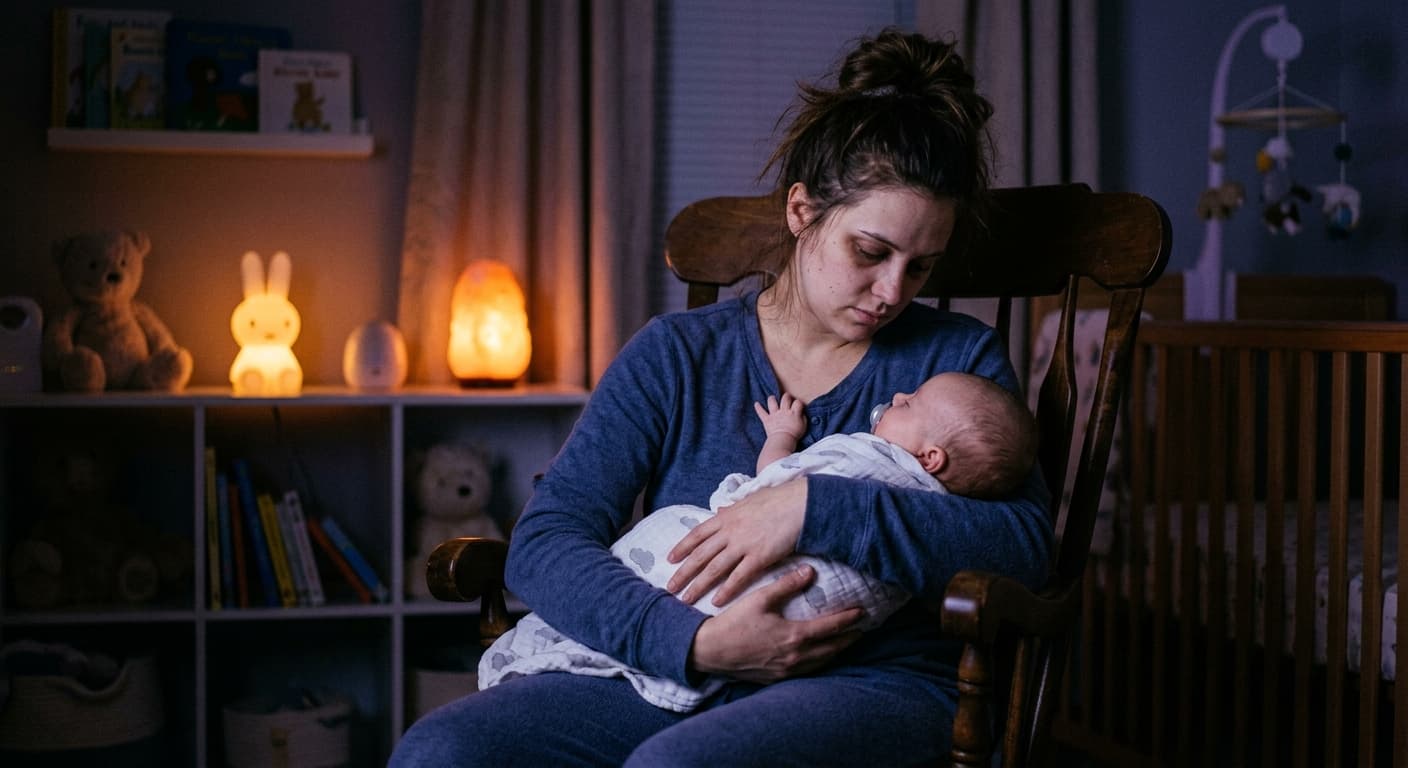
Ferber vs Gradual vs No-Cry: The Honest Sleep Training Comparison
The Verdict
No method wins on evidence alone. Ferber uses timed check-ins and usually works fastest, at three to seven nights of protest; full extinction skips the check-ins. Chair and gradual approaches take two to four weeks with less crying. No-cry routes take longest and demand the most patience. Pick what you can carry out consistently for a fortnight, and start no earlier than four to six months.
Our Verdict
Use Ferber when you need results quickly and can leave the room without checking early. Use the chair method if staying present matters to you and you have several weeks. Use bedtime fading for a baby who fights an unrealistically early lights-out. Choose a no-cry route when any protest is a dealbreaker, accepting a slower timeline. Abandon whichever one you cannot repeat identically every night.
Key Takeaways
- ✓Sleep training is one of the most contentious topics in new parenting.
- ✓Consistency matters more than method. A method you can commit to for 5-7 days will work better than a "better" method you abandon after 2 nights.
- ✓Night feeds: sleep training and night weaning are separate processes.
- ✓The research is not ambiguous: structured sleep training methods, done correctly, are safe for babies over 4-6 months. This doesn't mean you have to sleep train. It means if you choose to, you're not damaging your baby.
- ✓There is no "best" sleep training method. There's the one you'll actually stick with consistently for 5-10 days. If the idea of any crying makes you panic, don't pick Ferber.
As an Amazon Associate I earn from qualifying purchases. Product prices and availability are subject to change.
Ferber vs Gradual vs No-Cry: The Honest Sleep Training Comparison
Sleep training is one of the most contentious topics in new parenting. This guide won't tell you which method is "right" — it covers what each method involves, what the research says, and how to pick one that fits your family and your baby's temperament.
Important context: The AAP does not endorse or prohibit any specific sleep training method for babies over 4-6 months of age. Multiple peer-reviewed studies (including a well-known Australian study published in Pediatrics in 2012) have found no evidence of long-term harm from gradual extinction methods. Parents who don't want to sleep train are also making a valid choice. This is a personal decision, not a moral one.
When to sleep train (and when not to)
Developmentally ready:
- 4-6 months old at minimum (most sleep training research starts at 4-6 months)
- Cleared by pediatrician at your 4- or 6-month well visit
- Gaining weight normally
- No acute illness, teething pain, or recent major life changes
- Your pediatrician agrees any night feeds you plan to drop are no longer needed
Not ready yet:
- Under 4 months old (sleep patterns are too immature)
- In the middle of a sleep regression (wait until the regression resolves)
- Recently sick, had a major vaccine reaction, or started teething
- Moved, traveled, or experienced a major schedule change in the last 2 weeks
- You (parent) are emotionally exhausted and likely to be inconsistent
Consistency matters more than method. A method you can commit to for 5-7 days will work better than a "better" method you abandon after 2 nights.
The methods explained honestly
1. The Ferber Method (Graduated Extinction / "Ferberizing")
What it is: Named after Dr. Richard Ferber. You put baby down drowsy but awake, leave the room, and wait progressively longer intervals before returning to briefly comfort (without picking up).
Typical interval schedule (Night 1):
- Wait 3 minutes before first check
- Wait 5 minutes before second check
- Wait 10 minutes for all subsequent checks
- Repeat at each wake-up through the night
Subsequent nights increase the intervals. By Night 3-4, most babies are putting themselves to sleep.
How long it takes: Most families see significant improvement within 3-5 nights. Full results within 1-2 weeks.
Success rate: High in published trials
Pros:
- Fastest results
- Clear structure and consistency
- Well-researched
- Most families see longer stretches within a week
Cons:
- The crying is real and can be hard to hear
- Briefly intense for 2-4 nights
- Requires both parents to be on the same page and committed
- Talk to your pediatrician first if your baby has reflux, breathing issues or other medical needs
Best for: Babies over 6 months with no medical issues, families who can commit to strict consistency for 5-7 nights, parents who have tried gentler methods without success.
2. Full Extinction ("Cry It Out")
What it is: Often confused with Ferber, but distinct. You finish the bedtime routine, put baby down awake, say goodnight, and don't go back in until morning — or until a scheduled night feed, if your pediatrician says one is still needed. No check-ins.
How long it takes: Usually the fastest method; many families see bedtime settle within a few nights.
What the research says: A 2006 review in Sleep of 52 treatment studies found strong support for unmodified extinction among behavioral approaches.
Pros: fastest for many babies; nothing to time; suits babies who get more worked up each time a parent appears and leaves.
Cons: the hardest to sit through, and a poor fit if you know you'll cave — inconsistent extinction teaches that crying longer works.
Best for: Healthy babies over 6 months whose parents can commit completely.
3. The Chair Method / Camping Out
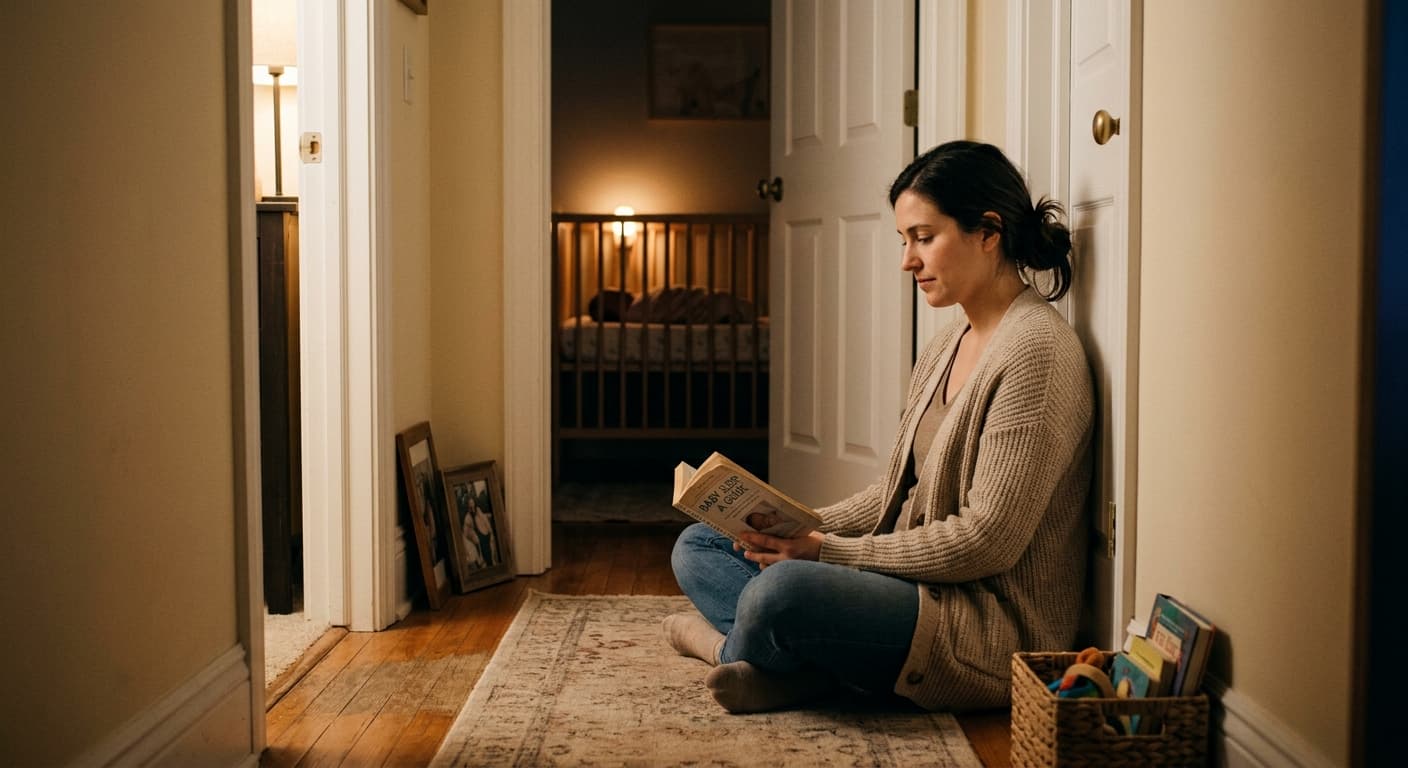
What it is: You stay in the room while baby falls asleep, but gradually move further away each night.
Typical progression:
- Nights 1-3: Sit in a chair right next to the crib
- Nights 4-6: Move the chair to the middle of the room
- Nights 7-9: Sit by the door
- Nights 10+: Leave the room entirely
How long it takes: 2-3 weeks typically.
Success rate: Moderate (success is harder to measure because families often modify the approach)
Pros:
- More gradual — baby sees you the whole time
- Easier on parents who can't tolerate leaving baby alone
- Works for babies with separation anxiety
Cons:
- Longer commitment required
- Easy to get stuck at one step
- Baby can fixate on your presence, making the chair itself a sleep association
- Harder to enforce consistency
Best for: Families who want a middle ground, babies who are especially anxious, parents who can commit to 2-3 weeks of the same routine.
4. Gradual Bedtime Fading
What it is: You adjust bedtime later to match baby's actual sleep window, reducing crying at bedtime. Once baby falls asleep quickly at the later time, you gradually move bedtime earlier week by week.
How it works:
- Week 1: Identify when baby actually falls asleep easily (say, 8:30 PM)
- Week 2: Bedtime is 8:30 PM, baby falls asleep within 15 minutes
- Week 3: Move bedtime to 8:15 PM
- Each week, move bedtime 15 minutes earlier until you reach your target (usually 7 PM)
How long it takes: 4-8 weeks.
Success rate: Moderate to high, with lowest crying of all structured methods.
Pros:
- Almost no crying involved
- Works with baby's natural biology
- Less stressful for parents
- Can be combined with other methods
Cons:
- Slow
- Requires careful tracking
- Can be difficult to move bedtime earlier if baby becomes over-tired
Best for: Parents who can't tolerate any crying and are willing to play the long game.
5. No-Cry Sleep Solutions / Attachment-Based
What it is: A collection of gentle techniques (Elizabeth Pantley's work is the most popular). Gradual changes to sleep associations over weeks or months, with no structured crying at any stage.
What it looks like:
- Slowly change nursing/rocking-to-sleep associations
- Introduce a pacifier if baby doesn't have one
- Create consistent routines
- Use "pick up, put down" (popularized by Tracy Hogg): pick baby up when they cry, put them down as soon as they calm, and repeat — dozens of times on the first nights
- Respond to every wake-up but with decreasing intensity
How long it takes: 1-6 months, sometimes longer.
Success rate: Variable. Works for babies with temperamental readiness but can take a very long time.
Pros:
- Truly gentle
- Aligns with attachment parenting principles
- Very low crying
- Flexible — parents can adjust as they go
Cons:
- Very slow
- Requires parental patience and sleep deprivation tolerance
- Success is not guaranteed
- Baby may never develop strong independent sleep skills
Best for: Families who philosophically oppose cry-based methods, parents who are not in urgent need of sleep improvement, babies whose temperament allows slow learning.
How to choose
Ask yourself honestly:
-
How sleep-deprived are you? If you're in dangerous sleep debt (affecting driving, work, mental health), choose a method with faster results (Ferber or modified Ferber).
-
How does crying make you feel? If hearing baby cry for 10 minutes feels traumatic and you know you'll intervene, don't pick Ferber. Pick a gentler method you can actually stick with.
-
What's baby's temperament? Some babies respond well to structure; others get more worked up. You know your baby best.
-
Are both parents on the same page? Inconsistency between parents is one of the most common reasons sleep training stalls. Pick something you both agree on.
-
What's your timeline? Going back to work in 4 weeks? Pick a faster method. Have time? Go gradual.
Sleep training mistakes
-
Starting too early (before 4-6 months) or during a regression or illness. Wait until baby is ready and stable.
-
Inconsistency between parents. One parent ferberizes, the other rocks. Baby learns to hold out for the softer option.
-
Giving up too soon. Most methods take 5-10 nights. If you quit on Night 3, you've just taught baby that crying longer works.
-
Expecting "sleep through the night" in days. Sleep training teaches baby to fall asleep independently. They may still wake for legitimate needs (hunger, discomfort) for months.
-
Feeding to sleep during training. Any "back to sleep" association you introduce during training becomes a new habit to unwind.
Night feeds and naps during training
Night feeds: sleep training and night weaning are separate processes. If your pediatrician says your baby still needs nighttime calories, train bedtime and early wake-ups while keeping one or two feeds at set times, rather than feeding in response to every cry.
Naps: start with bedtime only for the first week, when sleep pressure is highest and success comes faster. Once nights are settled, apply the same method to naps, which usually take longer.
Not working after 7-10 days? Recheck the basics: a dark room, the same routine every night, true consistency between caregivers, and whether your baby is ill or mid-regression. If all of that checks out, talk to your pediatrician.
What to set up before you start
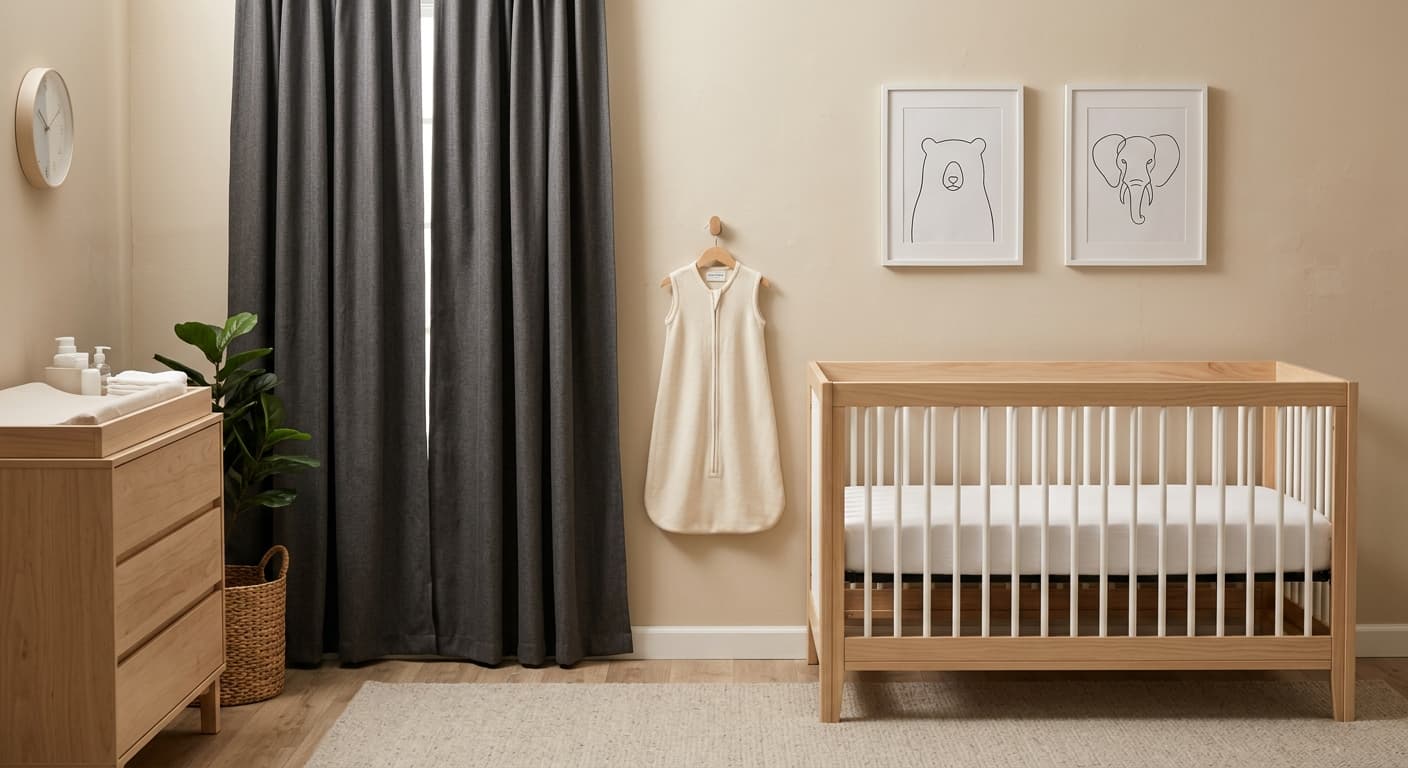
- Black-out curtains for the nursery
- White noise machine at safe volume
- Consistent 15-20 minute bedtime routine (bath, book, feed, bed)
- Age-appropriate schedule (check our nap schedules by age guide)
- A plan on paper so you don't waver at 2 AM
- A partner on board (huge)
- Pediatrician clearance at your 4- or 6-month visit
What the research actually says
For those who want receipts:
-
2012 Australian trial (Price et al., Pediatrics): Randomized 326 families whose 7-month-olds had sleep problems and followed the children to age 6. No evidence of long-term harm to child behavior, emotional health, or parent-child closeness.
-
2016 Australian study (Gradisar et al., Pediatrics): Compared graduated extinction, bedtime fading, and a control group. Both methods worked. Cortisol (stress hormone) levels did NOT differ significantly from the control group, and attachment at 12 months was unaffected.
-
2006 review (Mindell et al., Sleep): Across 52 treatment studies, behavioral interventions for bedtime problems and night wakings were effective, with the strongest support for extinction and parent education.
The research is not ambiguous: structured sleep training methods, done correctly, are safe for babies over 4-6 months. This doesn't mean you have to sleep train. It means if you choose to, you're not damaging your baby.
Bottom line
There is no "best" sleep training method. There's the one you'll actually stick with consistently for 5-10 days. If the idea of any crying makes you panic, don't pick Ferber. If you can't wait 6 weeks for slow progress, don't pick a gentle method.
The best sleep training is the one that fits your baby, your family, your tolerance, and your situation. Whatever you pick, be consistent, and be kind to yourself in the process.
Related reading:
- The Complete Baby Sleep Guide
- The 4-Month Sleep Regression
- Safe Sleep Environment: The AAP Checklist
- Nap Schedules by Age
- The Sleep Regression Survival Guide
- How to Establish a Bedtime Routine
Frequently Asked Questions
Is the Ferber method cruel?
No. Ferber (graduated extinction) uses timed check-ins, not endless crying. Research finds no lasting harm to attachment or stress hormones. It's a parenting choice, not a safety risk.
How long does the Ferber method take to work?
Most families see real improvement in 3–7 nights, with sleep solidifying over about 2 weeks. The first 1–3 nights are the hardest.
Ferber vs. gradual extinction — which is gentler?
Gradual methods (chair/fading) feel gentler night to night but take longer. Ferber is faster but harder up front. Both are evidence-based — pick the one you can stay consistent with.
If your baby is sleeping safely, you're doing it right. Ignore anyone who says otherwise.
Paraphrased community consensus — not a direct quote.
Your next step
Ready to start? Here's the how-to and the gear that helps.
Research Sources
- Getting Your Baby to Sleep - HealthyChildren.org (AAP)
- Healthy Sleep Habits: How Many Hours Does Your Child Need? - HealthyChildren.org (AAP)
- A Parent's Guide to Safe Sleep - HealthyChildren.org (AAP)
- Behavioral Interventions for Infant Sleep Problems: A Randomized Controlled Trial — Pediatrics (2016), PubMed abstract
- Five-year follow-up of harms and benefits of behavioral infant sleep intervention — Pediatrics (2012), PubMed abstract
- Behavioral treatment of bedtime problems and night wakings in infants and young children — Sleep (2006), PubMed abstract
Hilly Shore Inc.
Editorial teamIndependent product research team behind Cribworthy. Reviews are grounded in published AAP / CDC / NHTSA / CPSC pediatric guidance, JPMA / GREENGUARD GOLD / OEKO-TEX certification verification, and aggregated buyer sentiment.
122 products reviewed · 22 categories covered · cites AAP, CDC, NHTSA, CPSC, FDA, ACOG.
Safety claims are verified against published pediatric guidelines and CPSC databases. See our editorial standards.