Instagram-Ad Baby Brands: How to Check Before You Buy
Quick Answer
Before buying a baby product from a social ad, name what it really is (a sleep product, cushion, carrier, bath seat or neck float), search CPSC's recall database and SaferProducts.gov, and check that the listing or box shows the permanent label federal rules require: manufacturer, U.S. address and phone, model and date of manufacture, plus a registration card. Then read the seller's shipping and return terms and check reviews off the brand's own site, such as the BBB directory. Skip anything promising better sleep outside a crib, bassinet or play yard.
Our Verdict
A recall search, a label check and a look at the return policy take about five minutes and answer questions no ad will. A clean recall search is not a safety verdict, though, and no check rescues a product type pediatricians warn against, such as inclined sleepers or neck floats used without an adult within arm's reach.
Key Takeaways
- ✓A recall search, a label check and a look at the return policy take about five minutes and answer questions no ad will. A clean recall search is not a safety verdict, though, and no check rescues a product type pediatricians warn against, such as inclined sleepers or neck floats used without an adult within arm's reach.
- ✓A baby product found through a social ad usually arrives with everything a buyer could want: a slick video, a five-star average, a countdown timer and a price cut. What it almost never arrives with...
- ✓Federal safety rules attach to what a product *does*, not to what the ad names it. A "cuddle comforter" that holds a baby against your chest is doing the job of a carrier. A "lap pillow" is a cushi...
- ✓The CPSC recall database lists every product recall the agency has announced, searchable by brand or product name. SaferProducts.gov is the public database where consumers file incident reports, so...
- ✓This is the step social-ad listings most often leave blank, and the one a parent can verify once the box arrives.
As an Amazon Associate I earn from qualifying purchases. Product prices and availability are subject to change.
Why the ad can't answer the question you're asking
A baby product found through a social ad usually arrives with everything a buyer could want: a slick video, a five-star average, a countdown timer and a price cut. What it almost never arrives with is the information that tells a parent whether the thing is safe to put a baby in. That information exists — it just lives on government databases, product labels and complaint registries rather than in the ad.
The American Academy of Pediatrics puts the problem plainly in its guide to baby products to avoid: be wary when influencers call a product a "must-have" or a "lifesaver." The same page notes that the most dangerous products are the ones that promise to help infants sleep better.
Rule of thumb: the ad tells you what a product promises. The label, the recall database and the seller's policies tell you what you are actually buying.
This guide is the check we would run ourselves before ordering from an unfamiliar brand. It takes about five minutes and needs nothing but a phone.
The five-minute check before you buy
- Name what the product actually is, not what the ad calls it.
- Search the CPSCCPSCThe US federal agency that issues product recalls and enforces safety standards on cribs, strollers, car seats, and other juvenile products. recall database and SaferProducts.gov for the brand and product.
- Find the federal standard for that product type and look for proof the listing meets it.
- Confirm who is selling it, from where, and on what shipping and return terms.
- Read reviews somewhere the seller doesn't control.
Step 1: Name the category, not the marketing
Federal safety rules attach to what a product does, not to what the ad names it. A "cuddle comforter" that holds a baby against your chest is doing the job of a carrier. A "lap pillow" is a cushion. A "bath buddy" worn around the neck is a neck float. Getting the category right tells you which rule applies — and whether the product type is one pediatricians already warn against.
| If the product… | It is regulated as | Federal rule |
|---|---|---|
| Holds a sleeping baby up to 5 months old and isn't a crib, bassinet or play yard | Infant sleep product | 16 CFR 1236 |
| Is a lounger, nest, positioner or tummy-time pillow | Infant support cushion | 16 CFR 1243 |
| Supports a baby while feeding | Nursing pillow | 16 CFR 1242 |
| Is worn to carry a baby or toddler | Soft carrier or sling | 16 CFR 1226 / 1228 |
| Seats a baby in the bathtub | Infant bath seat | 16 CFR 1215 |
| Wraps around a baby's neck to float in water | Neck float (toy standard) | CPSC neck float standard, approved 2025 |
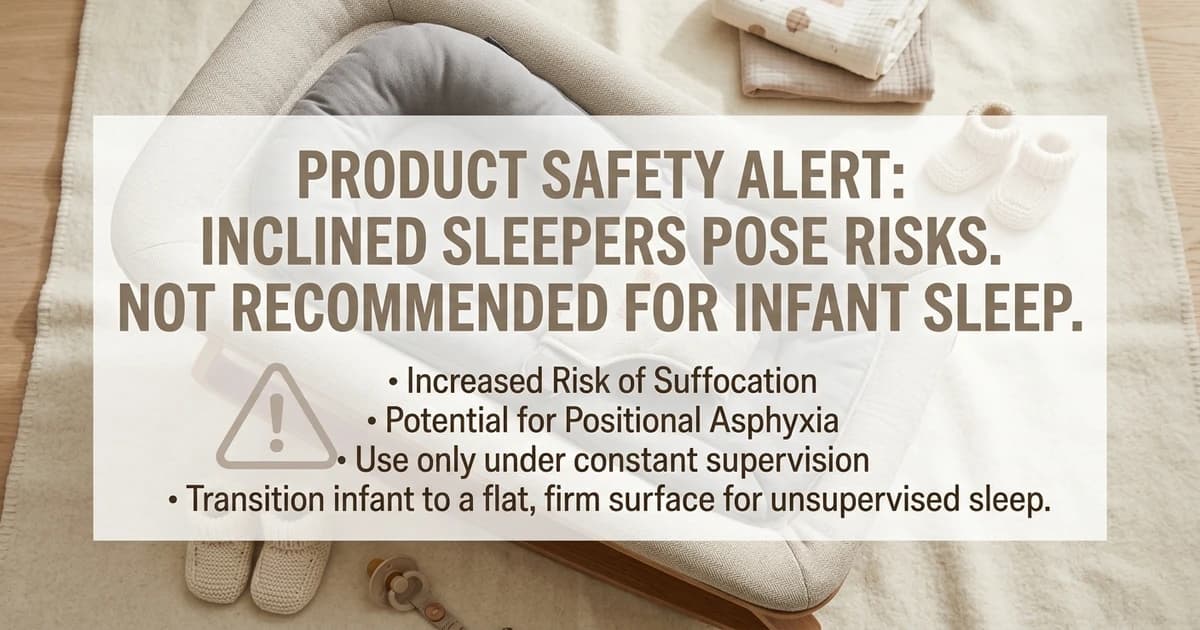
The infant sleep product rule exists to address, among other hazards, a sleep surface angled more than 10 degrees from horizontal. The AAP's safest-sleep advice is a firm, flat surface, on the back, with no loose bedding or soft objects. That is why a product marketed as a sleep "pod" or "wedge" is a hard stop: the AAP notes the Safe Sleep for Babies Act of 2022 banned inclined sleepers that raise a baby's head more than 10 degrees, and crib bumpers along with them. Our inclined sleeper breakdown covers the history, and the lounger rule explainer covers what the newer cushion standard requires.
Step 2: Search the recall databases — and read "no results" correctly
The CPSC recall database lists every product recall the agency has announced, searchable by brand or product name. SaferProducts.gov is the public database where consumers file incident reports, so it can surface problems that never became a recall. For car seats, use NHTSA's recall lookup instead.
To show what these searches return, we ran several brand names parents search alongside "review" or "legit" through CPSC's recall database on September 24, 2026:
- Otteroo returned one recall: a July 2015 recall of about 3,000 inflatable baby floats whose seam could leak air and deflate, posing a drowning risk. The remedy was a free replacement.
- Peekaboo Pillow, Nivaro, Kidsy and Zoberlo each returned no recalls.
Read this carefully: "no recalls" means no recall has been announced under that name. It is not a safety rating, a certification or a clean bill of health — and it says nothing about a product type that is hazardous by design.
A recall search is also only as good as the name you type. If a product appears under several different store names, search each one, plus the generic product type.
Step 3: Check the label and the paperwork
This is the step social-ad listings most often leave blank, and the one a parent can verify once the box arrives.
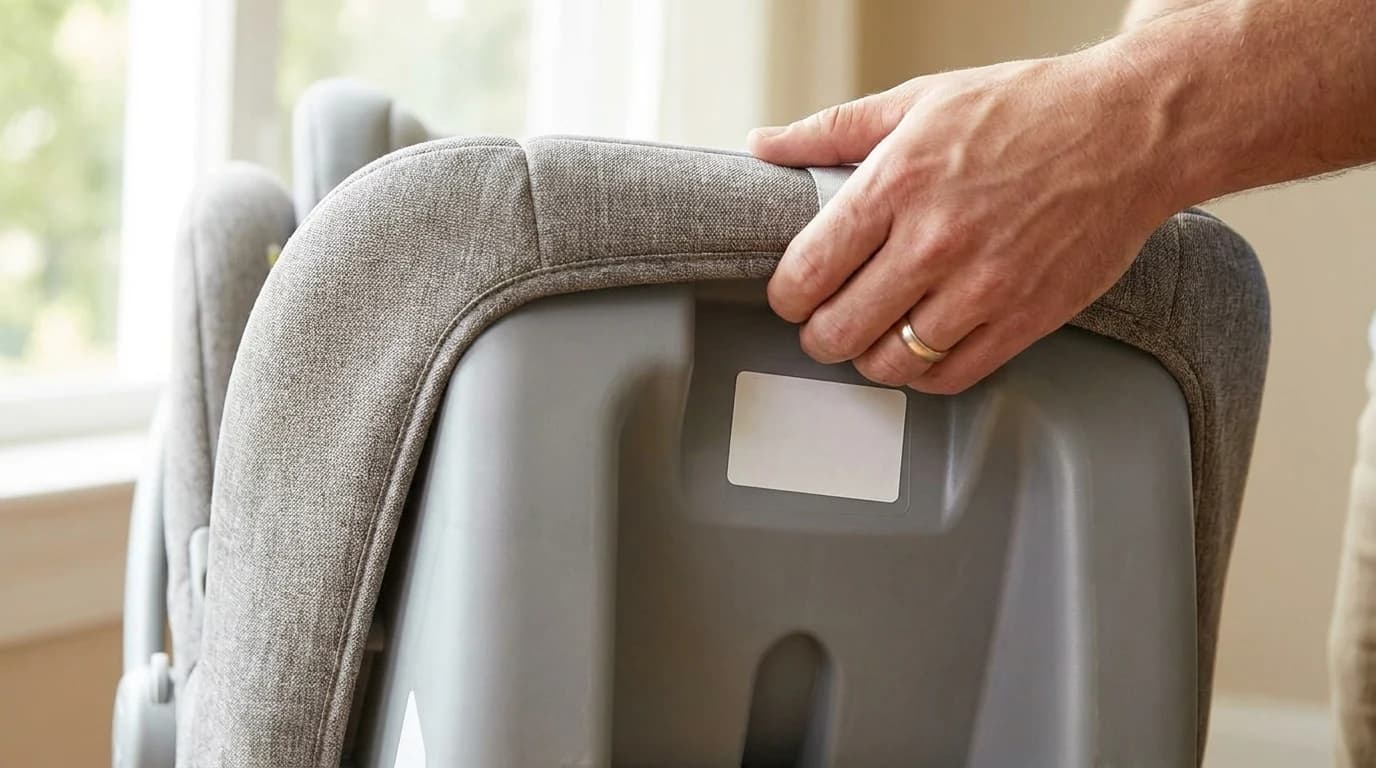
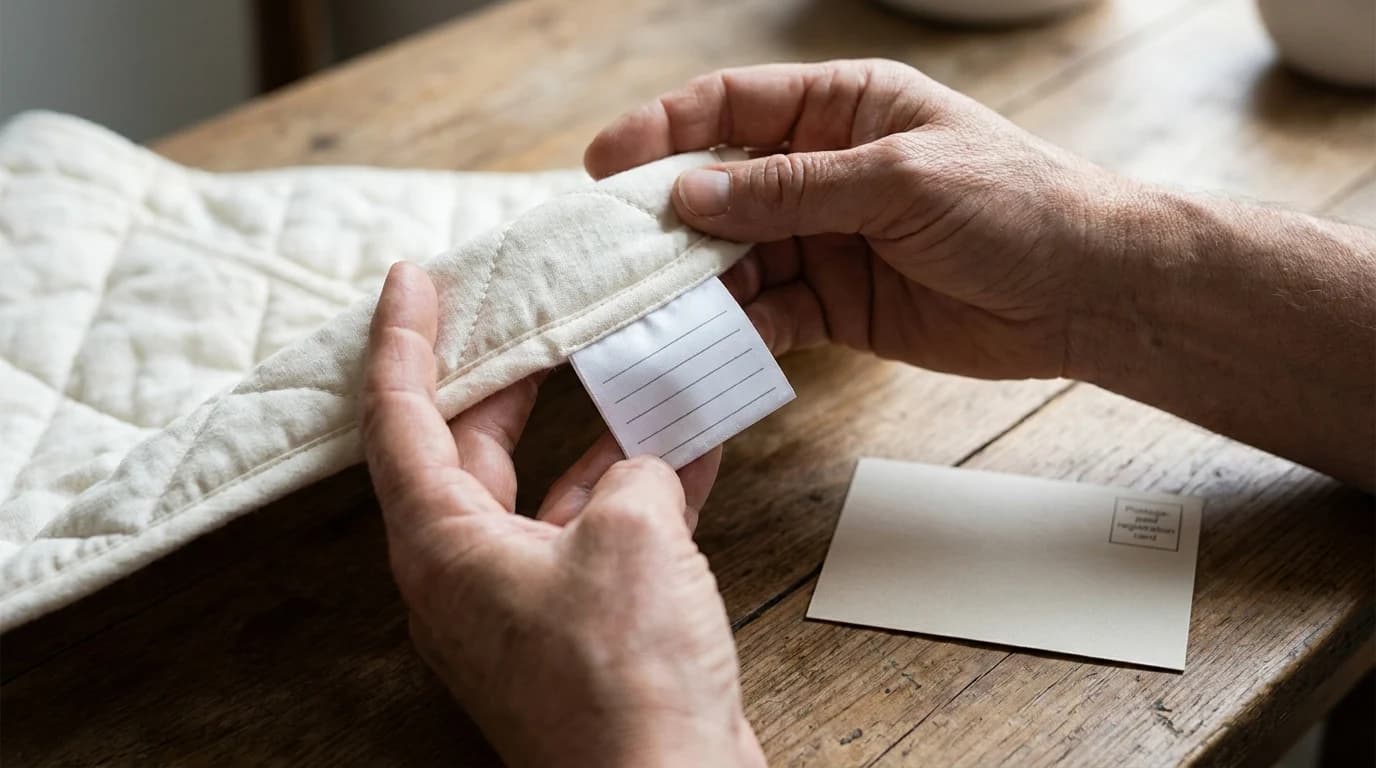
Under 16 CFR Part 1130, makers and importers of "durable infant or toddler products" must permanently mark each product with the manufacturer's name, a U.S. address and telephone number, the model name or number, and the month and year of manufacture. They must also include a postage-paid registration card so you can be contacted if the product is ever recalled. The list covers carriers and slings, nursing pillows, infant support cushions, bath seats, bouncers, swings, bassinets and more.
Separately, CPSC requires a Children's Product Certificate from the domestic manufacturer or importer of a children's product subject to a safety rule, based on testing by a third-party, CPSC-accepted laboratory.
What to look for on the listing and in the box
- A named manufacturer or importer with a U.S. address and phone number
- A model name or number you can search in the recall database
- A date of manufacture (month and year) on a permanent label
- A postage-paid registration card, for covered infant and toddler products
- Use instructions that match the rules for the category — supervision, age and weight limits, "not for sleep" where it applies
- A straight answer if you ask the seller which federal standard the product is certified to
As an example of the use-instructions point: Peekaboo Pillow's official site describes its product as an organic infant lap pillow and states that direct supervision is required at all times, that it is to be used only on a seated adult's lap, and that it must never be used as a sleep device. That is the kind of use statement worth finding before you buy anything a baby lies on.
Step 4: Check the seller, the shipping and the returns
The FTC's online shopping advice boils down to a few habits that matter more when a store is new to you:
Seller signals worth weighing
Reassuring
- A stated shipping timeframe and a written return policy
- Clear terms on restocking fees and who pays return shipping
- Card payment at checkout, which the FTC says best protects your money
- Contact details you can reach before you buy
Worth a pause
- No shipping timeframe stated anywhere
- Return costs or conditions you can't find until after checkout
- Requests to pay by gift card, wire transfer or cryptocurrency
- No way to reach the seller other than a form
Shipping has a legal floor, too. Under the FTC's Mail, Internet, or Telephone Order Merchandise Rule, a seller that states no shipping time must have a reasonable basis to expect to ship within 30 days. A seller that can't ship on time must notify you, offer you the choice to cancel, and promptly refund you if you do. Keep the order confirmation, the seller's policies and your messages; if a problem goes unresolved, the FTC takes reports at ReportFraud.ftc.gov.
Open-box and overstock stores are a different question
Some social-ad stores sell other brands' gear rather than their own. Kidsy, for instance, describes itself on its homepage as a discount store for open-box baby and kids gear from brands such as Graco, Evenflo and UPPAbaby. For that kind of purchase, check the original manufacturer's model in the recall databases, and for a car seat also confirm the manufacture date and expiration — our guide to car seat expiration dates explains where to find both.
Step 5: Read reviews the seller doesn't control
Star ratings on a brand's own storefront are displayed by the brand. The FTC's rule on consumer reviews and testimonials, in effect since October 21, 2024, prohibits fake reviews — including ones by people who don't exist, such as AI-generated reviews — as well as undisclosed insider reviews, review suppression through threats, and buying fake follower or view counts. A rule, though, is not a guarantee about any particular page.
So look elsewhere:
- The BBB directory: search the business name and read the complaint details, not just the letter grade — especially how the company responded.
- BBB Scam Tracker: a searchable log of consumer reports about online sellers.
- Independent parent communities: look for patterns across many posts about shipping, returns and durability rather than a single dramatic story.
Pattern to look for: one angry review is noise. The same complaint about delivery, refunds or product quality from many different buyers is information.
A note on neck floats and water products
Neck floats deserve their own warning because they turn up constantly in social ads. CPSC reports 115 incidents involving neck floats between January 2019 and January 2024, including two infant deaths and two hospitalizations, with victims aged from 17 days to 12 months where age was reported. It approved a mandatory neck-float standard in August 2025.
- 115 neck-float incidents reported to CPSC, January 2019 to January 2024
- 2 infant deaths among those reports
- 17 days to 12 months ages of the children involved, where reported
Source: CPSC, August 2025
The AAP's guidance is to never use baby floats without proper adult supervision, and CPSC advises staying within arm's reach and watching that the baby's mouth and nose stay above water. Whatever the brand, the category is one where the ad's promise of hands-free bath time is exactly the wrong frame.
The short version
Before you tap "buy" on a baby product from an ad, name what it really is, search the recall databases, look for the label and registration card the law requires, read the shipping and return terms, and check reviews off the brand's own site. If the product's main promise is better sleep outside a crib, bassinet or play yard, stop there.
Research Sources
- Baby Products to Avoid: Unsafe Registry Picks & Secondhand Gear — HealthyChildren.org (AAP)
- Recalls & Product Safety Warnings — CPSC recall search
- SaferProducts.gov — CPSC public incident-report database
- Otteroo Corp Recalls Inflatable Baby Floats (CPSC, July 2015)
- 16 CFR Part 1130 — Requirements for Consumer Registration of Durable Infant or Toddler Products (eCFR)
- 16 CFR Part 1236 — Safety Standard for Infant Sleep Products (eCFR)
- 16 CFR Part 1243 — Safety Standard for Infant Support Cushions (eCFR)
- Children's Product Certificate — CPSC business guidance
- CPSC Approves New Federal Safety Standard for Neck Floats (August 2025)
- Online Shopping — FTC Consumer Advice
- Business Guide to the FTC's Mail, Internet, or Telephone Order Merchandise Rule
- The Consumer Reviews and Testimonials Rule: Questions and Answers (FTC)
- Check for Recalls: Vehicle, Car Seat, Tire, Equipment (NHTSA)
- Search the BBB Directory (Better Business Bureau)
Hilly Shore Inc.
Editorial teamIndependent product research team behind Cribworthy. Reviews are grounded in published AAP / CDC / NHTSA / CPSC pediatric guidance, JPMA / GREENGUARD GOLD / OEKO-TEX certification verification, and aggregated buyer sentiment.
115 products reviewed · 20 categories covered · cites AAP, CDC, NHTSA, CPSC, FDA, ACOG.
Safety claims are verified against published pediatric guidelines and CPSC databases. See our editorial standards.