Do Car Seats Expire? How Long They Last and Why
Quick Answer
Yes. Car seats expire, and most are good for 6 to 10 years from the date of manufacture; some Maxi-Cosi models run to 12, and Diono counts 10 years from purchase. By brand: Clek 9 years; Evenflo 10 for seats made since January 2025; Chicco infant seats 6; Britax infant seats 6 and ClickTight convertibles 10; Graco 7 or 10 depending on the belt path. Use the date printed on your seat. If there is none, the AAP says to use 6 years from manufacture. Reusing your own in-date seat for a sibling is fine if it has never been in a moderate-to-severe crash, has all its parts and has no open recalls.
Our Verdict
Find the date of manufacture on the seat’s label, add your brand’s stated useful life (6 years if none is printed), and treat that date as a hard stop. Most brands land between 6 and 10 years. Reuse your own in-date seat for a sibling, and retire anything past its date no matter how new it looks.
Key Takeaways
- ✓A car seat is good for a set number of years from its date of manufacture, not from the day you bought it or first used it. Diono is the exception: it counts from the date of purchase.
- ✓You do not need the box or the manual. The information is molded into or stickered onto the seat itself.
- ✓Useful life isn't one number. It varies by brand and by seat type, so we read each manufacturer's own current expiration page or manual. Where a brand publishes only a range, the table says so.
- ✓This is the part most parents are skeptical about, and it is the part that matters. An expiration date is not a built-in obsolescence trick. There are three real reasons.
- ✓The biggest misconception is that the clock starts when you buy the seat. It does not. The clock starts at manufacture.
As an Amazon Associate I earn from qualifying purchases. Product prices and availability are subject to change.
Yes. Car seats expire, and most are good for 6 to 10 years from the date of manufacture, depending on the brand and seat type. Some Maxi-Cosi models run to 12. The exact limit is printed on your seat's label or in its manual. If you can't find one, the American Academy of Pediatrics says to use 6 years from the manufacture date.
For most seats, the expiration date is the date of manufacture on the label plus the useful life the brand states (Diono counts from purchase instead). The brand-by-brand table below gives those figures.
Most parents discover this the moment a relative offers a hand-me-down, or when they dig the infant seat out of the garage for baby number two. The expiration date is a real engineering limit. Using a seat past it means trusting plastic, and a safety standard, that may no longer be current.
Quick answer
A car seat is good for a set number of years from its date of manufacture, not from the day you bought it or first used it. Diono is the exception: it counts from the date of purchase. The table below gives each major brand's own figure. If your seat has a printed expiration date, use that. If it doesn't, the AAP says to use 6 years from the manufacture date. After that, retire the seat, even if it looks perfectly fine.
Find your car seat's expiration date in 60 seconds
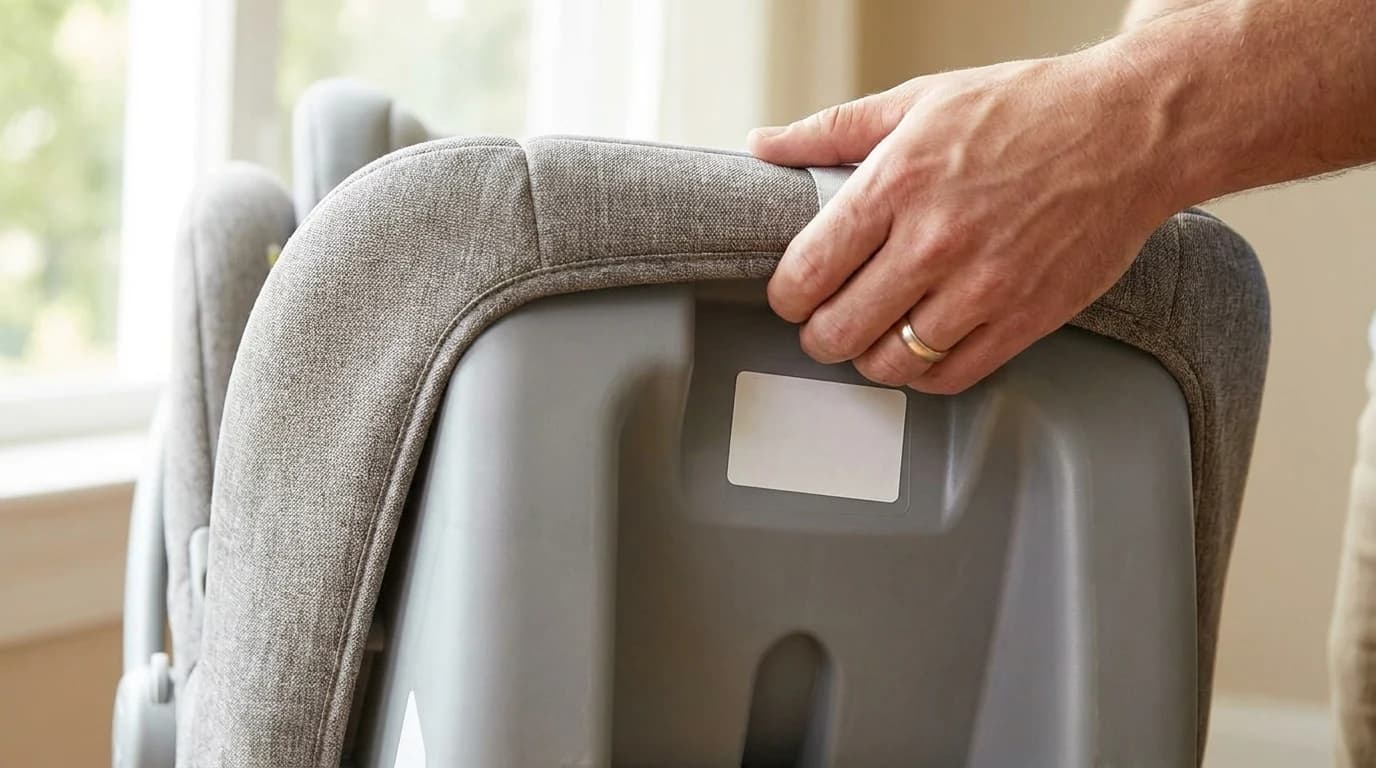
You do not need the box or the manual. The information is molded into or stickered onto the seat itself.
- Flip the seat over or check the sides and base. Look for a white or silver label with small print.
- Find the "Date of Manufacture" (DOM). Safe Kids Worldwide notes that federal law requires a label with the date of manufacture and model number.
- Look for a line that starts "Do not use this child restraint after..." Many seats stamp the expiration directly into the plastic shell near the DOM.
- No expiration printed? Do the math. Add your brand's useful life (see the table below) to the manufacture date. If you can't find the useful life, the AAP default is the manufacture date plus 6 years.
- Still unsure? Call the manufacturer with the model number and DOM. They will tell you the exact expiration.
💡 The DOM is the anchor for everything. It is also how you check for recalls, since recalls are tied to model number plus manufacture date. A seat with no readable labels is a seat you cannot verify, which is reason enough not to use it.
Car seat expiration dates by brand
Useful life isn't one number. It varies by brand and by seat type, so we read each manufacturer's own current expiration page or manual. Where a brand publishes only a range, the table says so. Your seat's label always wins over any chart.
| Brand | Stated useful life | Counted from | Source |
|---|---|---|---|
| Graco | 7 years for harnessed seats with plastic-reinforced belt paths; 10 years for steel-reinforced belt path seats and belt-positioning boosters | Manufacture | Car seat expiration FAQ |
| Chicco | Infant 6 years; rotating convertible 8; all-in-one 8 or 10; harness booster 8; booster 8 | Manufacture | Car seat basics guide |
| Britax | Infant seats and bases 6 years; ClickTight convertibles 10; all-in-one 10; harness-2-booster 9; belt-positioning boosters 10 | Manufacture | Expiration and DOM guide |
| Evenflo | 10 years for all car seats and boosters, for seats made from January 2025; older seats may differ, so follow your label | Manufacture | Car seat expiration article |
| Nuna | No brand-wide figure. The REVV convertible manual says not to use it if more than 10 years old; the PIPA-series infant manual points to the expiration label | Manufacture (per label) | REVV manual, PIPA lite manual |
| Clek | 9 years, all seats | Manufacture | Support FAQ |
| Maxi-Cosi | 8 to 12 years, depending on the product; check your manual | Manufacture | Car seat expiration page |
| Safety 1st | 8 to 12 years, depending on the product; the manual gives your seat's lifespan | Manufacture | Car seat expiration page |
| Cosco | No brand-wide figure. The Scenera NEXT convertible manual says not to use it more than 8 years after manufacture; Cosco prints the expiration date on the bottom of the seat | Manufacture (per label) | Scenera NEXT manual, Date and expiration label guide |
| Cybex | 6 to 10 years, depending on type and function; shown on the product label | Not stated (see label) | Safety FAQs |
| UPPAbaby | MESA V2 and MESA Max infant seats: 7 years; no brand-wide figure, so check the label on other models | Manufacture | MESA V2 manual, MESA Max manual |
| Doona | 6 years | Manufacture | Car seat safety myths vs facts |
| Diono | 10 years | Purchase | Support FAQ |
Want the date worked out for you? Our car seat expiration checker does the math for all 13 brands, and shows a range when a brand only states one.
💡 Two things this table shows. First, brand averages hide real spread: a Chicco infant seat is rated for 6 years, while a Britax ClickTight convertible is rated for 10. Second, Diono counts from the day you bought the seat, so keep the receipt.
Why car seats actually expire
This is the part most parents are skeptical about, and it is the part that matters. An expiration date is not a built-in obsolescence trick. There are three real reasons.
- Materials fatigue. A seat lives in a car. It bakes in summer heat, freezes in winter, and rides through hundreds of buckle-and-unbuckle cycles. Safe Kids Worldwide notes that structural integrity can weaken over time from environmental stress, especially extreme temperature swings. Plastic that has been heat-cycled for years is not the plastic that was crash-tested when new.
- Safety standards move. Crash-test requirements, labeling rules, and design features evolve. A seat built a decade ago may pre-date load legs, anti-rebound bars, or current side-impact expectations.
- History gets murky. Over years, a seat may be in a minor crash, lose a part, or get a recall you never registered for. The longer it has been in service, the more unknowns pile up.
⚠️ A seat that "looks fine" tells you nothing about micro-cracks in the shell or foam that has lost its crush properties. You cannot inspect your way out of an expiration date. The whole point is that degradation is invisible until it fails in a crash.
What most people get wrong
The biggest misconception is that the clock starts when you buy the seat. It does not. The clock starts at manufacture. A seat sold "new" that sat in a warehouse, or one passed down after two years on a shelf, has already burned part of its life. That is why a brand-new-looking hand-me-down can be closer to expiration than you think.
The second misconception is that expiration is the same as "still safe, just old." Once a seat is past its printed date, the manufacturer no longer stands behind its crash performance, and federal and pediatric guidance say to stop using it. There is no grace period.
Can you reuse a seat for the next baby?
Often yes, and this is the good news. If your own seat is still within its useful life, has never been in a moderate-to-severe crash, has all its parts and pads in good condition, and has no open recalls, reusing it for a younger sibling is fine. The AAP and NHTSA both treat your own seat with a known history very differently from a stranger's seat.
A secondhand or stranger seat is the risky case. Use NHTSA's used-seat checklist: it must have never been in a moderate or severe crash, must carry its DOM and model labels, must have no recalls, must have all parts, and must include its instruction book. If you cannot check every box, walk away. For more on that, see our guide on skipping used car seats from strangers.
✅ The cleanest reuse case is your own seat, sibling to sibling, within its date and with a history you trust. That is exactly the scenario the rules are built to allow.
What to do with an expired seat
Do not donate it, sell it, or leave it on the curb where someone might grab it. The goal is to make sure no one uses it after expiration.
- Remove the cover and pads so it is obviously not a usable seat.
- Cut or remove the harness straps.
- Write "EXPIRED, DO NOT USE" on the shell in permanent marker.
- Check whether your area recycles car seat plastic, or bag it before disposal.
Then choose a replacement based on your child's current height and weight, not their age. If you are starting that search, our how to choose a car seat guide walks through stage, fit, and installation, and our best car seats of 2026 covers current picks.
The bottom line
🎯 Treat the date of manufacture as the only number that matters, and treat the expiration as a hard stop, not a suggestion. Reuse your own in-date seat freely for a sibling; retire anything past its date even if it looks new; and never trust a seat whose history or labels you cannot verify. Fit and a clean, in-date seat beat a "premium" seat you are gambling on.
Sources
- Car Seat Safety Checkup: 10 Questions to Consider — HealthyChildren.org (AAP)
- Is It Okay To Use A Second-Hand Car Seat? — Safe Kids Worldwide
- Used Car Seat Safety Checklist — NHTSA
- Car Seat Expiration FAQ — Graco
- Manufacturer expiration pages and manuals for Graco, Chicco, Britax, Evenflo, Nuna, Clek, Maxi-Cosi, Safety 1st, Cosco, Cybex, UPPAbaby and Diono, linked in the table above.
Research Sources
- Car Seat Safety Checkup: 10 Questions to Consider — HealthyChildren.org (AAP)
- Is It Okay To Use A Second-Hand Car Seat? — Safe Kids Worldwide
- Used Car Seat Safety Checklist — NHTSA
- Car Seat Expiration FAQ — Graco
- Car Seat Basics: How Long They Last (lifespan by seat type) — Chicco
- Car Seat Expiration and Date of Manufacture: a Britax Guide — Britax
- When Do Car Seats Expire? What Parents Need to Know — Evenflo
- REVV Rotating Convertible Car Seat user manual (US) — Nuna
- PIPA lite series infant car seat user manual (US) — Nuna
- When does my seat expire? — Clek Support
- Maxi-Cosi Car Seat Expiration Dates — Maxi-Cosi
- CYBEX Safety Center FAQs (car seat expiration) — Cybex US
- MESA V2 infant car seat product manual (US) — UPPAbaby
- MESA Max infant car seat product manual (US) — UPPAbaby
- Is my car seat expired? — Diono Support
- Safety 1st Car Seat Expiration Dates — Safety 1st
- Scenera NEXT Convertible Car Seat manual (US, 2019) — Cosco
Hilly Shore Inc.
Editorial teamIndependent product research team behind Cribworthy. Reviews are grounded in published AAP / CDC / NHTSA / CPSC pediatric guidance, JPMA / GREENGUARD GOLD / OEKO-TEX certification verification, and aggregated buyer sentiment.
131 products reviewed · 22 categories covered · cites AAP, CDC, NHTSA, CPSC, FDA, ACOG.
Safety claims are verified against published pediatric guidelines and CPSC databases. See our editorial standards.