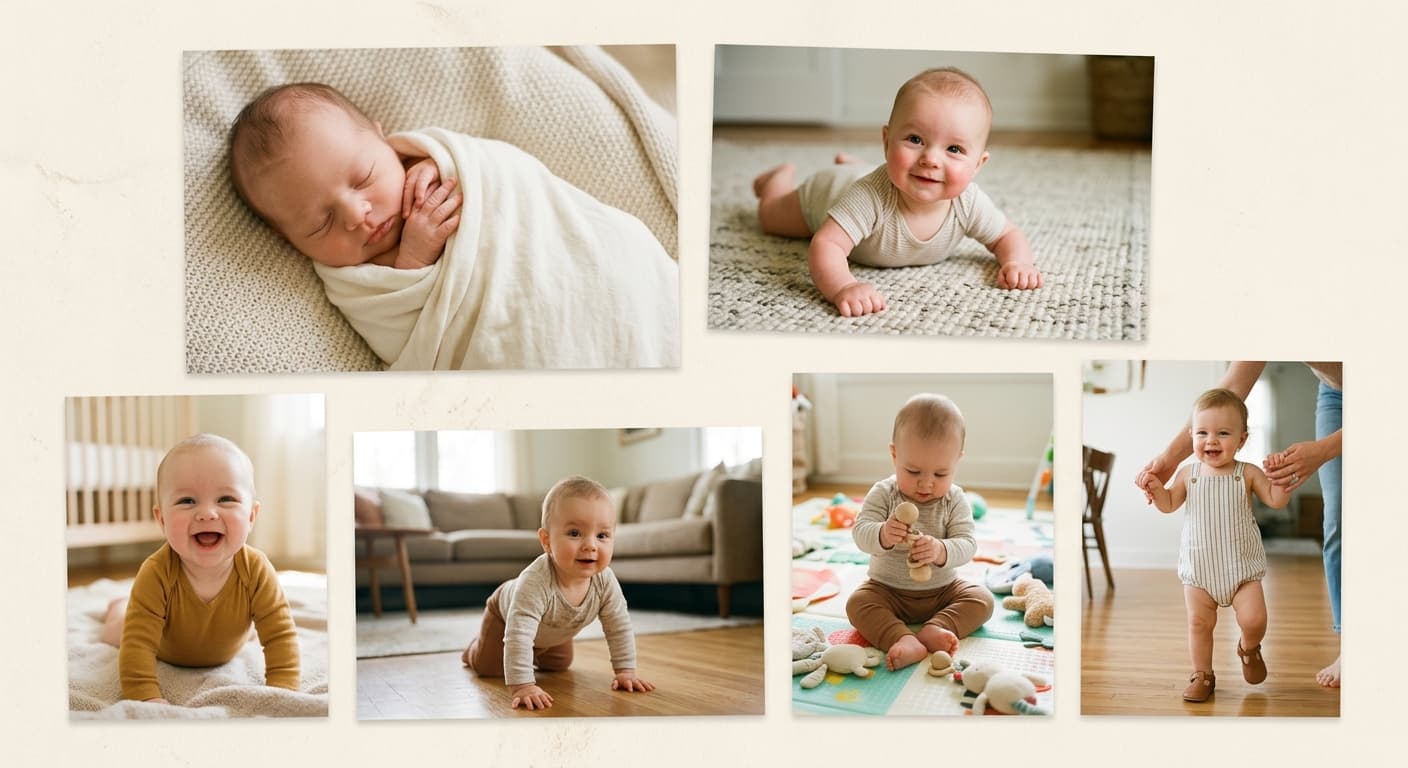
Month 3: Tummy Time Gear and Prepping for the 4-Month Sleep Regression
Quick Answer
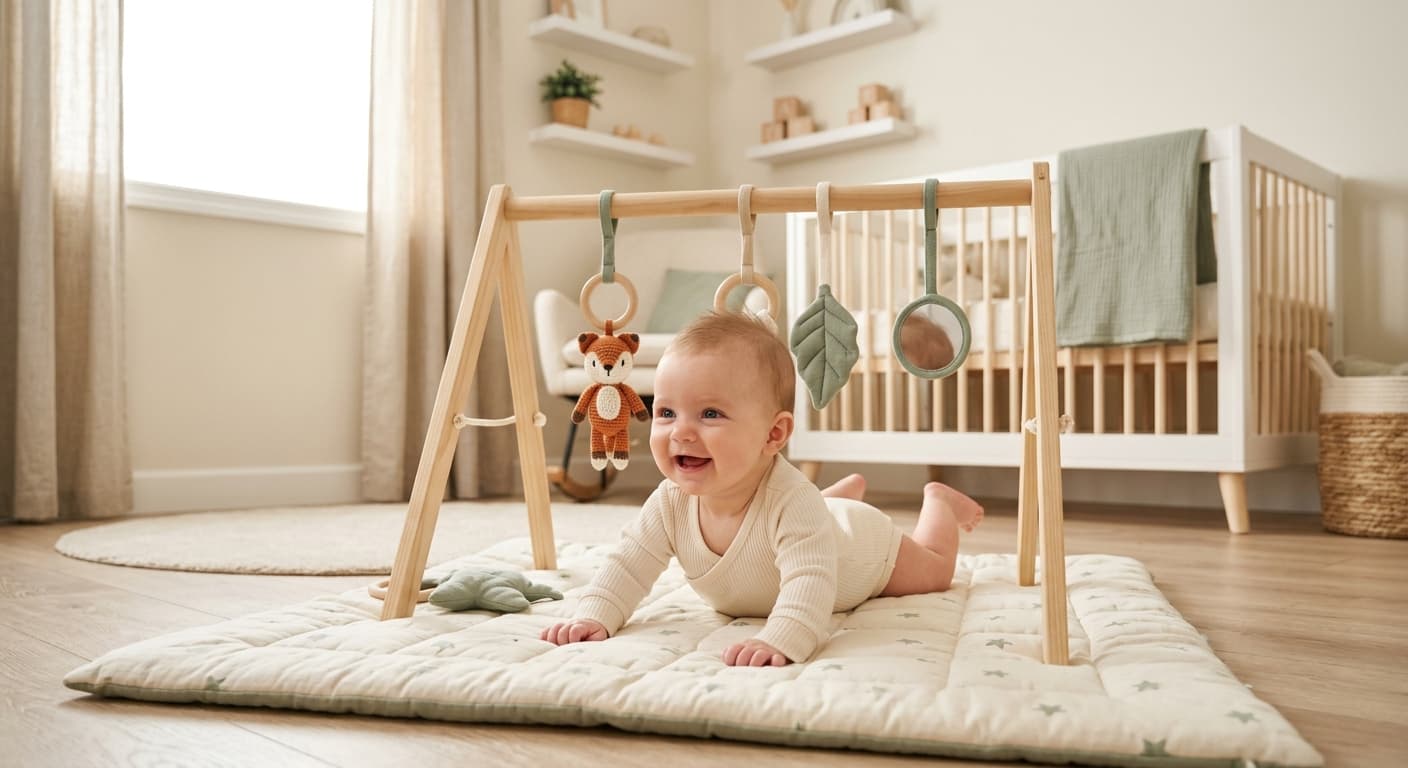
At three months the gear that earns its keep supports floor play and quietly prepares you for month four. A padded mat, a high-contrast play gym, and a shatterproof mirror turn tummy time into real practice, while blackout curtains and a transitional sleep sack bought now save a scramble when night waking arrives. Keep floor sessions short, frequent, awake, and watched.
Our Verdict
Buy the play mat and the blackout curtains this month; both get daily use and both pay off later. Pick a transitional sleep sack over another swaddle if rolling looks close, because arms need to come free before that first roll happens. Skip seats, jumpers, and other container gear, which eat into the floor practice that builds neck and trunk strength. None of this needs to be expensive.
Key Takeaways
- ✓Month 3 is when things start to feel manageable — and then the universe reminds you the 4-month sleep regression is coming. Here's what's happening, what gear you need now, and how to prep for what's next.
- ✓The AAP recommends supervised tummy time every day from birth, working up to at least 30 minutes total by 3-4 months. By month 3, baby should be getting 15-30 minutes of tummy time spread throughout the day.
- ✓Sleep at 3 months is all over the place. Some babies are sleeping 6-8 hours stretches; others are up every 90 minutes. Both are normal.
- ✓The infamous 4-month sleep regression is probably coming. It hits between 3.5-5 months for most babies and lasts 2-6 weeks.
As an Amazon Associate I earn from qualifying purchases. Product prices and availability are subject to change.
Month 3: Tummy Time, First Smiles, and Preparing for the 4-Month Regression
Month 3 is when things start to feel manageable — and then the universe reminds you the 4-month sleep regression is coming. Here's what's happening, what gear you need now, and how to prep for what's next.
What's happening at 3 months
Physical milestones:
- Social smiles are now real and intentional (melts your heart)
- Head control is improving — can hold head up during tummy time for longer
- Starting to reach for objects and bat at toys
- Tracking moving objects across the room
- Cooing and making vowel sounds
- Recognizing primary caregivers with obvious excitement
- Sleeping longer night stretches (4-6 hours) for many babies
What this means practically:
- You can engage more meaningfully — they'll smile back, coo, and respond to your voice
- Tummy time becomes productive rather than just torturous
- Nap windows are more predictable
- You may start getting small glimpses of "your old self" back
Gear for month 3
Engagement gear (new this month)
- Activity gym / play mat (Fisher-Price Deluxe Kick & Play, Skip Hop Discoverosity Montessori Gym)
- Soft rattles and crinkle toys (lamaze, Manhattan Toy)
- Tummy time mat with mirror (helps baby engage with tummy time)
- High-contrast baby books (Indestructibles or Sassy books)
Sleep updates
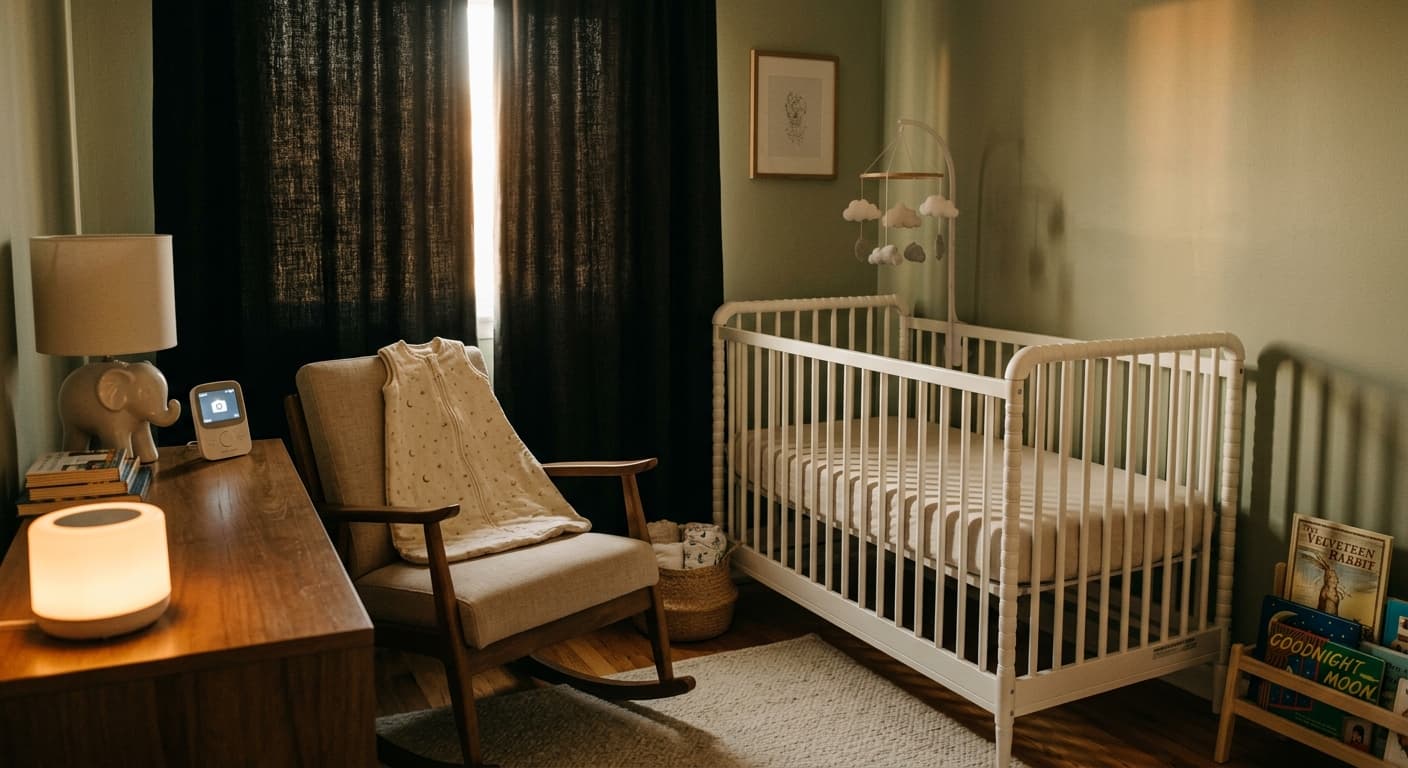
- Transitional sleep sack (Merlin Magic Sleepsuit or Zipadee-Zip) — prep for dropping the swaddle if baby is close to rolling
- More crib sheets — you've been doing laundry nonstop
- Extra sleep sacks if you're still on your 2 original ones
What you're probably done with by now
- Newborn-size clothes (outgrown around 6-10 weeks)
- Disposable nipple pads (if scarring is healed)
- Nightly burping sessions taking 45 minutes (hopefully faster by now)
Tummy time: why and how
The AAP recommends supervised tummy time every day from birth, working up to at least 30 minutes total by 3-4 months. By month 3, baby should be getting 15-30 minutes of tummy time spread throughout the day.
Why tummy time matters:
- Strengthens neck, shoulders, and back muscles
- Prevents flat spots on the back of the head
- Supports rolling over and eventually crawling
- Promotes visual development (different view of the world)
How to do tummy time if baby hates it:
- Start short — even 1-2 minutes at a time counts
- Get down on the floor with them (most babies hate being alone face-down)
- Put a mirror in front of them — they love looking at themselves
- Try after a nap when they're alert and well-rested
- Do it on your chest at a slight incline if floor tummy time isn't working yet
If baby screams every time, don't force it to 30 minutes. Build up slowly.
Sleep at month 3
Sleep at 3 months is all over the place. Some babies are sleeping 6-8 hours stretches; others are up every 90 minutes. Both are normal.
Typical 3-month sleep pattern:
- Total: 14-15 hours
- Night sleep: 9-10 hours (with wake-ups)
- Naps: 3-4 naps totaling 4-5 hours
- Wake windows: 1.5-2 hours
- Bedtime: 7:00-8:00 PM
Consider starting:
- A consistent 10-15 minute bedtime routine
- Putting baby down "drowsy but awake" at bedtime (not naps yet)
- Earlier bedtime than you'd expect (7:00 PM often works better than 9:00 PM)
Don't start yet:
- Sleep training (wait until 4+ months minimum)
- Solid foods (AAP: 6 months)
- Rigid scheduling (still too early)
Preparing for month 4
The infamous 4-month sleep regression is probably coming. It hits between 3.5-5 months for most babies and lasts 2-6 weeks.
Prep now by:
- Starting a bedtime routine — consistency matters when sleep gets disrupted
- Buying a transitional swaddle product — you'll likely need to drop the swaddle during the regression
- Adding blackout curtains if you haven't — matters more as baby becomes more alert
- Reading our 4-month sleep regression guide — knowing it's coming helps
Red flags at 3 months (talk to pediatrician)
- Not making eye contact or social smiling
- No head control during tummy time
- Not responding to loud sounds
- Extreme fussiness that doesn't improve
- Refusing to feed or dropping feed amounts
- No weight gain over 2+ weeks
- Persistent fever or illness symptoms
Month 3 to-dos
- Schedule 4-month well-child visit
- Start bedtime routine
- Stock up on transitional sleep sacks
- Make sure blackout curtains are in place
- Take lots of photos of the new smiling baby
- Maybe start thinking about daycare if returning to work
Related reading:
💬 Real Talk from Parents
Sleep training is 50% technique and 50% parental willpower.
You'll google 'baby sleep regression' at least once a month for the first year.
Every baby sleep book contradicts the last one you read. That's normal.
The secret nobody tells you: most babies figure out sleep eventually. The books just help you survive until they do.
Paraphrased community consensus — not a direct quote.
Research Sources
Hilly Shore Inc.
Editorial teamIndependent product research team behind Cribworthy. Reviews are grounded in published AAP / CDC / NHTSA / CPSC pediatric guidance, JPMA / GREENGUARD GOLD / OEKO-TEX certification verification, and aggregated buyer sentiment.
122 products reviewed · 22 categories covered · cites AAP, CDC, NHTSA, CPSC, FDA, ACOG.
Safety claims are verified against published pediatric guidelines and CPSC databases. See our editorial standards.